
If you’ve ever been chatting with someone online and suddenly received the message “brb,” you probably paused for a second. Does it mean they’re leaving? Ignoring you? Ending the conversation?
That tiny three-letter text abbreviation has been around for years, yet people still search its meaning daily. Why? Because context matters. Tone matters. And in modern digital communication, even a short message can carry emotional nuance.
This guide explains exactly what “brb” means in text, when and why people use it, and how to interpret it correctly across real-life conversations. By the end, you’ll not only understand the definition—you’ll feel confident using and responding to it naturally.
BRB – Quick Meaning
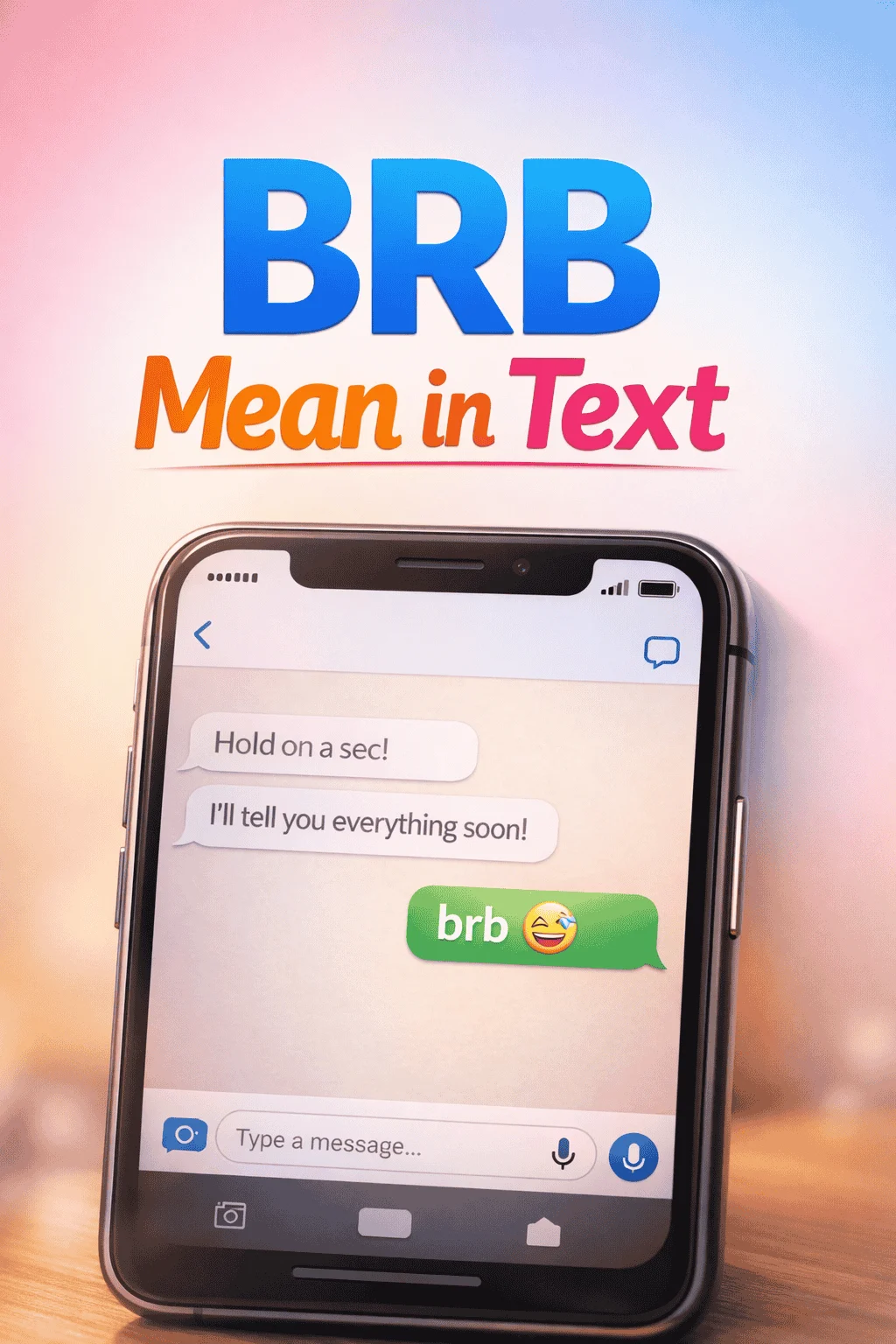
BRB stands for “Be Right Back.”
It’s used in chats or messages to tell someone you’re temporarily leaving the conversation but plan to return soon.
Simple definition:
- A short pause indicator in conversation
- Signals temporary absence
- Implies intention to continue chatting
Examples:
- “Hold on, brb.”
- “Doorbell—brb.”
- “Need coffee 😂 brb.”
The key idea: You’re not leaving permanently. Just stepping away briefly.
Origin & Background
“BRB” comes from early internet chat culture in the late 1990s and early 2000s. In fast-paced messaging environments like chat rooms and gaming platforms, typing full sentences slowed conversations down. Abbreviations became social shortcuts.
Back then, internet users created quick signals to manage presence:
- AFK (away from keyboard)
- GTG (got to go)
- BRB (be right back)
Among these, BRB became the friendliest. It reassured others: I’m still here—just paused.
As texting and social media grew, BRB migrated from desktop chats to:
- SMS texting
- Messaging apps
- Social media DMs
- Online gaming chats
Today, its meaning has remained remarkably stable. But the emotional tone has expanded. Depending on context, BRB can feel:
- Casual
- Polite
- Playful
- Slightly dismissive
- Or reassuring
That flexibility keeps it relevant across generations.
Real-Life Conversations
Here’s how BRB naturally appears in everyday digital interactions.
Person A: Are you free to talk?
Person B: Yes! Wait brb, mom calling.
Instagram DMs
Person A: You disappeared 😭
Person B: Sorry brb earlier—food arrived 😂
TikTok Comments
Person A: Part 2 please!!
Creator: Filming it now brb 😅
Text Messages
Person A: I need advice asap
Person B: I’m here. Brb 2 mins—parking.
These examples show BRB’s core role: maintaining connection while stepping away.
Emotional & Psychological Meaning
At a surface level, BRB simply indicates absence. But emotionally, it does more.
It reassures continuity.
When someone says BRB, they’re signaling:
- I value this conversation
- I’m not ignoring you
- I’ll return shortly
In digital communication, silence can feel personal. A delayed reply might trigger anxiety or uncertainty. BRB reduces that tension by acknowledging the pause.
Why people use it psychologically:
- To maintain rapport
- To prevent misunderstanding
- To show politeness
- To soften interruptions
Personal-style scenario
You’re texting a close friend about something important. Suddenly, your child spills juice everywhere. You type:
“Ah mess 😭 brb.”
That tiny phrase protects the emotional flow of the conversation. Without it, your silence might feel abrupt. With it, the connection stays intact.
Usage in Different Contexts
Social Media
On platforms with fast interactions, BRB signals temporary absence without formality.
Example:
“Reading this thread brb popcorn 🍿”
Tone: playful, informal
Friends & Relationships
Among friends, BRB feels natural and friendly.
Example:
“Don’t move brb getting snacks.”
Tone: relaxed, comfortable
Work / Professional Settings
BRB can appear in casual workplace chats but depends on culture.
Acceptable:
“Brb—joining another call.”
Less appropriate:
“brb lol”
Tone: neutral, concise
Casual vs Serious Tone
BRB itself is neutral, but context shifts meaning.
Casual:
“brb pizza here!!!”
Serious:
“Need to check something—brb.”
Emotional:
“Brb, crying 😭”
When NOT to Use It
Despite being common, BRB isn’t always suitable.
Formal communication
Emails, official messages, or professional reports rarely use slang.
Serious conversations
If someone shares sensitive news, “brb” can feel dismissive.
Example problem:
“I lost my job today.”
“brb”
This may seem uncaring.
Long absences
BRB implies short return. If you’ll be gone hours, it’s misleading.
Better:
“Talk later.”
Cultural misunderstandings
Not everyone understands internet abbreviations, especially older users.
Common Misunderstandings
1. Thinking BRB means ending conversation
It actually signals continuation.
2. Interpreting it as avoidance
Usually it’s practical, not emotional withdrawal.
3. Assuming exact time
BRB doesn’t specify minutes—it’s approximate.
4. Reading rudeness into it
Tone depends on context, not abbreviation itself.
Comparison Table
| Expression | Meaning | Tone | Return Expected |
|---|---|---|---|
| BRB | Be right back | Neutral/friendly | Yes |
| AFK | Away from keyboard | Detached | Maybe |
| GTG | Got to go | Final | No |
| TTYL | Talk to you later | Warm closing | Later |
| Hold on | Wait briefly | Direct | Yes |
| Back soon | Temporary leave | Polite | Yes |
| Bye | Conversation end | Final | No |
Key Insight:
BRB uniquely balances absence and connection. It pauses interaction without closing it, which makes it socially reassuring in digital communication.
Variations / Types
- brb – standard lowercase casual form
- BRB – neutral uppercase emphasis
- brb!! – playful urgency
- brb lol – humorous interruption
- brb sec – very short absence
- brb 2 mins – time-specific
- brb phone – reason-based
- brb sorry – polite tone
- brb rq – “real quick” slang
- brb back soon – reassuring variation
Each keeps the same core meaning: temporary pause with return.
How to Respond When Someone Uses It
Casual Replies
- “Ok 👍”
- “Np”
- “Kk”
Funny Replies
- “I’ll guard the chat 🛡️”
- “I’ll be here aging.”
- “Don’t get lost.”
Mature Replies
- “Take your time.”
- “No rush.”
- “I’m here.”
Respectful Replies
- “Sure.”
- “Okay, thanks.”
- “Message when back.”
Regional & Cultural Usage
Western Culture
BRB is widely understood and commonly used across ages. It’s considered neutral internet slang.
Asian Culture
Usage is common among younger users. In professional or hierarchical contexts, it may feel too informal.
Middle Eastern Culture
Used mostly among youth and bilingual internet users. Older generations may prefer full phrases.
Global Internet Usage
BRB is part of universal digital language. Even non-native English speakers recognize it due to gaming and social media exposure.
Generational Differences
Gen Z:
Uses BRB playfully or ironically.
Example:
“brb becoming famous”
Millennials:
Use BRB functionally—literal short absence.
Older users:
Less frequent usage; may prefer “one moment.”
Is It Safe for Kids?
Yes. BRB is harmless and neutral.
It simply means someone is stepping away briefly. There’s no inappropriate or hidden meaning. It’s safe in everyday texting and online communication for children and teens.
FAQs
What does BRB mean in texting?
It means “be right back,” indicating temporary absence from conversation.
Is BRB rude?
No. It’s usually polite because it explains a pause instead of disappearing.
How long is BRB?
Typically a few minutes, but not exact.
Is BRB still used today?
Yes. It remains common across messaging apps and online chats.
What’s the difference between BRB and AFK?
BRB implies returning soon; AFK suggests being away longer.
Can BRB be used professionally?
Only in informal workplace chats, not formal communication.
Does BRB end conversation?
No. It signals continuation after a short break.
Conclusion
In digital communication, small words carry big meaning. “BRB” may look like a simple abbreviation, but it performs an important social function: it preserves connection during absence.
It tells someone, I haven’t left—you still matter in this conversation.
That’s why it has survived decades of internet language evolution. It’s efficient, friendly, and emotionally considerate.
Use it naturally when stepping away briefly. Respond to it casually. And interpret it kindly—because most of the time, it’s just someone pausing life for a moment before returning.