
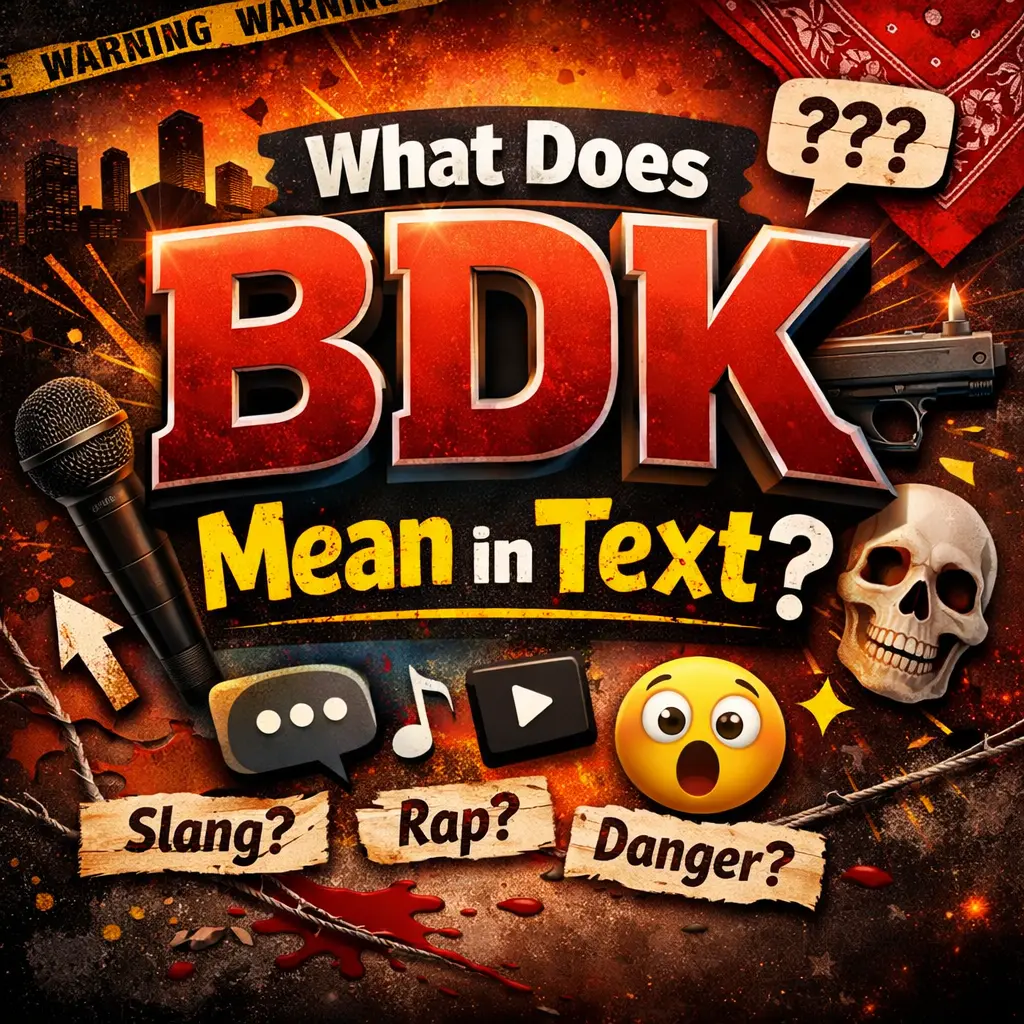
If you spend time on social media, gaming chats, or comment sections, you may have seen someone type “BDK” and wondered what it actually means. It is one of those internet abbreviations that can look harmless at first, yet carries a very specific meaning depending on the context.
Many people search for the phrase “what does BDK mean in text” because the acronym appears frequently in TikTok comments, rap discussions, and casual online conversations. For someone unfamiliar with internet slang or street culture, it can feel confusing or even slightly alarming.
The truth is that BDK is not a typical friendly texting abbreviation like LOL or BRB. It has roots in urban culture and can carry strong cultural or emotional weight depending on how it is used.
Understanding the meaning behind BDK helps avoid misunderstandings, awkward conversations, and sometimes serious social mistakes. In this article, we will break down its definition, origin, real conversation examples, emotional meaning, and when it should or should not be used.
By the end, you will have a clear and confident understanding of how this slang works in modern digital communication.
BDK – Quick Meaning
BDK is an acronym that most commonly stands for:
“Black Disciple Killer.”
It is a phrase associated with gang culture and is often used in rap music, street slang, and online communities connected to hip hop culture.
Quick breakdown
- BDK: Black Disciple Killer
- Usually used as an expression of opposition to the Black Disciples gang
- Often appears in rap lyrics, memes, or comments related to street culture
Example text messages
“I saw that rapper throwing up BDK in the video.”
“That comment section went confused. Everyone typing BDK.”
“Bro don’t post that BDK stuff. It can cause drama.”
Because of its origins, BDK should be used with caution, especially outside the communities where the slang originally developed.
Origin and Background
To understand BDK, it helps to look at its roots in American street culture.
The phrase comes from Chicago gang culture, where different groups historically used coded language, symbols, and abbreviations to represent alliances and rivalries.
The Black Disciples are one of the well known street gangs that originated in Chicago during the 1960s. Rival groups sometimes used the phrase “BDK” to express opposition or hostility toward that organization.
Over time, the phrase moved beyond local streets and into hip hop music. Rappers began referencing gang identities, rivalries, and neighborhood affiliations in their lyrics. As rap music spread globally, so did many of the slang terms connected to it.
Then came social media.
Platforms like TikTok, Instagram, and YouTube made it easy for slang to travel across cultures and countries. People who had never heard the term before suddenly saw BDK in comment sections or rap discussions.
In many cases, younger internet users repeat the phrase without fully understanding its history or seriousness.
Today, BDK can appear in three main ways online:
- In discussions about rap music
- In meme culture
- In controversial or edgy comment threads
Its meaning has remained mostly the same, but its audience has expanded dramatically due to the internet.
Real Life Conversations
Here are realistic examples of how BDK may appear in everyday digital conversations.
WhatsApp Chat
Person A:
Did you watch that new drill music video?
Person B:
Yeah. I noticed he said BDK a few times.
Person A:
That’s because he’s from a rival area.
Person B:
Oh okay. I didn’t know it meant that.
Instagram DM
Person A:
Why are people spamming BDK in the comments?
Person B:
Because the rapper mentioned the Black Disciples in the song.
Person A:
Wow I thought it was just random slang.
TikTok Comment Section
User 1:
This song goes hard 🔥
User 2:
BDK forever.
User 3:
Y’all gotta chill with that in the comments.
Text Message Between Friends
Friend 1:
Bro you posted BDK on your story?
Friend 2:
Yeah I saw it in a meme.
Friend 1:
You might wanna delete that. Some people take it seriously.
These examples show how easily misunderstandings can happen when slang spreads online without context.
Emotional and Psychological Meaning
At its core, BDK expresses opposition, rivalry, or loyalty to a certain identity.
For some people, especially those connected to the culture where it originated, the phrase carries emotional significance. It may represent:
- Group identity
- Territorial loyalty
- Cultural affiliation
- Defiance or rebellion
However, on the broader internet, many users treat it more casually, often repeating it without fully grasping its deeper implications.
From a psychological perspective, slang like BDK spreads quickly because people naturally seek belonging and identity in online communities.
When someone copies a phrase from a viral video or song, they may simply want to feel connected to a trend.
Personal style scenario
Imagine a teenager watching a viral drill rap video on TikTok. The comments are filled with slang phrases they have never seen before.
They type “BDK” in the comment section because everyone else is doing it.
To them, it feels like joining the conversation.
But to someone familiar with the history of the term, the message could carry a much heavier meaning.
This gap in understanding is one reason why learning internet slang is so important.
Usage in Different Contexts
Social Media
BDK appears most often on platforms like:
- TikTok
- YouTube
It may appear in comment sections, memes, or rap discussions.
Often people repeat it simply because they saw it somewhere else.
Friends and Relationships
Among close friends who understand the context, the phrase may appear jokingly or ironically when discussing rap culture.
Still, many people avoid using it casually because it can easily be misunderstood.
Work or Professional Settings
BDK should never be used in professional environments.
Workplace communication values clarity, professionalism, and neutrality. Slang tied to controversial or violent themes can damage credibility.
Casual vs Serious Tone
Tone depends heavily on context.
Casual internet use
May appear as slang in meme culture.
Serious context
Could reference real gang rivalry or cultural identity.
Because of this difference, using the phrase without understanding the context can lead to awkward or uncomfortable situations.
When NOT to Use It
There are several situations where using BDK is inappropriate or risky.
Professional communication
Never use slang connected to violence or gangs in workplace messages.
Public posts
Posting it publicly can create confusion or backlash.
Cultural misunderstandings
People unfamiliar with the term may interpret it as aggressive.
School environments
Teachers and administrators may view the phrase as inappropriate.
When in doubt, it is usually best not to use it at all.
Common Misunderstandings
Many people misunderstand BDK because they see it online without context.
Thinking it is harmless slang
Some assume it is just another funny abbreviation.
Confusing it with random letters
Without cultural knowledge, the phrase looks meaningless.
Ignoring the history
The internet often separates slang from its origins.
Tone confusion
Someone may post it jokingly while others interpret it seriously.
Understanding the background prevents these communication mistakes.
Comparison Table
| Expression | Meaning | Tone |
|---|---|---|
| BDK | Opposition to Black Disciples | Aggressive / cultural |
| LOL | Laughing out loud | Friendly |
| BRB | Be right back | Neutral |
| IDK | I don’t know | Casual |
| SMH | Shaking my head | Mild frustration |
Key Insight
Unlike most texting abbreviations, BDK carries cultural and historical meaning rather than simple emotional expression. That is why it requires much more awareness before using it.
Variations and Related Slang
Here are some slang variations or related expressions you might encounter.
1. GDK
Gangster Disciple Killer. Used in rival gang contexts.
2. BD
Short form referring to Black Disciples.
3. Opps
Slang for enemies or rivals.
4. Smoke
Used to indicate conflict or confrontation.
5. Drill
A music style closely connected with Chicago street culture.
6. Block
Refers to neighborhood territory.
7. Slide
Slang for confronting rivals.
8. No Cap
Means someone is telling the truth.
9. Cap
Means someone is lying.
10. Real One
A loyal or trustworthy person.
Not all of these carry the same intensity, but they often appear in similar cultural contexts.
How to Respond When Someone Uses It
If someone sends or posts BDK, your response should depend on the situation.
Casual replies
“I’ve seen that phrase before. What does it mean exactly?”
“Is that from a rap song?”
Funny replies
“I feel like I need a slang dictionary today.”
“Internet slang gets more confusing every week.”
Mature replies
“Just be careful using that phrase. It has a deeper history.”
“Some people take that slang seriously.”
Respectful replies
“I’m not really familiar with that term, but I’d rather avoid it.”
This approach keeps conversations calm and respectful.
Regional and Cultural Usage
Internet slang rarely means the same thing everywhere.
Western culture
In parts of the United States, the term has direct cultural and historical connections to gang identity and street politics.
Asian culture
In many Asian countries, users may encounter BDK through rap music or TikTok trends without fully understanding its origins.
Middle Eastern culture
The phrase appears mostly in music discussions or global hip hop communities.
Global internet culture
Worldwide, many people simply see it as edgy internet slang because social media spreads language faster than cultural context.
Generational differences
Gen Z
More likely to encounter the phrase through TikTok or drill music.
Millennials
Often less familiar with the slang unless they follow hip hop culture closely.
This generational gap is common with fast moving internet language.
Is It Safe for Kids?
Generally, BDK is not considered appropriate slang for children or younger teens.
Because the phrase is connected to gang culture and conflict, parents and educators usually discourage its use.
If kids encounter the term online, it is better to explain the background rather than simply ignoring it. Understanding context helps them make safer communication choices.
Frequently Asked Questions
What does BDK mean in text messages?
BDK usually means Black Disciple Killer, a phrase tied to gang culture and sometimes referenced in rap music or online comments.
Is BDK a common internet slang term?
It appears online, but it is far less common than typical texting abbreviations like LOL or BRB.
Is BDK offensive?
It can be considered offensive or aggressive because it relates to gang rivalry.
Why do people type BDK in TikTok comments?
Often it appears under drill rap videos or discussions related to hip hop culture.
Should I use BDK in casual conversation?
It is generally better to avoid using it unless you fully understand the cultural context.
Does BDK have multiple meanings?
Most of the time it refers to the same phrase, though some people repeat it online without understanding its origin.
Conclusion
Internet slang evolves incredibly fast, and new abbreviations appear every day. Some are lighthearted and harmless, while others carry deeper cultural meaning.
BDK is one of those terms where context matters a lot.
While it may look like just another short acronym in a comment section, its roots connect to real history, identity, and rivalry. Because of that, it is important to understand what it represents before using it casually.
The internet often spreads words faster than their meanings. Learning the background behind slang helps you communicate more responsibly and confidently online.
When you see BDK in text messages or social media comments, you now know exactly what it means and why awareness of its context matters.
Understanding language is not just about vocabulary. It is also about culture, respect, and thoughtful communication.