

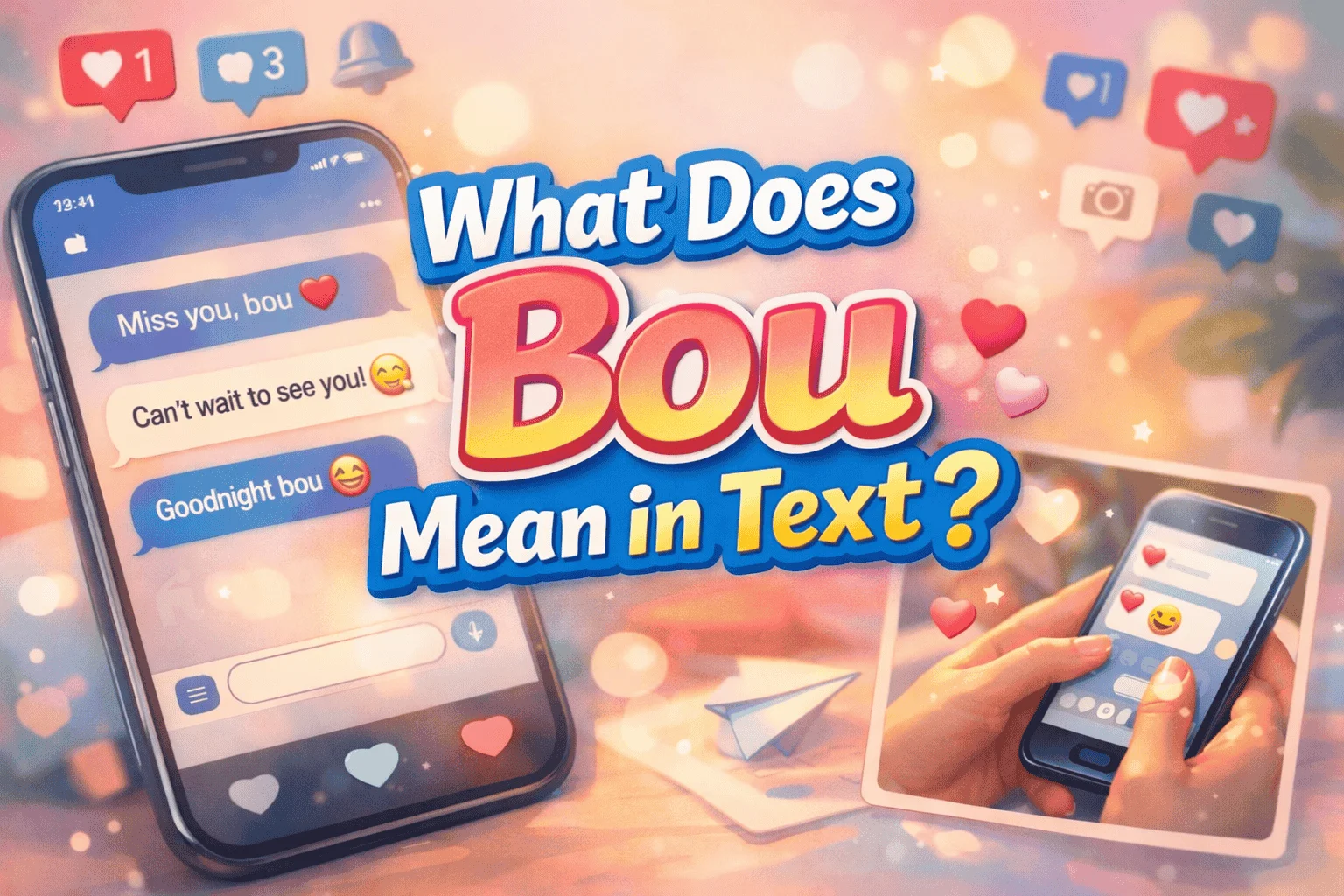
If you’ve seen someone write “Hey bou ❤️” or “Miss you, bou,” you’re not alone in wondering what it means. The term “bou” has quietly slipped into texting and social media language, especially among younger users and in affectionate conversations.
People search what does bou mean in text because it looks similar to other slang like “boo,” “bae,” or “babe,” yet its spelling feels unusual. Is it romantic? Friendly? Cultural? A typo?
This guide clears up that confusion. You’ll learn the exact meaning, where it came from, how people actually use it in conversations, and when you should (or shouldn’t) use it yourself.
“Bou” – Quick Meaning
“Bou” in text is an affectionate nickname used for someone you care about, similar to:
- Boo
- Babe
- Bae
- Love
It usually expresses warmth, closeness, or romantic affection.
Simple definition:
👉 A cute or intimate way to address someone special.
Examples:
- “Goodnight bou 😘”
- “I miss you, bou.”
- “How was your day, bou?”
In most cases, “bou” is simply a stylistic or playful spelling of “boo.”
Origin & Background
“Bou” didn’t appear from nowhere. It evolved through a mix of pronunciation, culture, and digital writing habits.
1. From “Boo” to “Bou”
“Boo” has been used in African American Vernacular English (AAVE) for decades as a term of affection. Over time, texting culture encouraged creative spelling. Just as “you” became “u,” “boo” sometimes became “bou.”
2. Social Media Aesthetics
Platforms like TikTok and Instagram normalized cute or stylized spellings. “Bou” looks softer and more aesthetic than “boo,” especially in captions and usernames.
3. Typing & Accent Influence
In some accents and languages, the vowel sound in “boo” naturally shifts toward “bou.” Multilingual users often adopt spellings that reflect pronunciation.
4. Personalization Trend
Modern digital communication values uniqueness. Changing a single letter makes a nickname feel personal — like a private term between two people.
So “bou” is less about new meaning and more about personalized expression.
Real-Life Conversations
Here’s how “bou” actually appears in everyday messaging.
Person A: Did you reach home?
Person B: Yes bou, just got in ❤️
Instagram DMs
Person A: You looked so good today 😍
Person B: Stoppp bou 😭❤️
TikTok Comments
Person A: Couple goals fr
Person B: That’s my bou 😌
Text Messages
Person A: I miss you already
Person B: I’ll see you tomorrow, bou
These examples show the consistent tone: affectionate, close, warm, and personal.
Emotional & Psychological Meaning
Calling someone “bou” signals emotional intimacy.
It often communicates:
- Comfort
- Attachment
- Fondness
- Romantic closeness
- Playful affection
Unlike formal terms like “partner” or “girlfriend,” “bou” feels soft and emotionally safe. It suggests familiarity without seriousness pressure.
Why people use it:
Modern communication favors emotional shorthand. A small word carries big feeling. “Bou” instantly signals closeness without long explanations.
What it reveals about communication today:
People increasingly prefer personalized, gentle language over labels. Instead of defining relationships, they express feeling.
Real-life scenario:
Someone you’re dating texts: “Sleep well, bou.”
You feel warmth — not because of the word itself, but because it signals you’re emotionally important to them.
That’s the real power of the term.
Usage in Different Contexts
Social Media
Common in captions, comments, and bios.
Example:
“Movie night with my bou 🍿❤️”
Tone: Romantic or affectionate.
Friends & Relationships
Mostly used in romantic or flirtatious friendships.
Example:
“You okay, bou?”
Tone: Caring and personal.
Work / Professional Settings
Rarely appropriate.
Using “bou” with colleagues can feel overly intimate or unprofessional unless there’s an established personal friendship outside work.
Casual vs Serious Tone
- Casual: “Hey bou 😂”
- Serious: “I’m here for you, bou.”
The word adapts to emotional depth depending on context.
When NOT to Use It
Despite being harmless, “bou” isn’t universal.
Avoid in:
- Professional emails
- Formal communication
- Early dating stages (may feel too intimate)
- With strangers
- Cultural settings valuing formality
- Serious conflict discussions
Example of awkward use:
“Dear Manager, thank you bou.”
Tone mismatch creates discomfort.
Common Misunderstandings
1. Thinking it means something different from “boo”
It doesn’t. It’s essentially the same.
2. Assuming it’s always romantic
Sometimes friends use it affectionately.
3. Believing it’s a typo
Often intentional.
4. Confusing tone
Without context, it may sound flirty or platonic.
5. Cultural unfamiliarity
Some readers may not recognize it at all.
Comparison Table
| Expression | Meaning | Tone | Relationship Level |
|---|---|---|---|
| Bou | Affectionate nickname | Soft | Close |
| Boo | Romantic nickname | Warm | Close |
| Bae | Partner/crush | Trendy | Romantic |
| Babe | Classic romantic | Intimate | Romantic |
| Bro | Friend | Casual | Platonic |
| Love | Caring | Emotional | Close |
| Hun | Friendly affection | Gentle | Mixed |
Key Insight:
“Bou” belongs to the same emotional category as “boo” and “babe,” but feels more personalized and modern due to its spelling.
Variations / Types
- Boo – Original affectionate term
- Bouu – Extra cute emphasis
- Bou ❤️ – Romantic tone
- My bou – Possessive affection
- Lil bou – Playful nickname
- Hey bou – Casual greeting
- Bou bae – Double affection slang
- Bouboo – Extremely cute form
- Baby bou – Romantic emphasis
- Bou bear – Playful pet name
All retain the same emotional base: closeness.
How to Respond When Someone Uses It
Casual Replies
- “Heyy 😊”
- “What’s up?”
- “Hi ❤️”
Funny Replies
- “Yes bou 😌”
- “Missed me?”
- “Always, bou 😎”
Mature Replies
- “I appreciate you.”
- “You’re sweet.”
- “I’m glad to hear from you.”
Respectful Replies
- “That means a lot.”
- “Thank you.”
- “You’re kind.”
Regional & Cultural Usage
Western Culture
Common in youth texting and dating language. Seen as cute and informal.
Asian Culture
Less common, but used among English-speaking youth and online communities. Often adopted through global social media trends.
Middle Eastern Culture
Usage varies. In conservative settings, affectionate nicknames outside family or marriage may feel inappropriate.
Global Internet Usage
Online language blends cultures. “Bou” spreads mainly through:
- TikTok captions
- Instagram comments
- Couple content
- Gaming chats
Generational Differences
Gen Z:
Comfortable with stylized slang and affectionate nicknames.
Millennials:
More familiar with “boo” or “babe,” but may understand “bou.”
Older generations may not recognize it.
Is It Safe for Kids?
Yes — “bou” itself is harmless. It’s simply an affectionate nickname.
However, context matters. If used in romantic or private conversations, parents may want awareness of relationship dynamics rather than the word itself.
So the term is safe; the relationship context determines appropriateness.
FAQs
1. Does “bou” mean boyfriend or girlfriend?
No. It’s a nickname for someone you care about, not a relationship label.
2. Is “bou” the same as “boo”?
Yes. It’s mainly a stylistic spelling variation.
3. Can friends use “bou”?
Yes, especially close or playful friendships.
4. Is “bou” flirting?
Often, but not always. Context determines tone.
5. Is it appropriate in professional settings?
No. It’s too informal and intimate.
6. Why do people spell it “bou”?
For aesthetic, personalization, or pronunciation reasons.
7. Is it a typo?
Usually intentional in modern texting.
Conclusion
So, what does “bou” mean in text?
At its core, it’s a gentle, affectionate nickname — a modern twist on “boo.”
Its popularity reflects how digital communication is evolving. People want language that feels personal, warm, and uniquely theirs. Changing one letter turns a common nickname into something intimate.
If someone calls you “bou,” it usually signals comfort and closeness. And if you choose to use it, you’re speaking in the soft language of modern connection — casual, caring, and emotionally expressive.
Language online keeps changing, but the human need behind it stays the same: we all want words that make us feel close to someone.