

Online conversations move fast. People shorten everything. Words turn into abbreviations, and sometimes those abbreviations leave people puzzled.
One acronym that often causes confusion is “DOD.”
You might see it in a message, a comment, or even a profile description and wonder what it actually means. The truth is that DOD can have multiple meanings depending on the context. In some cases it refers to something serious like a government department. In others, it may be used casually in conversation or slang.
This guide will break it down clearly.
By the end, you will understand:
- The exact meaning of DOD in text
- Where the term came from
- How people use it in real conversations
- When it is appropriate or inappropriate to use
Let’s start with the quick explanation most people are searching for.
DOD – Quick Meaning
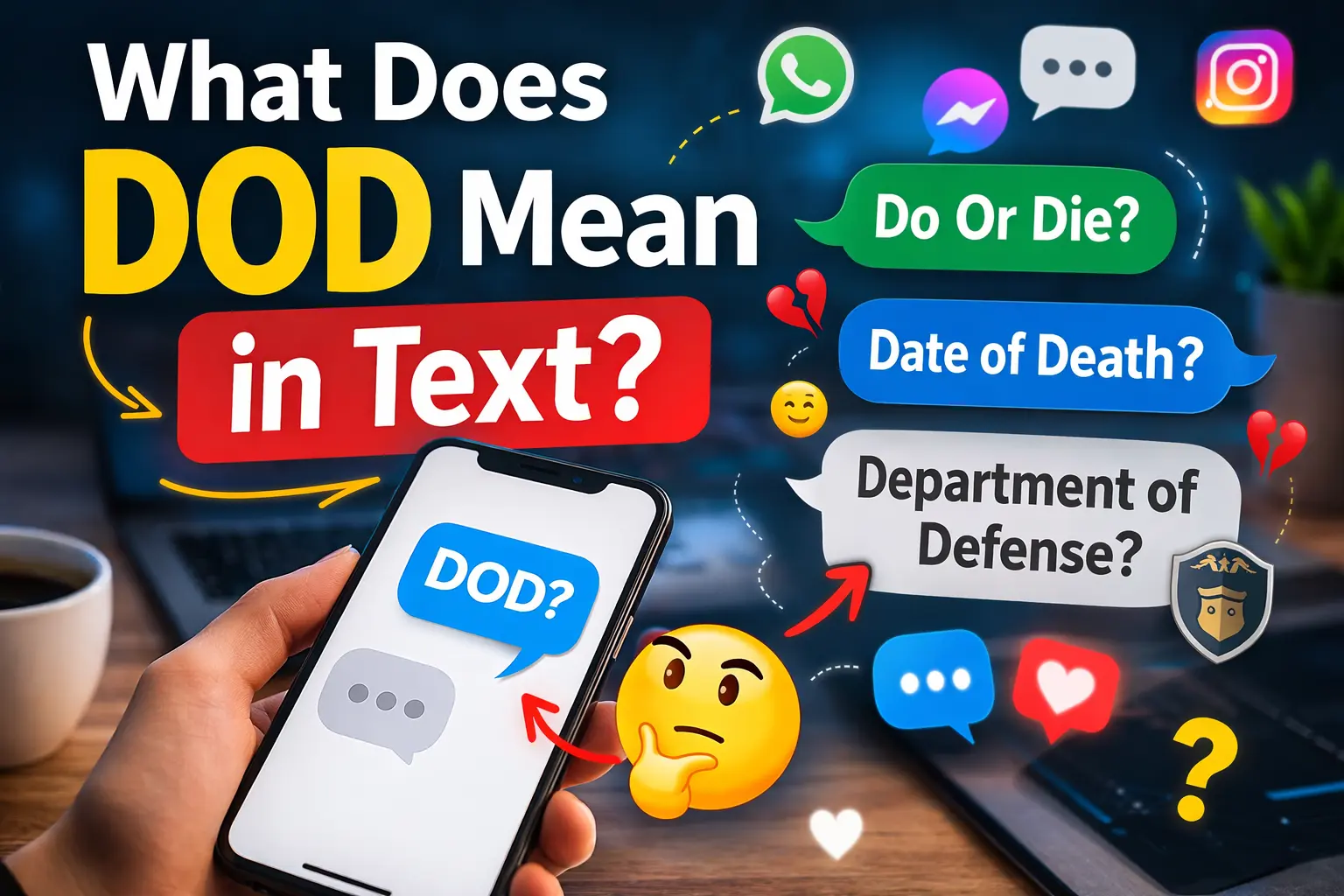
DOD is an acronym that can mean several things in text conversations. The most common meanings include:
1. Department of Defense
A government abbreviation referring to the U.S. military administration.
2. Date of Death
Used in historical records, biographies, or memorial posts.
3. Do Or Die
A slang phrase meaning a situation where success is essential.
4. Day of Defeat
Sometimes used by gamers referring to a video game title.
In casual texting, “Do Or Die” or “Date of Death” are the meanings most commonly seen in informal communication.
Example Messages
“This exam is DOD for me. I either pass or repeat the year.”
“The article didn’t mention his DOD.”
“My cousin works with the DOD in cybersecurity.”
As you can see, context determines the meaning.
Origin & Background
Like many internet abbreviations, DOD did not start on social media.
The earliest widespread use came from government and military terminology, where DOD stood for the Department of Defense. This abbreviation became common in official documents, news articles, and policy discussions.
Over time, the acronym spread into everyday language.
Several factors helped this happen.
1. Military and Government Influence
Because news media frequently mention defense agencies, people became familiar with the abbreviation.
2. Internet Forums and Gaming Culture
Online gaming communities often shorten game titles. For example, “Day of Defeat” players frequently use DOD when discussing the game.
3. Slang Evolution
In casual conversations, some people started using DOD to mean “Do Or Die.”
This expression describes a moment where failure is not an option.
4. Social Media Acceleration
Platforms like TikTok, Reddit, and Instagram normalize short forms. Acronyms spread quickly because they are faster to type and easy to remember.
Today, DOD exists as a flexible abbreviation that shifts meaning depending on the situation.
Real-Life Conversations
To understand slang, nothing works better than real conversational examples.
Here are a few realistic situations where DOD might appear in messages.
WhatsApp Conversation
Person A:
Bro tomorrow’s match is DOD for us.
Person B:
Yeah seriously. If we lose we’re out of the tournament.
Instagram DMs
Person A:
Is that actor still alive?
Person B:
No, his DOD was listed as 2018 in the article.
TikTok Comments
User 1:
Final exam tomorrow 😭
User 2:
Same here. DOD situation.
Text Message Between Friends
Friend A:
I finally applied for that job.
Friend B:
Nice! Interview?
Friend A:
Next week. Honestly feels like a DOD moment.
These conversations show how tone and context determine the interpretation.
Emotional & Psychological Meaning
Abbreviations are not just about saving time. They also reveal how people emotionally frame situations.
When someone uses DOD as “Do Or Die,” they are usually expressing:
- High pressure
- Determination
- Urgency
- Emotional intensity
It communicates that the stakes feel extremely high.
In modern communication, people often exaggerate situations for dramatic effect. Saying “this exam is DOD” does not literally mean life or death. It simply reflects how stressful the moment feels.
A Personal-Style Scenario
Imagine a student waiting outside an interview room. They text their best friend:
“Wish me luck. This is DOD for my career.”
The phrase captures the tension perfectly. It shows determination, anxiety, and hope all at once.
That emotional shorthand is exactly why acronyms like DOD survive in digital culture.
Usage in Different Contexts
Understanding where and how to use DOD helps avoid confusion.
Social Media
On social platforms, DOD often appears in:
- motivational captions
- gaming discussions
- competitive scenarios
Example:
“Championship tomorrow. DOD mindset.”
Friends and Relationships
Among friends, the term is used playfully to exaggerate a situation.
Example:
“If I don’t pass this test my parents will kill me. DOD.”
It adds drama but is usually humorous.
Work or Professional Settings
In professional conversations, DOD usually refers to the Department of Defense.
Example:
“Our company signed a contract with the DOD.”
Using it as slang in formal communication may feel inappropriate.
Casual vs Serious Tone
The same acronym can carry very different tones.
Casual use:
“Gym session today. DOD.”
Serious use:
“The report included both DOB and DOD.”
Tone matters more than the word itself.
When NOT to Use It
Even common slang can create awkward situations.
Avoid using DOD in these contexts.
Formal Documents
Professional writing requires clarity. Acronyms can confuse readers.
Sensitive Discussions
If discussing someone’s death, using abbreviations may feel insensitive.
Instead of:
“His DOD was 2020.”
A more respectful tone might be:
“He passed away in 2020.”
Cross-Cultural Communication
Some people may not understand the acronym and could misinterpret the message.
Academic Writing
In academic or research settings, always spell out full terms.
Common Misunderstandings
Because DOD has several meanings, confusion happens frequently.
Confusion With Government Agencies
Many people assume DOD always means Department of Defense, which is not always true.
Misreading Emotional Tone
Someone saying “This exam is DOD” might sound dramatic, but they are usually just joking.
Literal vs Figurative Meaning
In slang, “Do Or Die” is figurative, not literal.
Understanding this prevents unnecessary misunderstandings.
Comparison Table
| Expression | Meaning | Tone | Example |
|---|---|---|---|
| DOD | Do or Die / Date of Death / Department of Defense | Depends on context | “This match is DOD.” |
| YOLO | You Only Live Once | Carefree | “Let’s travel. YOLO.” |
| ASAP | As Soon As Possible | Urgent | “Send the file ASAP.” |
| RIP | Rest in Peace | Respectful | “RIP to a legend.” |
| TBD | To Be Determined | Neutral | “Date TBD.” |
Key Insight
Acronyms like DOD demonstrate how modern language compresses complex emotions and ideas into a few letters. The meaning depends heavily on context, tone, and the relationship between the people communicating.
Variations and Related Types
Here are related abbreviations that appear in similar contexts.
1. DOB
Date of Birth.
2. RIP
Rest in Peace.
3. YOLO
You Only Live Once.
4. FOMO
Fear of Missing Out.
5. TBD
To Be Determined.
6. ASAP
As Soon As Possible.
7. IDK
I Don’t Know.
8. IMO
In My Opinion.
9. BRB
Be Right Back.
10. IRL
In Real Life.
These abbreviations reflect the same culture of fast digital communication.
How to Respond When Someone Uses It
When someone sends a message with DOD, your response can match the tone.
Casual Replies
- “You’ve got this!”
- “Good luck!”
Funny Replies
- “No pressure at all then.”
- “Guess it’s hero mode.”
Mature Replies
- “Just do your best. That’s enough.”
Respectful Replies
If the context refers to death:
- “Thank you for sharing.”
- “I’m sorry for your loss.”
Responding appropriately depends on understanding the intention behind the message.
Regional & Cultural Usage
Acronyms often change meaning across cultures.
Western Culture
In Western online spaces, DOD frequently means Department of Defense or Do Or Die.
Asian Culture
Some online communities use it mainly in gaming or competition contexts.
Middle Eastern Culture
In many cases, people encounter the term through international media or military news.
Global Internet Culture
Across the internet, abbreviations are valued for speed and convenience. DOD fits into that broader pattern.
Generational Differences
Gen Z
- More likely to use it dramatically
- Often in gaming or memes
Millennials
- More familiar with official meanings
- Use it less casually
This generational gap sometimes explains misunderstandings.
Is It Safe for Kids?
Generally, DOD is safe for kids, especially when used to mean:
- Do Or Die (figuratively)
- Department of Defense
However, parents should be aware of context. When referring to death or serious topics, the term may feel heavy or confusing for younger audiences.
Teaching children to understand context and tone is more important than banning specific words.
FAQs
What does DOD mean in texting?
DOD can mean Do Or Die, Date of Death, or Department of Defense, depending on context.
Is DOD slang?
Sometimes. When used as “Do Or Die,” it functions as casual slang.
Is DOD a military term?
Yes. It commonly refers to the Department of Defense, the U.S. government agency responsible for military operations.
Why do people use DOD online?
Mostly for speed and convenience, especially in texting or gaming discussions.
Can DOD be offensive?
Not usually, but using it casually in conversations about death may seem insensitive.
Does DOD have multiple meanings?
Yes. Like many acronyms, it has several meanings that change depending on context.
Conclusion
The acronym DOD is a perfect example of how modern communication evolves.
Three simple letters can represent completely different ideas:
- a government institution
- a serious life record
- a dramatic “do or die” moment
Understanding context, tone, and intention is the key to interpreting it correctly.
Once you recognize those clues, the meaning becomes obvious.
Language online moves quickly, but when you learn how these abbreviations work, you can navigate digital conversations with confidence.
And the next time you see “DOD” in a message, you will know exactly what the sender probably meant.