
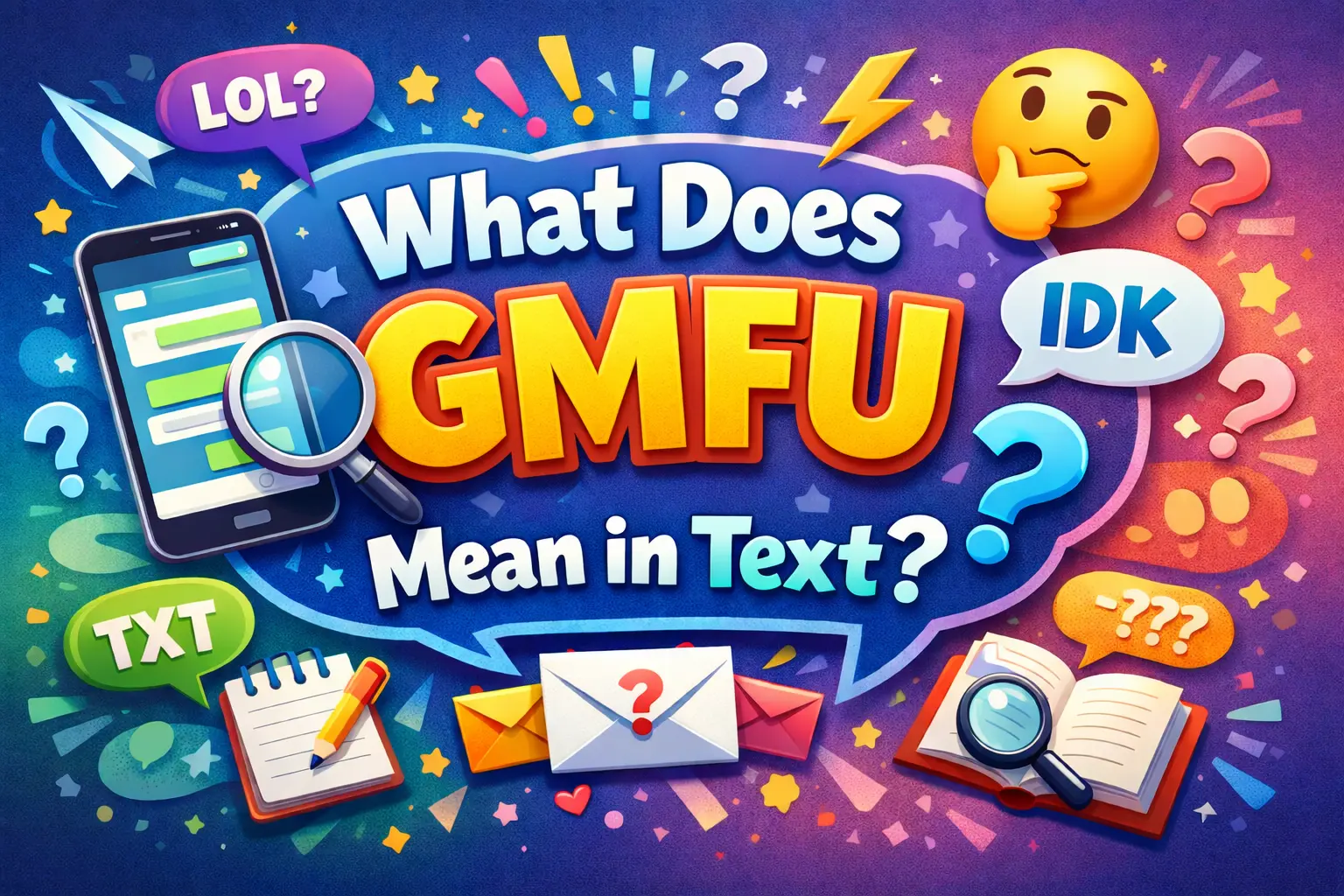
If you’ve come across “GMFU” in a message and felt unsure whether it was friendly, funny, or slightly aggressive, you’re not alone. Slang like this spreads fast across texting and social media, but the meaning can feel unclear without context.
So what does GMFU really mean in text?
At its core, it expresses disbelief, frustration, or feeling played by someone. But the tone can shift depending on how and where it’s used. That’s exactly why people search for it. They want to know not just the definition, but the feeling behind it.
In this guide, you’ll learn the real meaning of GMFU, where it came from, how people actually use it in conversations, and when you should avoid it altogether.
GMFU – Quick Meaning
GMFU stands for: “Got Me F*cked Up.”
It’s a slang phrase used when someone feels:
- Disrespected
- Confused in a negative way
- Shocked or annoyed by someone’s behavior
Simple breakdown:
- It expresses strong emotion
- Usually negative, but sometimes playful
- Often used in casual conversations
Example messages:
- “You really canceled last minute? You got me f*cked up.”
- “They charged me extra for that? Nah, GMFU.”
- “You think I’m paying for everyone? GMFU 😂”
The meaning stays the same, but the tone depends heavily on context and relationship.
Origin & Background
GMFU comes from African American Vernacular English (AAVE), where expressive, emotion-driven phrases often evolve into widely used internet slang.
Originally, “you got me f*cked up” was spoken in face-to-face conversations to show strong disagreement or disbelief. Over time, it moved into texting culture and got shortened into “GMFU.”
Social media platforms like Twitter, Instagram, and TikTok helped it spread globally. Short, punchy slang works well online, especially when people want to react quickly.
As it evolved, GMFU became more flexible:
- Sometimes serious and confrontational
- Sometimes joking among friends
- Sometimes exaggerated for humor
Today, it’s part of everyday digital language, especially among younger users.
Real-Life Conversations
WhatsApp Chat
Person A: I ate your snacks, hope you don’t mind
Person B: You serious right now? GMFU 😭
Instagram DM
Person A: I saw you online but you didn’t reply
Person B: Chill, I was busy. Don’t GMFU
TikTok Comments
User 1: This restaurant charges for water
User 2: Nah they GMFU for real 💀
Text Message
Person A: Can you cover my shift again?
Person B: Again? You GMFU if you think I’m doing that
These examples show how tone shifts from playful to slightly annoyed depending on the situation.
Emotional & Psychological Meaning
GMFU is more than just slang. It reflects how people process frustration and boundaries in fast communication.
At an emotional level, it expresses:
- Feeling taken advantage of
- Mild anger or disbelief
- A need to push back
People use it because it’s quick and expressive. Instead of explaining feelings in detail, one phrase captures everything.
From a psychological perspective, it shows how modern communication favors emotional shortcuts. We often react instantly instead of explaining calmly.
Real-life scenario:
Imagine a friend repeatedly asking for favors without giving anything back. Instead of writing a long message, you might just say, “You GMFU.” It signals frustration without needing a full explanation.
It’s emotional, direct, and sometimes defensive.
Usage in Different Contexts
Social Media
On platforms like TikTok or Instagram, GMFU is often used humorously or dramatically.
- “They raised prices again? GMFU 😂”
Friends & Relationships
Among close friends, it can be playful or slightly serious.
- Playful: teasing
- Serious: expressing annoyance
Work / Professional Settings
Avoid using GMFU in professional communication. It’s informal and includes profanity, even if abbreviated.
Casual vs Serious Tone
- Casual: joking, exaggerated reactions
- Serious: genuine frustration or boundary-setting
Understanding tone is everything with this phrase.
When NOT to Use It
There are situations where GMFU can come across the wrong way.
Avoid using it:
- In professional emails or workplace chats
- With people you don’t know well
- In serious emotional conversations
- In culturally sensitive situations
It may sound aggressive or disrespectful if the relationship doesn’t support that tone.
Common Misunderstandings
1. Thinking it’s always aggressive
Not always. It can be playful among friends.
2. Taking it literally
It’s rarely literal. It’s more about emotion than exact meaning.
3. Misreading tone in text
Without tone or facial expression, it can feel harsher than intended.
4. Assuming everyone understands it
Some people may not know the slang and feel confused or offended.
Comparison Table
| Expression | Meaning | Tone | Usage |
|---|---|---|---|
| GMFU | Got me f*cked up | Frustrated, shocked | Casual, emotional |
| WTF | What the f*ck | Shocked | General surprise |
| SMH | Shaking my head | Disappointed | Mild reaction |
| You got me messed up | Softer version | Less aggressive | Safer alternative |
| I’m not okay with that | Clear boundary | Calm | Professional |
Key Insight:
GMFU is stronger and more emotionally charged than many alternatives. It communicates intensity quickly, which is why it feels powerful but also risky.
Variations / Types
- GMFU fr
Means “for real.” Adds seriousness. - GMFU 😂
Used jokingly to soften the tone. - You GMFU
Directly calling someone out. - They GMFU
Talking about a third party. - Lowkey GMFU
Mild frustration, not extreme. - Highkey GMFU
Strong, obvious frustration. - Stop GMFU
Telling someone to stop acting unfairly. - You got me messed up
Cleaner version without profanity. - Nah GMFU
Immediate rejection or disbelief. - Don’t GMFU
Warning someone not to cross a line.
How to Respond When Someone Uses It
Casual Replies
- “Relax, it’s not that serious 😅”
- “You’ll be okay lol”
Funny Replies
- “I might have you a little messed up 😂”
- “Let me fix that before you get more mad”
Mature Replies
- “I get why you feel that way. Let’s talk it out.”
- “That wasn’t my intention, sorry about that”
Respectful Replies
- “I understand your frustration”
- “Let’s clear things up calmly”
Your response should match the tone. If they’re joking, keep it light. If they’re serious, respond thoughtfully.
Regional & Cultural Usage
Western Culture
Very common in the US, especially in casual and youth communication. Tone can vary widely.
Asian Culture
Less commonly used. English slang may feel too strong or unfamiliar.
Middle Eastern Culture
Often avoided in formal settings due to language sensitivity, but used casually among younger groups online.
Global Internet Usage
Social media has made GMFU globally recognizable, but not universally understood.
Generational Differences
- Gen Z: Uses it frequently and creatively
- Millennials: Understand it but may use it less
- Older generations: May find it confusing or inappropriate
Is It Safe for Kids?
Not entirely.
While it’s common online, GMFU includes hidden profanity. Kids may use it without fully understanding the tone or impact.
Parents and educators should guide context awareness rather than just banning slang.
FAQs
1. What does GMFU mean in texting?
It means “Got Me F*cked Up,” expressing frustration or disbelief.
2. Is GMFU rude?
It can be, depending on tone and context.
3. Can GMFU be used jokingly?
Yes, especially among friends with emojis or humor.
4. Is GMFU appropriate at work?
No, it’s too informal and contains profanity.
5. What is a polite alternative to GMFU?
“You got me confused” or “I’m not okay with that.”
6. Why do people use GMFU?
It’s quick, expressive, and emotionally direct.
7. Does GMFU always mean anger?
Not always. It can also show playful disbelief.
Conclusion
GMFU is one of those phrases that says a lot with very little. It captures frustration, disbelief, and emotional reaction in a way that feels natural in fast digital conversations.
But like most slang, its power comes from context. The same phrase can feel funny, serious, or even rude depending on how it’s used and who it’s directed at.
Understanding that balance is what makes you a confident communicator. Once you recognize the tone behind GMFU, you can use it naturally or choose a better alternative when needed.
Language is always evolving, and staying aware of these nuances helps you connect more clearly in every conversation.