
If you’ve ever scrolled through messages or social media and seen someone type “luh you,” you might have paused. Is it a typo? A joke? Or something deeper?
The truth is, “luh” is a modern slang word that carries more emotion than it seems at first glance. It pops up in casual chats, TikTok comments, and even romantic conversations, yet its meaning can feel unclear depending on the context.
This guide breaks it down clearly. You’ll learn what “luh” means, where it came from, how people use it in real conversations, and what it reveals about modern communication.
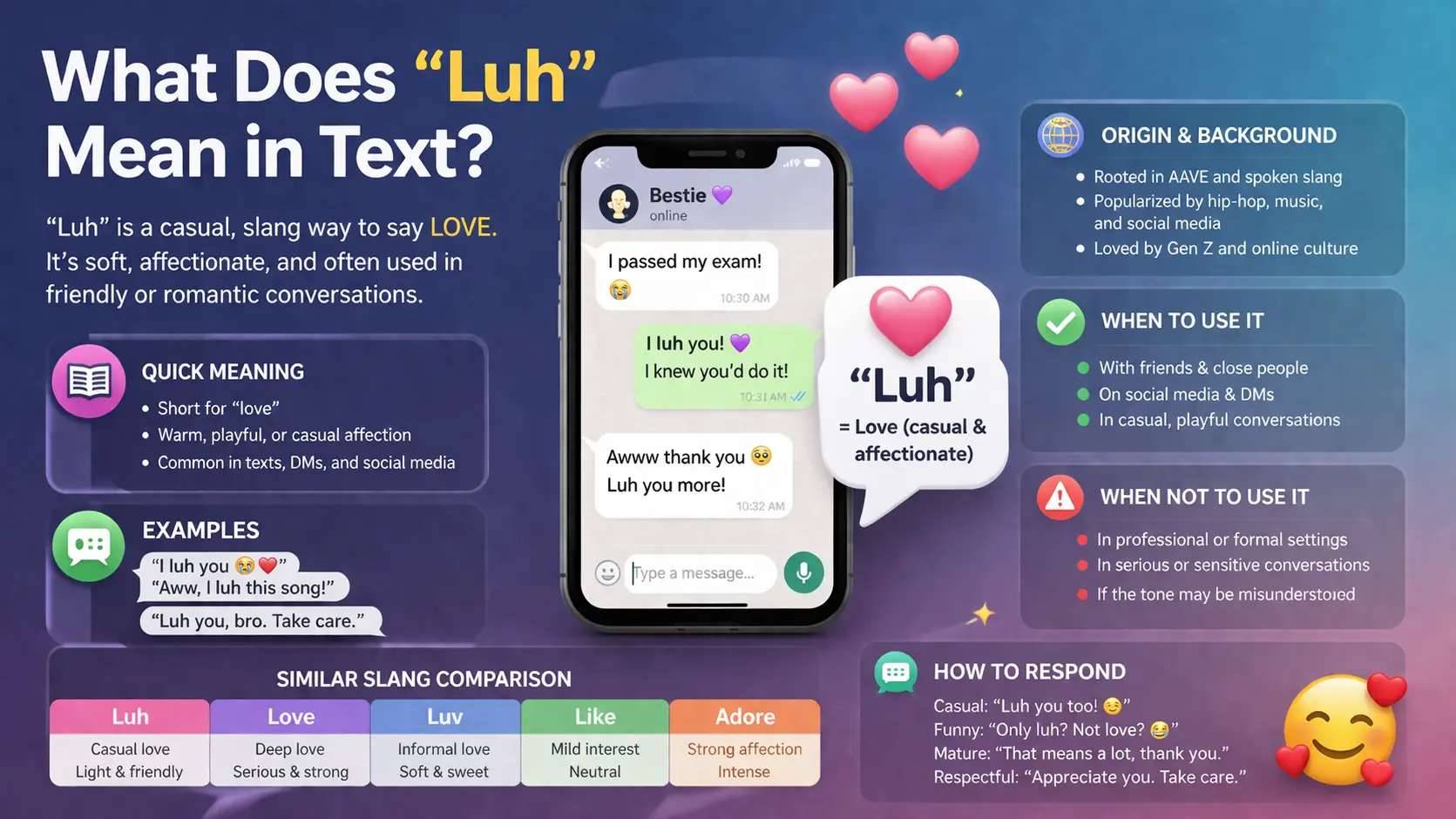
What Does “Luh” Mean in Text? – Quick Meaning
“Luh” is an informal, slang version of the word “love.”
It’s typically used to express affection in a light, playful, or casual way rather than deep or serious emotion.
Simple meanings:
- A softer version of “love”
- Casual affection
- Friendly or romantic depending on context
Example messages:
- “I luh you fr 😭”
- “Aww I luh this song”
- “Luh you bro, take care”
At its core, “luh” feels less intense than “love” but still carries warmth and friendliness.
Origin & Background
“Luh” didn’t come from formal English—it grew naturally from spoken language and internet culture.
It mirrors how people actually pronounce “love” in casual speech, especially in certain dialects and communities. Over time, that pronunciation became a written form.
How it spread:
- Early use in African American Vernacular English (AAVE)
- Popularized through music, especially hip-hop and rap
- Exploded on TikTok, Instagram, and other social platforms
- Adopted globally by Gen Z
Social media plays a huge role. Short-form content thrives on emotional, expressive language. Words like “luh” feel personal, playful, and less formal, which matches the way people communicate online today.
Real-Life Conversations
Here’s how “luh” shows up in everyday chats:
1. WhatsApp Chat
- Person A: I passed my exam finally 😭
- Person B: I luh you bro, I knew you’d do it
2. Instagram DMs
- Person A: You looked so good today
- Person B: Stoppp 😭 I luh you
3. TikTok Comments
- User 1: This video made my day
- User 2: Same 😭 I luh this
4. Text Message
- Person A: Drive safe okay?
- Person B: I will, luh you ❤️
These examples show that “luh” adapts to tone, feeling friendly, romantic, or emotional depending on who’s saying it.
Emotional & Psychological Meaning
“Luh” isn’t just a word—it reflects how people express feelings today.
Emotions it conveys:
- Warmth without pressure
- Affection without intensity
- Comfort and closeness
People often avoid saying “love” directly because it can feel too serious. “Luh” softens that emotional weight, making care feel easy and safe.
Why people use it:
- To sound relaxed
- To avoid vulnerability
- To keep interactions playful
- To match online culture
Example scenario:
You’ve just started liking someone. Saying “I love you” feels too intense. Texting “I luh you” expresses care without emotional pressure—the perfect balance for casual affection.
Usage in Different Contexts
1. Social Media
“Luh” is everywhere on TikTok, Instagram, and Snapchat. People use it to:
- React to content
- Show appreciation
- Express excitement
Example: “I luh this trend 😭”
2. Friends & Relationships
Among friends, it’s casual and supportive.
Example: “Luh you bro”
In romantic contexts, it’s soft and affectionate.
Example: “I luh you more than you know”
3. Work / Professional Settings
“Luh” doesn’t belong in emails or formal communication. Using it in work contexts can seem unprofessional or immature.
4. Casual vs. Serious Tone
- Casual: “I luh this outfit”
- Emotional: “I really luh you”
The tone depends entirely on context and delivery.
When NOT to Use It
Avoid “luh” in situations like:
- Professional emails or workplace chats
- Conversations with people who prefer formal language
- Serious relationship discussions where clarity matters
- Any scenario where tone could be misunderstood
For example, saying “luh you” during a heavy relationship talk might feel dismissive instead of sincere.
Common Misunderstandings
- It means the same as “love” – Not always; it’s often lighter.
- It’s always romantic – Friends use it too.
- Tone is obvious – Without emojis or context, it can be unclear.
- It’s childish – Playful, yes—but it reflects modern communication trends.
Comparison Table
| Expression | Meaning | Tone | Usage |
|---|---|---|---|
| Luh | Casual love | Light, playful | Friends, social media |
| Love | Deep affection | Serious | Relationships |
| Luv | Informal love | Soft, slightly emotional | Texting |
| Like | Mild interest | Neutral | General use |
| Adore | Strong affection | Intense | Romantic or emotional |
Key Insight: “Luh” sits between “like” and “love”, letting people show care without stepping into emotional intensity too quickly.
Variations / Types of “Luh”
- Luh you – Simple affection
- I luh you – Personal, slightly emotional
- Luh u – Shortened texting version
- Luh ya – Playful tone
- Luh this – Express liking something
- Luh that for you – Supportive, sometimes sarcastic
- Big luh – Strong but casual affection
- Luh fr (for real) – Emphasizes sincerity
- Luh it here – Expressing comfort or happiness
- Luh vibes – Enjoying a mood or atmosphere
How to Respond When Someone Uses “Luh”
- Casual: “Luh you too 😌”, “Same here”
- Funny: “Only luh? Not love? 😭”, “Upgrade that to love please”
- Mature: “That means a lot, thank you”, “I appreciate you”
- Respectful: “You’re kind, take care”, “Sending good energy back”
Your response should match tone and relationship.
Regional & Cultural Usage
- Western Culture: Widely used among Gen Z and young adults.
- Asian Culture: Adopted mostly through social media by younger audiences.
- Middle Eastern Culture: Less common, but appears online among youth.
- Global Internet: Used by non-native English speakers, becoming part of universal online language.
Generational Differences
- Gen Z: Uses “luh” naturally and frequently
- Millennials: Understand it, but may not use it often
Is It Safe for Kids?
Yes, “luh” is generally safe. It’s a casual expression of affection, but parents should ensure kids understand context to avoid miscommunication.
FAQs
- Does “luh” mean love? – Yes, but softer and casual.
- Is “luh” romantic? – Sometimes, but also used between friends.
- Why say “luh” instead of “love”? – It feels more relaxed and playful.
- Is “luh” slang? – Yes, modern internet slang.
- Can I use “luh” in formal writing? – No, it’s informal.
- What does “I luh you” mean? – “I care about you” casually and affectionately.
- Is “luh” rude? – Not at all; it’s positive and friendly.
Conclusion
“Luh” might look small, but it carries a lot of meaning. It reflects how communication is evolving—people want to express care without pressure or heaviness.
It sits perfectly between casual and caring. Understanding its tone allows you to use “luh” confidently, whether texting friends, reacting online, or softening a message. It’s a simple word with a surprisingly powerful way to connect.