
If you have ever come across the term “LWF” in a text message or on social media and felt confused, you are not alone. Modern digital communication is full of abbreviations, slang, and shorthand expressions that evolve quickly across platforms like WhatsApp, Instagram, and TikTok.
People often search for what does lwf mean in text because the meaning is not immediately obvious, and context can change its interpretation. In some cases, it is used as casual slang, while in others it may appear as a typo or platform-specific shorthand.
Understanding “LWF” helps you interpret messages more accurately, avoid miscommunication, and respond appropriately in conversations. In this guide, you will learn its meaning, origin, usage in real conversations, emotional tone, and how it fits into modern digital communication.
LWF – Quick Meaning
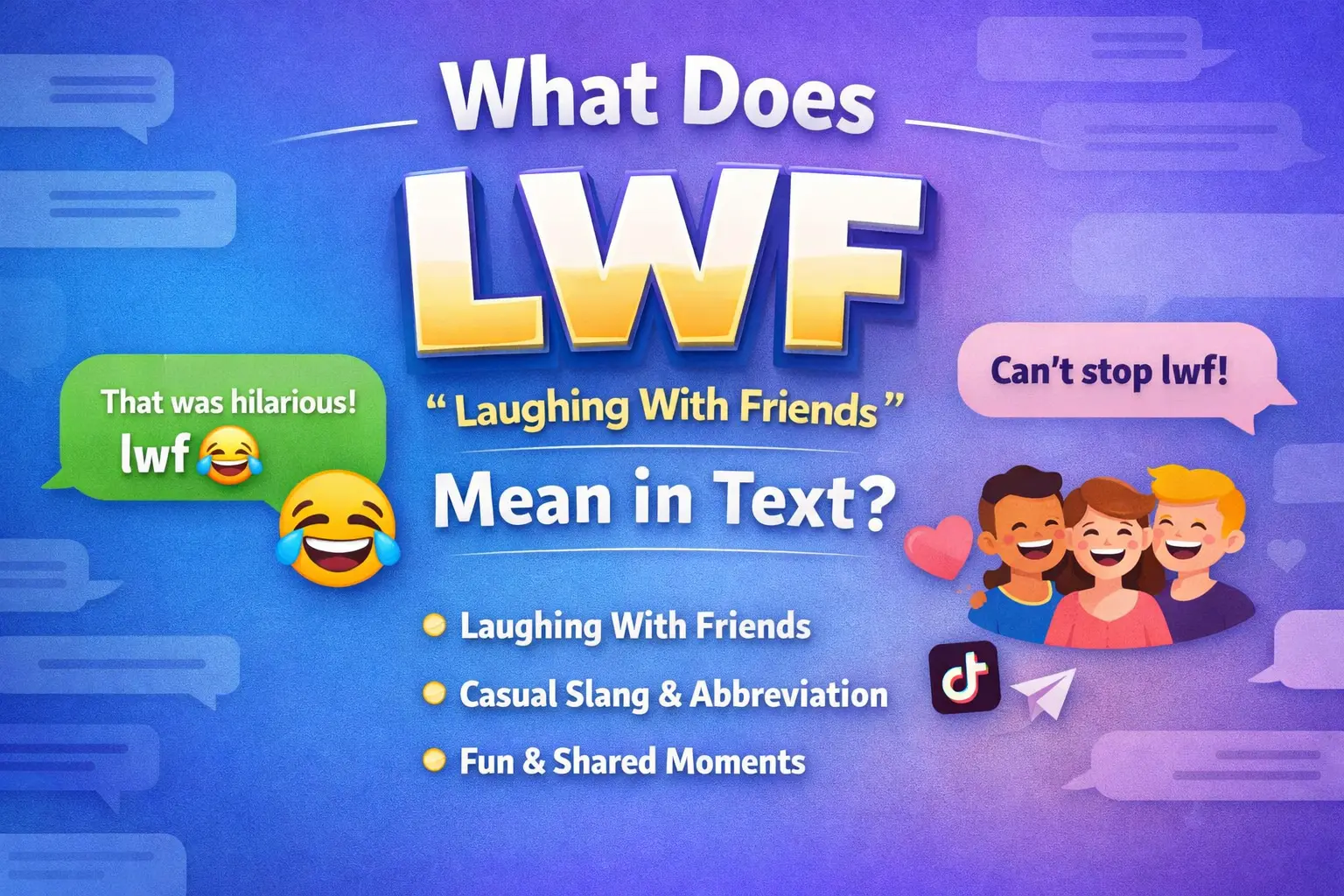
In most texting and social media contexts, LWF is commonly interpreted as:
“Laughing With Friends” or sometimes used as a casual expression related to laughter and shared amusement.
However, meanings can vary depending on context. In informal chats, it may also be used as:
- A variation of laughter expression
- A typo or shorthand similar to “lol” or “lmao”
- A personal or group-specific abbreviation
Examples:
- “That video was too funny lwf”
- “We were all lwf in the group chat”
- “Stop, I’m lwf right now”
These examples show that LWF is usually tied to humor, lighthearted reactions, or shared enjoyment.
Origin & Background
Unlike some internet slang that has a clearly documented origin, LWF does not have a single official source. It appears to have evolved organically within online messaging culture.
Several factors contributed to its usage:
- Abbreviation culture: As texting became faster, users shortened common phrases.
- Group chat dynamics: Friends often create their own shorthand expressions.
- Influence of laughter slang: Terms like LOL, LMAO, and ROFL inspired variations.
- Platform-driven communication: On platforms like TikTok comments or Discord chats, users often develop unique abbreviations for speed and identity.
Over time, LWF became part of informal digital vocabulary, though it is not as universally recognized as more established slang terms.
Real-Life Conversations (MANDATORY)
Here are realistic examples showing how LWF appears in everyday conversations:
Conversation 1 (WhatsApp Group Chat)
Person A: Did you see that prank video I sent?
Person B: Yes 😂 I was lwf the whole time
Person C: Same here, couldn’t stop laughing
Conversation 2 (Instagram DM)
Person A: That meme you posted is hilarious
Person B: Glad you liked it, I was lwf when I made it
Conversation 3 (TikTok Comments)
User 1: This is the funniest thing today
User 2: I’m literally lwf at this clip
User 3: Same, it keeps getting better every time
Conversation 4 (Text Message)
Friend A: Remember what happened in class today?
Friend B: Yes, I’m still lwf thinking about it
Friend A: It was so embarrassing but funny
These examples show that LWF is mostly used in casual, friendly, and humorous contexts where people share reactions to something funny.
Emotional & Psychological Meaning
LWF reflects more than just a phrase. It represents a shared emotional experience in digital communication.
When someone uses LWF, they are usually expressing:
- Genuine amusement
- Social bonding through humor
- A sense of connection with others
- Lighthearted engagement in conversation
In modern communication, abbreviations like LWF help people:
- React quickly without typing long sentences
- Show emotional alignment with others
- Maintain a relaxed and friendly tone
Personal-style scenario
Imagine you are in a group chat with close friends discussing a funny incident from school or work. Instead of writing a full sentence like “I found that extremely funny and was laughing a lot,” you simply type “lwf.” This small expression still conveys your emotion clearly while keeping the conversation fast and natural.
This reflects how digital communication often prioritizes efficiency while still preserving emotional expression.
Usage in Different Contexts
1. Social Media
On platforms like Instagram, TikTok, and Twitter, LWF is used in comments and captions to react to humorous content. It signals that the user found something entertaining.
2. Friends and Relationships
Among close friends, LWF is used casually to describe shared laughter or memories. It strengthens social bonding and group identity.
3. Work or Professional Settings
LWF is generally not appropriate in formal work communication. In professional emails or messages, it is better to use clear language instead of slang.
4. Casual vs Serious Tone
- Casual: Common and acceptable among peers
- Serious: Rarely used, as it can reduce clarity or professionalism
When NOT to Use It
Although LWF is harmless in most cases, there are situations where it should be avoided:
- Formal emails or business communication
- Academic writing or professional reports
- Conversations with people unfamiliar with slang
- Sensitive or serious discussions
- Cross-cultural communication where meaning may not be clear
Using LWF in these contexts can lead to confusion or appear unprofessional.
Common Misunderstandings
Many people misunderstand LWF due to its ambiguity:
- Some assume it is a typo rather than a meaningful abbreviation
- Others confuse it with similar slang like “lmao” or “lol”
- In some cases, it may be interpreted differently depending on personal or regional usage
Another common misunderstanding is assuming it always has a fixed meaning. In reality, context plays a major role in interpretation.
Comparison Table
| Expression | Meaning | Tone | Usage Context |
|---|---|---|---|
| LWF | Laughing With Friends or casual laughter | Informal | Social chats |
| LOL | Laugh Out Loud | Light humor | Universal online use |
| LMAO | Laughing My A Off | Strong humor | Casual conversations |
| ROFL | Rolling On the Floor Laughing | Extreme humor | Informal chats |
| SMH | Shaking My Head | Disapproval | Reactions to silly content |
Key Insight:
LWF is less standardized than expressions like LOL or LMAO, which means its meaning depends heavily on context and group familiarity. It is best used in informal environments where the audience understands the intended tone.
Variations / Types
Here are some related variations or interpretations of LWF:
- lwf (lowercase)
Common in casual typing, same meaning. - LWF (uppercase)
Used for emphasis in messages. - l.w.f.
Occasionally stylized with punctuation. - lwf 😂
Combined with emojis to reinforce humor. - lwf fr
Indicates agreement along with laughter. - lwf ngl
Means laughing and “not gonna lie.” - lwf rn
Means laughing right now. - lwf fr fr
Strong emphasis on genuine reaction. - lwf vibes
Indicates a generally funny or enjoyable mood. - lwf moment
Refers to a specific funny situation.
How to Respond When Someone Uses It
Casual Replies
- “Same here 😂”
- “I know right, lwf too”
- “That was hilarious”
Funny Replies
- “We are all lwf today”
- “Lwf is the mood now”
- “Can’t stop lwf”
Mature Replies
- “Yes, that was genuinely funny”
- “I agree, it was quite entertaining”
- “I understand why you found it funny”
Respectful Replies
- “Glad you enjoyed it”
- “Happy it made you laugh”
- “Good to hear that”
Choosing the right response depends on your relationship with the person and the tone of the conversation.
Regional & Cultural Usage
Western Culture
In Western countries, slang like LWF is used casually among younger users, especially on social media platforms.
Asian Culture
In many Asian countries, English slang is widely adopted in texting among youth, but awareness of lesser-known abbreviations like LWF may vary.
Middle Eastern Culture
Usage is generally informal and more common among bilingual or English-speaking users in digital spaces.
Global Internet Usage
On global platforms, LWF appears in niche contexts rather than being universally recognized like LOL.
Generational Differences
- Gen Z: More likely to understand and use abbreviations like LWF
- Millennials: Prefer more established slang such as LOL or LMAO
- Older generations: May find LWF unfamiliar or confusing
Is It Safe for Kids?
Yes, LWF is generally safe for kids to use because it is simply a casual expression related to laughter. It does not contain offensive or harmful meaning.
However, parents and educators should still guide children on:
- Appropriate usage contexts
- Understanding online communication
- Avoiding slang in formal writing
FAQs
1. What does LWF mean in text messages?
It usually means “laughing with friends” or expresses casual laughter in informal conversations.
2. Is LWF the same as LOL?
Not exactly. Both express laughter, but LOL is more widely recognized, while LWF is less common and more context-dependent.
3. Where is LWF commonly used?
It is mostly used in social media chats, group messages, and casual online conversations.
4. Can LWF have different meanings?
Yes, depending on context, it may represent different interpretations or simply act as slang for laughter.
5. Is LWF formal or informal?
It is strictly informal and should not be used in professional or academic communication.
6. Why do people use LWF instead of full words?
People use it for speed, convenience, and to express emotions quickly in digital conversations.
7. Is LWF widely known?
It is not as widely recognized as LOL or LMAO, but it is understood within certain online communities.
Conclusion
Understanding what does lwf mean in text helps you navigate modern digital conversations with confidence. While it is not as universally recognized as other slang terms, it plays a meaningful role in expressing laughter and shared enjoyment in informal communication.
Its usage reflects how language continues to evolve in online spaces, shaped by speed, creativity, and social interaction. By recognizing when and how to use LWF, you can communicate more naturally, interpret messages accurately, and stay connected in today’s fast-moving digital world.