

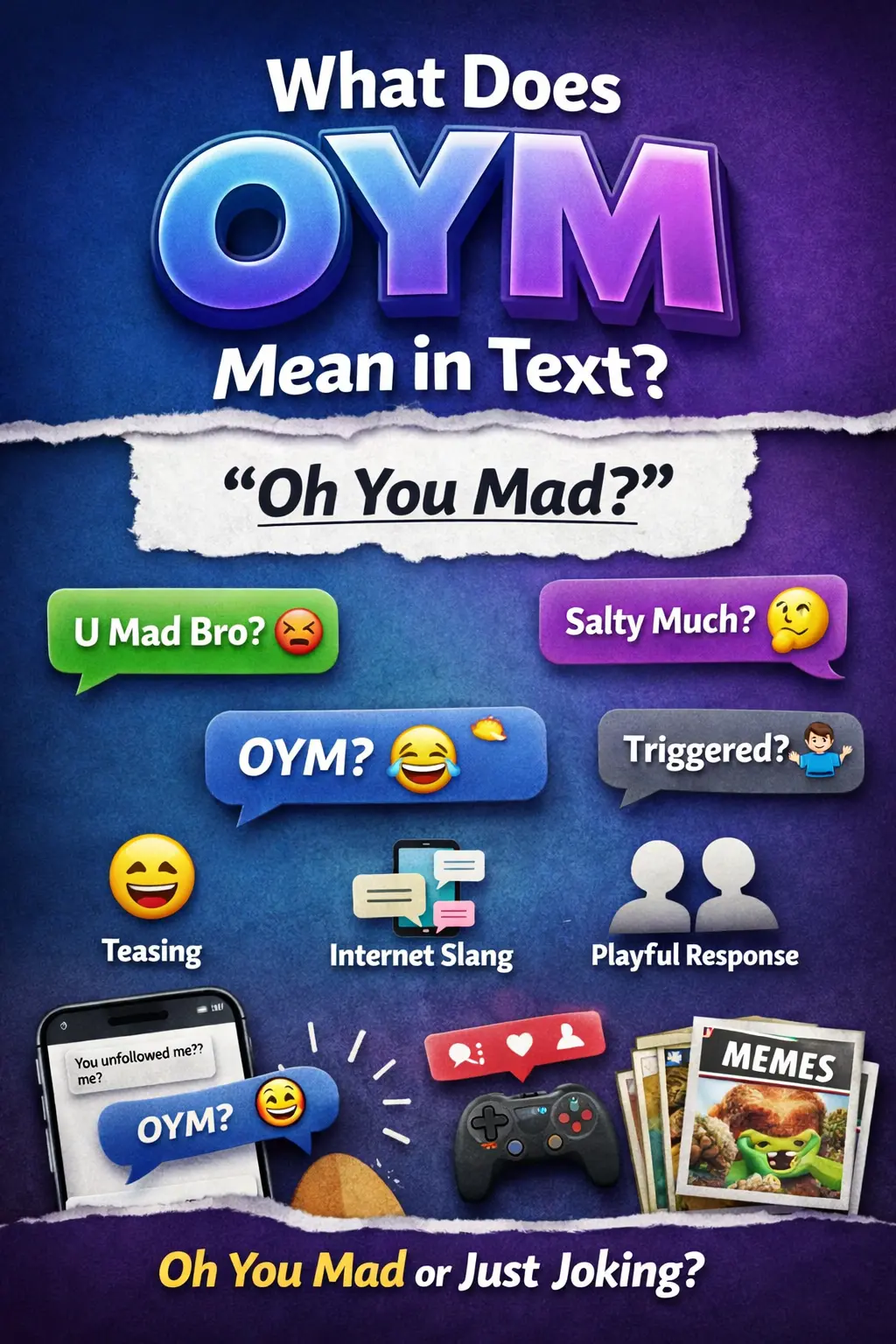
If you’ve recently seen “OYM” in a message, comment, or social media reply, you are not alone in wondering what it means. Short acronyms appear everywhere in modern texting culture, and many of them can feel confusing if you encounter them for the first time.
“OYM” is one of those expressions that can look mysterious at first glance. It often appears in casual chats, online debates, memes, and social media replies, usually in moments where emotions or humor are involved.
People search for this phrase because they want to understand the tone behind it. Is it friendly? Sarcastic? Confrontational? The meaning can depend on the context and the relationship between the people talking.
In this guide, you will learn the exact meaning of OYM in text, where it came from, how people actually use it in conversations, and when it might be better not to use it at all. By the end, you will recognize it instantly and know how to respond naturally.
OYM – Quick Meaning
OYM most commonly stands for:
“Oh You Mad?”
It is a casual internet slang phrase used to tease someone who appears upset, annoyed, or frustrated.
Instead of writing the full sentence, people shorten it to OYM for speed in texting or commenting.
Simple definition
OYM means someone is playfully or sarcastically asking if another person is angry or bothered.
Typical tone
• Teasing
• Playful sarcasm
• Mild provocation
• Friendly joking between friends
Examples
“Relax bro, it was a joke. OYM?”
“You unfollowed me already? OYM 😂”
“Why you typing paragraphs? OYM?”
The phrase is rarely meant as a serious question. Most of the time it is used to poke fun at someone reacting emotionally.
Origin and Background
Like many texting acronyms, OYM grew out of fast internet conversations, especially on platforms where short responses dominate.
The full phrase “Oh you mad?” has been around in spoken slang for many years. It became popular in online gaming chats, meme culture, and early internet forums, where players would tease opponents who reacted strongly after losing.
Over time, people started shortening common reactions. Just as “laughing out loud” became LOL, and “be right back” became BRB, the phrase “Oh you mad?” gradually turned into OYM.
Social media helped accelerate its spread.
Platforms where OYM frequently appears include:
• Twitter style replies
• TikTok comment sections
• Instagram meme pages
• Gaming chats
• Group texts among friends
Memes also reinforced the phrase. Many online jokes revolve around mocking exaggerated reactions, and OYM became a quick way to express that sentiment.
Another reason the acronym stuck is that it captures a very specific social dynamic. Modern digital conversations often involve playful teasing, and OYM fits perfectly into that tone.
Real Life Conversations
To understand how people actually use OYM, it helps to see it inside real style conversations.
WhatsApp Chat
Person A:
You really copied my outfit today 😂
Person B:
I did not.
Person A:
You literally wearing the same jacket.
Person B:
Coincidence.
Person A:
OYM? Relax, it looks good.
Instagram DM
Person A:
You unfollowed me??
Person B:
My app glitched.
Person A:
Sure it did.
Person B:
Why you so serious lol
Person A:
OYM? 😆
TikTok Comment
Person A:
This video is cringe.
Person B:
Then why did you watch the whole thing?
Person A:
Because it popped up.
Person B:
OYM? You sound mad.
Text Message
Person A:
You beat me by one point in that game.
Person B:
Still a win.
Person A:
Rematch tonight.
Person B:
OYM? Someone salty.
These examples show that OYM usually appears in playful arguments or teasing moments.
Emotional and Psychological Meaning
Slang terms often carry more emotional meaning than their literal definition.
“OYM” is less about asking a question and more about highlighting someone’s emotional reaction.
When people use it, they are often expressing:
• Playful teasing
• Friendly rivalry
• Light sarcasm
• Mild provocation
It can also act as a social pressure tool. By saying “OYM,” the speaker subtly suggests the other person is overreacting.
In many online communities, reacting strongly is seen as losing emotional control. So the phrase becomes a way to shift the tone from serious to humorous.
Imagine a simple scenario.
You are joking with a friend about a sports match. They start defending their team passionately. Instead of arguing, you reply with:
“OYM? It’s just a game.”
Suddenly the tension softens, and the conversation becomes playful again.
This reflects a broader pattern in digital communication. People often use short humor-based responses to manage emotional intensity.
Usage in Different Contexts
Social Media
On platforms like TikTok or Instagram, OYM often appears in comment sections during debates or playful arguments.
Example:
“Bro wrote a whole essay in the comments. OYM?”
Here it signals that someone is reacting too strongly.
Friends and Relationships
Among friends, the phrase is usually harmless teasing.
It can be used during:
• Friendly competition
• Gaming chats
• Inside jokes
• Group conversations
Example:
“You still talking about that loss? OYM?”
Work or Professional Settings
Using OYM in professional communication is not recommended.
The phrase can easily be interpreted as dismissive or rude. In workplace conversations, clarity and respect are more important than slang.
Instead of slang, it is better to say:
“Are you frustrated about this?”
Casual vs Serious Tone
OYM works best in casual conversations with people who understand your humor.
In serious discussions or emotional situations, it can come across as insensitive.
Context matters a lot.
When NOT to Use It
There are situations where using OYM can create problems.
During serious discussions
If someone is genuinely upset, responding with OYM might feel dismissive.
With people you do not know well
Humor does not always translate between strangers online.
In professional environments
Workplace messages require respectful language.
Cultural misunderstandings
Some cultures interpret teasing more literally, which may make the phrase sound confrontational.
Being aware of tone and relationship context helps avoid misunderstandings.
Common Misunderstandings
Many people misunderstand OYM the first time they see it.
Thinking it means something formal
Some assume it stands for a business term or technical phrase.
Interpreting it as anger
Ironically, the phrase itself is usually playful rather than aggressive.
Taking it literally
The person saying OYM is rarely genuinely asking if someone is mad. It is more of a humorous observation.
Confusing it with other acronyms
Because internet slang evolves quickly, people sometimes mix OYM with other similar looking abbreviations.
Understanding the tone behind it is more important than the literal wording.
Comparison Table
| Expression | Meaning | Tone |
|---|---|---|
| OYM | Oh You Mad | Playful teasing |
| LOL | Laughing Out Loud | Humor |
| SMH | Shaking My Head | Disapproval |
| IDC | I Don’t Care | Indifference |
| Calm Down | Relax or stop reacting strongly | Neutral |
| Stay Mad | Continue being upset | More confrontational |
Key Insight
OYM sits somewhere between humor and sarcasm. It is less aggressive than “stay mad,” but still playful enough to tease someone who seems overly emotional.
Variations and Related Expressions
Internet slang rarely stays in one form. Several variations express similar ideas.
1. OUM
Oh You Mad. A slightly different abbreviation with the same meaning.
2. U Mad
A direct and classic version of the phrase.
3. Why You Mad
Playful questioning of someone’s frustration.
4. Stay Mad
A sarcastic response implying someone will remain upset.
5. Mad Bro
Popular meme phrase used jokingly.
6. Salty
Means someone is bitter about losing or being criticized.
7. Chill Bro
Encouraging someone to relax emotionally.
8. Triggered
Internet slang describing an exaggerated reaction.
9. Relax Man
A softer alternative.
10. It’s Not That Deep
Used when someone is overthinking a situation.
All of these expressions highlight emotional reactions in conversations.
How to Respond When Someone Uses OYM
When someone says OYM to you, your reply depends on the mood of the conversation.
Casual Replies
“Nah I’m good.”
“Not mad at all.”
“Just explaining.”
Funny Replies
“Yeah I’m furious actually 😂”
“Only a little mad.”
“You caught me.”
Mature Replies
“I’m not mad, just sharing my opinion.”
“Let’s keep it respectful.”
Respectful Replies
“I see your point.”
“Fair enough.”
Responding calmly keeps the conversation balanced.
Regional and Cultural Usage
Western Culture
In North America and parts of Europe, OYM is typically seen as lighthearted teasing. Internet humor often includes playful confrontation.
Asian Culture
Some online communities may interpret the phrase more literally. Tone is important because teasing language can feel disrespectful if misunderstood.
Middle Eastern Culture
In certain contexts, direct teasing may feel more confrontational. People often prefer clearer expressions of humor.
Global Internet Usage
Across the internet, OYM is mostly used in gaming communities, meme pages, and comment debates.
Generational Differences
Gen Z uses slang acronyms very frequently and understands them quickly.
Millennials recognize many of them but may use them less often in everyday conversation.
Older generations may find them confusing or unnecessary.
Is It Safe for Kids?
Generally, OYM is not offensive or inappropriate. It simply expresses playful teasing.
However, children should still understand tone and context. If used in arguments or bullying situations, the phrase could contribute to negative interactions.
Teaching kids respectful communication online remains important.
FAQs
What does OYM stand for in text?
OYM usually means “Oh You Mad?”, a playful phrase used to tease someone who seems upset or reacting strongly.
Is OYM an insult?
Not usually. It is typically used jokingly between friends, but tone and context matter.
Where is OYM most commonly used?
It often appears in social media comments, gaming chats, and casual text messages.
Can OYM be rude?
Yes, if used during serious conversations or with someone who is genuinely upset.
Is OYM popular slang?
It is moderately common in internet culture, especially among younger users and meme communities.
Should I use OYM at work?
No. Professional communication should avoid slang that might sound dismissive.
Does OYM always mean someone is angry?
No. It usually just suggests someone is reacting emotionally or taking something too seriously.
Conclusion
Internet slang evolves quickly, and phrases like OYM show how modern communication blends humor, emotion, and speed.
At its core, OYM simply means “Oh you mad?” and is usually used as playful teasing when someone seems frustrated or overly serious. In friendly conversations, it can lighten the mood and turn arguments into jokes.
However, tone and context always matter. What feels funny among close friends might sound rude in a professional or unfamiliar setting.
Understanding these small expressions gives you deeper insight into how people communicate online today. Once you recognize OYM, you will likely start noticing it across comments, chats, and meme culture.
And the next time someone sends it to you, you will know exactly what they mean and how to respond with confidence.