
In the age of rapid texting, emojis, and instant messaging, three simple letters can carry far more weight than their dictionary definition. One of these is the word “period”. If you’ve ever read a text or social media comment ending with period, you might have paused and wondered: what does it really mean in this context? This article explores its meaning, origin, and how people truly use it in everyday conversations. By the end, you’ll understand not just the words themselves but the emotions and intentions behind them.
What Does Period Mean in Text – Quick Meaning
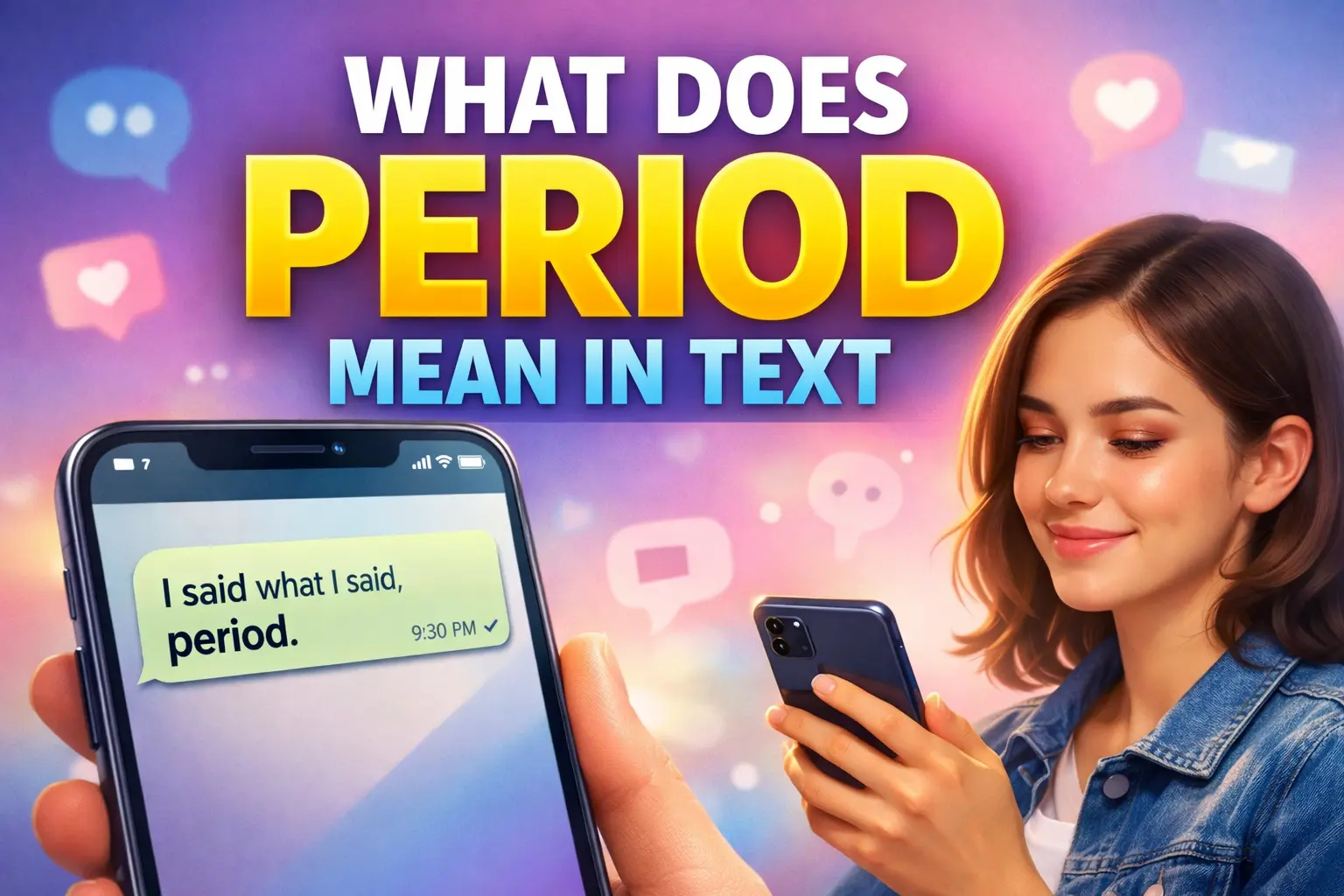
At its core, when someone writes “period” in a text, they are emphasizing finality. It signals that the statement is non-negotiable, unapologetic, and definitive. Think of it as a verbal exclamation mark that carries confidence and conviction.
Key Points:
- Expresses strong certainty or emphasis
- Often used to end a statement without leaving room for argument
- Adds emotional weight to short messages
Examples:
- “I’m going to the party tonight, period.”
- “She’s the best singer of our generation, period.”
- “No excuses, period.”
In essence, it’s not about punctuation—it’s about attitude.
Origin & Background
The usage of “period” in text originates from African American Vernacular English (AAVE) and has been popularized through social media, especially Twitter, Instagram, and TikTok. Traditionally, period was used in speech for emphasis, but online platforms amplified its reach.
Culturally, it became a way for people, particularly young women and Gen Z users, to assert authority or confidence in a statement. Social media influencers, reality TV personalities, and pop culture have further cemented its usage. From tweets to TikTok captions, ending a sentence with period signals that the speaker’s stance is firm and not up for debate.
The meaning has evolved: while it started as a spoken exclamation, it’s now a digital shorthand that carries emotional intensity, often paired with emojis like 💅, 🔥, or 👏 to amplify the message.
Real-Life Conversations
Here are some realistic examples of how “period” shows up in everyday chats.
WhatsApp Chat:
Person A: Are you really going to eat that whole pizza?
Person B: Yes, I am. Period.
Instagram DM:
Person A: Honestly, do you think she can pull off that outfit?
Person B: She looks amazing, period.
TikTok Comment:
User1: This song is overrated.
User2: No, it’s iconic, period.
Text Message:
Person A: You’re never changing your mind, huh?
Person B: Nope, period.
These conversations illustrate how period communicates certainty, support, or even playful stubbornness.
Emotional & Psychological Meaning
Using “period” in a text is not just about language—it’s emotional signaling. Psychologically, it can convey:
- Confidence and self-assurance
- Finality in an argument
- Emotional intensity (pride, excitement, or even humor)
For instance, imagine texting your friend about your favorite TV character: “She’s the most inspiring character, period.” This short statement communicates admiration, enthusiasm, and decisiveness. Using period reinforces your stance without needing long explanations.
It also reflects modern communication trends where brevity and impact matter. In an era of fast scrolling, people want to convey strong opinions quickly and clearly.
Usage in Different Contexts
Social Media: Often used for emphasis in posts, captions, or comments.
Example: “This outfit is flawless, period.”
Friends & Relationships: Shows agreement, confidence, or support in casual conversations.
Example: “You deserve the promotion, period.”
Work / Professional Settings: Rarely appropriate unless informal contexts allow humor or emphasis.
Example: A team chat might include: “This deadline is non-negotiable, period.”
Casual vs Serious Tone: In casual settings, it can be playful or humorous. In serious conversations, it underscores authority or finality.
When NOT to Use It
While period is versatile, it can backfire if used incorrectly:
- Professional emails – may seem unprofessional or overly confrontational
- Cultural sensitivity – some cultures perceive bluntness as rude
- Conflict situations – can escalate tension if misinterpreted
Always consider tone and audience before using it in formal or sensitive situations.
Common Misunderstandings
Literal vs Figurative: Some people think period is just punctuation, but online it’s figurative—signaling authority.
Tone Confusion: Without context, period can appear aggressive or dismissive.
Overuse: Using it too often can dilute impact or seem overly dramatic.
Comparison Table
| Expression | Meaning | Tone | When to Use |
|---|---|---|---|
| Period | Final, non-negotiable | Confident | Texts, social media, casual chats |
| Full stop | Literal punctuation | Neutral | Writing, formal |
| End of story | Similar to period | Assertive | Conversations, storytelling |
| No cap | Slang for “truth” | Informal | Social media, friends |
| Fact | Agreement, emphasis | Casual, firm | Texts, tweets |
Key Insight: Period is uniquely versatile—it blends linguistic emphasis with emotional signaling, making it a tool for assertive and confident digital communication.
Variations / Types
- Periodt – Stronger, dramatic version for emphasis
- 💅 period – Playful and stylish, often in social media
- Period. – Standard assertive use
- Period, no debate – Explicitly shuts down discussion
- Period, end of discussion – Conveys finality in arguments
- 🔥 period – Amplifies excitement or hype
- Period, facts – Combines truth and finality
- Period, period – Doubling for extra emphasis
- Periodt! – Expressive with excitement or sass
- 👏 period – Adds celebratory tone
Each type carries slight nuance, ranging from playful to strongly assertive.
How to Respond When Someone Uses It
- Casual: “Haha, got it, period.”
- Funny: “Period? More like periodt 💅”
- Mature: “Understood, no arguments.”
- Respectful: “Absolutely, your point is clear.”
Responses should match the tone and context to avoid misinterpretation.
Regional & Cultural Usage
- Western culture: Very common among Gen Z and Millennials; signifies confidence
- Asian culture: Seen more online; tone may be interpreted as blunt or humorous
- Middle Eastern culture: Often adapted in social media; used informally
- Global internet usage: Widely understood among younger audiences
- Generational differences: Gen Z uses it for impact and sass; Millennials use it for clarity and emphasis
Is It Safe for Kids?
Yes, but context matters. Period is non-offensive, but young users should understand it conveys assertiveness, not aggression. Teach them tone awareness to avoid misunderstandings in digital communication.
FAQs
1. Can period be used in professional emails?
Rarely; it may appear confrontational unless the workplace is informal.
2. Is period the same as a full stop?
No. Full stop is literal punctuation; period in text is figurative emphasis.
3. What does periodt mean?
It’s a more dramatic or playful version for emphasis.
4. Can period be overused?
Yes. Too much can feel aggressive or excessive.
5. Is it only popular with Gen Z?
It originated with younger generations but is widely understood online.
6. Does it always show confidence?
Mostly, but tone can vary based on context or accompanying emojis.
7. Can it escalate arguments?
Yes, if used in sensitive or formal conversations, it may seem dismissive.
Conclusion
Period in text is more than a word—it’s a statement of confidence, a mark of finality, and a cultural shorthand that packs emotional weight. Understanding its meaning helps you navigate modern communication with clarity and style. Use it wisely, embrace its versatility, and remember: it’s about the conviction behind the word, not just the letters themselves.
Communicating with clarity and confidence has never been simpler. Next time you see period in a chat, you’ll know exactly what it conveys—and how to respond with the right tone.