

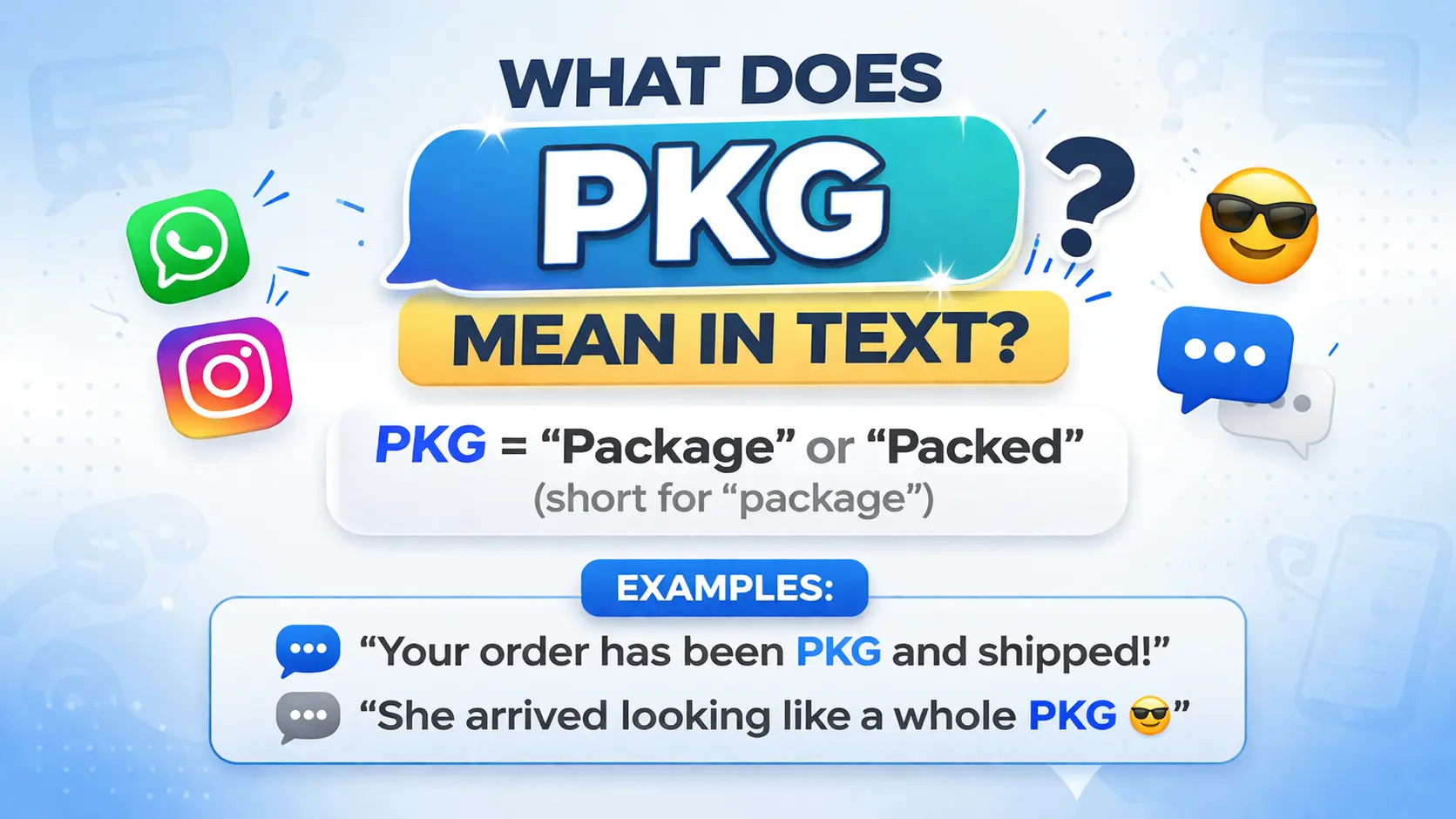
If you have ever received a message with the abbreviation “PKG” and paused for a moment wondering what it means, you are not alone. Many people search for “what does pkg mean in text” because modern digital communication is filled with short forms, slang, and context-based expressions that are not always obvious at first glance.
PKG is one of those terms that can feel confusing depending on where and how it is used. In some cases, it refers to something simple like “package,” while in other contexts it can carry slightly different meanings based on the conversation. Understanding it properly helps you avoid misinterpretation and respond more naturally in chats, social media, or professional discussions.
This guide breaks down everything you need to know in a clear and practical way. You will learn the meaning, origins, real-life usage, emotional context, and how to use or respond to it confidently in different situations.
PKG – Quick Meaning
At its core, PKG is a shortened form of the word “package.”
It is commonly used in text messages and online conversations to refer to:
- A physical package or delivery
- A bundle of items or services
- A grouped set of something
Simple examples:
- “Your pkg arrived today.”
- “I’ll send the pkg by tomorrow.”
- “Did you receive the pkg I shipped?”
In casual communication, PKG saves time and characters while still conveying the same meaning as “package.”
Origin & Background
The abbreviation PKG comes from standard shorthand practices in written communication. As texting, emails, and online messaging became more common, people began shortening frequently used words to communicate faster.
PKG likely evolved from:
- Early email communication habits
- Logistics and shipping industries using abbreviations
- Typing convenience on mobile devices
In professional environments, abbreviations like PKG were already used internally in shipping labels, warehouse systems, and documentation. Over time, this shorthand moved into everyday texting and social media language.
With the rise of digital platforms, users adopted PKG not only for efficiency but also as part of a broader trend of concise communication. Today, it is widely understood in contexts involving delivery, e-commerce, and casual messaging.
Real-Life Conversations
Conversation 1: WhatsApp Chat
Person A: Hey, did the pkg arrive?
Person B: Yes, it came this morning. I just checked it.
Person A: Great, I was worried it might be delayed.
Conversation 2: Instagram DM
Person A: I sent you a small pkg yesterday.
Person B: Oh nice, I will check my mail today. Thanks!
Conversation 3: TikTok Comment Thread
Person A: How long did your pkg take to arrive?
Person B: Around 5 days, pretty fast actually.
Person A: That is quicker than I expected.
Conversation 4: Text Message
Person A: The pkg for the event is ready.
Person B: Perfect, let me know when to pick it up.
Person A: I will update you in an hour.
These examples show how naturally PKG fits into everyday conversations without changing the tone or meaning.
Emotional & Psychological Meaning
PKG itself is a neutral term, but its use reflects something important about modern communication. People prefer shorter, faster, and more efficient ways to exchange information.
Using abbreviations like PKG often signals:
- Familiarity between communicators
- A casual or semi-formal tone
- Efficiency in communication
- Comfort with digital slang
In a real-life scenario, imagine waiting for an important delivery. A message saying “your pkg has arrived” feels immediate and direct. It removes unnecessary wording while still delivering reassurance.
From a psychological perspective, such abbreviations reduce cognitive load. They make conversations quicker to read and respond to, which is especially valuable in fast-paced environments where people handle multiple messages at once.
Usage in Different Contexts
Social Media
PKG is commonly used in comments, captions, and direct messages when referring to deliveries, giveaways, or shared items.
Example:
“Winner will receive the pkg within 3 business days.”
Friends & Relationships
Friends often use PKG casually when discussing gifts or shared items.
Example:
“I left your pkg at the front desk.”
Work / Professional Settings
In logistics, retail, or customer service, PKG may appear in internal communication.
Example:
“The pkg is ready for dispatch.”
Casual vs Serious Tone
- Casual: Short chats between friends or online users
- Professional: Used in documentation or internal notes
- Serious: Used in contexts involving deliveries or transactions
The meaning stays consistent, but the tone depends on context.
When NOT to Use It
While PKG is widely understood, there are situations where using the full word “package” is better.
Avoid PKG when:
- Communicating with people unfamiliar with texting slang
- Writing formal emails or official documents
- Addressing clients in professional business communication
- Dealing with legal or formal logistics paperwork
In such cases, clarity and professionalism matter more than brevity.
Common Misunderstandings
Some people misinterpret PKG due to lack of context.
Common mistakes include:
- Thinking PKG has multiple unrelated meanings
- Confusing it with technical or coding abbreviations
- Assuming it is slang unrelated to “package”
- Misreading tone in professional messages
Another misunderstanding happens when tone is unclear. For example, “pkg delayed” might sound abrupt, but it simply reflects shorthand communication, not rudeness.
Context is always key in understanding abbreviations like PKG.
Comparison Table
| Term | Meaning | Usage Context | Tone |
|---|---|---|---|
| PKG | Package (short form) | Texts, logistics, chats | Neutral |
| Package | Full word for item bundle | Formal and informal | Neutral |
| Parcel | Delivery item | Shipping, postal system | Formal |
| Box | Physical container | Casual or descriptive | Casual |
| Shipment | Group of goods sent | Business and logistics | Formal |
Key Insight:
PKG is simply a shortened, informal version of “package” that is most useful in quick communication, especially in digital environments where speed and brevity matter.
Variations / Types
Here are related abbreviations and variations often used in similar contexts:
- Pkg
Lowercase or mixed case version of PKG, same meaning. - Package
Full form, used in formal and informal contexts. - Parc
Short form of parcel, less common. - Shp
Short for shipment, used in logistics notes. - Deliv
Short for delivery, used in tracking or updates. - Box
Refers to a physical container, sometimes used informally. - Order
Refers to purchased items, often used in e-commerce. - Consignment
Formal term used in business and shipping. - Freight
Used for large-scale or commercial transport. - Cargo
Used in shipping industries for transported goods.
How to Respond When Someone Uses It
Casual Replies
- “Got it, thanks!”
- “Nice, I will check it.”
- “Perfect, appreciate it.”
Funny Replies
- “Finally, my pkg has arrived 😄”
- “Hope it survived the journey!”
- “My pkg and I have been reunited!”
Mature Replies
- “Thank you for the update, I will confirm receipt.”
- “I appreciate the information, I will review it shortly.”
Respectful Replies
- “Thanks for letting me know.”
- “I received the pkg, thank you.”
- “Everything looks good, appreciate it.”
Regional & Cultural Usage
Western Culture
PKG is commonly used in everyday texting and logistics-related communication. People are familiar with abbreviations and often use them casually.
Asian Culture
In many Asian countries, abbreviations are widely used in mobile communication, especially in business and e-commerce contexts.
Middle Eastern Culture
Usage is growing, especially in digital commerce and international communication, but full words are sometimes preferred in formal settings.
Global Internet Usage
PKG is widely understood across platforms like WhatsApp, Instagram, and email due to globalization of slang.
Generational Differences
- Gen Z: Comfortable using PKG and similar abbreviations frequently
- Millennials: Familiar but may use full words in professional contexts
- Older generations: Prefer full words for clarity
Is It Safe for Kids?
Yes, PKG is a safe and neutral abbreviation. It simply means “package” and does not contain any inappropriate or sensitive meaning. However, children may need guidance to understand abbreviations in general, as context matters in digital communication.
FAQs
1. What does PKG mean in text messages?
PKG usually means “package,” referring to an item that is delivered or being shipped.
2. Is PKG slang or a formal abbreviation?
It is an informal abbreviation commonly used in texting and casual communication.
3. Can PKG have different meanings?
In most contexts, it means package. Rarely, it may be used differently depending on specific industries.
4. Is PKG used in professional communication?
Yes, but mainly in internal notes or logistics contexts rather than formal emails.
5. Is PKG widely understood?
Yes, especially among people familiar with online communication and shipping-related conversations.
6. Should I use PKG in emails?
It is better to use the full word “package” in formal emails for clarity.
7. Why do people use PKG instead of package?
It saves time, reduces typing effort, and fits the fast-paced nature of digital communication.
Conclusion
Understanding “what does pkg mean in text” helps you navigate modern communication with confidence. PKG is a simple abbreviation for “package,” widely used in texting, social media, and logistics-related conversations. Its meaning remains consistent, but its tone depends on context and relationship between communicators.
As digital conversations continue to evolve, abbreviations like PKG make communication faster and more efficient. By recognizing its meaning and appropriate usage, you can respond naturally, avoid confusion, and communicate more effectively in both casual and semi-professional settings.