

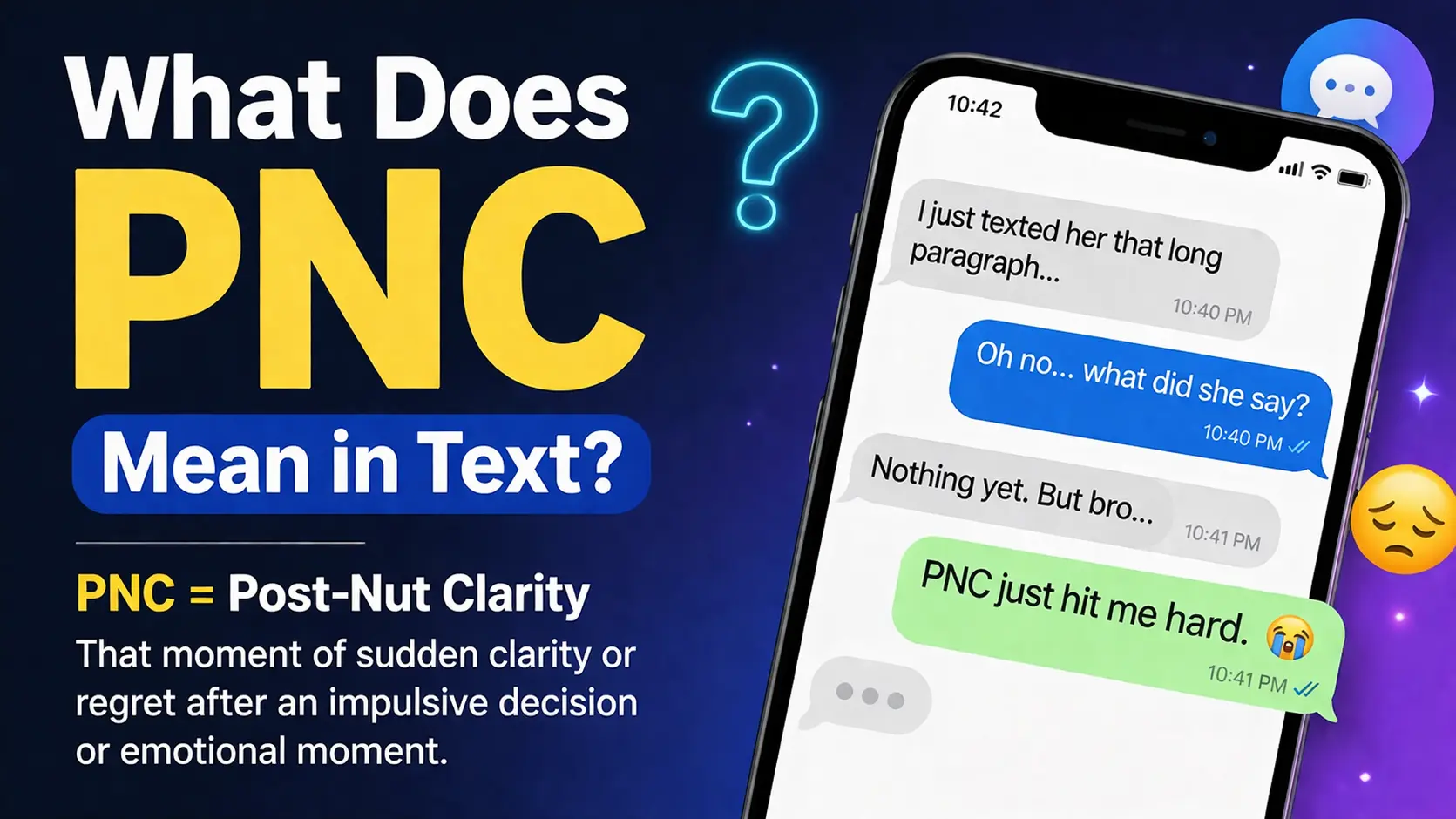
If you’ve ever seen “PNC” pop up in a message and felt unsure about what it meant, you’re not alone. Text slang evolves fast, and meanings can shift depending on the context, tone, and even the relationship between the people chatting.
“PNC” is one of those abbreviations that can feel confusing at first because it isn’t as widely discussed as common slang like “LOL” or “BRB.” People search for it because they’ve seen it in a text, a DM, or a comment and want to make sure they’re not misreading the situation.
The truth is, “PNC” carries a very specific and sometimes sensitive meaning. Understanding it correctly helps you avoid awkward misunderstandings and communicate more confidently in modern digital conversations.
Let’s break it down clearly and naturally so you know exactly what it means, when to use it, and when to avoid it.
What Does PNC Mean in Text – Quick Meaning
In texting, PNC most commonly stands for “Post-Nut Clarity.”
It refers to a mental or emotional state someone experiences after a moment of strong desire or impulse, especially after something intimate or emotionally intense.
Simple breakdown:
- PNC = Post-Nut Clarity
- A feeling of sudden clarity or realization after acting on desire
- Often linked to regret, reflection, or emotional awareness
Example messages:
- “Bro I just got PNC… what was I thinking 😭”
- “That PNC hit hard after I sent that text”
- “PNC really makes you rethink everything”
Origin & Background
The term “PNC” originated from internet culture, particularly in online forums and meme communities. It became popular on platforms like Reddit and later spread to TikTok, Twitter, and Instagram.
Originally, it was used humorously to describe a sudden shift in mindset after a moment of intense attraction or impulse. Over time, the meaning expanded beyond its literal roots and became more metaphorical.
Today, people use “PNC” not just in a physical sense but also to describe emotional clarity after:
- Sending a risky message
- Making a questionable decision
- Acting impulsively in relationships
Social media played a huge role in its growth. Short videos and memes made the term relatable, especially among younger audiences who enjoy expressing complex emotions in simple, catchy ways.
Real-Life Conversations
Here’s how “PNC” actually shows up in everyday chats.
WhatsApp Chat
Person A: I just texted her something kinda bold
Person B: And?
Person A: Bro… PNC just hit. I regret it already
Instagram DMs
Person A: Why did I like his old pics 😭
Person B: LMAO
Person A: PNC is real, I need to disappear
TikTok Comments
User 1: This is exactly how PNC feels
User 2: The regret hits instantly 😂
User 3: PNC got me deleting messages
Text Message
Person A: I almost called my ex last night
Person B: Almost?
Person A: Yeah… PNC saved me just in time
Emotional & Psychological Meaning
“PNC” isn’t just slang. It reflects a real psychological experience.
At its core, it represents the moment when emotion fades and logic returns. During intense feelings, people often act quickly without thinking. Once that intensity passes, clarity steps in.
That clarity can bring:
- Regret
- Self-awareness
- Relief
- Embarrassment
People use “PNC” because it’s a quick way to admit, “I acted on impulse, and now I see things clearly.”
A relatable scenario
You’re up late at night, feeling emotional. You type out a long message to someone you miss. You hesitate, then send it anyway.
A few minutes later, your mind clears. You reread the message and think, “Why did I send that?”
That moment is exactly what “PNC” captures.
Usage in Different Contexts
1. Social Media
On platforms like TikTok or Instagram, “PNC” is often used humorously. People joke about making impulsive decisions and then instantly regretting them.
Example:
“PNC after oversharing in someone’s DMs 😭”
2. Friends & Relationships
Among friends, it’s used casually to describe emotional or impulsive moments.
Example:
“I had PNC after texting him… I shouldn’t have done that.”
It can also reflect vulnerability, especially in romantic situations.
3. Work / Professional Settings
“PNC” is not appropriate in professional communication.
It’s informal and can be misunderstood or seen as unprofessional. Avoid using it in emails, meetings, or workplace chats.
4. Casual vs Serious Tone
- Casual: Funny, relatable, light-hearted
- Serious: Can hint at regret or emotional reflection
Tone depends on context and relationship between speakers.
When NOT to Use It
There are situations where using “PNC” can be inappropriate or confusing.
Avoid using it:
- In formal or professional settings
- With people unfamiliar with slang
- In sensitive conversations where clarity is needed
- Around older audiences who may misinterpret it
It can also feel uncomfortable if used in the wrong context, especially if the meaning is misunderstood.
Common Misunderstandings
Many people misinterpret “PNC” because it isn’t widely explained.
Common mistakes:
- Thinking it means something professional like a company name
- Assuming it’s always inappropriate
- Missing the emotional or metaphorical meaning
Tone confusion
Sometimes “PNC” is used jokingly, other times seriously. Without context, it can be hard to tell.
Literal vs Figurative
Originally literal, now often figurative.
Today, someone might say “PNC” after:
- Sending a risky message
- Posting something embarrassing
- Making a bad decision
It’s less about the literal meaning and more about the feeling of sudden clarity.
Comparison Table
| Term | Meaning | Tone | Usage |
|---|---|---|---|
| PNC | Post-impulse clarity or regret | Casual, emotional | Personal chats |
| Regret | Feeling sorry for an action | Neutral | All contexts |
| Oops | Minor mistake acknowledgment | Light | Casual |
| YOLO | Acting without thinking | Carefree | Social media |
| Think twice | Encouraging caution | Serious | Advice |
Key Insight
“PNC” stands out because it combines humor with emotional honesty. It allows people to admit mistakes without sounding too heavy or serious.
Variations / Types
Here are some common variations and related expressions:
- Instant PNC
Clarity hits immediately after an action. - Delayed PNC
Realization comes later, sometimes hours after. - Emotional PNC
More about feelings than actions. - Text PNC
Regret after sending a message. - DM PNC
Used specifically for social media messages. - Late-night PNC
Common after emotional nighttime decisions. - Relationship PNC
Clarity about romantic choices. - Social PNC
After posting or commenting online. - Silent PNC
You feel it but don’t say it out loud. - Funny PNC
Used jokingly among friends.
How to Respond When Someone Uses It
Casual replies
- “Happens to the best of us 😅”
- “You’ll be fine, don’t stress”
Funny replies
- “PNC is undefeated 😂”
- “Delete the chat and move on!”
Mature replies
- “At least you realized it quickly”
- “We all learn from these moments”
Respectful replies
- “Do you want to talk about it?”
- “It’s okay, don’t be too hard on yourself”
Regional & Cultural Usage
Western Culture
“PNC” is widely used in meme culture and casual conversations. It’s often humorous and relatable.
Asian Culture
Less commonly used directly. People may understand the feeling but use different expressions to describe it.
Middle Eastern Culture
Usage is limited and depends on exposure to global internet slang. It may be misunderstood without context.
Global Internet Usage
Thanks to social media, “PNC” is spreading globally, especially among younger users who engage with memes and online trends.
Generational Differences
- Gen Z: Uses it frequently, often humorously
- Millennials: Understand it but may use it less
- Older generations: Often unfamiliar with the term
Is It Safe for Kids?
“PNC” is not inherently harmful, but it carries mature undertones.
For younger audiences:
- It’s better understood in a general sense of “regret after an action”
- Parents should be aware of context
It’s not inappropriate in all cases, but awareness matters.
FAQs
1. What does PNC mean in texting?
It usually means “Post-Nut Clarity,” referring to a moment of realization or regret after acting on impulse.
2. Is PNC always inappropriate?
Not always. It depends on how it’s used. Many people use it metaphorically in a harmless way.
3. Can I use PNC with friends?
Yes, if they understand the meaning and you’re in a casual conversation.
4. Why do people say PNC after texting?
Because they regret sending a message or feel they acted impulsively.
5. Is PNC used seriously or jokingly?
Both. It can be humorous or reflect genuine emotion.
6. Should I use PNC at work?
No. It’s too informal and may be misunderstood.
7. What’s similar to PNC?
Words like “regret,” “realization,” or “thinking clearly after the fact.”
Conclusion
“PNC” might seem like just another internet abbreviation, but it actually captures a very human experience. That moment when emotions fade and clarity takes over is something everyone can relate to.
What makes the term powerful is how it blends humor with honesty. It allows people to admit mistakes, reflect on their actions, and move forward without overcomplicating things.
Once you understand the meaning and context, using or recognizing “PNC” becomes much easier. You’ll not only avoid confusion but also connect better with the tone and emotion behind modern digital conversations.
Use it wisely, keep the context in mind, and you’ll never feel lost when it pops up again.