
In the fast-paced world of texting, abbreviations can feel like a secret language. If you’ve recently seen someone type WDYK in a message and felt confused, you’re not alone. This abbreviation pops up across social media, WhatsApp, and even professional chats, leaving many wondering what it actually means. Understanding it can help you decode conversations faster, avoid miscommunication, and even connect better with friends or colleagues who favor shorthand.
In this article, we’ll explore everything about WDYK—its meaning, origin, real-life usage, emotional undertones, and cultural nuances. By the end, you’ll not only know what it stands for but also how to use it confidently in your daily messaging.
WDYK – Quick Meaning
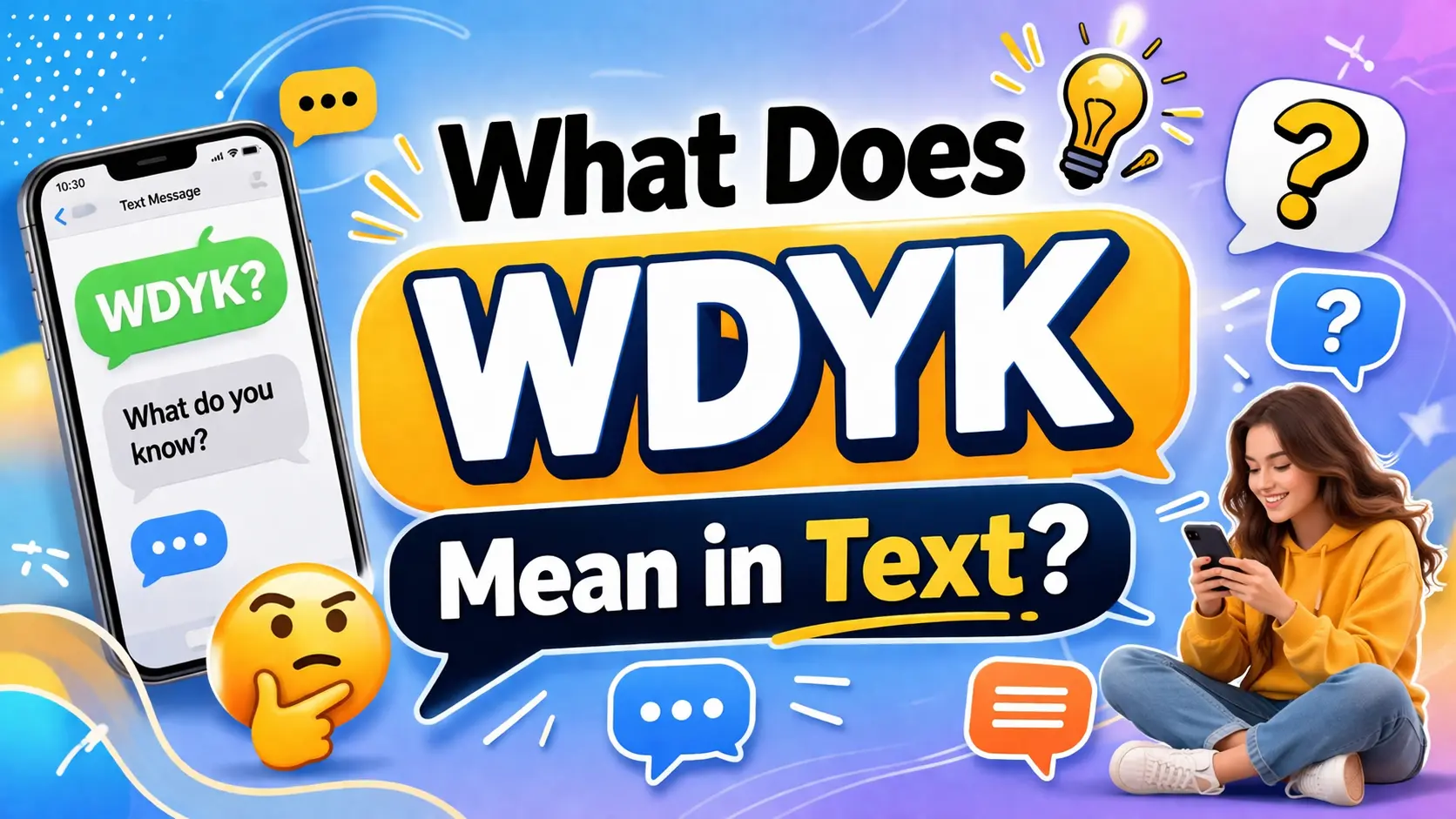
WDYK stands for “What Do You Know?”. It is commonly used as a casual check-in, a prompt for information, or sometimes as a playful expression of curiosity or surprise.
Key Points:
- It’s informal and mostly used in text messages, social media, or chat apps.
- Can express curiosity, skepticism, or interest depending on context.
- Often used among friends or peers, not in formal writing.
Examples in Texts:
- “WDYK about the new café downtown?”
- “I just heard some shocking news, WDYK?”
- “WDYK, maybe we can meet this weekend!”
This abbreviation is versatile and mirrors how modern digital communication prioritizes brevity without losing the social nuance of curiosity or engagement.
Origin & Background
The exact origin of WDYK is hard to trace, but it naturally evolved from the internet culture of shorthand texting. As instant messaging became popular in the early 2000s, users on platforms like AOL Instant Messenger, MSN, and early social media started abbreviating common phrases to save time.
Cultural Influence:
- Platforms like Twitter, TikTok, and Instagram popularized short abbreviations to fit character limits and fast scrolling behaviors.
- Gen Z and younger Millennials favored slang that was concise but expressive, turning phrases like “What do you know?” into WDYK.
Evolution:
- Initially used among close friends for casual check-ins.
- Gradually adopted in wider social media interactions and online discussions.
- Context-dependent: can be genuine, sarcastic, or rhetorical.
Real-Life Conversations
Here are some authentic scenarios where WDYK might appear:
WhatsApp
Person A: “WDYK about the surprise party for Sarah?”
Person B: “Heard a little, but don’t spoil it!”
Instagram DMs
Person A: “WDYK about that new trend everyone’s doing?”
Person B: “Just saw it! Looks hilarious 😂”
TikTok Comments
User1: “WDYK about this dance challenge?”
User2: “Tried it yesterday, still can’t get the steps 😅”
Text Message
Friend A: “WDYK if the library is open tomorrow?”
Friend B: “Not sure, maybe check the website.”
These examples show the flexibility of WDYK—it can be casual, inquisitive, playful, or informational depending on context.
Emotional & Psychological Meaning
At its core, WDYK conveys curiosity and engagement. It signals interest in what the other person knows, often inviting a response. Psychologically, it creates a subtle bridge of connection between the sender and receiver.
Scenario: Imagine texting a close friend about a new café. Typing WDYK instantly sets a tone of curiosity and shared excitement without lengthy sentences.
Using WDYK can also reduce social friction. Instead of asking a longer question like “Do you know anything about this?” you get a concise, friendly, and approachable prompt.
Usage in Different Contexts
Social Media:
- Common in comments, posts, and threads to ask for information or opinions.
Friends & Relationships:
- Perfect for casual chats, teasing, or playful curiosity.
Work / Professional Settings:
- Rarely used formally. It may appear in informal team chats, but stick to full sentences in official emails.
Casual vs Serious Tone:
- Casual: playful or curious inquiries.
- Serious: can be misread as sarcastic if the tone is not clear.
When NOT to Use It
- Formal communication: Avoid in emails or professional documents.
- Sensitive contexts: Using it when asking serious or personal questions can feel dismissive.
- Cross-cultural misunderstandings: Not everyone may understand this abbreviation, leading to confusion.
Common Misunderstandings
- Some assume WDYK means a rhetorical “you wouldn’t know,” which is incorrect in casual contexts.
- Tone matters: without punctuation or emojis, it might be misinterpreted as blunt or sarcastic.
- Literal vs figurative: most people use it figuratively to prompt conversation, not literally interrogate someone.
Comparison Table
| Slang/Expression | Meaning | Tone | Usage Example |
|---|---|---|---|
| WDYK | What do you know? | Curious, playful | “WDYK about the concert?” |
| IDK | I don’t know | Neutral | “IDK, maybe check online.” |
| FYI | For your information | Informative | “FYI, the meeting is tomorrow.” |
| BTW | By the way | Casual | “BTW, did you see that meme?” |
| WTH | What the heck | Surprised, confused | “WTH happened here?” |
Key Insight: WDYK is most similar to conversational curiosity, unlike IDK or FYI, which are more informative or declarative. Its tone depends heavily on context and emojis.
Variations / Types
- WDYK? – Standard: what do you know
- WDYK tho? – Emphasizes playful curiosity
- WDYK rn? – Asking “what do you know right now?”
- WDYK abt… – Topic-specific inquiry
- WDYK lol – Lighthearted or joking
- WDYK fr? – Serious or genuine interest
- WDYK smh – Confused or skeptical tone
- WDYK 😂 – Playful or humorous
- WDYK fam? – Informal among close friends
- WDYK tbh? – Honest curiosity
How to Respond When Someone Uses It
Casual Reply: “Not much, what about you?”
Funny Reply: “WDYK? Only the secrets of the universe 😎”
Mature Reply: “I know a few things, happy to share.”
Respectful Reply: “I can look into that for you.”
Regional & Cultural Usage
- Western culture: Common among teens and young adults in casual texts.
- Asian culture: Increasingly seen in online forums and chats, often influenced by Western social media.
- Middle Eastern culture: Less common in formal conversation, mostly in digital communication.
- Global internet usage: Widespread in memes, TikTok, and comment threads.
- Generational differences: Gen Z uses it casually and frequently; Millennials use it less often but understand it.
Is It Safe for Kids?
Yes, WDYK is generally safe. It is non-offensive, non-sexual, and age-neutral. However, younger children may not understand it without context, so some guidance can help.
FAQs
1. Can WDYK be sarcastic?
Yes, depending on punctuation, emojis, and context.
2. Is WDYK formal enough for work emails?
No, it should be reserved for casual chats.
3. Can WDYK be used in text messages only?
Mostly yes, but it’s also seen in comments and DMs.
4. What’s the difference between WDYK and IDK?
WDYK asks for information, IDK states lack of knowledge.
5. Does everyone know WDYK?
Mostly younger generations and social media users; older audiences may not recognize it.
6. Can it be used internationally?
Yes, but clarity may vary by region and culture.
7. Can WDYK replace full sentences?
It can, but context is crucial to avoid misunderstanding.
Conclusion
WDYK is a small abbreviation with a lot of social power. It conveys curiosity, playfulness, and engagement, making digital conversations feel connected and dynamic. Using it confidently can make your texts feel friendly and approachable. Remember context, tone, and audience, and you’ll never miss a beat in modern messaging culture.
Next time you see WDYK in your chat, you’ll know exactly how to respond, whether with humor, curiosity, or thoughtful insight. Embrace it as part of the evolving language of our digital world.