

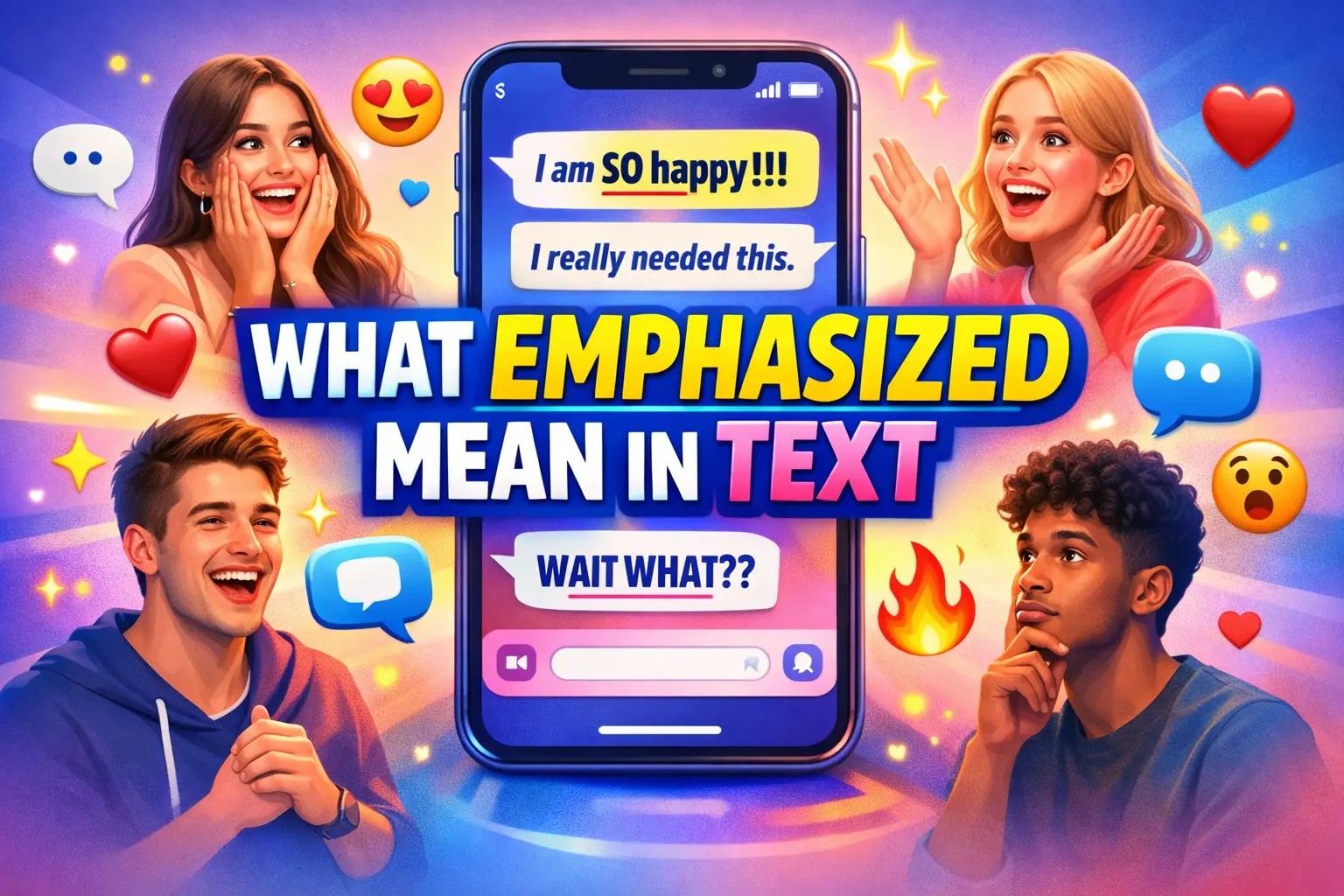
If you have ever received a message where a word was written in ALL CAPS, surrounded by asterisks, or repeated for impact, you might have wondered what emphasized mean in text.
It sounds simple at first. But in digital communication, emphasis carries emotional weight. It can show excitement, urgency, frustration, affection, or even sarcasm. That is why so many people search for this phrase. They want to understand not just the dictionary meaning, but the emotional meaning behind it.
In text messages, tone is invisible. We cannot hear voice pitch or see facial expressions. So we rely on visual signals. Emphasis becomes our digital body language.
Let’s break it down clearly and practically.
What Emphasized Mean in Text – Quick Meaning
In texting and online communication, “emphasized” means:
• Highlighting a word or phrase to make it stand out
• Adding emotional intensity
• Showing importance or urgency
• Expressing stronger feelings than usual
People emphasize words by using:
• ALL CAPS
• Repeated letters like “soooo”
• Symbols like this or this
• Emojis to amplify emotion
Examples:
“I really need this done TODAY.”
“That was SO sweet of you.”
“I am not okay.”
In each case, emphasis changes how the sentence feels.
Origin and Background of Text Emphasis
Before smartphones, emphasis existed in handwritten letters. People underlined words or wrote them larger. In printed books, authors used italics or bold fonts.
When texting began through SMS in the 1990s, formatting tools were limited. No bold. No italics. No colors. People had to invent new ways to show emotion.
This is how ALL CAPS became associated with shouting. It was not officially defined anywhere. It simply evolved from early internet culture, including forums and platforms like Reddit and messaging services like WhatsApp.
Social media platforms such as Instagram and TikTok expanded expressive language even more. Emojis, repetition, spacing, and creative punctuation became emotional amplifiers.
Over time, emphasis stopped being just visual formatting. It became emotional signaling.
Real Life Conversations
Here are realistic examples of how emphasis appears in everyday digital life.
WhatsApp Conversation
Person A: I finally got the job.
Person B: WAIT WHAT?? That is AMAZING!!!
Person A: I am still shaking.
Notice how capital letters and repeated punctuation show excitement.
Instagram DM
Person A: Did you see my post?
Person B: Yes and you looked STUNNING.
Person A: Stop it, you are too sweet.
“STUNNING” communicates admiration far beyond a neutral compliment.
TikTok Comment Section
User 1: This edit deserves more likes.
User 2: NO because this is SO underrated.
User 3: I watched it five times already.
The emphasis shows passion and agreement.
Text Message Between Friends
Person A: Are you mad at me?
Person B: I am not mad. I am just tired.
Person A: Oh… I get it now.
The emphasis on “tired” shifts the emotional meaning entirely.
Emotional and Psychological Meaning
When someone emphasizes a word in text, they are often trying to bridge an emotional gap.
Digital communication removes tone. Emphasis puts some of that tone back.
Psychologically, emphasis can signal:
• Excitement
• Frustration
• Urgency
• Deep affection
• Sarcasm
I once received a message from a colleague that said, “I REALLY need that report.” My first reaction was anxiety. Were they upset? Later they explained they were just under pressure. That one emphasized word shaped my emotional reaction.
This shows how powerful digital emphasis can be. It is not just formatting. It is emotional coding.
Usage in Different Contexts
Social Media
On platforms like Instagram, emphasis is used to grab attention.
Example: “This is the BEST day ever.”
Creators emphasize words to increase engagement and emotional impact.
Friends and Relationships
Among close friends, emphasis often shows excitement or affection.
“I MISSED you.”
“You are SO annoying but I love you.”
Tone depends on relationship closeness.
Work and Professional Settings
In professional emails, heavy emphasis can appear aggressive.
Instead of writing “I NEED this ASAP,” it is better to say, “Could you please prioritize this?”
Professional tone usually avoids dramatic emphasis.
Casual vs Serious Tone
In casual chats, emphasis feels natural.
In serious conversations, it can intensify conflict if not handled carefully.
“I am FINE.” can sound very different from “I am fine.”
When Not to Use It
Emphasis can cause misunderstandings in certain situations.
Avoid it:
• During sensitive discussions
• In formal business emails
• When speaking cross culturally
• When emotions are already high
For example, writing “CALM DOWN” almost never helps. It usually escalates tension.
Cultural sensitivity also matters. Some cultures interpret caps as rude or disrespectful.
Common Misunderstandings
Many people assume emphasis equals anger. That is not always true.
Misunderstanding 1: ALL CAPS means yelling
Sometimes it means excitement.
Misunderstanding 2: Repeated letters are childish
They can express warmth or playfulness.
Misunderstanding 3: Italic style means sarcasm
It depends on context.
Literal meaning and emotional meaning are different layers. Digital literacy means reading both.
Comparison Table
| Expression | Meaning | Emotional Tone |
|---|---|---|
| SO good | Strong positive feeling | Excited |
| VERY good | Formal emphasis | Neutral |
| GOOD | Could sound angry or intense | Context dependent |
| Not good | Simple negative | Calm |
| Not good | Focused correction | Serious |
Key Insight:
Emphasis does not change the dictionary meaning. It changes the emotional temperature of the sentence.
Variations and Types of Emphasis
Here are common ways people emphasize words in text:
- ALL CAPS
Used for urgency or excitement. - Repeated letters
“Soooo happy” shows exaggeration. - Asterisks
“I am fine” highlights contrast. - Underscores
Less common but still used for focus. - Multiple punctuation
“What???” shows shock. - Emoji amplification
“So proud of you 🥹” - Spacing
“This. Is. Serious.” - Repetition
“No no no.” - Bold text in formatted apps
Often used in captions. - Lowercase emphasis
“i am tired” can signal sadness or softness.
Each style sends subtle emotional signals.
How to Respond When Someone Uses It
When someone emphasizes a word, respond according to tone.
Casual Replies
“Haha I know right.”
“You are so dramatic.”
Funny Replies
“Why are we yelling?”
“Blink twice if you are okay.”
Mature Replies
“I can tell this matters to you.”
“Let’s talk about it calmly.”
Respectful Replies
“Thank you for explaining clearly.”
“I understand your urgency.”
The key is reading the emotion behind the emphasis.
Regional and Cultural Usage
Western Culture
In the United States and parts of Europe, emphasis through caps is common but can signal strong emotion quickly.
Asian Culture
In some Asian contexts, overly dramatic emphasis may feel immature or impolite in formal settings.
Middle Eastern Culture
Expressive writing is often culturally normal, so repetition and emotional emphasis can feel natural in friendly conversations.
Global Internet Usage
Internet communities worldwide use emphasis creatively, especially on platforms like TikTok.
Generational Differences
Gen Z often uses lowercase writing intentionally to create emotional tone.
Millennials are more likely to use exclamation marks and caps.
These differences reflect evolving digital communication norms.
Is It Safe for Kids?
Yes, emphasis itself is harmless.
However, children should understand tone. Writing in ALL CAPS during arguments can escalate conflict. Teaching digital etiquette helps kids communicate respectfully.
Context awareness is key.
FAQs
1. Does emphasized text always mean shouting?
No. It can mean excitement, urgency, or strong emotion.
2. Why do people use all caps in text?
To highlight importance or express intense feelings.
3. Is emphasis rude?
It depends on context and relationship.
4. Can emphasis change meaning?
It changes emotional tone, not dictionary meaning.
5. Why do younger people avoid caps?
Lowercase writing can signal softness or emotional nuance.
6. Is emphasis professional?
Usually limited in formal settings.
Conclusion
Understanding what emphasized mean in text goes beyond grammar.
It is about emotional intelligence.
Every capital letter, repeated vowel, or highlighted word carries feeling. Digital communication has created its own body language, and emphasis is one of its strongest signals.
When you learn to read emphasis carefully, you avoid misunderstandings. You respond with empathy. You communicate clearly.
Use it confidently, but use it wisely.
Digital tone matters more than we realize.