
If you’ve ever received a message saying “I don’t fwu anymore” or “I fwu heavy,” you probably paused for a second. It looks casual, almost cryptic, yet emotionally loaded.
That’s exactly why people search for what fwu mean in text. It shows up in conversations, captions, and comments, but its tone can shift depending on context. Sometimes it feels friendly. Other times it carries a sharp edge.
In modern digital communication, a single abbreviation can carry layers of meaning. FWU is one of those expressions. It is short, direct, and often more emotional than it appears.
Let’s break it down in a way that actually makes sense, so you can understand not just what it means, but how it feels when people use it.
FWU – Quick Meaning
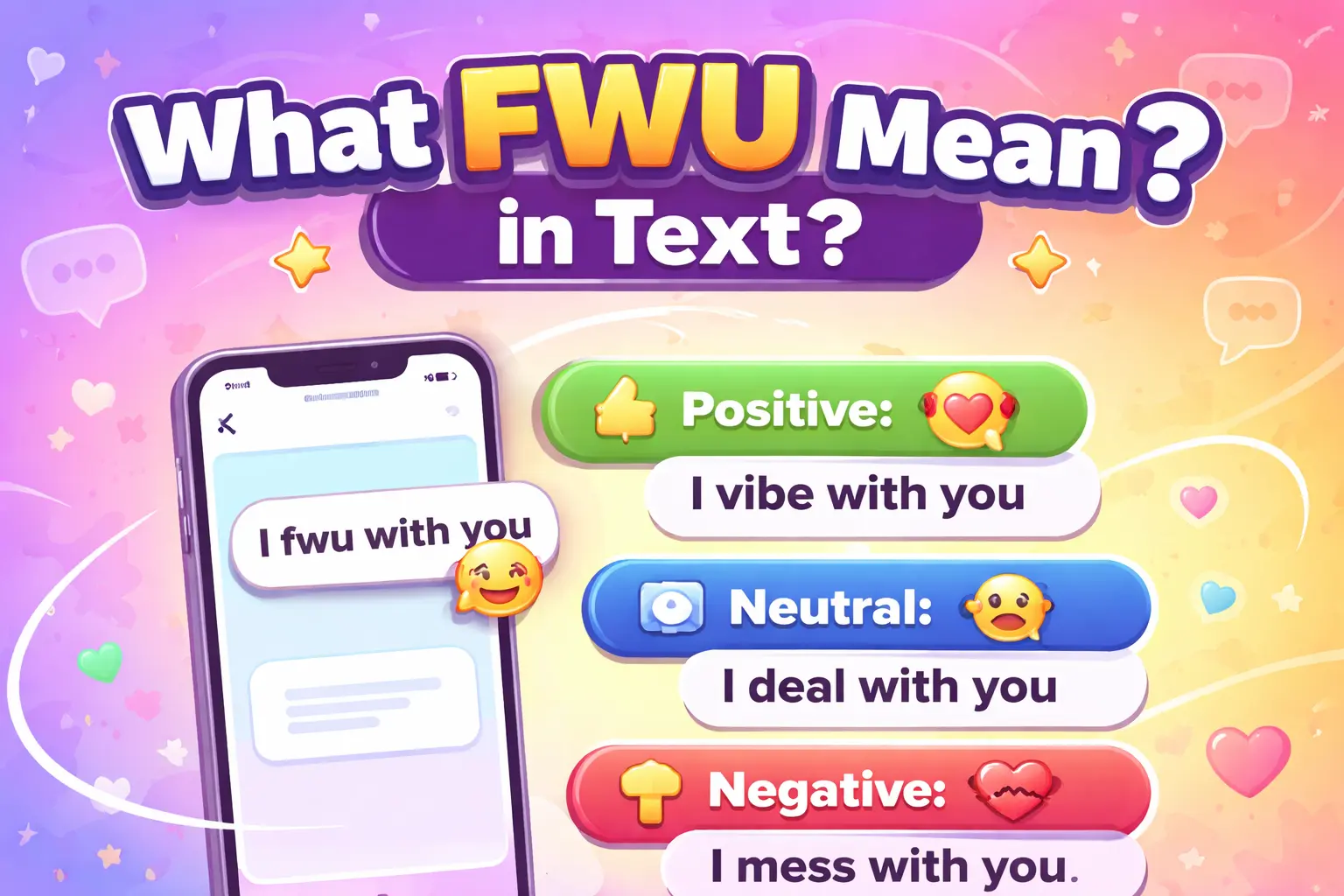
FWU stands for: “F* With You”**
Its meaning depends on tone and context:
- Positive meaning: I like you or I vibe with you
- Neutral meaning: I associate with you or deal with you
- Negative meaning: I mess with you in a harmful or disrespectful way
Simple examples:
- “I fwu, you’re real.”
- “I don’t fwu like that anymore.”
- “He been fwu since day one.”
At its core, FWU is about connection, loyalty, or interaction, either good or bad.
Origin & Background
FWU comes from urban slang rooted in African American Vernacular English, often abbreviated online for speed and style.
As texting culture evolved, phrases were shortened to keep conversations fast and expressive. FWU became popular through:
- Social media platforms like Instagram and TikTok
- Hip-hop culture and lyrics
- Meme culture and comment sections
Over time, the phrase shifted from a literal meaning to a more emotional one. Today, it often expresses trust, loyalty, or distance rather than anything literal.
It is part of a larger trend where language becomes more compact but emotionally charged.
Real-Life Conversations
Here’s how FWU naturally appears in everyday digital conversations:
WhatsApp Chat
Person A: You didn’t reply all day
Person B: Relax, I still fwu, just busy
Instagram DMs
Person A: You always support my posts
Person B: Of course, I fwu heavy
TikTok Comments
Person A: This creator is underrated
Person B: Fr I fwu, they real
Text Messages
Person A: I feel like we drifting
Person B: Nah, I still fwu, just going through stuff
Relationship Context
Person A: So you don’t talk to him anymore?
Person B: Nah, I don’t fwu like that anymore
These examples show how flexible the phrase is. It can reassure, distance, or express loyalty depending on the situation.
Emotional & Psychological Meaning
FWU is more than slang. It is emotional shorthand.
When someone says “I fwu,” they are often expressing:
- Trust
- Loyalty
- Emotional connection
- Respect
When they say “I don’t fwu,” it signals:
- Distance
- Disappointment
- Emotional withdrawal
Why people use it
People prefer short expressions that still feel personal. FWU works because it sounds raw and real. It avoids over-explaining feelings.
A relatable scenario
Imagine a friend who rarely opens up. One day they text, “I fwu, you always keep it real.”
That short message can feel deeper than a long paragraph. It shows appreciation without sounding overly emotional.
That is the power of modern slang. It compresses feelings into a few words.
Usage in Different Contexts
Social Media
FWU is common in captions and comments:
- “I fwu if you support me from day one”
It builds connection with followers.
Friends & Relationships
Used to show loyalty or closeness:
- “I fwu, you always got my back”
Or distance:
- “I don’t fwu anymore”
Work / Professional Settings
Not appropriate in formal communication.
Avoid using FWU in emails or workplace chats. It can come across as unprofessional or unclear.
Casual vs Serious Tone
- Casual: Friendly and supportive
- Serious: Emotional and sometimes confrontational
Tone depends on the situation and relationship between people.
When NOT to Use It
There are moments where FWU can backfire:
- Professional environments like emails or meetings
- With elders or authority figures who may not understand slang
- Sensitive conversations where clarity matters
- Cross-cultural interactions where meaning could be misunderstood
Using FWU in the wrong setting can make you seem careless or disrespectful.
Common Misunderstandings
1. Thinking it’s always negative
Some assume FWU means something aggressive. In reality, it is often positive.
2. Tone confusion
“I fwu” vs “I don’t fwu” changes everything. Missing one word flips the meaning.
3. Taking it literally
The phrase is rarely meant in a literal sense. It is emotional slang, not a direct action.
Comparison Table
| Expression | Meaning | Tone | Usage |
|---|---|---|---|
| FWU | I vibe with you / deal with you | Casual, emotional | Friends, social media |
| I like you | Clear affection | Direct | Universal |
| I respect you | Admiration | Formal or semi-formal | Work, life |
| I don’t fwu | I distance myself | Negative | Conflict or boundaries |
| I mess with you | Similar to FWU | Casual | Friendly contexts |
| I avoid you | Strong rejection | Serious | Direct communication |
Key Insight
FWU stands out because it blends emotion with casual tone. It feels real without sounding too formal or too vulnerable.
Variations / Types
Here are common variations you might see:
- I fwu heavy
Strong connection or loyalty - I don’t fwu
Complete disconnection - Still fwu
Ongoing support despite distance - He fwu
Someone supports or likes you - They don’t fwu like that
Limited connection - I barely fwu
Weak or fading relationship - She fwu from day one
Long-term loyalty - I only fwu real ones
Preference for authenticity - Why you fwu them?
Questioning someone’s choices - I fwu but…
Mixed feelings or hesitation
How to Respond When Someone Uses It
Casual Replies
- “I fwu too”
- “Always got you”
Funny Replies
- “You better 😄”
- “Took you long enough 😂”
Mature Replies
- “I appreciate that, it means a lot”
- “Same here, respect always”
Respectful Replies
- “Thank you, I value that”
- “That’s kind of you to say”
Your response should match the tone of the conversation.
Regional & Cultural Usage
Western Culture
FWU is widely used among younger audiences. It is casual, expressive, and common in social media culture.
Asian Culture
Less common in direct use. People may understand it but prefer more polite expressions.
Middle Eastern Culture
Usage is limited. Direct slang like FWU may feel too informal in many contexts.
Global Internet Usage
Thanks to social media, FWU is spreading globally. Many people recognize it even if they don’t use it.
Generational Differences
- Gen Z: Uses it naturally and frequently
- Millennials: Understand it but may use it less often
Language evolves with each generation, and FWU reflects that shift.
Is It Safe for Kids?
FWU includes a censored form of explicit language, so context matters.
- Teens may use it casually with friends
- Younger children should avoid it due to the underlying word
Parents and educators should focus on teaching context awareness, not just banning words.
FAQs
1. What does FWU mean in texting?
It means “I f*** with you,” which usually expresses liking, trust, or connection.
2. Is FWU positive or negative?
It can be both. Positive when showing support, negative when used with “don’t.”
3. Can I use FWU in formal settings?
No, it is too informal for professional communication.
4. Is FWU rude?
Not necessarily. It depends on tone and relationship.
5. What is the difference between FWU and “I like you”?
FWU feels more casual and emotional, while “I like you” is clearer and more direct.
6. Why do people say “I fwu heavy”?
To emphasize strong loyalty or deep connection.
Conclusion
FWU is a perfect example of how modern language works. It is short, expressive, and emotionally layered.
At first glance, it may seem confusing or even harsh. But once you understand the context, it becomes a powerful way to express connection, loyalty, or distance.
The key is not just knowing what FWU means, but understanding how it feels in conversation.
Language today is less about perfect grammar and more about authentic expression. FWU fits right into that world.
Use it wisely, read the tone carefully, and you will never feel lost when you see it again.