
If you have ever seen someone reply with “wrd” in a text message or on social media and felt confused, you are not alone. Modern digital communication is filled with short forms, abbreviations, and slang that evolve quickly. “wrd” is one of those expressions that often appears in casual chats, especially among younger users.
People usually search for “what is wrd mean in text” because they want clarity in conversations where tone matters. Misunderstanding a small abbreviation can completely change how a message is interpreted. This guide breaks down the meaning of “wrd,” how it is used, where it came from, and how to respond naturally in different situations.
By the end, you will not only understand the term but also feel confident using or interpreting it in real conversations.
WRD Meaning in Text – Quick Meaning
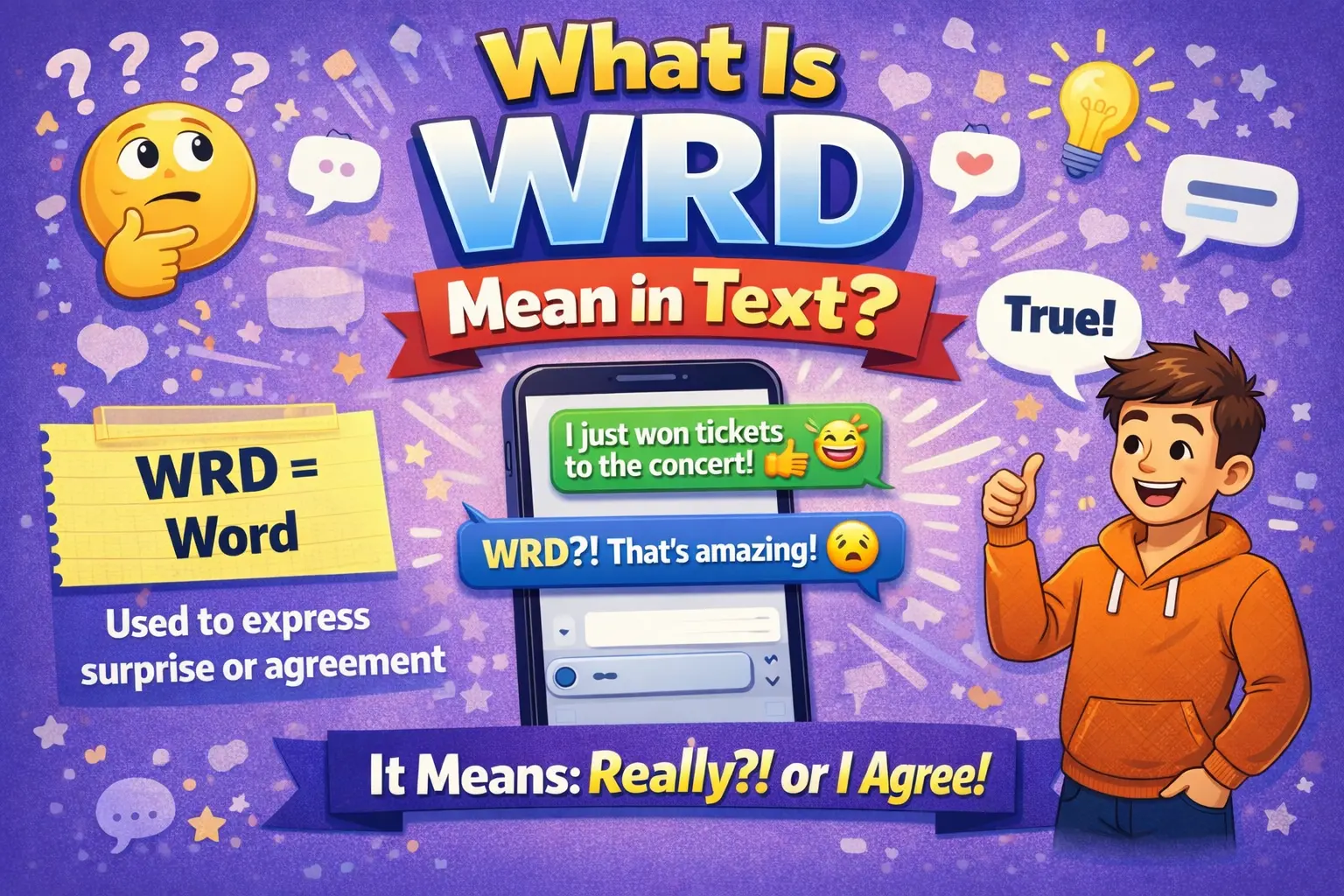
In text messaging, “wrd” is a shortened slang form of “word.” It is commonly used to show agreement, acknowledgment, or emphasis.
Simple definition:
- “wrd” = “word”
- Used to agree with someone
- Can express confirmation or understanding
Example meanings in conversation:
- “wrd” → “I agree”
- “wrd” → “That’s true”
- “wrd” → “I hear you”
Short quoted examples:
- “You coming tonight?”
“wrd, I’ll be there.” - “That movie was actually good.”
“wrd!” - “We should study earlier next time.”
“wrd, facts.”
In many cases, the meaning depends on tone and context rather than the word itself.
Origin & Background
The abbreviation “wrd” comes from the casual spoken use of the word “word” in urban English and street slang. It gained popularity in African American Vernacular English (AAVE) and hip-hop culture, where “word” was used as a way to show agreement or acknowledgment.
As texting and internet communication grew, people began shortening words to save time and effort. “Word” naturally became “wrd” in written form, especially on platforms like SMS, Twitter, Instagram, and TikTok.
Over time, the usage expanded beyond its original cultural roots and became part of global internet slang. Today, it is widely understood across different regions, especially among Gen Z and digital-native users.
Social media played a major role in spreading this abbreviation. Influencers, memes, and short-form content normalized it, making it a quick and expressive way to respond in conversations.
Real-Life Conversations
Here are realistic examples showing how “wrd” appears in everyday chats:
Conversation 1: WhatsApp Chat
Person A: “This week has been exhausting.”
Person B: “wrd, I feel the same.”
Conversation 2: Instagram DM
Person A: “Your latest post was fire 🔥”
Person B: “wrd, appreciate it!”
Conversation 3: TikTok Comment Thread
User A: “This actually explains it perfectly.”
User B: “wrd, finally something clear.”
Conversation 4: Text Message
Person A: “Let’s meet earlier tomorrow.”
Person B: “wrd, good idea.”
These examples show how flexible and natural the term feels in casual communication.
Emotional & Psychological Meaning
Beyond its literal meaning, “wrd” carries emotional nuance. It is not just about agreement, but also about connection and shared understanding.
When someone uses “wrd,” they are often:
- Acknowledging what the other person said
- Showing empathy or relatability
- Keeping the conversation smooth and informal
Why people use it:
- It saves time while texting
- It feels relaxed and conversational
- It creates a sense of belonging in casual chats
Real-life scenario:
Imagine a friend sharing a stressful experience about work. Instead of writing a long reply, you respond with “wrd.” This small response communicates that you understand their feeling without overexplaining. It feels natural, supportive, and emotionally aligned.
In modern communication, short expressions like this help maintain flow without making conversations feel heavy or formal.
Usage in Different Contexts
1. Social Media
On platforms like Instagram, TikTok, or Twitter, “wrd” is often used in comments or replies to show agreement or appreciation.
Example:
- “This outfit is perfect.”
“wrd, you nailed it.”
2. Friends & Relationships
Among friends, “wrd” is a casual way to agree or confirm something without sounding formal.
Example:
- “We should hang out this weekend.”
“wrd, let’s do it.”
3. Work / Professional Settings
In professional communication, “wrd” is generally not appropriate. It may come across as too informal or unprofessional.
Instead, formal alternatives like:
- “I agree”
- “That makes sense”
- “Understood”
are preferred.
4. Casual vs Serious Tone
- Casual chats: Perfectly acceptable
- Serious discussions: Avoid using it
- Emotional conversations: Use carefully depending on context
The tone of the conversation determines whether “wrd” fits naturally or not.
When NOT to Use It
While “wrd” is widely accepted in informal communication, there are situations where it should be avoided:
- Professional emails or workplace chats
- Academic writing or formal communication
- Sensitive or serious discussions where clarity is important
- Conversations with people unfamiliar with slang
Using slang in the wrong context can lead to misunderstandings or appear disrespectful.
Cultural awareness also matters. Not everyone interprets slang the same way, so it is important to adjust your language based on your audience.
Common Misunderstandings
Many people misinterpret “wrd” because of its simplicity.
Common mistakes:
- Thinking it is a random typo instead of slang
- Assuming it has a different meaning in each context
- Misreading tone as dismissive when it is actually agreement
Tone confusion:
Depending on punctuation or context, “wrd” can feel:
- Enthusiastic (wrd!)
- Neutral (wrd)
- Slightly dismissive (short reply without context)
Literal vs figurative meaning:
- Literal: A shortened form of “word”
- Figurative: A signal of agreement or acknowledgment
Understanding context is key to interpreting it correctly.
Comparison Table
| Expression | Meaning | Tone | Usage |
|---|---|---|---|
| wrd | Agreement / acknowledgment | Casual | Texts, social media |
| word | Same as wrd but spelled fully | Casual | Spoken or written |
| yes | Direct agreement | Neutral | Formal and informal |
| ok | Neutral acknowledgment | Neutral | General use |
| facts | Strong agreement | Emphatic | Casual slang |
| I agree | Formal agreement | Professional | Work or formal contexts |
Key Insight:
“wrd” is a relaxed, modern shorthand for agreement that fits best in informal conversations, while formal alternatives are better suited for professional or serious communication.
Variations / Types
Here are related expressions and variations often used alongside or instead of “wrd”:
- wrd
Short form of “word,” used for agreement. - word
Full version, same meaning, slightly more explicit. - facts
Strong agreement with emphasis on truth. - true
Simple acknowledgment of correctness. - fr (for real)
Expresses sincerity or agreement. - bet
Confirms agreement or acceptance of a plan. - exactly
Used to strongly agree with a statement. - ok
Neutral acknowledgment without strong emotion. - yeah
Casual agreement, more conversational. - got it
Indicates understanding rather than agreement.
Each variation carries slightly different emotional weight depending on the context.
How to Respond When Someone Uses It
Casual replies:
- “wrd, I get you too”
- “exactly!”
- “true that”
Funny replies:
- “wrd? You sound like a philosopher now 😄”
- “wrd, we speaking in code now”
Mature replies:
- “I agree, that makes sense”
- “Yes, that’s a good point”
Respectful replies:
- “I understand your perspective”
- “That’s a valid point, thanks for sharing”
Choosing the right response depends on your relationship with the person and the tone of the conversation.
Regional & Cultural Usage
Western culture
“wrd” is widely used in casual conversations, especially in urban and youth culture. It is common in texting and online interactions.
Asian culture
Its usage is growing among English-speaking users and younger audiences active on global platforms. However, it may not be universally recognized in all regions.
Middle Eastern culture
Usage exists mostly among digitally active youth who engage with global slang through social media.
Global internet usage
Thanks to memes, TikTok, and Instagram, “wrd” has become a globally recognized informal expression.
Generational differences
- Gen Z: Frequently uses slang like “wrd” in daily communication
- Millennials: May understand it but use it less often
- Older generations: Less familiar, may prefer formal expressions
Is It Safe for Kids?
Yes, “wrd” itself is not harmful or inappropriate. It is simply informal slang. However, children should be guided on when to use slang appropriately.
They should understand:
- When casual language is acceptable
- When formal language is required
- How tone affects communication
Teaching context awareness is more important than the slang itself.
FAQs
1. What does wrd mean in chat?
It means “word,” used to show agreement or acknowledgment in casual conversations.
2. Is wrd the same as word?
Yes, “wrd” is just a shortened slang version of “word.”
3. Is wrd formal or informal?
It is informal and should be used only in casual settings.
4. Can wrd mean something different?
No, its primary meaning is agreement, though tone may vary by context.
5. Is wrd commonly used today?
Yes, especially on social media and in texting among younger users.
6. Can I use wrd in professional emails?
No, it is not appropriate for professional or formal communication.
7. Why do people use wrd instead of word?
Because it is quicker to type and fits modern texting style.
Conclusion
Understanding what “wrd” means in text helps you navigate modern digital conversations with ease. It is a simple yet expressive slang term that signals agreement, acknowledgment, and shared understanding. While it originated from cultural and linguistic evolution, it has now become a widely recognized part of online communication.
The key to using “wrd” effectively is context. In casual conversations, it feels natural and relatable. In formal or professional settings, however, clearer and more formal language is better suited.
Mastering small expressions like this improves not only your communication skills but also your ability to connect with others in a more authentic way. Language continues to evolve, and staying aware of these changes helps you remain confident and adaptable in any conversation.