
If you’ve ever received a message that simply said “mbb” and paused for a second wondering what it meant, you’re not alone. Modern texting has turned language into a fast, shorthand-based system where three letters can carry warmth, affection, or even subtle social cues.
Understanding what “mbb” means in text isn’t just about decoding slang. It’s about understanding tone, relationships, and the emotional shortcuts people use in digital conversations today.
This guide explains the meaning of “mbb,” where it came from, how people actually use it, and when it’s appropriate—or not. By the end, you’ll recognize it instantly and respond naturally without second-guessing yourself.
What MBB Mean in Text – Quick Meaning
MBB in texting most commonly means:
- “My baby”
- A cute or affectionate way to address someone close
- Often used in romantic or deeply friendly contexts
It’s essentially a softer, more intimate version of “baby” or “babe.”
Examples:
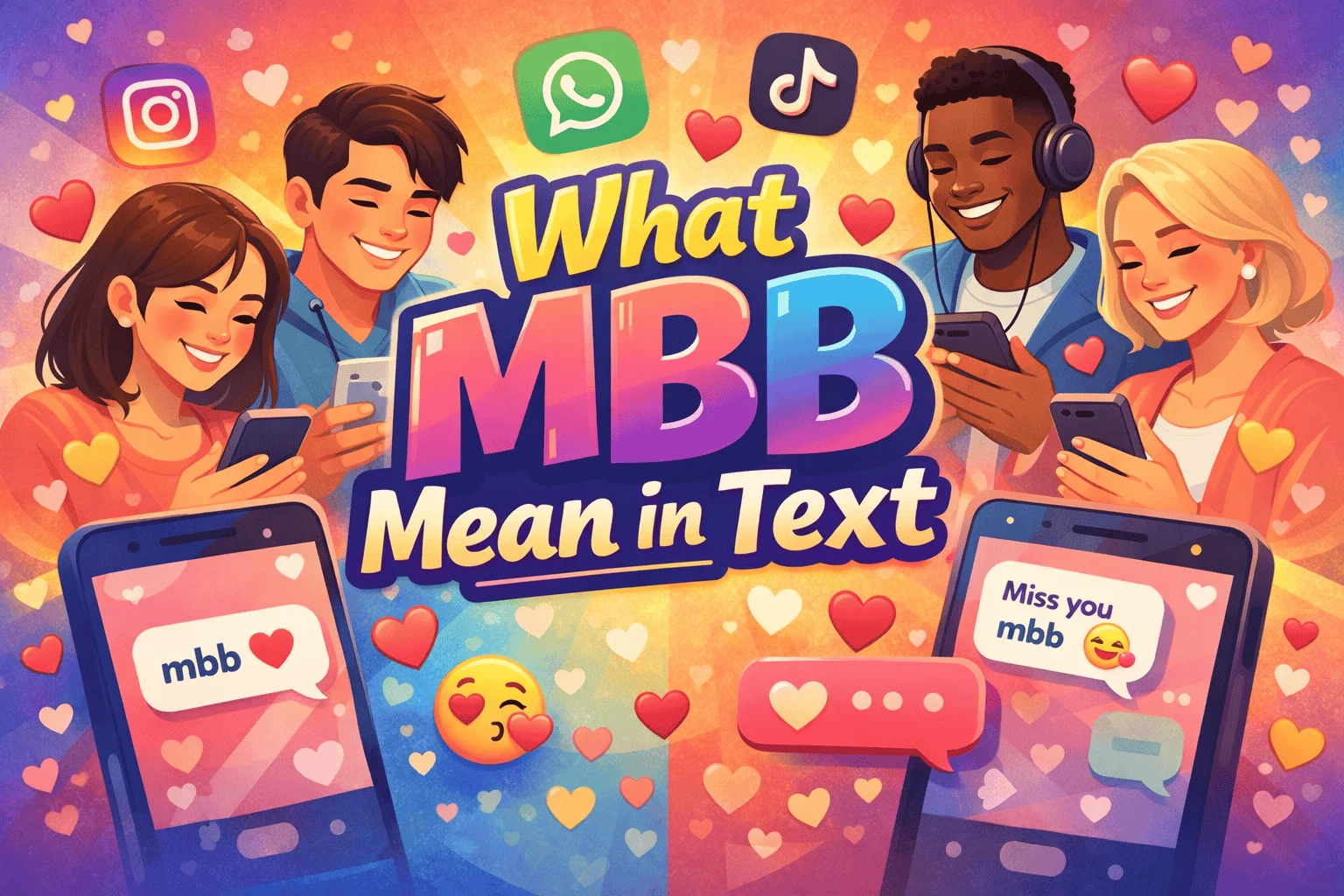
- “Good morning mbb ❤️”
- “Miss you mbb”
- “Sleep well mbb 😘”
The tone is gentle, warm, and personal. It’s rarely neutral.
Origin & Background
“MBB” emerged from the same digital language trend that produced abbreviations like “bb,” “bby,” and “bae.” As texting became faster and more emotional, people began shortening affectionate words to maintain intimacy while typing quickly.
At first, “bb” meant “baby.” Then users extended it to “mbb” to emphasize possession or closeness—my baby rather than just baby.
This shift reflects a broader social media pattern:
- Desire for intimacy in short messages
- Playful identity markers in relationships
- Personalized slang between couples or close friends
Platforms like Instagram and TikTok amplified this style. Comment sections filled with affectionate shorthand, making “mbb” feel familiar and cozy rather than strange.
Over time, it became less about literal meaning and more about emotional tone.
Real-Life Conversations
Here’s how “mbb” actually appears in everyday digital life.
Person A: Did you reach home?
Person B: Yes mbb, just got in ❤️
Instagram DM
Person A: You looked so happy today
Person B: Because you were there mbb 🥺
TikTok Comments
Person A: You’re glowing lately
Person B: It’s the love mbb 😌✨
Text Message
Person A: I miss you
Person B: I miss you more mbb
These feel natural because “mbb” carries affection without needing a full sentence.
Emotional & Psychological Meaning
“MBB” expresses attachment and closeness.
It signals:
- Emotional safety
- Affection
- Warmth
- Familiarity
People use it when they want to soften communication. It reduces emotional distance instantly.
There’s also a psychological layer: abbreviated affection feels private. It creates a micro-language shared between people, reinforcing bond and belonging.
Personal-style scenario
You’re in a long-distance relationship. Messages become routine: “good morning,” “eat well,” “sleep early.” Then your partner adds “mbb.”
Suddenly the same message feels warmer. More personal. More yours.
That’s the emotional power of small digital terms like this.
Usage in Different Contexts
Social Media
Common in captions, comments, and replies between couples or close friends.
Example: “Happy birthday mbb ❤️”
Friends & Relationships
Most natural in romantic or very close friendships.
Example: “Proud of you mbb”
Work / Professional Settings
Generally inappropriate. It sounds overly intimate.
Example: Avoid: “Great job mbb”
Casual vs Serious Tone
Casual: sweet, playful
Serious: deeply affectionate
Tone depends on relationship closeness.
When NOT to Use It
There are situations where “mbb” can feel uncomfortable or confusing.
- Professional communication
- New acquaintances
- Formal messages
- Cross-gender contexts where intimacy may be misread
- Conflict conversations
Example: During disagreement, “mbb” may sound dismissive or manipulative.
Affectionate slang works best when emotional safety already exists.
Common Misunderstandings
1. Thinking it’s gender-specific
It’s not. Anyone can use it.
2. Assuming it’s always romantic
Close friends sometimes use it too.
3. Reading it literally
It rarely implies possession—just closeness.
4. Confusing with “MB”
“MB” often means “my bad,” not affection.
5. Tone misinterpretation
Without context, it can feel sarcastic or forced.
Comparison Table
| Expression | Meaning | Tone | Relationship Level |
|---|---|---|---|
| MBB | My baby | Soft, intimate | Very close |
| BB | Baby | Casual affection | Close |
| Bae | Before anyone else | Romantic | Partner |
| Love | Endearment | Warm | Close |
| Bro | Friend | Casual | Friendly |
| My dear | Formal affection | Polite | Respectful |
| MB | My bad | Apology | Neutral |
Key Insight
“MBB” sits at the intimate end of digital affection. It implies emotional closeness beyond casual slang but less formal than traditional endearments.
Variations / Types
Here are common related forms people use.
1. bb
Short for baby. Quick affection.
2. bby
Cute version of baby. Playful tone.
3. my bb
Possessive emphasis.
4. mbby
Extra soft spelling.
5. babyyy
Stretched for excitement.
6. bbz
Stylized slang.
7. my love
More mature equivalent.
8. babycakes
Playful romantic nickname.
9. bub / bubba
Affectionate, cozy tone.
10. bae
Romantic priority slang.
How to Respond When Someone Uses It
If someone calls you “mbb,” your reply depends on your comfort and relationship.
Casual Replies
- “Hey mbb 😊”
- “What are you doing mbb”
- “Miss you too mbb”
Funny Replies
- “Yes mbb reporting for duty”
- “Mbb energy activated”
- “Stop making me blush mbb”
Mature Replies
- “Always here for you”
- “You mean a lot to me too”
- “I appreciate you”
Respectful Replies
- “That’s sweet of you”
- “Thank you”
- “You’re kind”
These help match tone without awkwardness.
Regional & Cultural Usage
Western Culture
Common in romantic texting. Similar to “baby” or “babe.”
Asian Culture
Used among couples influenced by global internet slang. Often paired with emojis.
Middle Eastern Culture
Less public use due to modesty norms, but present in private messaging.
Global Internet Usage
Understood across platforms. Meaning stable worldwide.
Generational Differences
Gen Z: frequent, playful, stylized
Millennials: less frequent, more sincere
Older users: rare
Is It Safe for Kids?
“MBB” itself is harmless. It simply means “my baby.”
However, context matters. Because it expresses intimacy, parents should ensure children understand boundaries and appropriate communication with strangers.
Within friendships or family chats, it’s generally safe.
FAQs
What does mbb stand for in text?
It usually means “my baby,” an affectionate nickname.
Is mbb romantic?
Most often yes, but close friends may use it too.
Can kids both use mbb?
Yes. It’s gender-neutral.
Is mbb flirting?
Often affectionate, sometimes flirtatious depending on context.
Is mbb same as bae?
Similar affection, but mbb feels softer and more personal.
Is mbb appropriate at work?
No. It’s too intimate for professional communication.
Why do people say mbb?
To express closeness quickly in text conversations.
Conclusion
“MBB” is a small expression with a big emotional footprint. It transforms ordinary messages into something warmer and more personal, signaling affection without long explanations.
In modern digital communication, people rely on tiny linguistic shortcuts to maintain connection. “Mbb” works because it feels private, gentle, and emotionally safe between people who share closeness.
Used naturally, it strengthens bonds. Used in the wrong context, it can confuse tone.
Once you understand its meaning and nuance, you can read it instantly—and respond with confidence, warmth, and emotional clarity.