
If you have ever received a message like “unt” in a chat and felt confused, you are not alone. Modern texting language is full of abbreviations, slang, and shortcuts that evolve quickly, especially on platforms like WhatsApp, Instagram, TikTok, and Snapchat.
People search for what unt mean in text because the term is not universally understood. It can feel ambiguous, especially if you are not familiar with regional slang or informal online expressions. In some cases, it may be a typo, while in others it may carry a specific meaning depending on context, tone, or even cultural background.
Understanding these small expressions is important because digital communication relies heavily on short forms. Misinterpreting them can lead to confusion, misunderstandings, or even awkward conversations. This guide will break down the meaning of “unt,” how it is used, and what you should know before using or responding to it.
what unt mean in text – Quick Meaning
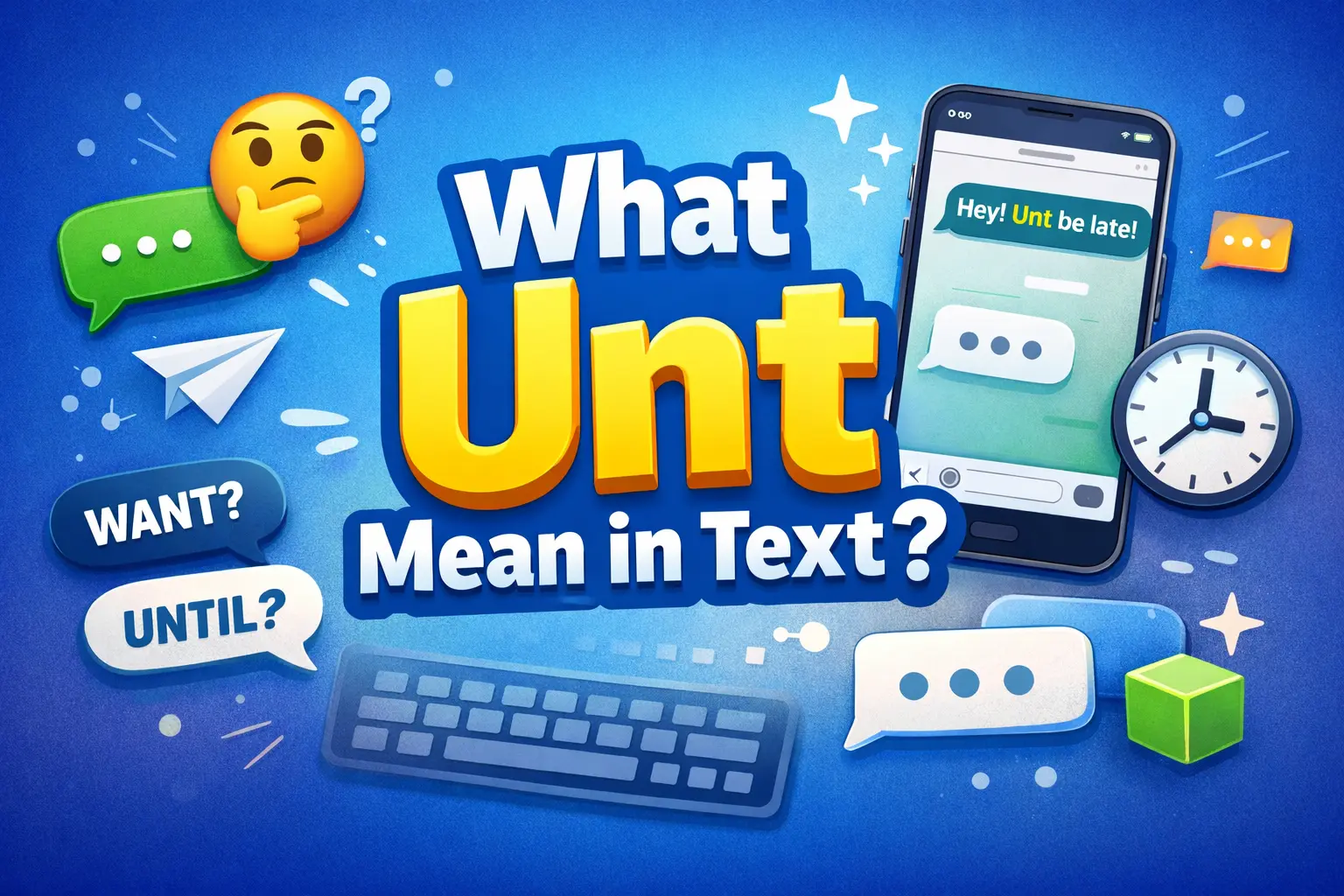
In most texting contexts, “unt” does not have a single fixed dictionary meaning. Instead, it is usually one of the following:
- A typo or shorthand for another word such as “want,” “unit,” or “until”
- A fragmented abbreviation depending on the sender’s intent
- A slang or informal expression used casually in fast typing
Examples:
- “I unt to go now” meaning “I want to go now”
- “Wait unt I come” meaning “Wait until I come”
- “That’s a small unt” possibly meaning “unit”
In many cases, the meaning depends entirely on the surrounding sentence.
Origin & Background
The term “unt” does not originate from formal English vocabulary. Instead, it comes from the natural evolution of online communication where users prioritize speed over accuracy.
Several factors influenced its usage:
- Fast typing on mobile keyboards often leads to missing letters
- Predictive text sometimes alters intended words
- Informal conversations encourage shortened or incomplete words
- Regional accents and pronunciation influence spelling in text
Over time, texting culture on platforms like SMS, WhatsApp, and social media has normalized abbreviated and incomplete words. This creates variations where “unt” may appear accidentally or intentionally depending on how a person communicates.
Unlike widely recognized slang terms, “unt” is not standardized. Its meaning is flexible and context-driven rather than fixed.
Real-Life Conversations
Conversation 1 (WhatsApp)
Person A: Are you coming to the party?
Person B: Yes, just unt I finish my work
Person A: Got it, take your time
Here, “unt” likely means “until.”
Conversation 2 (Instagram DM)
Person A: Why did you leave early?
Person B: I unt feeling well
Here, it appears to be a typo for “was not” or “am not,” depending on intent.
Conversation 3 (TikTok Comment)
User 1: This video is amazing
User 2: I unt agree more
This likely means “I couldn’t agree more,” showing that “unt” replaced part of a phrase.
Conversation 4 (Text Message)
Friend A: What do you unt for dinner?
Friend B: Pizza sounds good
Here, “unt” is used instead of “want.”
These examples show that interpretation depends heavily on context rather than a fixed definition.
Emotional & Psychological Meaning
From a communication perspective, “unt” reflects the speed and informality of modern messaging. People often type quickly, sometimes without proofreading, especially in casual conversations.
It can reveal:
- A relaxed tone between friends
- A lack of concern for formal grammar
- A focus on speed rather than precision
- Comfort in informal digital environments
Example Scenario
Imagine two close friends chatting late at night. One types quickly while multitasking and writes “I unt talk now.” The other understands it immediately as “I want to talk now” or “I cannot talk now” depending on tone.
This shows how shared context and familiarity allow people to interpret imperfect language effortlessly. It also highlights how digital communication is less about perfect grammar and more about shared understanding.
Usage in Different Contexts
Social Media
On platforms like Instagram or TikTok, “unt” may appear in comments or captions where users type quickly. It is usually informal and depends on context.
Friends & Relationships
Among close friends, “unt” is often understood without confusion. The meaning is derived from conversation flow rather than strict grammar.
Work or Professional Settings
In professional communication, “unt” is not appropriate. Clear and correct language should always be used to avoid misunderstandings.
Casual vs Serious Tone
- Casual: Acceptable among peers in informal chats
- Serious: Should be avoided in formal or important discussions
When NOT to Use It
There are situations where using or interpreting “unt” may cause confusion:
- Professional emails or workplace communication
- Academic writing or formal documents
- Conversations with people unfamiliar with slang
- Situations where clarity is critical, such as instructions or agreements
It is also important to consider cultural differences. Not everyone interprets abbreviations the same way, and unclear wording may lead to miscommunication.
Common Misunderstandings
Many people misunderstand “unt” because:
- They assume it has a fixed slang meaning
- They interpret it as a deliberate abbreviation rather than a typo
- They confuse it with unrelated acronyms or words
- They try to translate it literally without context
Another common issue is tone. Without context, “unt” may appear incomplete or even confusing, but in casual chats it is usually harmless.
Comparison Table
| Expression | Meaning | Tone | Usage Context |
|---|---|---|---|
| unt | Context-based, often typo or shorthand | Informal | Casual texting |
| want | Desire or intention | Neutral | General use |
| until | Time reference | Neutral | Instructions, time-based chats |
| unit | Measurement or item | Neutral | Technical or academic |
| won’t | Will not | Neutral | Everyday conversation |
Key Insight
“Unt” is not a standalone expression with a universal meaning. Its interpretation depends entirely on context, making it more of a situational shorthand than a defined word.
Variations / Types
Here are common ways “unt” may appear or be interpreted:
- Unt as “want”
Used when typing quickly or missing a letter. - Unt as “until”
Common in time-related messages. - Unt as “unit”
Appears in technical or numeric discussions. - Unt as a typo for “is not” phrases
Occurs in fast or careless typing. - Unt in fragmented sentences
Used when messages are incomplete. - Unt in predictive text errors
Auto-correct or keyboard prediction may alter intended words. - Unt in informal shorthand
Used intentionally in casual chats. - Unt influenced by pronunciation
Spelling reflects how a word sounds when spoken. - Unt in multilingual typing
Appears when switching between languages. - Unt as message truncation
Happens when messages are cut off or incomplete.
How to Respond When Someone Uses It
Casual Replies
- “Got it 👍”
- “Okay, take your time”
- “No worries”
Funny Replies
- “Unt means want or until? 😄”
- “Lost me at unt 😂”
Mature Replies
- “Do you mean want or until?”
- “Just confirming what you meant there”
Respectful Replies
- “I just want to make sure I understood you correctly”
- “Could you clarify that for me?”
These responses help maintain clarity without sounding judgmental.
Regional & Cultural Usage
Western Culture
In Western texting culture, abbreviations and typos are common. “Unt” may be interpreted based on context without much confusion among frequent digital communicators.
Asian Culture
In many Asian countries, English texting slang is widely used but varies by region. “Unt” may be less common and more likely interpreted as a typo rather than slang.
Middle Eastern Culture
English is often used alongside native languages. “Unt” may appear in informal chats but is typically clarified if unclear.
Global Internet Usage
Across global platforms, meaning is derived from context rather than standard definitions. Users rely on conversational cues.
Generational Differences
- Gen Z: More comfortable with slang, abbreviations, and shorthand
- Millennials: Familiar with texting slang but may prefer clearer wording
Is It Safe for Kids?
Yes, “unt” itself is not harmful. However, its meaning depends on context. Children and younger users may encounter it in casual conversations, so understanding basic digital literacy is helpful.
Parents and educators can guide children to:
- Ask for clarification when unsure
- Avoid assuming meanings without context
- Use clear language in important communication
FAQs
1. What does unt mean in texting?
It usually refers to a typo or shorthand for words like want, until, or unit, depending on context.
2. Is unt a slang word?
No, it is not a standardized slang term. It is mostly a contextual abbreviation or typing error.
3. How do I understand unt in a sentence?
Look at the surrounding words and conversation context to interpret its meaning.
4. Can unt be used intentionally?
Yes, sometimes people use it informally, but it is more often unintentional.
5. Is unt appropriate in formal writing?
No, it should be avoided in professional or academic communication.
6. Why do people type unt instead of full words?
It usually happens due to fast typing, autocorrect, or incomplete input.
7. Should I ask for clarification if I see unt?
Yes, if the meaning is unclear, asking is the best way to avoid misunderstanding.
Conclusion
Understanding what unt mean in text comes down to context rather than a fixed definition. It is typically a shorthand, typo, or incomplete form of a word like want, until, or unit. In casual conversations, people often interpret it naturally without confusion, but in formal communication, clarity should always be prioritized.
As digital communication continues to evolve, small expressions like this remind us how flexible and adaptive language can be. The key is not just knowing the meaning, but also understanding the situation, tone, and intent behind the message. With that awareness, you can confidently interpret and respond to messages without hesitation.