

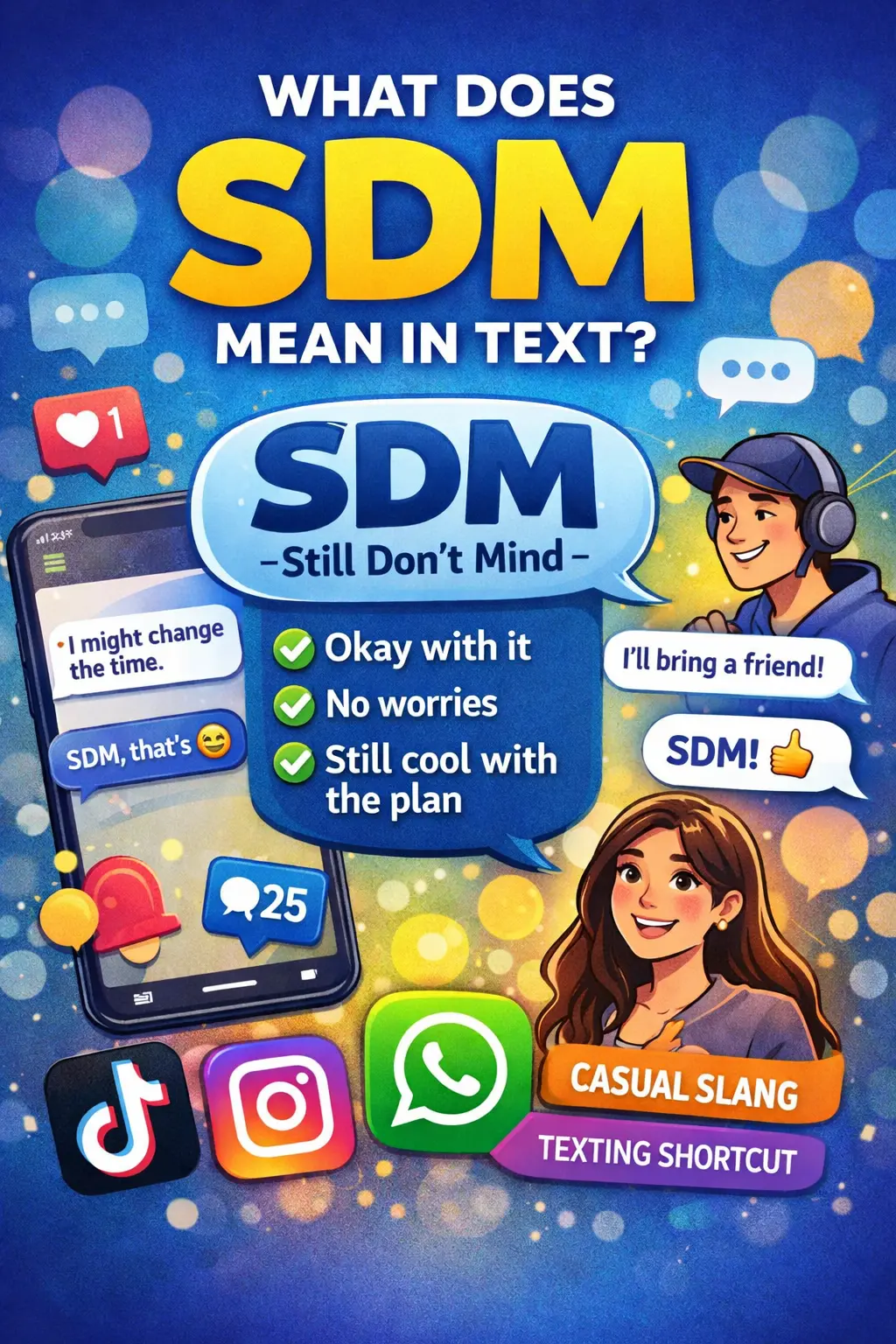
If you have recently seen “SDM” in a text message, Instagram DM, or comment thread, you might have paused for a moment and wondered what it means.
Short texting abbreviations appear online every day. Some are easy to recognize, like “LOL” or “BRB.” Others, like SDM, can feel confusing because the meaning changes depending on the conversation and the people using it.
Many people search for this phrase because they see it in casual chats, social media comments, or gaming conversations and want to make sure they understand the tone behind it.
In most cases, SDM is a casual shorthand used in digital communication, but its meaning can vary slightly depending on context. Understanding the emotional tone behind it helps you respond naturally without misunderstanding the message.
This guide explains the true meaning of SDM in text, where it came from, how people actually use it in real conversations, and when it is appropriate or inappropriate to use.
SDM – Quick Meaning
In texting and online messaging, SDM usually means “Still Don’t Mind.”
It is often used to show that someone is okay with something even after thinking about it again or that they are not bothered by a situation.
Simple Definition
SDM = Still Don’t Mind
People use it to express:
- Acceptance
- Reassurance
- Casual agreement
- Emotional calmness
Example Messages
“I know it’s late but I might still come over.”
“SDM, you’re always welcome.”
“You said you were busy earlier.”
“Yeah but SDM now.”
“I changed the plan again.”
“SDM 👍”
In all these examples, the person is saying they are still okay with the situation.
Origin & Background
Unlike some famous internet slang terms, SDM does not have a single clear origin. Instead, it grew naturally from the way people shorten phrases during fast digital communication.
Text abbreviations started becoming popular in the early SMS era when messages had strict character limits. People shortened words to save space and type faster.
Over time, platforms like:
- Snapchat
- TikTok
- Discord
helped accelerate this trend.
Younger internet users especially enjoy compressing emotions into short phrases. SDM fits perfectly into that style. It communicates a relaxed response without writing a full sentence like:
“I still don’t mind if that happens.”
Social media also encourages quick emotional reactions, and abbreviations like SDM help people keep conversations flowing without long explanations.
Interestingly, some online communities use SDM slightly differently depending on culture or group slang. But the core idea remains the same. It expresses a relaxed acceptance or lack of objection.
Real-Life Conversations
To understand SDM fully, it helps to see how people naturally use it in everyday chats.
WhatsApp Conversation
Person A:
“Sorry I cancelled yesterday. Are you still okay to meet today?”
Person B:
“Yeah SDM. Let’s go.”
Instagram DM
Person A:
“I might bring another friend with me.”
Person B:
“SDM 😊 the more the better.”
TikTok Comment Thread
User 1:
“I posted this video twice by accident.”
User 2:
“SDM it’s funny both times 😂”
Text Message
Person A:
“Is it weird if I call you late tonight?”
Person B:
“SDM. I’m awake anyway.”
In each case, the abbreviation acts like a relaxed green light. The person is signaling that the situation is fine.
Emotional & Psychological Meaning
Abbreviations like SDM reveal something interesting about modern digital communication.
People today often prefer low-pressure responses. Instead of writing long explanations, they use short phrases that communicate feelings quickly.
When someone writes SDM, they are usually expressing:
- Comfort
- Flexibility
- Emotional calm
- Lack of annoyance
It can also act as a subtle reassurance.
For example, imagine this situation.
You accidentally reschedule plans with a friend. You worry they might be upset. When they reply with “SDM”, it instantly reduces tension. The message is simple but emotionally powerful.
This type of response works because it signals emotional stability. The person is saying the situation does not bother them.
In digital communication, where tone can be hard to read, small signals like this help keep relationships smooth.
Usage in Different Contexts
Social Media
On platforms like TikTok or Instagram, SDM often appears in comment replies or casual DMs.
Example:
“Sorry I reposted your meme.”
“SDM 😂”
It keeps the tone light and friendly.
Friends & Relationships
Among friends, SDM usually communicates understanding and flexibility.
Example:
“You changed the movie again.”
“SDM, I just want popcorn anyway.”
In relationships, it can also show emotional patience.
Work or Professional Settings
In professional communication, SDM is rarely appropriate.
Most workplaces prefer full sentences because abbreviations may appear unclear or unprofessional.
Instead of writing “SDM,” people might say:
“I don’t mind.”
“That works for me.”
Casual vs Serious Tone
SDM is strongly casual in tone.
It works best in relaxed conversations with people you already know well.
Using it in serious discussions could make the message sound dismissive.
When NOT to Use It
Although SDM is harmless in many situations, there are moments when it can create confusion.
Professional communication
Emails, workplace chats, and formal discussions should avoid slang abbreviations.
Serious emotional conversations
If someone is discussing a sensitive topic, responding with “SDM” might sound cold or uninterested.
Cultural misunderstandings
Not everyone knows the abbreviation. Some people may simply feel confused.
Important decisions
When clarity matters, full sentences are always better.
Example:
Instead of “SDM,” say “I’m okay with that plan.”
Common Misunderstandings
Because texting slang evolves quickly, people sometimes interpret abbreviations incorrectly.
Mistake 1: Assuming one fixed meaning
Some users think SDM always means the same thing. In reality, context can slightly shift its tone.
Mistake 2: Reading sarcasm where none exists
Short messages often feel ambiguous. Someone might read “SDM” as sarcastic when it is actually genuine.
Mistake 3: Confusing it with other abbreviations
SDM can sometimes be mistaken for technical or professional terms, especially in formal conversations.
Understanding the surrounding conversation helps prevent these misunderstandings.
Comparison Table
| Expression | Meaning | Tone |
|---|---|---|
| SDM | Still Don’t Mind | Relaxed acceptance |
| IDC | I Don’t Care | Indifference |
| NVM | Never Mind | Dismissive or retracting |
| NP | No Problem | Friendly reassurance |
| Sure | Agreement | Neutral |
Key Insight
While several abbreviations express acceptance, SDM carries a softer emotional tone. It suggests calm flexibility rather than indifference or dismissal.
Variations / Types
Online conversations often produce variations of similar phrases.
Here are some related forms you might see.
1. SDM 🙂
Adds a friendly tone with an emoji.
2. SDM lol
Shows playful acceptance.
3. SDM tbh
Means “Still don’t mind, to be honest.”
4. SDM tho
Used when acknowledging something but still accepting it.
5. SDM fr
“Still don’t mind, for real.”
6. SDM anyway
Shows casual dismissal of the issue.
7. SDM bro
Very informal, used among close friends.
8. SDM yeah
Reinforces agreement.
9. SDM it’s fine
Extra reassurance.
10. SDM honestly
Used to emphasize sincerity.
How to Respond When Someone Uses It
If someone sends “SDM,” your response can vary depending on tone.
Casual Replies
“Cool thanks.”
“Alright awesome.”
Funny Replies
“Good because I already did it 😂”
“Too late now anyway.”
Mature Replies
“I appreciate your understanding.”
“Thanks for being flexible.”
Respectful Replies
“Thank you for being okay with it.”
“That means a lot.”
Matching the tone keeps the conversation natural.
Regional & Cultural Usage
Internet slang behaves differently across cultures.
Western Culture
In Western online spaces, abbreviations are extremely common. SDM fits easily into the quick conversational style used in texting and social media.
Asian Culture
Many Asian online communities also use abbreviations, but English slang is sometimes mixed with local language expressions.
Middle Eastern Culture
Abbreviations appear less often in everyday messaging. Some users may prefer writing the full sentence instead.
Global Internet Usage
Because social media connects people worldwide, slang like SDM spreads quickly. However, recognition still varies widely.
Generational Differences
Gen Z:
Highly comfortable with abbreviations and short digital expressions.
Millennials:
Use some slang but may prefer slightly clearer messages.
Older generations often prefer full phrases.
Is It Safe for Kids?
Yes. SDM is generally safe and harmless.
It does not contain offensive language or inappropriate meaning. It simply expresses that someone does not mind a situation.
However, parents should still encourage kids to understand context. Online slang can sometimes evolve quickly.
FAQs
What does SDM mean in texting?
In most casual conversations, SDM means “Still Don’t Mind.” It shows someone remains okay with a situation.
Is SDM rude?
No. It usually expresses calm acceptance rather than annoyance.
Can SDM have other meanings?
Yes. In certain professional contexts it may refer to different terms, but in texting it typically means “Still Don’t Mind.”
Is SDM commonly used?
It is less common than abbreviations like LOL or BRB, but it appears in casual online conversations.
Should I use SDM in professional messages?
No. Professional communication usually requires full, clear sentences.
Why do people use abbreviations like SDM?
They make conversations faster, lighter, and more relaxed, especially on mobile messaging platforms.
Conclusion
Understanding modern texting language can feel overwhelming at times. New abbreviations appear constantly, and their meanings often depend on context.
In most casual conversations, SDM simply means “Still Don’t Mind.” It signals flexibility, calm acceptance, and emotional reassurance.
The phrase works best in relaxed chats with friends, social media conversations, or informal messages. When used correctly, it helps keep communication short and friendly.
Like many pieces of internet slang, its power lies in simplicity. A three letter abbreviation can quietly communicate understanding and ease.
Once you recognize the tone behind it, you can read and respond with confidence. And the next time someone texts SDM, you will know exactly what they mean.