
If you’ve ever received a message that simply said “dg” and paused for a second, you’re not alone.
Short forms dominate digital communication. From “lol” to “brb,” we rely on quick abbreviations to express feelings, reactions, and decisions. But when it comes to what does dg mean in text, the answer is not always straightforward.
People search this phrase because they’ve seen it in a chat, a TikTok comment, or an Instagram DM and felt unsure. Is it rude? Is it casual? Is it an inside joke?
Let’s clear the confusion in a way that actually makes sense.
What Does DG Mean in Text – Quick Meaning
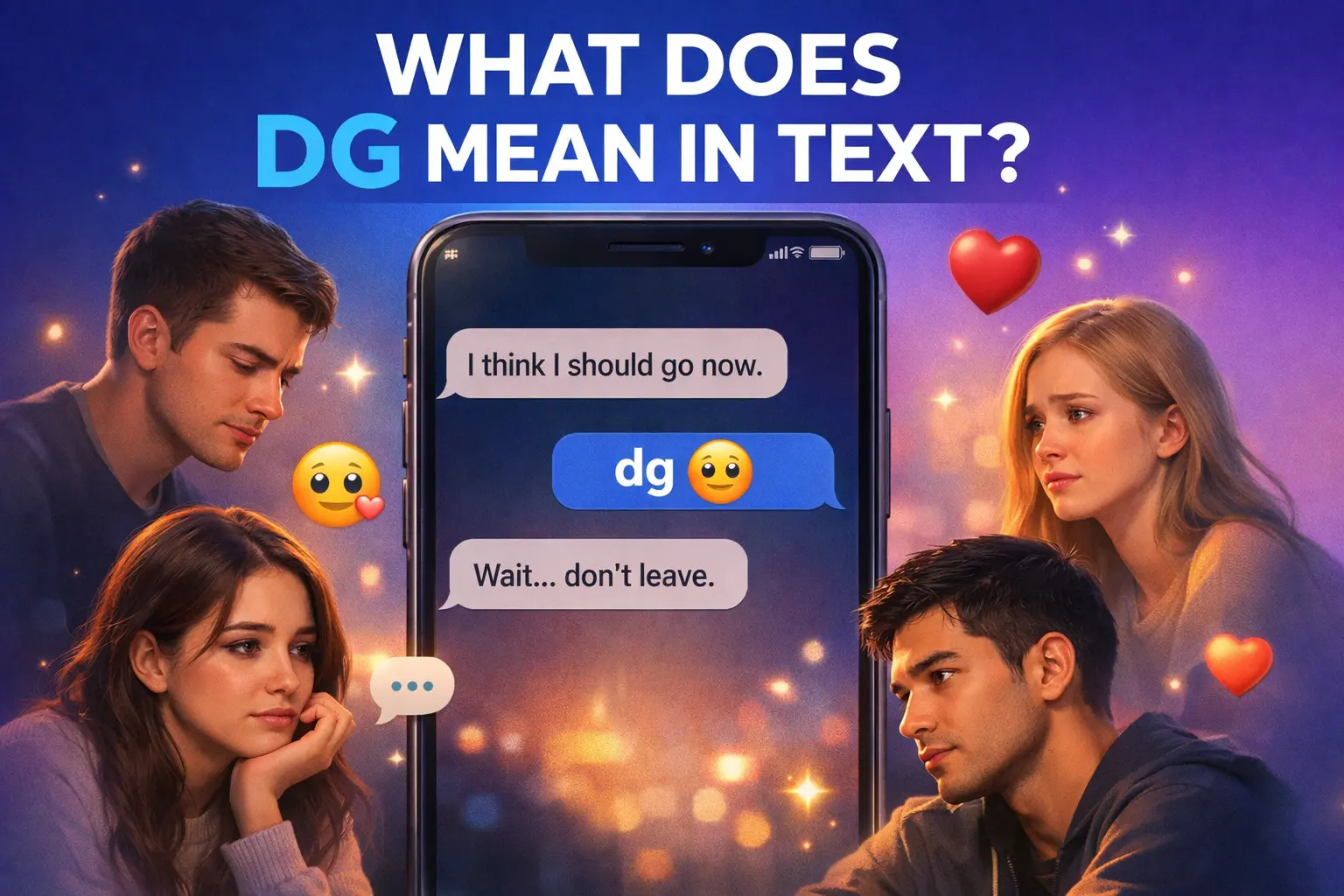
In most casual texting situations, “DG” means “Don’t Go.”
It’s usually:
- A quick emotional request
- A short way to express attachment
- Used in friendly or romantic conversations
Simple examples:
- “It’s late… dg 🥺”
- “I’m not ready for you to leave. dg.”
- “Wait, dg yet.”
In other contexts, though, “DG” can mean different things. That’s where misunderstandings begin.
Origin & Background
Unlike older internet slang that came from early chatrooms or gaming communities, “DG” feels more like a natural abbreviation. It simply shortens two common words: Don’t Go.
Its popularity increased with:
- Fast-paced texting culture
- Emotional minimalism in messaging
- Platforms like TikTok and Instagram where short replies dominate
As attention spans shortened and typing habits became faster, abbreviations became more emotional than practical. “DG” carries a feeling. It is rarely neutral.
Over time, it also picked up other meanings depending on context, including:
- “Don’t care” variations in some circles
- A nickname or initials
- Occasionally “Dear God” in dramatic texting
Context is everything.
Real-Life Conversations
Here’s how “DG” actually appears in real conversations.
1. WhatsApp Chat
Person A: I think I should head home now.
Person B: Already? dg 😭
Person A: I have work early.
Person B: Just 10 more mins?
Here, “dg” clearly means “don’t go” and expresses emotional attachment.
2. Instagram DMs
Person A: I’m deleting my account for a while.
Person B: Wait what?? dg pls
Person A: I need a break.
Person B: I’ll miss your posts.
The abbreviation adds urgency and closeness.
3. TikTok Comments
Creator: Taking a break from posting.
Commenter: dg we love your content
This shows community attachment rather than romance.
4. Text Message Between Friends
Person A: I’m thinking of quitting the group chat.
Person B: dg it won’t be the same
Here it expresses emotional dependence on shared connection.
Emotional & Psychological Meaning
“DG” expresses resistance to separation.
Psychologically, it reflects:
- Fear of loss
- Attachment
- Desire to prolong connection
- Emotional vulnerability
When someone says “dg,” they are revealing a small emotional truth. They are saying, “I value this moment.”
In my experience observing digital conversations, these tiny abbreviations often hold more emotion than full sentences. A simple “dg” can feel warmer than “Please don’t leave.”
It is brief but intimate.
Usage in Different Contexts
1. Social Media
Used in comments and DMs when someone announces leaving, logging off, or taking a break.
Tone is emotional but casual.
2. Friends & Relationships
Common in romantic or close friendships.
It can sound cute or clingy depending on delivery.
3. Work / Professional Settings
Not appropriate.
Professional communication requires clarity. “DG” could confuse colleagues or appear unprofessional.
4. Casual vs Serious Tone
- With emojis: playful and affectionate
- Without emojis: can feel serious or urgent
Example:
“dg 🥺” feels soft.
“dg.” feels intense.
When NOT to Use It
There are situations where “DG” may cause confusion.
- In formal emails
- In academic settings
- With someone unfamiliar with slang
- In cross-cultural professional communication
Also, if someone is expressing a serious life decision, using “dg” lightly may seem dismissive.
Tone awareness matters.
Common Misunderstandings
Some people misread “DG” as:
- Initials of a person
- A brand reference
- “Don’t give”
- “Don’t care”
Tone confusion is common because digital text lacks voice and facial expression.
Literal vs figurative meaning also plays a role. Sometimes “dg” is playful. Other times, it signals genuine emotional attachment.
Always look at surrounding messages.
Comparison Table
| Expression | Meaning | Tone | Usage Context |
|---|---|---|---|
| DG | Don’t Go | Emotional, attached | Casual texting |
| BRB | Be Right Back | Neutral | Informational |
| IDC | I Don’t Care | Dismissive | Argumentative |
| Stay | Literal request to remain | Direct | Serious tone |
| Bye | Goodbye | Neutral | General |
Key Insight
“DG” feels softer and more emotionally loaded than simply saying “stay.” It reflects closeness rather than command.
Variations and Types
- dg pls
Adds urgency. “Please don’t go.” - dg yet
Temporary request. Delay leaving. - dggg
Playful exaggeration for emotional emphasis. - dg 😭
Shows sadness or dramatic attachment. - dg fr
“Don’t go for real.” Strong sincerity. - dg babe
Romantic tone. - dg rn
Right now emphasis. - DG?
Questioning tone. Unsure request. - dg bro
Friendly attachment. - dg lol
Playful, not deeply serious.
Each variation shifts emotional intensity.
How to Respond When Someone Uses It
Casual Replies
- “Haha I’ll stay a bit.”
- “Okay fine, five more minutes.”
Funny Replies
- “Only if you pay me in snacks.”
- “You’re emotionally blackmailing me.”
Mature Replies
- “I can stay for a little longer.”
- “I appreciate that, but I really need to go.”
Respectful Replies
- “That’s sweet. I’ll talk to you tomorrow.”
- “Thank you, that means a lot.”
Your response should match the emotional weight.
Regional & Cultural Usage
Western Culture
Common in romantic and friend-based texting. Emotional expressiveness is socially accepted online.
Asian Culture
Used among younger generations, especially in urban digital spaces. Older generations may not recognize it.
Middle Eastern Culture
Often used in private chats. Public emotional expression varies culturally.
Global Internet Usage
Meaning largely standardized through TikTok and Instagram comment culture.
Gen Z vs Millennials
- Gen Z uses it more frequently and playfully.
- Millennials may prefer full sentences like “don’t go yet.”
Generational comfort with shorthand affects tone interpretation.
Is It Safe for Kids?
Yes, in most contexts.
“DG” itself is harmless. It simply means “Don’t Go.” However, parents should encourage children to understand emotional tone in digital communication to avoid misunderstandings.
Context is always more important than the abbreviation itself.
FAQs
1. Does DG always mean “Don’t Go”?
No. It usually does in texting, but context can change meaning.
2. Is DG rude?
Not typically. It is emotional, not aggressive.
3. Can DG mean something romantic?
Yes. It often appears in romantic chats.
4. Is DG used on TikTok?
Yes, especially in comments when creators announce breaks.
5. Should I use DG at work?
No. It is too informal for professional settings.
6. Why do people use DG instead of full words?
Speed, emotional shorthand, and digital habit.
7. Can DG sound clingy?
Yes, depending on tone and relationship dynamics.
Conclusion
So, what does dg mean in text?
In most cases, it simply means “Don’t Go.” But emotionally, it means much more.
It reflects attachment. It shows care. It reveals that someone values your presence enough to ask you to stay, even briefly.
Modern communication thrives on small signals. Two letters can carry vulnerability, humor, affection, or urgency.
If you understand the tone and context, you can use “DG” confidently. And when someone sends it to you, you’ll know it is less about grammar and more about connection.