
If you have ever come across the abbreviation “TPT” in a message and paused for a moment, you are not alone. Modern digital communication is filled with short forms, acronyms, and slang that evolve quickly across platforms like WhatsApp, Instagram, TikTok, and Snapchat. These abbreviations often carry meanings that depend on context, tone, and even the relationship between the people communicating.
The phrase “what does tpt mean in text” is commonly searched because people encounter it in chats and feel unsure whether it is playful, technical, or something else entirely. Misunderstanding such abbreviations can easily lead to confusion or misinterpretation of tone.
This guide explains everything about TPT in a clear, practical, and human-centered way. You will learn its meaning, how it is used in conversations, emotional implications, variations, and how to respond naturally when someone uses it. By the end, you will feel confident recognizing and using it in the right context.
TPT – Quick Meaning
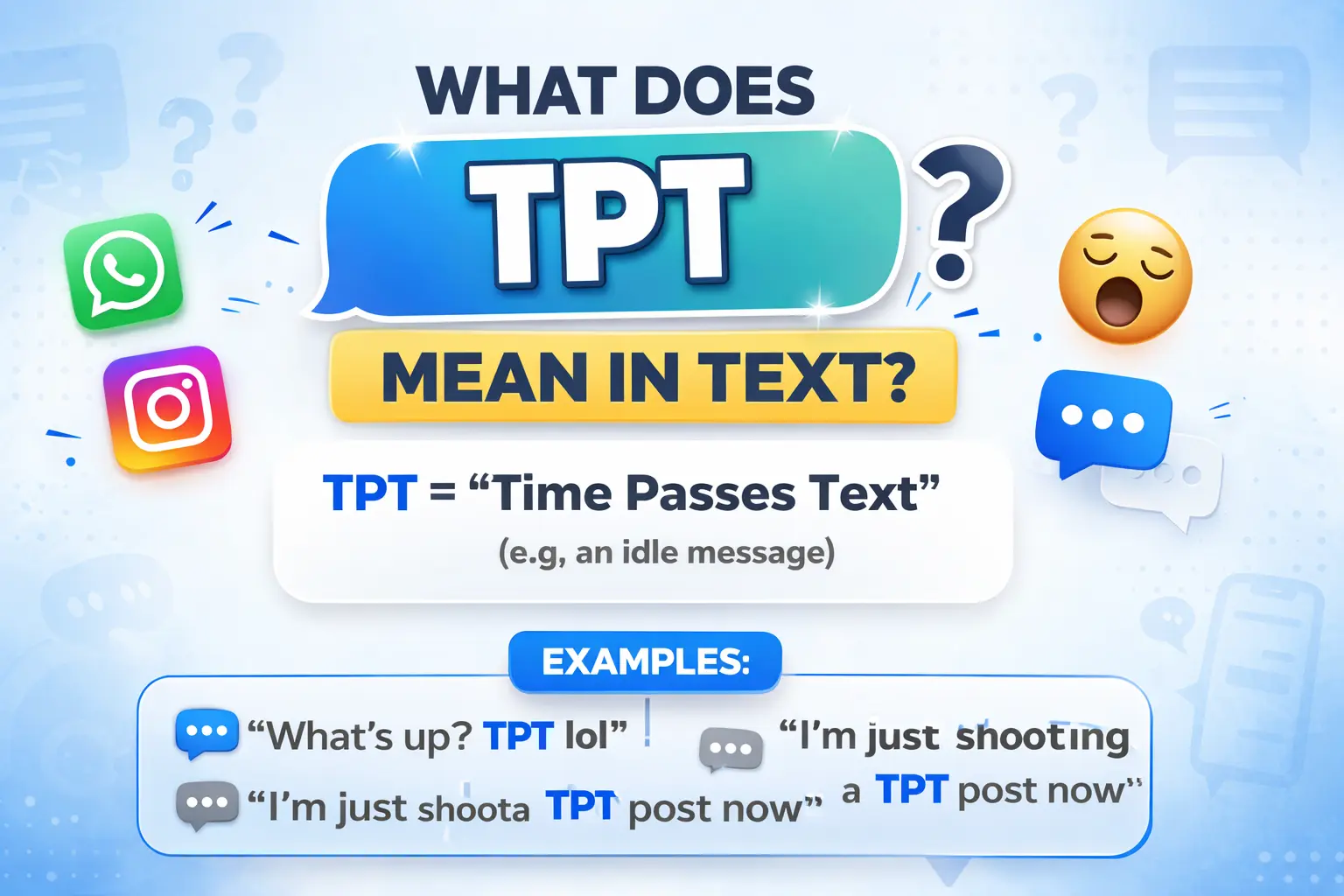
In text messaging and online communication, TPT is most commonly used as shorthand for “Time Pass Talk” or “Talking for Time Pass” in some regions, especially in informal conversations. However, it can also have different meanings depending on context, such as:
- A casual filler conversation
- Light, non-serious chatting
- Passing time without a specific purpose
Simple Definition:
TPT refers to conversation that is not deeply meaningful, often used just to pass time or stay engaged casually.
Example Usage:
- “We were just doing TPT last night.”
- “It’s not serious, just TPT.”
- “Stop the TPT and get to the point.”
In some contexts, especially outside informal slang usage, TPT can also stand for other meanings like “Teacher Pay Teachers” (an educational platform), but in texting conversations, the casual slang meaning is the most relevant.
Origin & Background
The abbreviation TPT does not come from a single official origin like dictionary words. Instead, it evolved organically through internet communication habits.
With the rise of SMS texting and later social media platforms, users began shortening common phrases to save time and effort. In regions where English blends with local conversational styles, phrases like “time pass talk” became naturally abbreviated into TPT.
Its popularity increased through:
- Messaging apps where quick replies are preferred
- Youth communication culture
- Regional slang blending with English abbreviations
- Online group chats where casual interaction is frequent
Over time, TPT became part of informal digital vocabulary, especially among younger users who frequently engage in light, non-structured conversations.
Real-Life Conversations
Here are some realistic examples that show how TPT appears in everyday chats:
WhatsApp Chat Example 1
Person A: “Why are we chatting for so long?”
Person B: “Relax, it’s just TPT, nothing serious.”
Instagram DM Example
Person A: “Are we planning something or just talking?”
Person B: “Honestly just TPT 😂”
TikTok Comment Thread
Person A: “This convo is going nowhere.”
Person B: “It’s TPT, not everything needs a purpose.”
Text Message Example
Person A: “We’ve been talking for an hour.”
Person B: “Yeah, pure TPT vibes.”
These conversations show that TPT is often used to describe relaxed, aimless, or casual communication rather than structured or goal-oriented discussion.
Emotional & Psychological Meaning
TPT is more than just an abbreviation. It reflects how people emotionally engage in digital conversations.
When someone says they are doing TPT, it often indicates:
- A desire for companionship without pressure
- A relaxed mental state
- A preference for casual connection over serious discussion
In many cases, TPT conversations help reduce loneliness, especially in fast-paced digital environments where people may not always have deep topics to discuss.
Example Scenario:
Imagine two friends who are bored late at night. They start chatting without any specific topic, sharing memes, random thoughts, or light jokes. This type of interaction is TPT. It may seem simple, but it plays a subtle role in maintaining social bonds and emotional connection.
From a communication perspective, TPT reflects how modern conversations are not always goal-driven. Sometimes, the value lies in simply being present in the conversation rather than achieving something specific.
Usage in Different Contexts
TPT can be used differently depending on the situation:
Social Media
On platforms like Instagram or TikTok, TPT is often used in comments or captions to describe casual interactions or random discussions.
Friends & Relationships
Among friends, TPT usually signals comfort and informality. It shows that the conversation does not require seriousness.
Work / Professional Settings
TPT is generally not appropriate in professional communication. Using it in emails or workplace chats may cause confusion or appear unprofessional.
Casual vs Serious Tone
- Casual tone: Common and acceptable
- Serious tone: Avoid using TPT, as it may undermine clarity
Understanding context is key to using TPT correctly.
When NOT to Use It
While TPT is useful in informal chats, there are situations where it should be avoided:
- Formal emails or professional communication
- Academic writing or presentations
- Sensitive conversations requiring clarity
- Discussions involving serious topics such as conflicts or important decisions
Using TPT in the wrong context can make your message seem dismissive or unclear. It is best reserved for relaxed, informal interactions.
Common Misunderstandings
Many people misinterpret TPT because:
- They assume it has a single universal meaning
- They confuse it with technical or corporate abbreviations
- They take it literally instead of contextually
Another common misunderstanding is tone. Some may interpret TPT as dismissive or unimportant, while in reality, it simply describes casual conversation.
The meaning of TPT is highly dependent on context, relationship, and tone. Without these, interpretation can vary widely.
Comparison Table
| Expression | Meaning | Tone | Usage Context |
|---|---|---|---|
| TPT | Time pass talk or casual chat | Informal | Friends, social media |
| Small talk | Light conversation | Neutral | Social or professional |
| Deep talk | Meaningful conversation | Serious | Personal relationships |
| Idle chat | Unfocused conversation | Casual | Informal settings |
| Serious discussion | Goal-oriented talk | Formal | Work or important matters |
Key Insight
TPT sits at the casual end of the communication spectrum. It represents relaxed interaction without pressure, unlike structured or goal-driven conversations.
Variations / Types
Here are related variations and expressions often associated with TPT:
- TP (Time Pass)
A shorter form meaning casual or non-serious activity. - Casual chat
General conversation without a specific goal. - Chill talk
Relaxed and friendly conversation. - Random talk
Unstructured discussion on different topics. - Idle conversation
Talking just to pass time. - Light conversation
Easy, non-heavy discussion. - Free talk
Open-ended and informal discussion. - Small talk
Brief, polite conversation, often with acquaintances. - Friendly banter
Playful and humorous interaction. - Hangout chat
Casual interaction while spending time together.
Each of these shares a similar idea of relaxed communication without strict purpose.
How to Respond When Someone Uses It
When someone uses TPT in conversation, your response can match the tone of the chat:
Casual Replies
- “Yeah, just chilling 😄”
- “Same here, just passing time”
Funny Replies
- “Best kind of conversation honestly 😂”
- “TPT is our full-time job now”
Mature Replies
- “Got it, just keeping things light”
- “No problem, casual chat is fine”
Respectful Replies
- “Understood, let’s keep it relaxed”
- “Alright, we’ll keep it simple”
Matching the tone helps maintain smooth communication and avoids misunderstandings.
Regional & Cultural Usage
The meaning and frequency of TPT usage can vary across cultures:
Western Culture
TPT is less commonly used as slang. People may prefer terms like “small talk” or “chit-chat.”
Asian Culture
In some regions, especially where English blends with local languages, TPT is more commonly understood as “time pass talk.”
Middle Eastern Culture
Usage exists mainly in informal digital conversations among younger users.
Global Internet Usage
Across global platforms, TPT is not as universally recognized as other slang terms, but it appears in niche communities and informal chats.
Generational Differences
- Gen Z: More likely to use and understand abbreviations like TPT
- Millennials: May recognize it but use more traditional expressions
- Older generations: Less familiar with such slang
Is It Safe for Kids?
Yes, TPT itself is a neutral and harmless abbreviation. It does not carry offensive or inappropriate meaning. However, its usage depends on context.
Children and teens may encounter it in casual conversations online. As with any digital communication, guidance on context awareness is helpful so they understand when informal language is appropriate.
FAQs
1. What does TPT mean in texting?
It usually means “time pass talk,” referring to casual or non-serious conversation.
2. Is TPT a formal term?
No, it is strictly informal and used in casual communication.
3. Can TPT have different meanings?
Yes, outside texting slang, it can refer to other things like educational platforms, but context matters.
4. Is TPT rude to use?
No, it is not rude, but it should be used in appropriate informal settings.
5. Where is TPT commonly used?
It is commonly seen in chat apps and social media among younger users.
6. Should I use TPT in professional messages?
No, it is best avoided in professional or formal communication.
7. Does TPT always mean the same thing?
No, meaning depends on context, tone, and the relationship between speakers.
Conclusion
Understanding what TPT means in text helps you navigate modern digital conversations with confidence. While it may seem like just another abbreviation, it represents a broader communication style where not every interaction needs a strict purpose. Sometimes, people simply talk to connect, relax, or pass time together.
Recognizing TPT allows you to interpret tone correctly and respond naturally without confusion. Whether you are chatting with friends, browsing social media, or engaging in casual online discussions, knowing these small expressions makes communication smoother and more meaningful.
In the end, TPT reflects a simple truth about human interaction in the digital age: not every conversation has to be serious to be valuable.