
If you have ever received a message that simply said “WTF?” and felt confused, surprised, or slightly offended, you are not alone.
Many people search what do wtf mean in text because they see it everywhere. It pops up in group chats, Instagram comments, TikTok replies, and even casual emails. But the meaning is not always as straightforward as it seems.
Sometimes it expresses shock.
Sometimes it shows humor.
Sometimes it signals anger or disbelief.
Understanding it correctly helps you avoid awkward misunderstandings and communicate with more confidence in digital spaces.
Let’s break it down clearly and honestly.
WTF – Quick Meaning
WTF stands for:
“What The F*”**
It is an informal slang expression used to show:
- Shock or surprise
- Confusion
- Disbelief
- Frustration
- Amusement in shocking situations
In text conversations, it often replaces a full emotional reaction.
Examples:
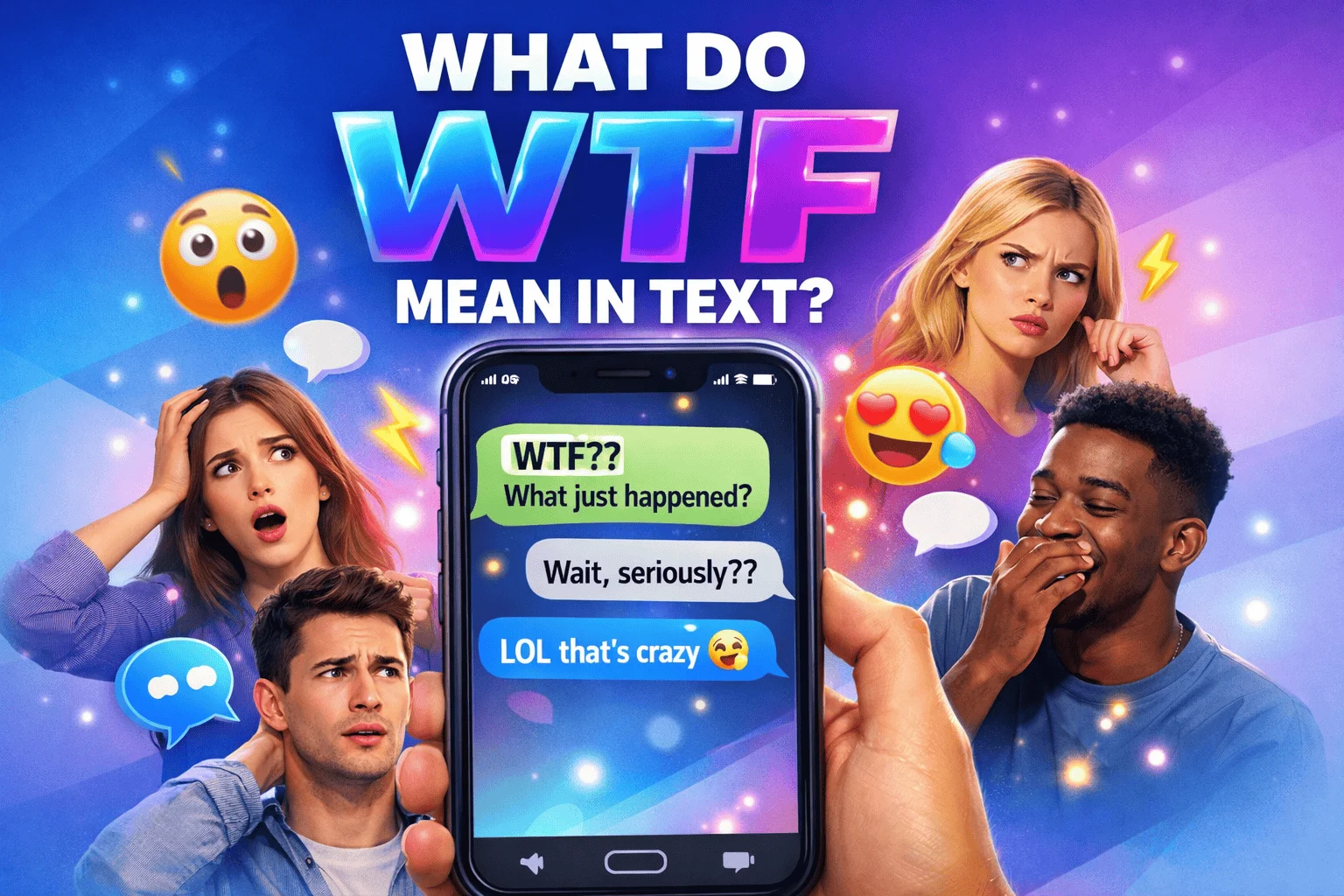
- “WTF just happened?”
- “WTF is going on here?”
- “WTF 😂 that plot twist!”
Notice something important. The tone completely changes depending on context and emojis.
Origin & Background
WTF did not begin with texting.
It originated in spoken English as a profanity-based expression. Over time, it became abbreviated in writing, especially in early internet forums and chat rooms in the late 1990s.
As texting culture grew with platforms like:
- TikTok
Short acronyms became more practical than typing full sentences.
People preferred speed.
Emotions became compressed.
Language became faster and sharper.
WTF evolved from a harsh, angry phrase into something more flexible. Today, it can be dramatic, playful, sarcastic, or genuinely upset depending on tone.
Social media accelerated that evolution. Reaction culture made exaggerated shock a form of entertainment.
Now, sometimes people use “WTF” even when they are not truly angry. It can simply mean “Wow, that is unexpected.”
Real-Life Conversations
To truly understand what do wtf mean in text, you need to see it in real digital conversations.
1. WhatsApp Chat
Person A: I just quit my job today.
Person B: WTF?? Why didn’t you tell me?!
Here, it expresses shock and concern. It is emotional, not aggressive.
2. Instagram DMs
Person A: Look at this outfit I bought for $5.
Person B: WTF 😂 That’s ridiculous. Where did you find it?
This is playful surprise. No anger involved.
3. TikTok Comments
Video shows a wild plot twist.
Commenter 1: WTF just happened??
Commenter 2: I had to rewatch it three times 😭
This shows confusion mixed with excitement.
4. Text Message Between Friends
Person A: I accidentally sent that message to my boss.
Person B: WTF… are you serious?
Here, the tone is serious shock and concern.
In real life, I have seen friendships briefly tense up because someone misread the tone. Without facial expressions, three letters can feel harsher than intended.
Context matters more than the acronym itself.
Emotional & Psychological Meaning
At its core, WTF expresses an intense emotional spike.
It signals that something has disrupted expectations.
Psychologically, humans react strongly when reality does not match what we predicted. That reaction needs expression. In face-to-face conversation, we use tone and body language. Online, we use acronyms.
WTF acts like a digital emotional shortcut.
It often reveals:
- Impulsiveness
- Strong emotional engagement
- Surprise sensitivity
- Informal comfort level with the other person
I remember once texting a close friend about a sudden engagement announcement from someone who had just gone through a breakup. She replied, “WTF?? Already??”
She was not angry. She was processing shock. It was raw, honest emotion in three letters.
That is the power of slang in modern communication.
Usage in Different Contexts
Social Media
On platforms like Instagram and TikTok, WTF is often exaggerated for entertainment.
It can mean:
- “That’s mistaken!”
- “That’s unbelievable!”
- “I can’t process this.”
Tone is usually dramatic rather than hostile.
Friends & Relationships
Among close friends, WTF often signals comfort.
Example:
“WTF you didn’t invite me?? 😭”
This is playful guilt, not serious anger.
In romantic relationships, tone matters more. Without emojis, it may feel confrontational.
Work / Professional Settings
This is where caution is necessary.
Using WTF in professional emails or formal Slack messages can appear disrespectful or immature.
Instead of:
“WTF happened to the report?”
Say:
“Can you clarify what happened with the report?”
Professional communication requires emotional control.
Casual vs Serious Tone
- With emojis, it softens.
- In all caps without punctuation, it feels intense.
- With question marks, it feels confused.
- With periods, it feels irritated.
Digital tone is subtle but powerful.
When NOT to Use It
There are situations where WTF is inappropriate:
- Formal emails
- Academic writing
- Communication with elders who value formality
- Religious or culturally conservative spaces
- Conflict situations where escalation is possible
Cultural sensitivity is important. In some communities, even abbreviated profanity is considered disrespectful.
If you are unsure, choose a safer alternative like “What happened?” or “I’m confused.”
Common Misunderstandings
1. Assuming It Always Means Anger
Many people interpret WTF as aggressive. In reality, it is often playful.
2. Ignoring Tone Markers
“WTF 😂” is very different from “WTF.”
Emojis matter.
3. Taking It Literally
The literal expansion includes profanity. But in modern texting, many users treat it as a symbolic reaction rather than a curse.
4. Generational Misreading
Older adults may see it as offensive. Younger users may see it as harmless slang.
Tone interpretation depends on cultural lens.
Comparison Table
| Expression | Meaning | Tone Level | Formality |
|---|---|---|---|
| WTF | Shock or disbelief | High emotional intensity | Very informal |
| OMG | Surprise or excitement | Medium | Informal |
| Seriously? | Questioning disbelief | Medium | Neutral |
| What happened? | Genuine inquiry | Low | Neutral |
| No way | Surprise or denial | Light | Casual |
| That’s unbelievable | Strong disbelief | Controlled | Semi-formal |
Key Insight
WTF is emotionally louder than most alternatives. If you want intensity, it works. If you want clarity without risk, choose softer expressions.
Variations / Types
Here are common variations you might see:
- WTF?!
Strong shock with urgency. - WTF 😂
Shock mixed with humor. - WTF bro
Casual disbelief among friends. - WTF is this?
Confusion or criticism. - WTF happened?
Urgent curiosity. - WTF man
Frustration toward someone. - WTF lol
Playful disbelief. - WTF seriously?
Questioning legitimacy. - WTF???
Heightened emotional reaction. - WTF omg
Dramatic surprise combo.
Each variation shifts emotional intensity.
How to Respond When Someone Uses It
Casual Replies
- “I know right!”
- “Mistaken, isn’t it?”
- “I couldn’t believe it either.”
Funny Replies
- “Plot twist of the year.”
- “Welcome to my life.”
- “I need popcorn for this.”
Mature Replies
- “Let me explain.”
- “It’s not as bad as it sounds.”
- “Here’s what really happened.”
Respectful Replies
- “I understand your reaction.”
- “It surprised me too.”
- “Let’s talk about it calmly.”
Your response sets the emotional direction of the conversation.
Regional & Cultural Usage
Western Culture
In countries like the United States and the United Kingdom, abbreviated profanity is common in informal texting. WTF is widely recognized and often used humorously.
Asian Culture
In many Asian societies, public communication values politeness. Younger users may use WTF casually, but older generations may view it as disrespectful.
Middle Eastern Culture
In more conservative communities, profanity based acronyms can feel inappropriate, especially in mixed company or formal settings.
Global Internet Usage
Online gaming communities and meme culture use WTF frequently to react to unexpected events. Tone is usually exaggerated for effect.
Generational Differences
Gen Z often uses WTF dramatically, sometimes ironically.
Millennials use it for genuine shock or frustration.
Older generations may avoid it entirely.
Understanding generational tone prevents misinterpretation.
Is It Safe for Kids?
WTF contains implied profanity.
While many teenagers use it casually, parents and educators should be aware of the underlying word.
It is not considered appropriate in formal school assignments or respectful conversations with authority figures.
Context awareness is key.
FAQs
1. Is WTF always offensive?
Not always. It depends on tone, context, and relationship.
2. Can I use WTF at work?
It is best avoided in professional communication.
3. Does WTF always mean anger?
No. It often means surprise or confusion.
4. Is WTF stronger than OMG?
Yes. It carries higher emotional intensity.
5. Why do people use acronyms like WTF?
Speed, emotional impact, and digital culture influence.
6. Is it rude to reply with WTF?
It can be if tone is misread. Add emojis if your intent is playful.
7. Do older people understand WTF?
Many do, but some may view it as inappropriate.
Conclusion
Understanding what do wtf mean in text is really about understanding modern emotional expression.
It is not just an acronym. It is a digital reaction. A burst of surprise. A compressed emotional moment.
Used casually with friends, it can feel funny and expressive.
Used carelessly in serious contexts, it can create tension.
Language evolves. Digital communication shortens everything, including emotions. When you understand tone, context, and cultural sensitivity, you can use slang confidently without misunderstanding.
The key is simple.
Know your audience.
Match the moment.
And choose your words with awareness.
That is how modern communication becomes powerful rather than confusing.