
If you spend time texting, scrolling through TikTok, reading Instagram comments, or chatting on dating apps, you’ve probably seen the term “FWB” pop up more than once. For some people, it sounds obvious. For others, it creates confusion, awkwardness, or even mixed emotions.
The reason so many people search for “what dose fwb mean in text” is simple. The term carries emotional weight. It can sound casual, romantic, playful, or complicated depending on the conversation and the people involved.
In modern texting culture, abbreviations move fast. Some are harmless jokes. Others describe real relationship dynamics that can affect emotions, boundaries, and expectations. FWB is one of those terms.
This guide explains what FWB really means, where it came from, how people use it online, and what it emotionally communicates in real conversations.
FWB – Quick Meaning
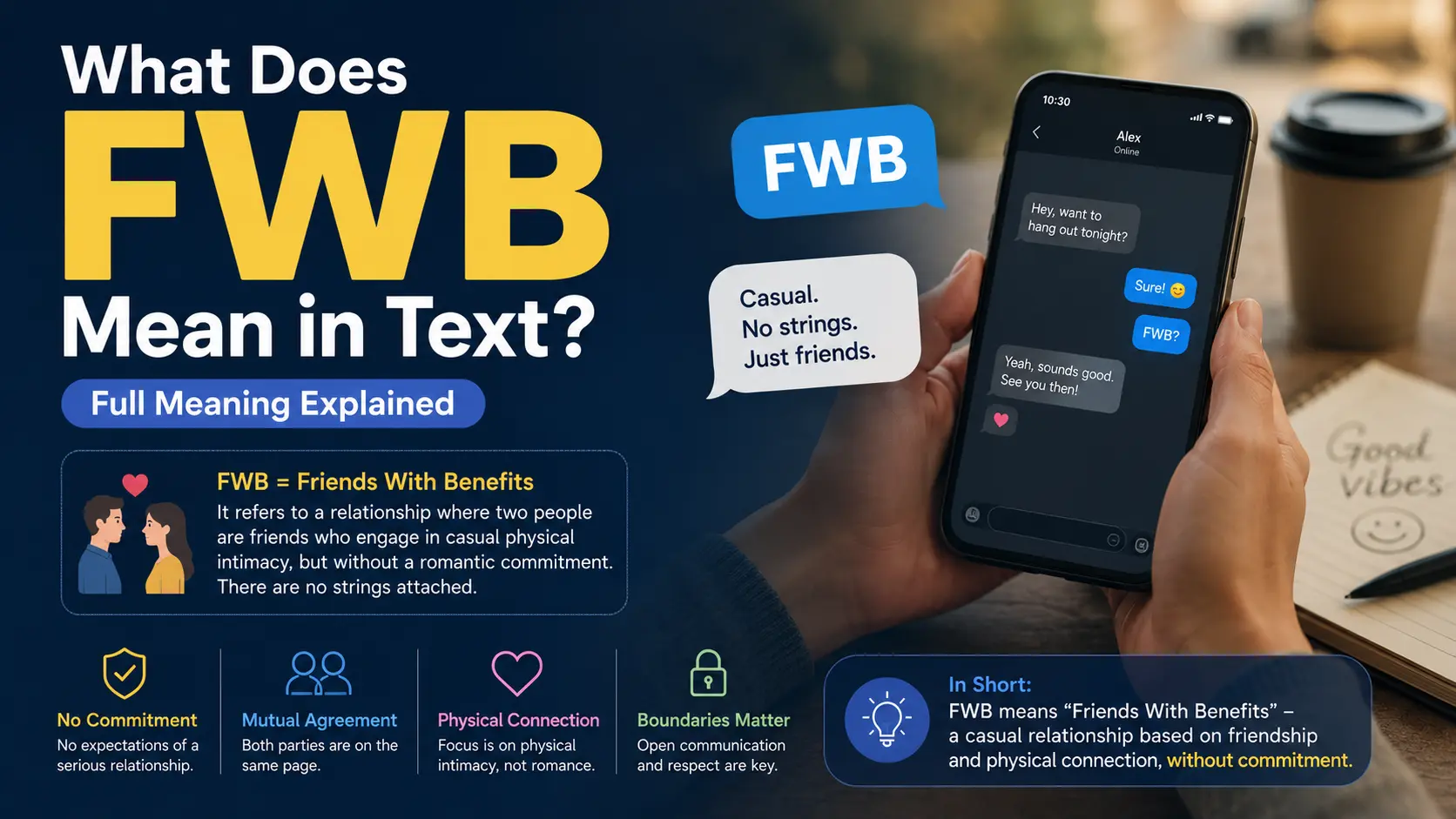
FWB stands for “Friends With Benefits.”
It usually describes two people who are friends but also have a physical or intimate relationship without officially dating.
In texting, the phrase often suggests:
- Casual intimacy
- No formal romantic commitment
- Friendship mixed with attraction
- Flexible emotional boundaries
People may use it seriously, jokingly, or flirtatiously.
Quick Text Examples
“We’re not dating. It’s more of an FWB situation.”
“I don’t want a relationship right now, maybe just FWB.”
“FWB never works for me because feelings get involved.”
The tone depends heavily on context, maturity, and emotional expectations.
Origin & Background
The phrase “friends with benefits” became widely popular in the late 1990s and early 2000s, especially through movies, television, and dating culture discussions.
As texting and online communication exploded, the shorter version “FWB” became common in:
- SMS texting
- Dating apps
- Twitter/X
- TikTok
- Snapchat
- Reddit forums
Pop culture also helped normalize the phrase. Movies like Friends with Benefits and No Strings Attached pushed the idea into mainstream conversation.
Over time, the meaning evolved.
Originally, many people used it to describe a secret or casual arrangement between close friends. Today, younger generations may use FWB more loosely, sometimes even referring to temporary dating situations or emotionally undefined relationships.
Social media accelerated this shift. Relationship labels became more flexible, and slang terms like FWB, situationship, talking stage, and sneaky link entered everyday communication.
Real-Life Conversations
WhatsApp Conversation
Person A:
So are you two officially together now?
Person B:
Not really. It’s kind of an FWB thing right now.
Person A:
Be careful though. Someone always catches feelings.
Instagram DM
Person A:
You two look cute together honestly 👀
Person B:
LOL we’re just FWB, nothing serious.
Person A:
That’s what everyone says at first 😭
TikTok Comments
Person A:
FWB sounds fun until emotions show up.
Person B:
Exactly. It starts casual and suddenly someone gets jealous.
Text Message
Person A:
I’m not ready for a full relationship.
Person B:
I understand. Are you thinking more like FWB?
Person A:
Maybe, but only if we’re honest with each other.
These examples show why the term can feel emotionally loaded even when people describe it as “casual.”
Emotional & Psychological Meaning
FWB is not just slang. It reflects how modern relationships have changed.
Emotionally, the term often communicates:
- Desire without commitment
- Comfort without labels
- Physical attraction mixed with friendship
- Fear of emotional pressure
- Need for freedom or flexibility
Some people choose an FWB arrangement because they genuinely want something casual. Others use it because they are healing from heartbreak, avoiding commitment, focusing on work, or unsure about deeper emotions.
Psychologically, FWB relationships can become complicated because humans naturally build emotional attachment through closeness, attention, and intimacy.
One common real-life scenario looks like this:
A person starts an FWB arrangement thinking it will stay simple. At first, both people enjoy the relaxed connection. Over time, one person begins expecting more communication, exclusivity, or emotional support. Suddenly, the “casual” setup no longer feels casual.
That emotional shift is why the term creates strong reactions online. Some people see FWB as modern freedom. Others see it as emotionally risky.
Usage in Different Contexts
Social Media
On TikTok, Instagram, and Snapchat, FWB is often used casually or humorously.
Examples include:
- “POV: your FWB starts acting jealous.”
- “Never fall for your FWB.”
- “FWB rules gone wrong.”
Online culture often treats the term as relatable relationship drama.
Friends & Relationships
In personal conversations, FWB usually describes a real relationship dynamic.
People may use it to:
- Avoid labeling a relationship
- Explain emotional boundaries
- Keep things casual
- Avoid commitment discussions
Work or Professional Settings
FWB is generally inappropriate in professional communication.
Using relationship slang in workplace chats, emails, or business discussions can appear unprofessional and uncomfortable.
Casual vs Serious Tone
Sometimes people use FWB jokingly:
- “My gym is basically my FWB at this point.”
Other times, the term carries serious emotional meaning:
- “I thought we were becoming something more than FWB.”
Tone matters greatly.
When NOT to Use It
There are situations where using FWB may cause confusion or discomfort.
Avoid Using It:
- In professional environments
- Around children without explanation
- In formal conversations
- With people unfamiliar with English slang
- In emotionally sensitive discussions
Cultural Sensitivity Matters
In some cultures, openly discussing casual relationships may feel inappropriate or disrespectful.
Even online, humor involving FWB can be misunderstood depending on age, background, or personal beliefs.
Relationship Confusion
Using the term too casually may accidentally hurt someone’s feelings, especially if emotional expectations are unclear.
Common Misunderstandings
Many people misunderstand what FWB actually means.
Misunderstanding #1: It Always Means No Feelings
Not true.
Even when people agree on casual boundaries, emotions can still develop naturally.
Misunderstanding #2: FWB Is the Same as Dating
FWB usually lacks official commitment, long-term planning, or exclusivity.
Dating typically involves deeper emotional expectations.
Misunderstanding #3: It’s Always Toxic
Some FWB arrangements work fine when both people communicate honestly and respect boundaries.
Problems usually happen when expectations differ.
Misunderstanding #4: Everyone Uses It the Same Way
Different generations and cultures interpret the term differently.
For some, it means occasional casual intimacy. For others, it describes an emotionally close but undefined relationship.
Comparison Table
| Expression | Meaning | Tone | Commitment Level |
|---|---|---|---|
| FWB | Friends with physical intimacy | Casual | Low |
| Situationship | Undefined romantic connection | Emotionally mixed | Medium |
| Dating | Romantic relationship exploration | Serious or casual | Medium to High |
| Sneaky Link | Secret meetup or connection | Private/flirty | Low |
| Ex | Former partner | Emotional/history-based | Ended |
| Soulmate | Deep emotional connection | Serious | Very High |
| One-night stand | Single casual encounter | Temporary | None |
| Talking Stage | Early romantic communication | Curious/flirty | Low to Medium |
Key Insight
FWB exists in the gray area between friendship and romance. That gray area is exactly why the term creates both excitement and emotional confusion in modern texting culture.
Variations / Types of FWB
1. Casual FWB
A relaxed arrangement with minimal emotional involvement.
2. Long-Term FWB
An ongoing connection lasting months or even years.
3. Secret FWB
A private arrangement hidden from friends or family.
4. Online FWB
A connection that mostly exists through texting, calls, or online interaction.
5. Exclusive FWB
Two people agree not to see others physically.
6. Non-Exclusive FWB
Both people remain free to meet others.
7. Emotional FWB
A situation where emotional closeness becomes stronger over time.
8. Former Friends Turned FWB
Close friends who later add physical intimacy.
9. Post-Breakup FWB
Ex-partners continuing a casual connection after ending a relationship.
10. Temporary FWB
A short-term arrangement during a specific life period.
How to Respond When Someone Uses It
Your reply depends on comfort level, maturity, and interest.
Casual Replies
- “Gotcha, makes sense.”
- “As long as you’re both clear about it.”
- “That sounds complicated honestly.”
Funny Replies
- “That’s either gonna end perfectly or dramatically 😂”
- “FWB is just emotional roulette.”
- “Good luck surviving the feelings stage.”
Mature Replies
- “Communication matters a lot in those situations.”
- “Just make sure your expectations match.”
- “Honesty keeps things healthy.”
Respectful Replies
- “I appreciate you being open about it.”
- “Everyone approaches relationships differently.”
- “What matters most is mutual respect.”
Regional & Cultural Usage
Western Culture
In North America and parts of Europe, FWB is widely recognized and openly discussed, especially among younger adults.
The term is common in dating culture and social media conversations.
Asian Culture
In many Asian societies, conversations about casual relationships may remain more private due to cultural expectations around dating and family values.
However, younger internet users increasingly understand the term through global media.
Middle Eastern Culture
In more conservative environments, FWB may be considered culturally sensitive or inappropriate in public discussion.
People may avoid openly using the term offline even if they recognize it online.
Global Internet Usage
Because of TikTok, Netflix, memes, and dating apps, FWB has become globally recognizable English slang.
Even non-native English speakers often understand its meaning.
Generational Differences
Gen Z
Often uses FWB casually and openly in memes, texting, and relationship discussions.
Millennials
Usually associate the term with emotional complexity and evolving dating culture.
Older generations may find the phrase confusing, modern, or overly informal.
Is It Safe for Kids?
FWB is an adult relationship term.
Children or younger teens may encounter it online through social media, texting, or entertainment content. Parents and guardians should explain it in an age-appropriate way if needed.
Context matters more than the abbreviation itself.
Understanding respectful communication, boundaries, and emotional safety is more important than simply hiding internet slang.
FAQs
What does FWB mean in text messages?
FWB means “Friends With Benefits.” It describes friends who also share physical or intimate involvement without officially dating.
Is FWB the same as dating?
No. FWB usually focuses on casual connection without formal commitment or long-term expectations.
Can FWB turn into a real relationship?
Yes. Some FWB situations eventually become romantic relationships when deeper feelings develop.
Is FWB always physical?
Usually, yes. The term generally implies physical intimacy alongside friendship.
Why do people choose FWB relationships?
People may want companionship, attraction, flexibility, or emotional connection without full relationship pressure.
Is FWB toxic?
Not automatically. Honest communication and mutual boundaries are what determine whether the arrangement stays healthy.
What is the difference between FWB and situationship?
FWB focuses more on friendship plus physical intimacy. A situationship usually involves stronger romantic uncertainty and emotional ambiguity.
Conclusion
Understanding what FWB means in text is about more than learning internet slang. It’s about understanding how modern communication reflects changing relationships, emotional boundaries, and social expectations.
For some people, FWB feels casual and uncomplicated. For others, it becomes emotionally meaningful very quickly. That’s why clear communication matters so much whenever the term appears in real life.
Language online evolves constantly, but human emotions remain surprisingly consistent. Whether someone uses FWB jokingly, seriously, or cautiously, the meaning behind it often says more about connection and vulnerability than the abbreviation itself.
The more confidently you understand modern slang like FWB, the easier it becomes to navigate conversations without confusion, awkwardness, or misunderstanding.