
If you spend time on TikTok, Snapchat, Instagram, or texting apps, you’ve probably seen someone type “DGMT” and wondered what it actually means. At first glance, it looks confusing because it is not as obvious as common abbreviations like “LOL” or “BRB.”
The truth is that DGMT has become part of a growing wave of internet shorthand that reflects how fast and emotionally layered modern communication has become. People use it casually in chats, comments, and online conversations, but its meaning can shift slightly depending on tone and context.
In this guide, you’ll learn exactly what DGMT means in text, where it came from, how people really use it online, and when you should avoid using it. You’ll also see real conversation examples, emotional meanings, slang comparisons, and cultural differences that most articles completely miss.
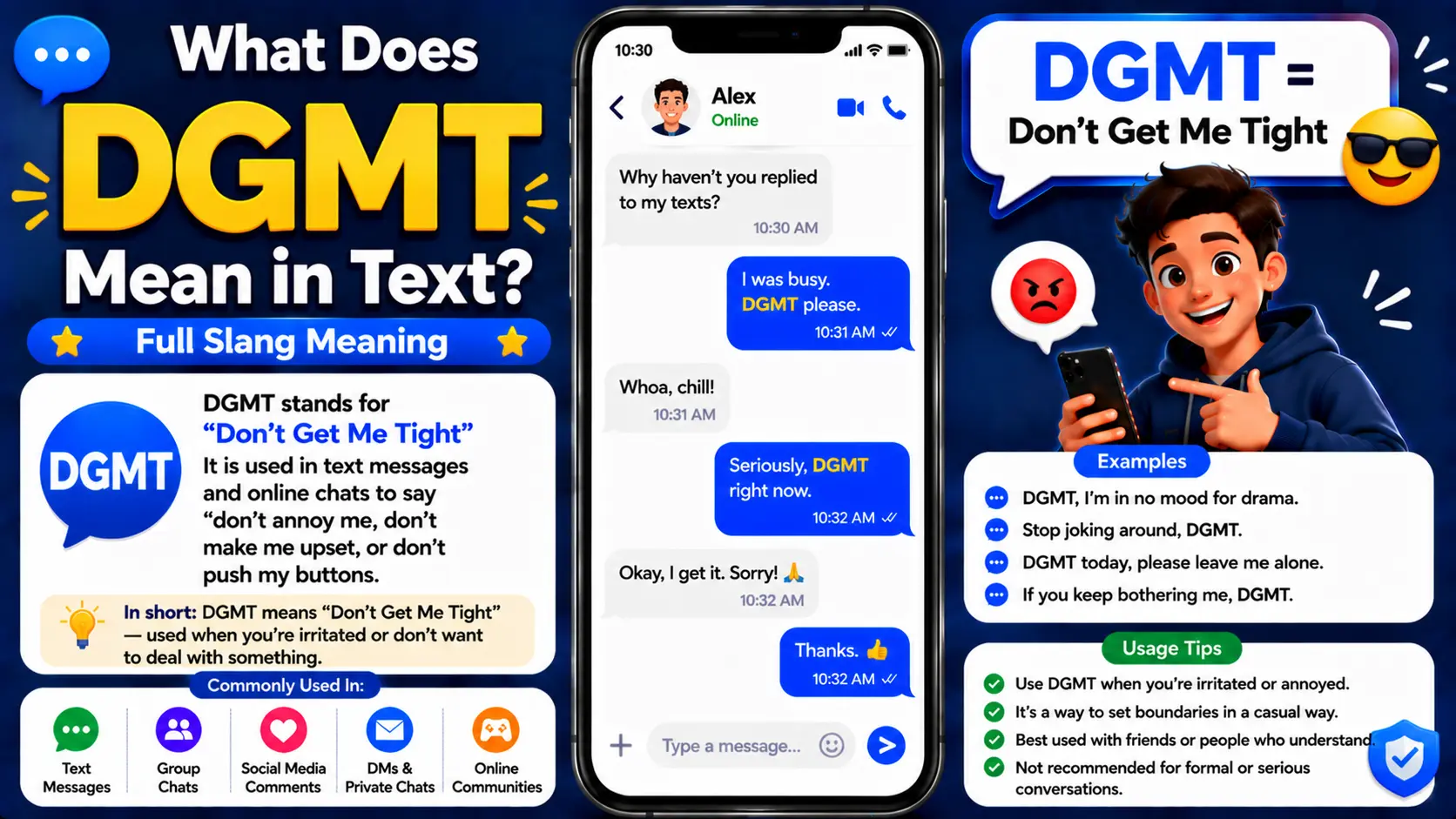
DGMT – Quick Meaning
DGMT usually stands for:
“Don’t Get Me Tight.”
The phrase is commonly used to express irritation, frustration, or emotional annoyance. It often means:
- “Don’t make me angry”
- “Don’t stress me out”
- “Don’t push my buttons”
- “Don’t start drama with me”
It is especially popular in texting culture, TikTok comments, urban slang, and casual online conversations.
Simple Examples
“Bro, DGMT today. I already had a rough morning.”
“You ate my fries again? DGMT 😭”
“DGMT, I’m trying to stay calm.”
In most situations, the phrase sounds playful rather than aggressively angry. Tone matters a lot.
Origin & Background
DGMT comes from African American Vernacular English (AAVE), where the phrase “don’t get me tight” has been used conversationally for years.
In this context, “tight” means irritated, annoyed, upset, or emotionally worked up.
Over time, social media platforms helped shorten the phrase into the acronym DGMT. TikTok played a huge role in spreading it globally. People started using it in captions, reaction videos, memes, and comment sections because it quickly communicated emotional frustration in a relatable way.
The phrase gained popularity because internet culture rewards emotional shorthand. Instead of typing:
“I’m getting annoyed and I don’t want extra stress right now.”
People simply say:
“DGMT.”
That short expression instantly carries mood, attitude, and emotion.
Today, DGMT is commonly seen among Gen Z users, especially in meme culture and casual messaging.
Real-Life Conversations
WhatsApp Chat
Person A:
You forgot to send the notes again 😭
Person B:
DGMT, I was literally asleep after work.
Instagram DM
Person A:
Why you liking your ex’s pictures again?
Person B:
Please DGMT right now 😩
TikTok Comments
Person A:
This song reminds me of my toxic relationship.
Person B:
DGMT because same 💀
Text Message
Person A:
Your team lost by 30 points last night 😂
Person B:
DGMT bro. I’m already suffering enough.
These examples show how DGMT often mixes humor with emotional honesty.
Emotional & Psychological Meaning
DGMT is more than just slang. Emotionally, it signals boundaries.
When someone says “DGMT,” they are usually communicating one of these feelings:
- Emotional exhaustion
- Frustration
- Stress
- Playful annoyance
- Defensive humor
- Irritation mixed with affection
Modern texting culture values emotional efficiency. People want to express feelings quickly without sounding overly serious. DGMT works perfectly because it sounds emotional without becoming dramatic.
It also reflects how younger generations often use humor to soften negative emotions.
For example, imagine someone spending all day at work dealing with stress. Then a friend texts them with unnecessary drama. Instead of writing a long emotional paragraph, they simply reply:
“DGMT today 😭”
That tiny phrase communicates exhaustion, frustration, and emotional limits all at once.
This is one reason internet slang spreads so fast. It captures complicated emotions in just a few letters.
Usage in Different Contexts
Social Media
On TikTok and Instagram, DGMT is often used jokingly.
People use it in:
- Reaction videos
- Meme captions
- Funny relationship posts
- Emotional storytelling
- Sports debates
Example:
“DGMT because why is gas expensive again?”
Here, the phrase feels humorous and relatable.
Friends & Relationships
Among close friends, DGMT usually sounds playful.
Example:
“DGMT, you always steal my hoodie.”
In relationships, it can express mild frustration without escalating conflict.
Work or Professional Settings
DGMT is generally inappropriate in formal communication.
Avoid using it in:
- Emails
- Job interviews
- Professional meetings
- Academic writing
Many people outside internet culture may not understand it.
Casual vs Serious Tone
Tone changes everything.
Playful:
“DGMT 😂”
Serious:
“Honestly, DGMT today.”
The second version carries stronger emotional weight.
When NOT to Use It
Even though DGMT is popular online, there are situations where it can create confusion or seem disrespectful.
Avoid It in Professional Environments
Managers, coworkers, teachers, or clients may misunderstand the phrase entirely.
Avoid It During Serious Emotional Conversations
If someone is discussing grief, trauma, or mental health struggles, slang can sound dismissive.
Avoid Overusing It
Repeating DGMT too often may make you sound overly defensive or emotionally reactive.
Be Careful With Cultural Context
Because the phrase comes from AAVE culture, people should avoid mocking or exaggerating it for internet trends without understanding its background.
Respect matters.
Common Misunderstandings
One major reason people search “what does DGMT mean in text” is because the acronym is easy to misread.
Here are common misunderstandings:
People Think It Means Something Positive
The phrase actually expresses annoyance or emotional tension.
Tone Gets Confused
Sometimes DGMT sounds joking. Other times it sounds genuinely upset.
Without emojis or voice tone, misunderstandings happen easily.
Literal Interpretation
Some people interpret “tight” literally instead of emotionally.
In slang culture, “tight” means irritated or stressed.
Older Users Often Misunderstand It
Millennials may recognize it occasionally, but many older internet users do not immediately understand the abbreviation.
Comparison Table
| Expression | Meaning | Emotional Tone |
|---|---|---|
| DGMT | Don’t get me tight | Irritated but controlled |
| FR | For real | Agreement or seriousness |
| SMH | Shaking my head | Disappointment |
| IDC | I don’t care | Emotional detachment |
| Chill | Calm down | Relaxed or dismissive |
| Don’t push me | Warning expression | More intense |
| LOL | Laughing out loud | Humor |
| TBH | To be honest | Honesty or confession |
Key Insight
DGMT stands out because it blends frustration with personality. Unlike aggressive phrases, it often keeps conversations emotionally light while still expressing annoyance.
Variations & Related Types
Here are common variations and related expressions people use alongside DGMT:
1. “Don’t Get Me Mad”
A softer variation expressing frustration.
2. “You Getting Me Tight”
Directly tells someone they are becoming annoying.
3. “Don’t Start”
A warning to stop provoking someone.
4. “I’m Tight”
Means “I’m irritated” or upset.
5. “Please”
Often used sarcastically instead of DGMT.
Example: “Please 😭”
6. “You Doing Too Much”
Means someone is acting excessively dramatic.
7. “Relax”
Used to calm down tension during arguments.
8. “Not Today”
Signals emotional exhaustion or low patience.
9. “I Can’t”
Internet slang for disbelief or emotional overload.
10. “Be Serious”
Used when someone says something ridiculous or frustrating.
How to Respond When Someone Uses It
Your response depends on the mood of the conversation.
Casual Replies
- “My bad 😭”
- “Okay okay, I’ll stop.”
- “You got it.”
Funny Replies
- “Too late 😂”
- “I’m absolutely getting you tight.”
- “Mission accomplished.”
Mature Replies
- “I understand. Take your time.”
- “Didn’t mean to stress you out.”
- “Let’s talk later.”
Respectful Replies
- “I hear you.”
- “No pressure.”
- “Hope your day gets better.”
Good communication means recognizing emotional tone before replying.
Regional & Cultural Usage
Western Culture
In the United States and the UK, DGMT is mostly tied to youth internet culture and urban slang communities.
It is especially common on TikTok and Snapchat.
Asian Culture
In many Asian countries, English slang spreads through social media rather than daily speech. DGMT may be recognized online but less commonly spoken aloud.
Middle Eastern Culture
Internet-savvy younger users may understand DGMT, but it is still niche compared to global slang like “LOL” or “OMG.”
Global Internet Usage
Social media has erased many language barriers. Even users who are not native English speakers now use expressions like DGMT because of memes, music culture, and viral videos.
Gen Z vs Millennials
Gen Z uses DGMT more naturally because they grew up with rapid internet slang evolution.
Millennials may understand it eventually, but many still prefer full phrases instead of abbreviations.
Is It Safe for Kids?
DGMT is generally not considered offensive or dangerous.
However, parents should understand that it expresses irritation or emotional frustration. The phrase itself is relatively mild, but context matters.
If kids use it jokingly with friends, it is usually harmless. Still, teaching respectful communication is important because slang can sometimes encourage dismissive or reactive conversations.
FAQs
What does DGMT stand for in text?
DGMT usually means “Don’t Get Me Tight,” which expresses annoyance, frustration, or emotional stress.
Is DGMT rude?
Not always. It is often playful among friends, but tone determines whether it sounds rude or serious.
Where did DGMT come from?
The phrase comes from AAVE slang culture and became popular through social media platforms like TikTok.
Can I use DGMT at work?
It is better to avoid it in professional settings because many people may not understand the slang.
Is DGMT popular on TikTok?
Yes. TikTok helped spread the abbreviation widely through memes, comments, and reaction videos.
Does DGMT mean anger?
Usually mild anger or irritation, not extreme rage.
How do you reply to DGMT?
You can respond casually, humorously, or respectfully depending on the emotional tone of the conversation.
Conclusion
Understanding what DGMT means in text gives you a better picture of how modern internet communication works. The phrase may look small, but it carries emotion, humor, stress, personality, and social context all at once.
At its core, DGMT means “Don’t Get Me Tight,” a way of saying “don’t irritate me” or “don’t push me emotionally.” People use it because it feels quick, expressive, and relatable in today’s fast-moving digital conversations.
Like most slang, the real meaning depends on tone, relationship, and context. Used correctly, it can make conversations feel more natural and emotionally honest. Used carelessly, it can create confusion.
The best approach is simple: understand the emotion behind the phrase before using it yourself. That awareness makes online communication smoother, smarter, and far more human.