
If you’ve ever seen “idx” in a message and paused for a second, you’re not alone. It’s one of those short, slightly confusing texting shortcuts that doesn’t immediately make sense unless you’ve seen it used in context.
People search for “what does idx mean in text” because it looks like a typo at first glance. But it’s not random. It actually carries a specific tone and meaning, especially in casual digital conversations.
Understanding “idx” clears up a common communication gap. Once you know it, you’ll start noticing it everywhere in chats, comments, and replies.
Let’s break it down in a way that feels real and useful.
IDX – Quick Meaning
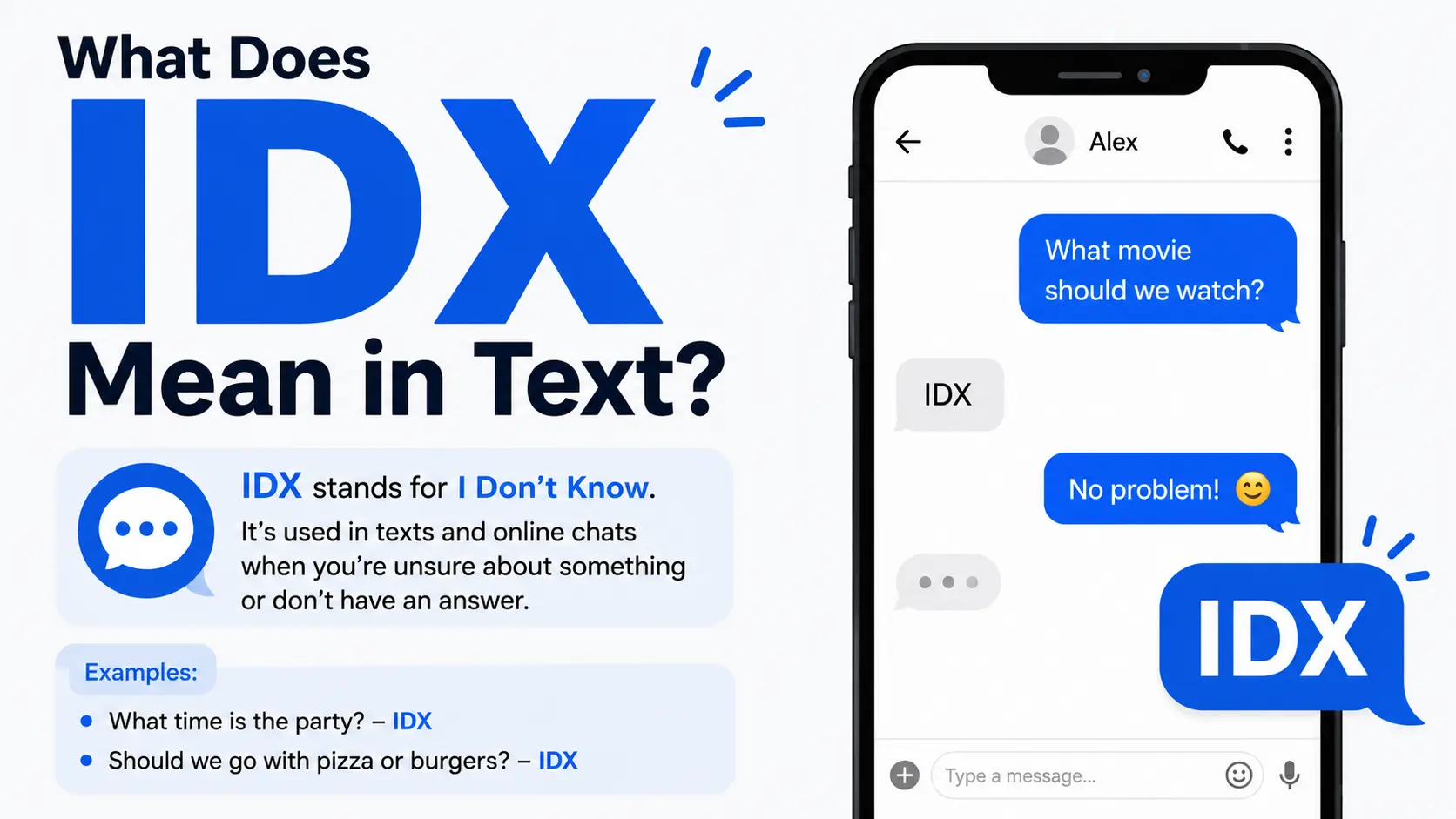
“IDX” in text usually means: “I don’t care” or sometimes “I don’t know exactly.”
It depends on context, but most often it leans toward indifference.
Simple Breakdown:
- I = I
- D = don’t
- X = care or know (informal shortcut)
Quick Examples:
- “Do you want pizza or burgers?”
“idx, you choose.” - “Did he reply to your message?”
“idx honestly.” - “Where should we go?”
“idx lol.”
The tone is usually relaxed, sometimes slightly dismissive, but not always rude.
Origin & Background
“IDX” isn’t a traditional abbreviation like “IDK” or “IDC.” It feels more like a blended shorthand that emerged from fast typing and evolving internet habits.
It likely developed from:
- “IDC” (I don’t care)
- “IDK” (I don’t know)
Over time, people started shortening things even further. The letter “X” became a kind of flexible placeholder, often replacing words or sounds.
Social media platforms like TikTok, Instagram, and Snapchat played a big role. Fast replies, short attention spans, and casual tone encouraged people to compress language even more.
So instead of typing:
- “I don’t care”
or - “I don’t know”
People began using:
- “idx”
It’s not officially standardized, which is why confusion still exists.
Real-Life Conversations
Here’s how “idx” actually shows up in everyday chats.
WhatsApp Chat
Person A: Should we meet at 6 or 7?
Person B: idx, anytime works
Instagram DMs
Person A: Do you like this outfit or the black one?
Person B: idx both look good tbh
TikTok Comments
Person A: Is this real or staged?
Person B: idx but it’s funny 😂
Text Message
Person A: Are you mad at me?
Person B: idx… just tired
These examples show something important. “Idx” is rarely about strong opinions. It’s more about neutral energy, uncertainty, or emotional distance.
Emotional & Psychological Meaning
At its core, “idx” often expresses low emotional investment.
It can mean:
- “I don’t have a strong opinion”
- “It doesn’t matter to me”
- “I’m not fully engaged right now”
Sometimes it’s used to avoid conflict. Instead of choosing or arguing, a person says “idx” to stay neutral.
Other times, it reflects mental fatigue. When someone doesn’t want to think too much, they simplify their response.
A Real-Life Scenario
Imagine you’ve had a long day. A friend asks:
“What movie should we watch?”
You don’t feel like deciding. You’re not upset, just drained.
So you reply:
“idx, you pick.”
That single word communicates more than it seems. It quietly says:
“I trust you. I just don’t have the energy right now.”
That’s the subtle emotional layer behind it.
Usage in Different Contexts
Social Media
On platforms like Instagram or TikTok, “idx” is common in comments and quick replies. It keeps things light and casual.
Example:
“Is this trend good or cringe?”
“idx lol”
Friends & Relationships
Among friends, it feels normal and relaxed. It can signal flexibility or indifference depending on tone.
Example:
“Where do you want to go?”
“idx, surprise me”
Work or Professional Settings
This is where things get tricky.
Using “idx” in professional communication can feel careless or unclear.
Instead of:
“idx”
It’s better to say:
“I don’t have a strong preference”
or
“I’m okay with either option”
Casual vs Serious Tone
- Casual: Friendly, flexible, easygoing
- Serious: Can sound disengaged or uninterested
Tone always depends on context and relationship.
When NOT to Use It
There are moments when “idx” can create the wrong impression.
Avoid Using It:
- In formal emails or workplace chats
- When someone needs a clear answer
- During emotional or serious conversations
- When decision-making matters
Example:
If someone says,
“Do you care about this situation?”
Replying “idx” could sound dismissive or even hurtful.
Common Misunderstandings
1. Thinking It Always Means “I Don’t Care”
Sometimes it means “I don’t know.” Context matters.
2. Assuming It’s Rude
It can feel rude, but often it’s just casual or neutral.
3. Confusing It with Typos
Many people think it’s a typing mistake for “idk” or “idc.”
4. Tone Misreading
Without voice or facial expression, “idx” can feel colder than intended.
Comparison Table
| Expression | Meaning | Tone | Usage |
|---|---|---|---|
| IDX | I don’t care / I don’t know | Neutral | Casual chats |
| IDK | I don’t know | Honest, unsure | Very common |
| IDC | I don’t care | Direct, sometimes blunt | Stronger tone |
| Whatever | Indifference | Can feel rude | Depends on context |
| Up to you | You decide | Polite, flexible | Friendly |
Key Insight
“IDX” sits in the middle. It’s softer than “IDC” but less clear than “IDK.” That’s why context and tone matter so much.
Variations / Types
Here are common variations and related forms:
- IDK – I don’t know
- IDC – I don’t care
- IDRC – I don’t really care
- IDTS – I don’t think so
- IDGAF – Strong version of indifference
- IDM – I don’t mind
- IDW – I don’t want
- IDKY – I don’t know why
- IDTSO – I don’t think so, honestly
- IDWT – I don’t want that
Each variation carries a slightly different emotional weight.
How to Respond When Someone Uses It
Casual Replies
- “Alright, I’ll pick then 😄”
- “Cool, I got it”
Funny Replies
- “Wow, such strong opinions 😂”
- “Love the enthusiasm lol”
Mature Replies
- “Okay, I’ll decide this time”
- “Let me know if you change your mind”
Respectful Replies
- “No worries, I’ll handle it”
- “I appreciate your flexibility”
The best response depends on the situation and your relationship with the person.
Regional & Cultural Usage
Western Culture
Common among Gen Z and young adults. Used casually in texting and social media.
Asian Culture
Less common in formal communication. More likely used in English-speaking online spaces.
Middle Eastern Culture
Used in digital conversations, but often mixed with local language slang.
Global Internet Usage
“Idx” is part of evolving internet shorthand. It spreads through memes, comments, and viral trends.
Generational Differences
- Gen Z: More likely to use and understand it
- Millennials: May recognize it but prefer clearer terms like IDK
Is It Safe for Kids?
Yes, “idx” is generally safe.
It doesn’t contain offensive or harmful meaning. However, parents should be aware that it can reflect emotional disengagement or indifference, which might be worth understanding in context.
FAQs
1. Does IDX always mean “I don’t care”?
No. It can also mean “I don’t know.” Context decides the meaning.
2. Is IDX rude?
Not necessarily. It depends on tone and situation.
3. Is IDX the same as IDK?
Not exactly. IDK means “I don’t know,” while IDX can be more flexible.
4. Why do people use IDX instead of IDC or IDK?
It’s faster and feels more casual. Some people like shorter forms.
5. Can I use IDX in professional messages?
It’s better to avoid it. Use clear and complete sentences instead.
6. Is IDX widely used?
It’s not as common as IDK or IDC, but it’s growing in informal chats.
Conclusion
“IDX” is a small piece of modern digital language, but it carries more meaning than it looks.
It can signal indifference, flexibility, or simple uncertainty. The key is understanding the context and the relationship behind the message.
In a world where conversations happen quickly and emotions are often hidden behind screens, even a three-letter word like “idx” can say a lot.
Once you recognize it, you’ll read messages more accurately and respond with more awareness.
And if you choose to use it yourself, you’ll know exactly what tone you’re sending.