
If you’ve seen the word “masc” in a message, comment, or bio and felt a little unsure, you’re not alone. It’s one of those short, modern terms that carries more meaning than it first appears.
People often search “what does masc mean in text” because the context isn’t always obvious. Is it about personality, identity, or just style? The answer depends on how and where it’s used.
Let’s break it down in a way that actually makes sense in real conversations.
Masc – Quick Meaning
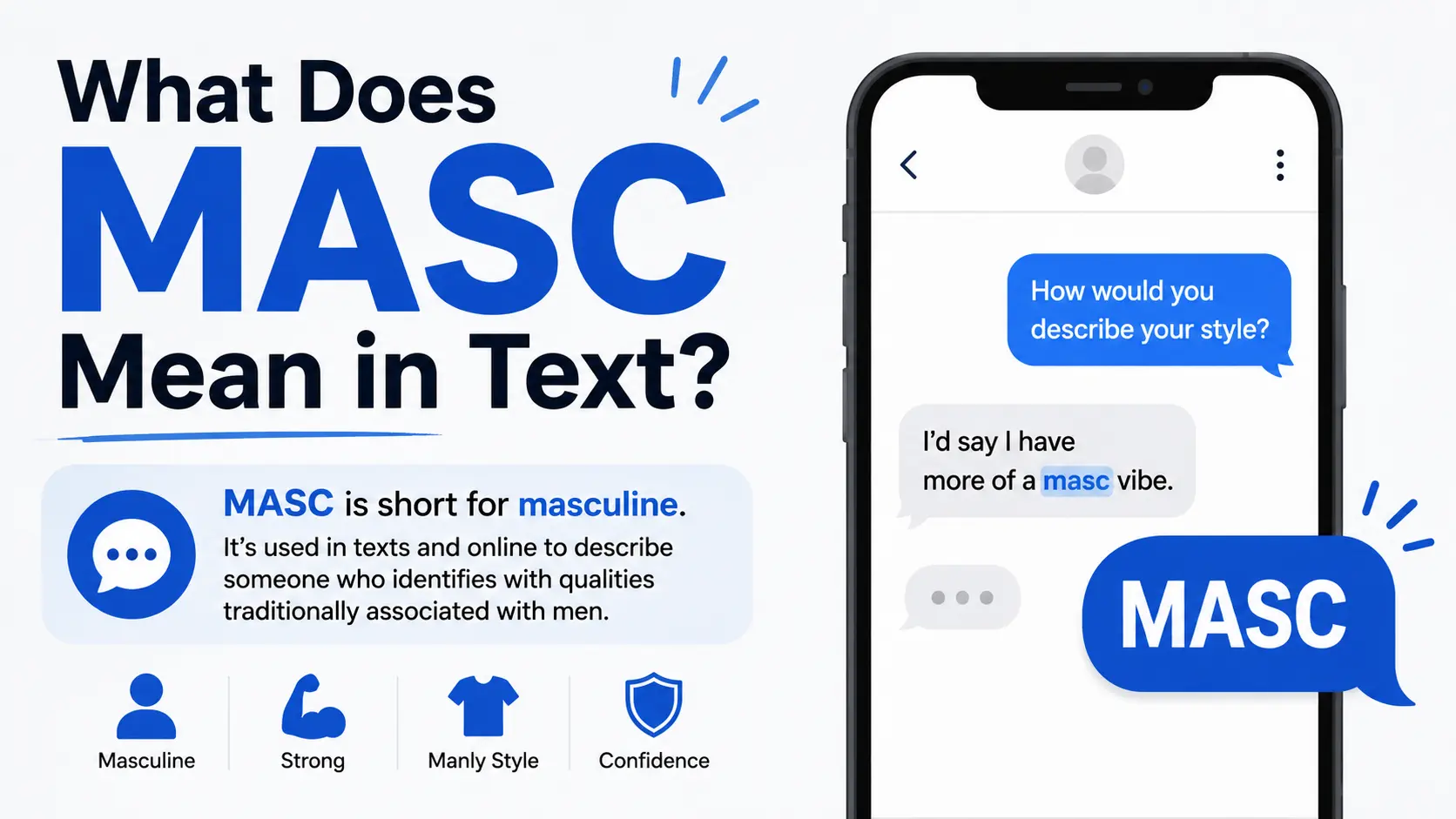
“Masc” is short for masculine.
It’s used to describe:
- A person’s appearance or style
- Behavior that feels traditionally masculine
- Gender expression, especially in LGBTQ+ contexts
Simple examples:
- “He’s more masc than fem.”
- “I like masc energy.”
- “She has a masc vibe.”
It’s not always about gender. It’s often about how someone presents themselves.
Origin & Background
The word “masc” comes from the longer word masculine, but its shortened form grew popular online.
It first gained traction in LGBTQ+ communities, where people needed quick ways to describe identity and expression. Over time, social media platforms like Instagram, TikTok, and Twitter helped spread it into everyday language.
Now, it’s used far beyond its original space. You’ll see it in dating profiles, fashion discussions, and casual chats.
The meaning has also evolved. Earlier, it was more tied to gender identity. Today, it’s often about vibe, style, and energy rather than strict definitions.
Real-Life Conversations
Here’s how “masc” actually shows up in everyday chats.
WhatsApp Chat
Person A: Do you like him?
Person B: Yeah, he’s cute. More masc than I expected.
Instagram DMs
Person A: Your outfit is fire 🔥
Person B: Thanks! I was going for a masc look today.
TikTok Comments
User1: The way he walks is so confident
User2: Right? That masc energy is strong
Text Message
Person A: What’s your type?
Person B: I usually go for masc guys, not too flashy
These examples show how natural and casual the word feels in conversation.
Emotional & Psychological Meaning
When someone uses “masc,” they’re often expressing more than just a description.
It can signal:
- Attraction or preference
- Identity and self-expression
- Comfort with a certain style or role
At a deeper level, it reflects how people perceive and label energy. Masculinity, in this context, isn’t just physical. It’s about confidence, behavior, and presence.
A real-life style scenario
Imagine someone scrolling through a dating app. They pause on a profile and think, “He seems masc.” What they really mean is that the person feels grounded, confident, maybe even protective.
It’s less about stereotypes and more about personal interpretation.
Usage in Different Contexts
Social Media
“Masc” is everywhere on platforms like TikTok and Instagram. People use it in captions, bios, and comments to describe their vibe or preferences.
Friends & Relationships
Among friends, it’s often used casually:
- “You look kinda masc today”
- “That’s such a masc outfit”
In dating, it can indicate attraction:
- “I’m into masc guys”
Work / Professional Settings
This is where you need to be careful.
Using “masc” in a workplace conversation can feel too informal or even confusing. It’s better to stick to clear, neutral language.
Casual vs Serious Tone
In casual chats, it feels light and expressive.
In serious discussions about identity, it can carry deeper meaning and should be used thoughtfully.
When NOT to Use It
There are moments where using “masc” can feel off.
- In formal or professional communication
- When describing someone who hasn’t used the term for themselves
- In cultures where the term may not be understood
- When it could sound judgmental or stereotypical
Context matters more than the word itself.
Common Misunderstandings
Many people assume “masc” always refers to men. That’s not true.
Here’s what people often get wrong:
- It’s only about gender
It’s actually about expression, not identity alone - It’s always positive
Tone depends on context. It can be neutral or even critical - It means “strong” or “dominant”
Not necessarily. It’s more about perceived traits
Understanding these nuances helps avoid awkward conversations.
Comparison Table
| Term | Meaning | Usage |
|---|---|---|
| Masc | Masculine expression or vibe | Style, personality, attraction |
| Fem | Feminine expression | Opposite of masc |
| Androgynous | Mix of masculine and feminine | Fashion and identity |
| Soft masc | Gentle masculine traits | More emotional, less rigid |
| Hypermasc | Strong, exaggerated masculinity | Often intense or stylized |
Key Insight
“Masc” isn’t a fixed label. It’s a flexible way people describe energy and identity in a fast-moving digital world.
Variations / Types
Here are common variations you might see:
- Masc energy – A vibe that feels masculine
- Soft masc – Masculine but gentle or emotional
- Hard masc – Strong, traditional masculinity
- Masc-presenting – Someone who looks masculine
- Masc vibe – Overall impression of masculinity
- Masc style – Clothing or fashion choices
- Masc guy – A man with masculine traits
- Masc lesbian – A woman with masculine expression
- Masc aesthetic – Visual style that feels masculine
- Masc leaning – Slightly more masculine than feminine
Each version adds a slightly different shade of meaning.
How to Respond When Someone Uses It
Casual Replies
- “Yeah, I see that vibe”
- “Makes sense, he does seem masc”
Funny Replies
- “Masc energy unlocked 😄”
- “Level 100 masc mode”
Mature Replies
- “I think it’s more about personality than labels”
- “Interesting how you describe it that way”
Respectful Replies
- “Got it, thanks for explaining”
- “I appreciate how you see that”
Regional & Cultural Usage
Western Culture
In Western countries, “masc” is widely understood, especially in LGBTQ+ spaces and younger communities.
Asian Culture
Usage exists but is less common. People may prefer full words like “masculine” instead of slang.
Middle Eastern Culture
It’s less frequently used in everyday conversation. When it is used, it’s mostly online among younger audiences.
Global Internet Usage
Online, the term is almost universal. Social media has made it recognizable across borders.
Generational Differences
- Gen Z uses it naturally and often
- Millennials understand it but may use it less
- Older generations may find it unfamiliar
Is It Safe for Kids?
Yes, in general.
“Masc” is not an offensive or harmful term. It’s simply descriptive. However, kids may need context to understand it properly, especially since it connects to identity and expression.
Guidance from adults can help avoid confusion.
FAQs
1. Does “masc” only refer to men?
No. It can describe anyone’s style or expression, regardless of gender.
2. Is “masc” the same as “manly”?
Not exactly. “Masc” is more modern and flexible, while “manly” can feel more traditional.
3. Can “masc” be offensive?
It depends on tone and context. Used respectfully, it’s neutral.
4. What is “soft masc”?
It refers to a gentler, more emotionally expressive form of masculinity.
5. Do people use “masc” in dating apps?
Yes. It’s very common to describe preferences or identity.
6. Is “masc” formal language?
No. It’s informal and mostly used in casual or online conversations.
Conclusion
Understanding what “masc” means in text isn’t just about learning a definition. It’s about recognizing how language evolves with culture, identity, and digital communication.
At its core, “masc” is a simple way to describe a masculine vibe, style, or expression. But behind that simplicity is a deeper layer of personal meaning and social context.
The next time you see it, you won’t have to guess. You’ll understand not just the word, but the feeling behind it.
And that’s what modern communication is really about.