
Modern texting and social media are filled with abbreviations, and “IHTG” is one that has recently caught many people’s attention. If you’ve come across it in a chat, comment, or direct message and felt unsure about its meaning, you’re not the only one.
Short forms like “IHTG” can seem unclear at first because they aren’t as commonly recognized as abbreviations like LOL or BRB. However, once you understand the meaning and context behind it, online conversations become much easier to follow.
This guide will break down what “IHTG” means, how it’s used in digital communication, and why people use it in casual conversations. By the end, you’ll have a clear understanding of the term along with the tone and context that come with it.
IHTG – Quick Meaning
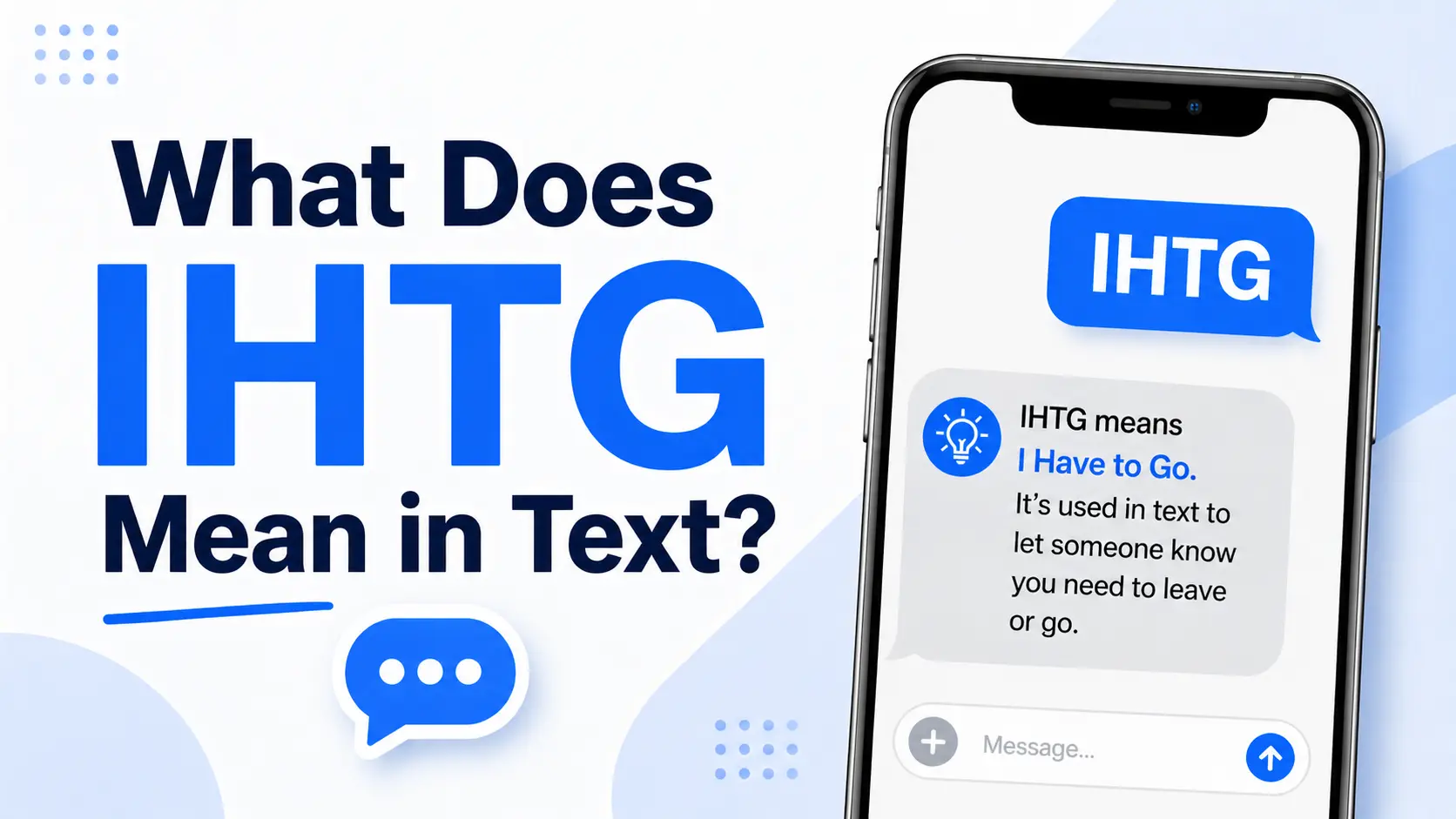
At its core, IHTG stands for “I Have To Go.” It’s a shorthand way of telling someone that you need to leave a conversation, event, or digital space. Simple, yet effective for fast-paced chats where typing a full sentence feels unnecessary.
Key Points:
- Abbreviation used mainly in texting, DMs, and chat apps
- Indicates leaving a conversation politely or suddenly
- Often conveys urgency or casual exit
Examples:
- Person A: “Are you still coming to the party?”
Person B: “IHTG, maybe next time 😅” - Person A: “Talk later?”
Person B: “Sure, IHTG for now” - Person A: “Why did you leave?”
Person B: “IHTG, got something urgent 😬”
Origin & Background
The abbreviation IHTG grew out of the larger trend of text shorthand that started in the early 2000s with SMS messaging. Back then, character limits forced people to condense sentences. “I have to go” became IHTG as texting evolved on platforms like WhatsApp, Facebook Messenger, and later TikTok.
Its cultural impact is interesting because it reflects how modern communication prioritizes speed and efficiency. People now favor emojis and short acronyms to express intent, tone, or emotion instantly. Over time, IHTG became more than a literal exit phrase—it also conveys politeness, urgency, or even playfulness depending on context.
Social media further amplified its use. On Instagram DMs and TikTok comments, users drop IHTG mid-conversation to exit gracefully, while keeping the tone casual. This evolution shows how online language adapts to the fast-moving nature of digital life.
Real-Life Conversations
Seeing IHTG in action helps you understand its natural usage. Here are some realistic examples from daily digital life.
WhatsApp Chat
Person A: “Want to finish this group project tonight?”
Person B: “IHTG, maybe tomorrow 😅”
Instagram DM
Person A: “You online? Can we talk?”
Person B: “Hey, IHTG, will DM later 👍”
TikTok Comment
Person A: “This video cracked me up 😂”
Person B: “IHTG, this is too funny lol”
Text Message
Person A: “Dinner at 8?”
Person B: “IHTG, stuck at work. Catch you later”
Notice how context and tone make the abbreviation flexible, sometimes urgent, sometimes casual.
Emotional & Psychological Meaning
Beyond convenience, IHTG carries subtle emotional signals. It can indicate:
- Politeness: Exiting without seeming rude
- Urgency: Quickly leaving for real-life reasons
- Playfulness: Exiting jokingly in informal chats
For example, imagine you’re texting a friend while running late for an appointment. Typing “IHTG 😬” communicates both urgency and respect—they know you’re leaving but not upset.
Psychologically, this abbreviation reflects the modern human need for efficiency and clarity in communication. We want to convey intent without over-explaining.
Usage in Different Contexts
Social Media: Mostly casual, can include emojis, often in DMs or comments.
Friends & Relationships: Polite exit from long chats or hangouts, friendly tone.
Work / Professional Settings: Limited usage, best avoided unless the environment is informal.
Casual vs Serious: Works well in casual chats; in serious situations, full sentences are safer.
When NOT to Use It
While IHTG is convenient, it can backfire in certain scenarios:
- Formal emails or professional correspondence
- Sensitive conversations, where leaving abruptly could seem dismissive
- Cultural sensitivity contexts, where abrupt exits are considered rude
Understanding the context prevents miscommunication.
Common Misunderstandings
People often misinterpret IHTG because:
- It might sound abrupt or dismissive if no emoji or explanation is added
- New users may not know it stands for “I Have To Go”
- Literal readers might take it too seriously
Clarifying tone with emojis or follow-ups can prevent confusion.
Comparison Table
| Slang | Meaning | Usage Tip | Tone |
|---|---|---|---|
| IHTG | I Have To Go | Casual exits | Polite/casual |
| BRB | Be Right Back | Temporary absence | Casual |
| GTG | Got To Go | Similar to IHTG | Neutral |
| TTYL | Talk To You Later | Leaving conversation | Friendly |
| AFK | Away From Keyboard | Gaming chats | Neutral/funny |
Key Insight: IHTG is most effective when paired with context cues like emojis, tone, or follow-up messages.
Variations / Types
- IHTG 😅 – Playful exit
- IHTG ASAP – Urgent leave
- IHTG, ttyl – Exit with promise to return
- IHTG now – Immediate exit
- IHTG, work calls – Work-related excuse
- IHTG, need rest – Health-related exit
- IHTG, family time – Polite exit for personal reasons
- IHTG, chores 😬 – Casual everyday exit
- IHTG, party’s over – Social context exit
- IHTG, got errands – Casual real-life exit
Each variation adjusts tone and context for better clarity.
How to Respond When Someone Uses IHTG
Casual Reply: “No worries, catch you later!”
Funny Reply: “Don’t let the door hit you 😎”
Mature Reply: “Understood, talk soon”
Respectful Reply: “Thanks for letting me know, have a good one”
Regional & Cultural Usage
- Western Culture: Common in informal texting and social media
- Asian Culture: Politeness often emphasized with emojis or context
- Middle Eastern Culture: Avoid abrupt exits without explanation
- Global Internet Usage: Understood internationally among younger generations
- Generational Differences: Gen Z uses it casually; Millennials may prefer full sentences
Is It Safe for Kids?
Yes, generally safe as it is neutral language. Still, children should learn when it is polite to leave a conversation versus being dismissive. Context awareness is key.
FAQs
Q1: Is IHTG formal?
A: No, it is casual texting slang.
Q2: Can I use IHTG at work?
A: Only in informal professional chats. Avoid formal emails.
Q3: Does IHTG sound rude?
A: It can, if used without context or emojis.
Q4: Is IHTG the same as GTG?
A: Similar, but IHTG often feels slightly more polite.
Q5: Can IHTG be used in voice messages?
A: Rarely, mostly written shorthand for text-based chats.
Q6: Is IHTG understood worldwide?
A: Among younger, internet-savvy users, yes.
Q7: Are there alternative expressions?
A: BRB, GTG, TTYL, or simply “I have to go” work well.
Conclusion
IHTG may seem like a simple abbreviation, but it carries layers of social and emotional meaning. From polite exits to playful goodbyes, it reflects how modern communication balances efficiency with empathy. By understanding its usage, context, and tone, you can leave conversations smoothly and connect more effectively online. Next time someone drops IHTG in your chat, you’ll not only understand it but respond confidently.