
In our fast-paced digital world, abbreviations have become a secret language of their own. Among them, AA has started appearing in texts, Instagram DMs, TikTok comments, and WhatsApp chats. But if you’ve ever paused mid-scroll asking, “Wait, what does AA mean?” you’re not alone. This simple two-letter abbreviation can be confusing, and understanding it can save you from awkward miscommunications or missed jokes.
People search for AA constantly because its meaning shifts depending on the platform, context, and even the age of the sender. In this article, we’ll break it down for you—from its quick meaning to real-life examples, psychological insight, and usage across cultures. By the end, you’ll feel confident spotting AA in conversation and knowing exactly how to respond.
AA – Quick Meaning
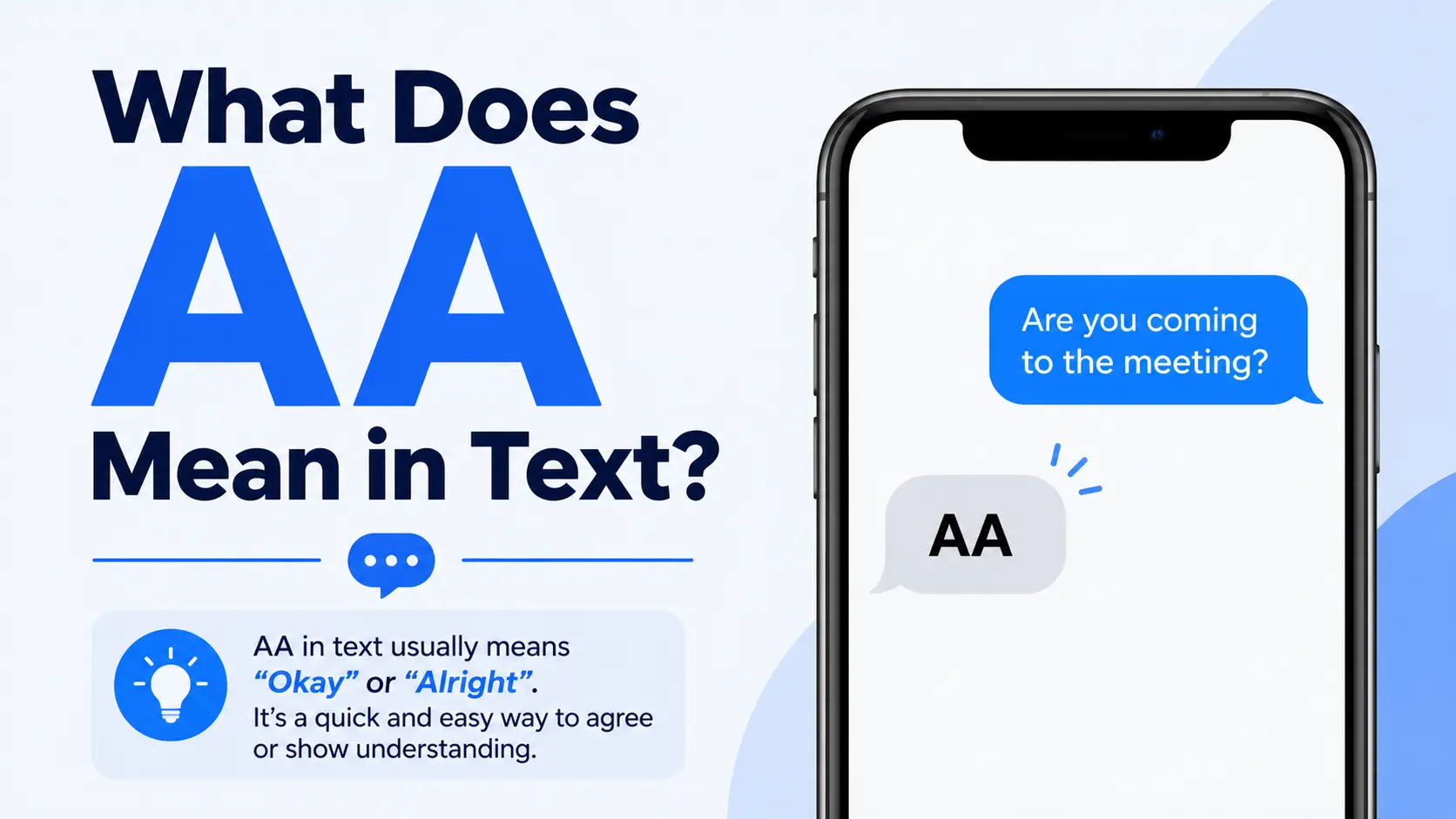
At its core, AA is an abbreviation that usually means:
- Alcoholics Anonymous – The most common and formal meaning, referring to the global support organization for people recovering from alcohol addiction.
- Anonymous Acknowledgment – Sometimes used informally online to acknowledge someone without revealing identity.
- As Always – Often used in casual texting to express consistency or routine.
Example uses in text:
- “I’m heading to AA tonight.” → Likely Alcoholics Anonymous meeting.
- “AA, thanks for the tip!” → Could mean ‘as always, thanks.’
- “Shoutout to my AA on this thread 😎” → Anonymous acknowledgment online.
The meaning depends heavily on the conversation’s context, which is why understanding nuance is key.
Origin & Background
AA has roots in both formal and informal settings. The most historically significant meaning comes from Alcoholics Anonymous, founded in 1935 in the United States. Over decades, this organization made “AA” a widely recognized acronym, especially in health and recovery contexts.
On social media, AA evolved. Online communities needed shorthand for efficiency and anonymity. Teens and young adults began using AA to mean “As Always” or “Anonymous Acknowledgment.” Platforms like TikTok, Instagram, and WhatsApp accelerated this shift, creating generational and cultural layers of meaning.
The abbreviation’s adaptability shows how language evolves digitally. A single pair of letters can carry weight, history, and casual friendliness simultaneously.
Real-Life Conversations
Here are realistic examples of how AA appears in different messaging contexts:
WhatsApp:
Person A: “Are you going to the meeting tonight?”
Person B: “Yeah, AA, see you there!”
Instagram DM:
Person A: “Love your posts, seriously inspiring 😍”
Person B: “AA, thanks! Means a lot coming from you.”
TikTok Comment:
Person A: “Who posted this? So good 👏”
Person B: “AA, just trying to help!”
Text Message:
Person A: “You always remind me to stay focused 😅”
Person B: “AA, it’s what friends do.”
Notice how the emotional tone varies: encouragement, casual acknowledgment, or genuine appreciation.
Emotional & Psychological Meaning
The psychology behind AA is subtle but telling. When someone uses AA, they often convey:
- Consistency (“as always”)
- Support or acknowledgment
- Politeness without over-explaining
- Sometimes anonymity for safety or privacy
For example, imagine your friend always shares study tips:
- Friend: “AA, here’s the article I mentioned.”
- You instantly feel valued because they remembered and followed through.
This small gesture of acknowledgment and reliability makes AA powerful in digital relationships. It’s a brief code that signals emotional presence without needing long sentences.
Usage in Different Contexts
Social Media: Quick acknowledgment, appreciation, or casual tagging.
Friends & Relationships: Expresses consistency or gratitude in daily conversations.
Work / Professional Settings: Rarely formal; only appropriate for informal internal chats if everyone understands the abbreviation.
Casual vs Serious Tone: Mostly casual, friendly, or humorous. In serious conversations (legal, medical, or professional emails), spelling out the meaning is safer.
When NOT to Use It
While AA is flexible, there are situations where it can misfire:
- Formal professional communication – Can appear unprofessional or confusing.
- Cultural contexts – Some regions may interpret AA solely as Alcoholics Anonymous.
- Sensitive topics – Misuse around addiction or recovery may be seen as insensitive.
If you’re unsure about your audience, spelling out “As Always” or “Acknowledgment” is safer.
Common Misunderstandings
People often confuse AA with:
- Alcoholics Anonymous only – Even casual social media users may misread it.
- Tone misinterpretation – AA can seem sarcastic if misread.
- Literal vs figurative meaning – Some assume it’s about drinking or anonymity even in casual friendship chats.
Being context-aware prevents confusion and preserves the intended tone.
Comparison Table
| Expression | Meaning | Tone / Context | Similarity to AA |
|---|---|---|---|
| As Always | Consistency, routine | Friendly, casual | Direct match |
| Anonymous | Privacy, unknown identity | Formal or informal | Related |
| TY / Thx | Gratitude | Casual, friendly | Similar acknowledgment |
| LOL | Humor, amusement | Casual, playful | Sometimes overlaps |
| ASAP | Urgency | Professional or casual | Opposite in tone |
Key Insight: AA is versatile and context-sensitive. Understanding the conversation type is key to interpreting its meaning correctly.
Variations / Types
- AA (Alcoholics Anonymous) – Support group context.
- AA (As Always) – Routine or consistency in casual texting.
- AA (Anonymous Acknowledgment) – Online forums or social media nod.
- AA (All Around) – Compliment or praise in playful contexts.
- AA (Auto-Approved) – Used in online workflows or group chats.
- AA (Assistant Administrator) – In gaming or online community roles.
- AA (Actual Advice) – Informal text slang giving real guidance.
- AA (Anti-Anxiety) – Occasionally used in mental health chats.
- AA (Always Awesome) – Playful encouragement among friends.
- AA (After Action) – Gaming or work debrief shorthand.
Each variation depends on the audience, platform, and tone. Context is always the guiding principle.
How to Respond When Someone Uses It
- Casual: “AA, got it!”
- Funny: “AA, my hero 😂”
- Mature: “Thanks, I appreciate that as always.”
- Respectful: “AA, noted. Thank you for sharing.”
Responses should match tone and intent for clarity and rapport.
Regional & Cultural Usage
- Western Culture: Frequently “As Always” or Alcoholics Anonymous.
- Asian Culture: Mostly casual acknowledgment in chat or messaging apps.
- Middle Eastern Culture: Context-driven; AA may lean toward formal acknowledgment.
- Global Internet Usage: Often playful or friendly acknowledgment.
- Generational Differences:
- Gen Z uses AA casually in DMs and comments.
- Millennials lean more toward formal or literal meanings.
Understanding regional and generational nuances prevents misinterpretation.
Is It Safe for Kids?
Generally yes, if used to mean “As Always” or casual acknowledgment. Avoid AA in contexts related to alcohol or addiction with children. Always provide context if teaching abbreviation meanings.
FAQs
1. Can AA mean anything bad?
Rarely. Only if misunderstood as Alcoholics Anonymous in the wrong context.
2. Is AA formal or casual?
Mostly casual, except when referring to Alcoholics Anonymous.
3. Can AA be used professionally?
Only in informal internal chats if everyone understands.
4. How do I know which AA meaning applies?
Check context, platform, and relationship with the sender.
5. Is AA only used online?
No, it appears in text messages and social media alike.
6. Can AA convey emotion?
Yes, it can show appreciation, consistency, or encouragement.
7. How should I teach kids about AA?
Explain “As Always” for casual chats; skip sensitive Alcoholics Anonymous contexts unless necessary.
Conclusion
AA may seem like a small abbreviation, but it carries layers of meaning depending on context, platform, and culture. From supportive nods in recovery communities to casual expressions in DMs, understanding AA lets you communicate confidently and empathetically. Pay attention to tone, audience, and situation, and you’ll navigate AA like a pro. Using it thoughtfully shows awareness of modern communication and respect for the subtle emotional cues it carries.