

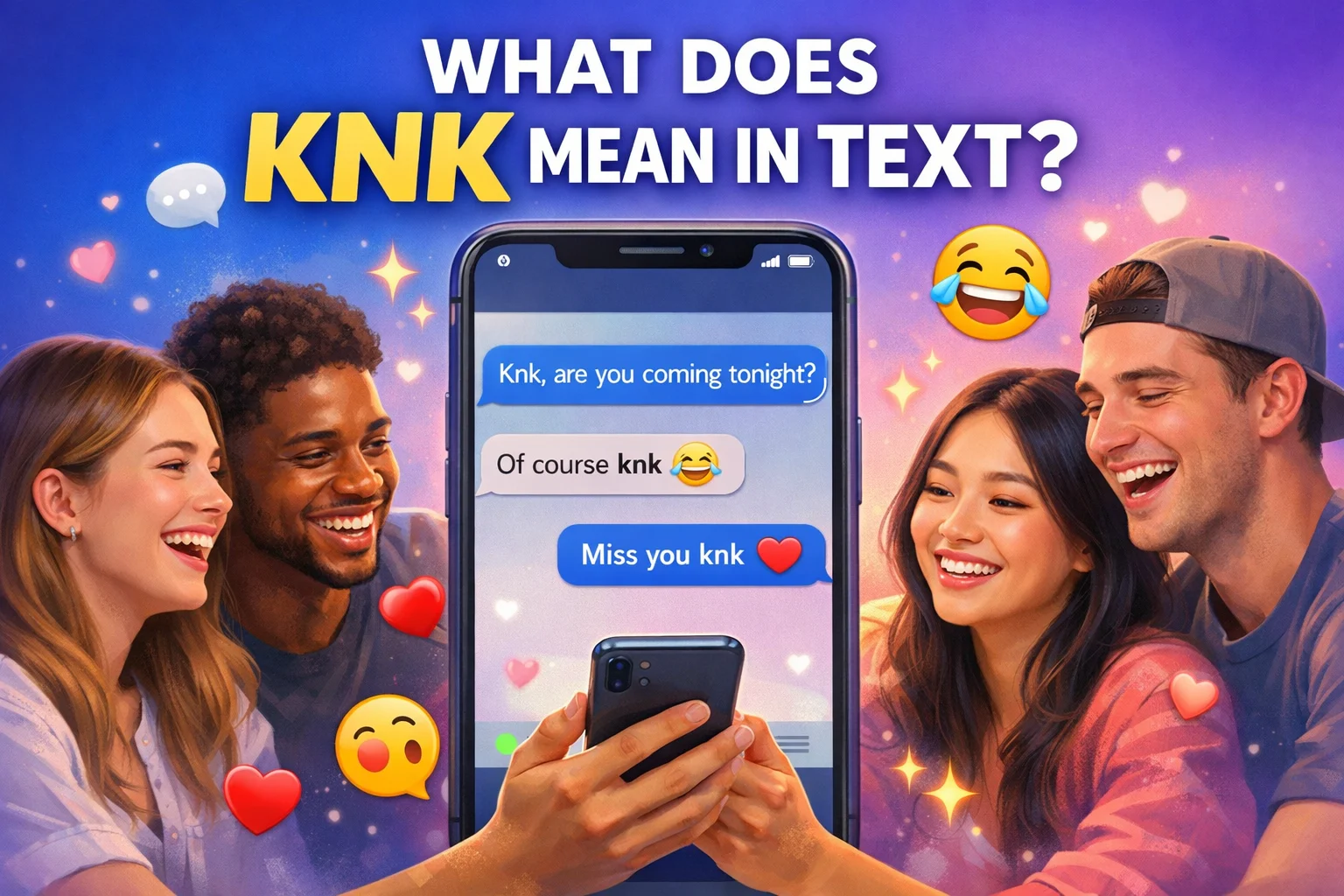
If you’ve recently seen “KNK” in a message and paused for a second, you’re not alone.
Slang moves fast. What feels obvious to one person can be completely confusing to another. And when it comes to short acronyms like KNK, context changes everything.
So what does KNK mean in text? Is it friendly? Is it rude? Is it cultural?
In this guide, I’ll walk you through the true meaning of KNK, where it comes from, how it’s used in real conversations, and when you should or shouldn’t use it. By the end, you’ll understand not just the definition, but the emotional tone behind it.
Let’s break it down clearly and honestly.
KNK – Quick Meaning
KNK is an informal slang abbreviation that most commonly stands for:
• “Kanka” which means close friend or buddy
• A friendly way to address someone
• A casual expression of familiarity
It is often used in texting and social media to refer to a close friend in a relaxed tone.
Example Messages:
“What are you doing tonight, knk?”
“Miss you, knk. It’s been too long.”
“Knk, that was hilarious.”
The tone is usually warm, playful, and friendly.
However, context matters. In some cases, tone or cultural background can slightly shift the meaning.
Origin & Background
KNK is strongly connected to the word “kanka”, which originates from Turkish slang. In Turkish culture, “kanka” is a deeply affectionate way to say best friend or bro.
It became popular in texting because:
- It is shorter
- It feels modern
- It fits fast digital communication
As global internet culture grew, especially through platforms like Instagram and TikTok, shortened forms like KNK started spreading beyond Turkish communities.
The internet naturally compresses language. Just like “bro” became “bruh,” “kanka” became “knk.”
Over time, it evolved from being strictly cultural to being casually adopted by online friend groups who liked the vibe of it.
Real-Life Conversations
To truly understand what KNK means in text, you need to see it in action.
1. WhatsApp Chat
Person A: Knk, are we still meeting at 7?
Person B: Of course, knk. Don’t be late again 😂
Tone: Playful, friendly, close.
2. Instagram DM
Person A: That outfit looks amazing on you, knk 🔥
Person B: Stoppp knk, you’re hyping me too much ❤️
Tone: Supportive and affectionate.
3. TikTok Comment
User 1: Knk this video is too relatable 😭
Creator: Glad you liked it knk!
Tone: Community bonding.
4. Regular Text Message
Person A: Knk I’m stressed about tomorrow.
Person B: Don’t worry knk, you’ll do great.
Tone: Emotional support.
In all these cases, KNK signals closeness and comfort.
Emotional & Psychological Meaning
Slang is never just about words. It’s about belonging.
When someone says “knk,” they are:
- Creating closeness
- Signaling friendship
- Reducing emotional distance
Psychologically, short slang terms create intimacy. They feel less formal and more personal.
I’ve seen this happen many times. When two people shift from calling each other by name to using a nickname like knk, the relationship subtly deepens. It feels like an inside language. A shared space.
In modern digital communication, these small signals matter. They replace facial expressions and tone of voice.
KNK communicates warmth in three letters.
Usage in Different Contexts
1. Social Media
On Instagram, TikTok, and Snapchat, KNK is used casually in comments and DMs. It builds a friendly vibe.
Example:
“Knk you need to post more.”
2. Friends & Relationships
Among close friends, it works perfectly. It feels affectionate and safe.
However, in romantic relationships, tone matters. It can feel friendly rather than romantic.
3. Work or Professional Settings
Avoid it.
Using KNK in professional emails or workplace chats can appear immature or culturally unclear.
4. Casual vs Serious Tone
Casual conversation? Yes.
Serious discussion or formal setting? No.
KNK belongs in relaxed environments.
When NOT to Use It
There are moments where using KNK could create confusion or awkwardness:
• In formal business communication
• When speaking to elders unfamiliar with slang
• During serious arguments
• With someone you do not know well
Also, in cross-cultural conversations, the other person may not understand it.
Slang should build connection, not create misunderstanding.
Common Misunderstandings
1. Thinking It’s an Insult
Some people unfamiliar with the term may assume it’s negative because it looks sharp or abrupt.
2. Tone Confusion
If typed without emojis or context, it can feel neutral instead of affectionate.
Example:
“Okay knk.”
Depending on tone, it could feel caring or slightly dismissive.
3. Literal vs Figurative
It is not meant literally. It does not mean biological sibling or actual family. It means emotional closeness.
Understanding context solves most confusion.
Comparison Table
| Term | Meaning | Tone | Usage |
|---|---|---|---|
| KNK | Close friend | Warm | Casual |
| Bro | Friend | Friendly | Casual |
| Bestie | Best friend | Affectionate | Casual |
| Dude | Friend | Neutral | Informal |
| Sir/Madam | Formal address | Respectful | Professional |
Key Insight
KNK sits in the sweet spot between playful and personal. It is warmer than “dude” but less intense than “bestie.”
Variations & Types
Here are common variations you might see:
- Kanka – Full original word meaning best friend.
- Knka – Typo variation of KNK.
- Knk ❤️ – Affectionate version.
- Knk 😂 – Playful tone.
- Knkk – Extended spelling for emphasis.
- Knk bro – Mixed slang expression.
- Hey knk – Friendly greeting.
- Okay knk – Casual agreement.
- Knk pls – Playful request.
- My knk – Stronger emotional closeness.
Small variations slightly change emotional tone.
How to Respond When Someone Uses It
Casual Replies
• “What’s up knk?”
• “Tell me everything.”
Funny Replies
• “Only if you buy coffee, knk.”
• “Calm down knk 😂”
Mature Replies
• “I appreciate you.”
• “Thanks for checking in.”
Respectful Replies
• “Yes, I’m here.”
• “Let me know how I can help.”
Match the energy. That’s the secret.
Regional & Cultural Usage
Western Culture
It is less common but growing through global internet slang. Often adopted by diverse online communities.
Asian Culture
In regions with strong online gaming and social media culture, KNK may appear among youth groups influenced by global trends.
Middle Eastern Culture
Due to cultural proximity and digital exchange, KNK usage may feel familiar among younger users.
Global Internet Usage
On platforms like TikTok and Instagram, slang spreads rapidly. KNK is part of this borderless language shift.
Generational Differences
Gen Z embraces short slang naturally.
Millennials may understand it but use it less frequently.
Language evolves with each generation.
Is It Safe for Kids?
Yes, in most contexts.
KNK is generally harmless and friendly. It does not carry explicit meaning.
However, parents should always monitor context. Any slang can be misused depending on tone.
On its own, KNK is safe.
FAQs
1. What does KNK mean in text?
It usually means “kanka,” which translates to close friend or buddy.
2. Is KNK romantic?
Not typically. It signals friendship more than romance.
3. Can I use KNK at work?
No. It is informal slang best used with friends.
4. Is KNK rude?
No. It is generally affectionate and friendly.
5. Why do people shorten it?
Digital communication favors speed and simplicity.
6. Is KNK only Turkish?
It originated from Turkish slang but now appears globally online.
7. Does KNK mean something bad?
In most cases, no. Context determines tone.
Conclusion
Language is constantly evolving. What once sounded unfamiliar quickly becomes normal in online conversations.
So what does KNK mean in text?
At its heart, it means friendship. It signals closeness, warmth, and shared understanding. It is casual, modern, and part of the digital generation’s way of expressing connection.
If someone calls you knk, they’re likely treating you as part of their inner circle.
And if you decide to use it, use it confidently, warmly, and in the right setting.
Because in the end, slang is not just about words.
It’s about belonging.