
If you’ve recently received a message containing “QA” and found yourself wondering what it means, you’re not alone. Texting abbreviations and internet slang evolve quickly, and many terms can have multiple meanings depending on the conversation.
The abbreviation QA is commonly used in professional, technical, and casual digital communication. While its most recognized meaning is Quality Assurance, it can also represent different phrases depending on the platform, industry, or context.
People search for “what does QA mean in text” because they encounter it in work chats, social media comments, gaming communities, customer support conversations, or text messages and want to understand exactly what the sender intended.
This guide explains the meaning of QA, where it came from, how it is used in real conversations, and how to respond when someone uses it.
QA Meaning in Text – Quick Meaning
QA most commonly stands for “Quality Assurance.”
It refers to the process of checking, reviewing, or testing something to ensure it meets certain standards before being released or shared.
Quick Definition
- QA = Quality Assurance
- Used in workplaces, technology, software development, customer service, and project management
- Sometimes used casually to refer to reviewing or checking work
Example Messages
“The app is still in QA.”
“Can you send this to QA before publishing?”
“QA approved the update this morning.”
In most text conversations involving work or technology, QA almost always means Quality Assurance.
Origin & Background
The term Quality Assurance existed long before texting and social media.
It became widely used in manufacturing during the twentieth century. Companies needed systems to ensure products met quality standards before reaching customers.
As technology grew, software companies adopted QA to describe testing programs, websites, apps, and digital products before launch.
Over time, the abbreviation moved into:
- Workplace messaging
- Team collaboration apps
- Email communication
- Online forums
- Social media discussions
Today, QA is recognized globally, especially among professionals working in technology, customer service, product development, and business operations.
Social media has further popularized the term because employees frequently discuss work processes online, making the abbreviation familiar even to people outside technical industries.
Real-Life Conversations
WhatsApp Conversation
Person A: Did they release the new app version?
Person B: Not yet. It’s still in QA.
Person A: Hopefully it passes testing today.
Instagram DM
Person A: Why isn’t the feature available yet?
Person B: The team said it’s currently in QA.
Person A: Makes sense. Better to fix issues first.
TikTok Comments
Person A: When is the game update dropping?
Person B: Developers said QA found some bugs.
Person A: Glad they’re fixing them before launch.
Text Message
Person A: Can I send the report to the client?
Person B: Give QA one final review first.
Person A: Got it. I’ll wait for approval.
Emotional & Psychological Meaning
Unlike emotional slang such as “LOL” or “ILY,” QA is primarily functional.
However, it still communicates something important psychologically.
When someone mentions QA, they are often expressing:
- Care about quality
- Attention to detail
- Responsibility
- Professionalism
- Trustworthiness
People use QA because they want to reassure others that something has been checked properly.
Personal-Style Scenario
Imagine you’re waiting for an important software update. The company announces that the update is currently in QA.
Although the launch is delayed, the message creates confidence because users know the company is prioritizing quality rather than rushing the release.
This is why QA often carries a positive and reassuring tone.
Usage in Different Contexts
Social Media
On social media, QA usually appears in discussions about:
- Apps
- Games
- Software updates
- Product launches
Example:
“The update is in QA and should be available next week.”
Friends & Relationships
Friends rarely use QA in emotional conversations, but they may jokingly use it when reviewing something.
Example:
“My outfit passed QA inspection.”
This playful use suggests approval or quality checking.
Work & Professional Settings
This is where QA appears most frequently.
Examples include:
- Software testing
- Content review
- Product inspection
- Documentation checks
Example:
“The document is currently under QA review.”
Casual vs Serious Tone
Casual Use
- Lighthearted
- Humorous
- Playful
Example:
“Your pizza passed QA.”
Serious Use
- Professional
- Technical
- Business-focused
Example:
“QA identified several critical issues.”
When NOT to Use It
There are situations where using QA may create confusion.
When Your Audience Is Unfamiliar
Not everyone understands workplace abbreviations.
Instead of writing:
“It’s in QA.”
You might say:
“It’s being tested.”
Formal Customer Communication
Some customers may not understand technical jargon.
Clear language is often better.
Sensitive Conversations
QA is not appropriate in emotional or personal discussions.
For example, using workplace terminology during serious personal conversations may sound cold or detached.
Cross-Cultural Communication
People from different industries or backgrounds may interpret QA differently.
Providing additional context can help avoid misunderstandings.
Common Misunderstandings
Many people misunderstand QA because abbreviations often have multiple meanings.
Mistaking It for a Question
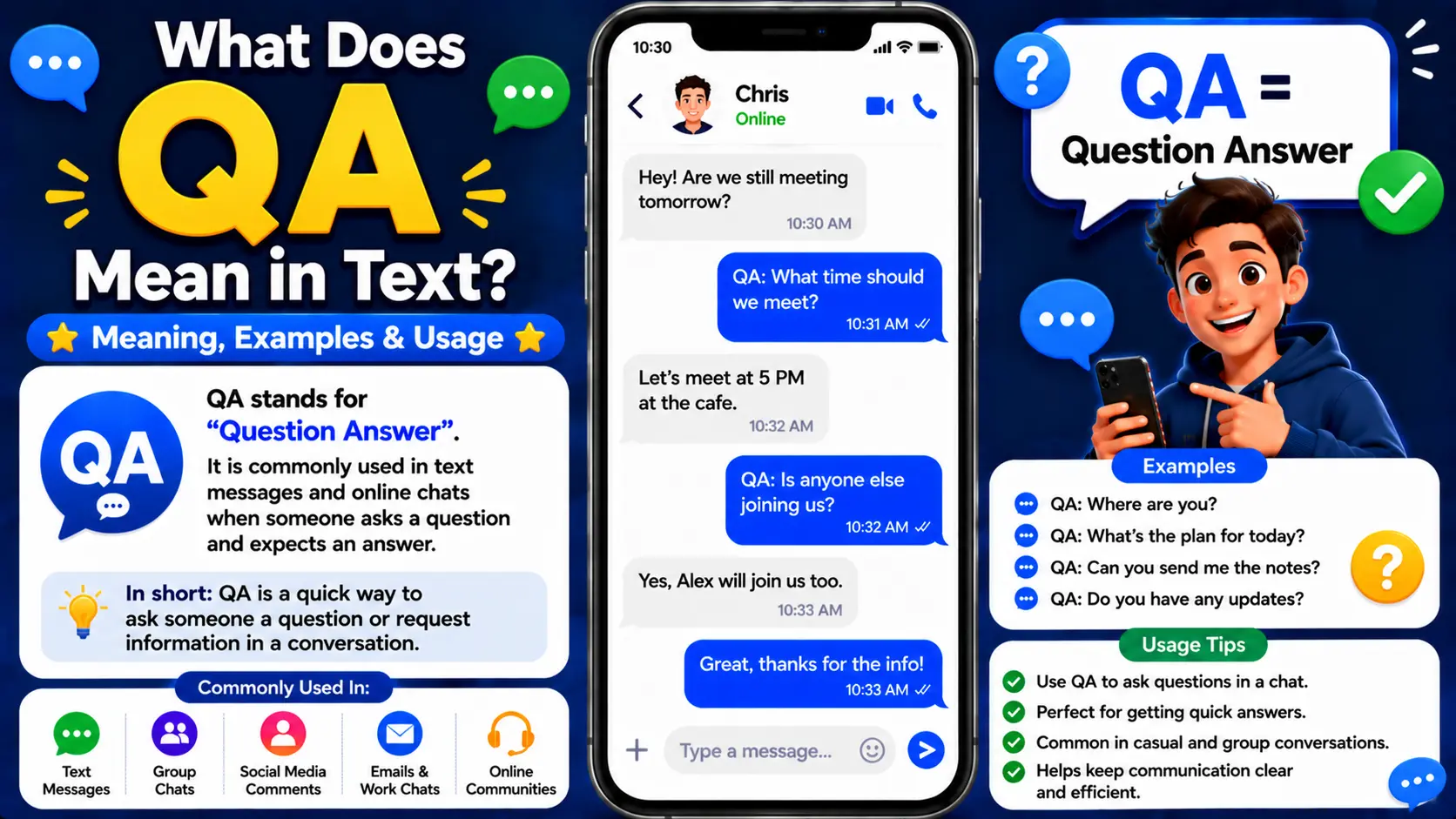
Some people think QA refers to a question-and-answer session.
In certain contexts, it can.
However, workplace texts usually mean Quality Assurance.
Assuming It Means Approval
QA does not automatically mean approval.
It simply means testing or reviewing is taking place.
Confusing It with Customer Support
QA teams sometimes evaluate customer service performance, but QA itself is not customer support.
Believing It Is Only for Software
Although common in technology, QA exists in:
- Manufacturing
- Healthcare
- Education
- Retail
- Marketing
Comparison Table
| Expression | Meaning | Usage |
|---|---|---|
| QA | Quality Assurance | Testing and reviewing |
| QC | Quality Control | Inspecting final results |
| Review | Examination of work | General checking |
| Audit | Formal evaluation | Compliance and standards |
| Approval | Final authorization | Permission to proceed |
| Bug Testing | Finding software issues | Technical development |
| Launch | Product release | Opposite stage from QA |
Key Insight
QA is unique because it focuses on preventing problems before they reach users. Unlike approval or launch stages, QA exists specifically to identify issues and improve quality before release.
Variations and Types of QA
1. Software QA
Testing apps, websites, and software programs.
2. Manual QA
Human testers check products manually.
3. Automated QA
Testing performed through automated systems.
4. QA Review
A formal quality evaluation process.
5. QA Testing
The act of identifying defects or errors.
6. QA Team
A group responsible for quality verification.
7. QA Analyst
A professional who performs testing and evaluation.
8. QA Approval
Confirmation that quality standards have been met.
9. QA Process
The complete quality assurance workflow.
10. QA Report
A document detailing testing results and findings.
How to Respond When Someone Uses QA
Casual Replies
- “Sounds good.”
- “Hope it passes.”
- “Keep me updated.”
- “Nice, thanks for checking.”
Funny Replies
- “My work needs QA too!”
- “Let the quality detectives handle it.”
- “Hopefully the bugs are on vacation.”
- “QA never sleeps.”
Mature Replies
- “Quality checks are important.”
- “Thanks for ensuring everything is ready.”
- “I appreciate the thorough review.”
- “That makes sense before launch.”
Respectful Replies
- “Thank you for the update.”
- “Please let me know when QA is complete.”
- “I understand the need for testing.”
- “Looking forward to the final version.”
Regional & Cultural Usage
Western Culture
In North America and Europe, QA is heavily associated with technology, software, and business operations.
Many professionals use the abbreviation daily.
Asian Culture
Rapidly growing technology sectors across Asia have made QA a common workplace term.
Many multinational companies use the abbreviation in English regardless of local language.
Middle Eastern Culture
QA is frequently used in technology, telecommunications, and international business environments.
Professional teams often communicate using English abbreviations like QA.
Global Internet Usage
Online communities discussing apps, games, and software updates regularly use QA.
Gamers and tech enthusiasts encounter the term frequently.
Gen Z vs Millennials
Gen Z
- More likely to encounter QA through gaming and technology content.
- Familiar with software development discussions online.
Millennials
- Often know QA from workplace experience.
- Commonly use it in professional communication.
Is It Safe for Kids?
Yes.
QA is generally considered a safe and professional abbreviation.
It does not contain offensive language, inappropriate content, or harmful meanings.
However, children may not understand the technical context unless it is explained as a process for checking quality and fixing mistakes.
Frequently Asked Questions
What does QA stand for in text?
QA usually stands for Quality Assurance, meaning testing or reviewing something to ensure quality standards are met.
Does QA always mean Quality Assurance?
No. In some contexts, QA can mean Question and Answer, but Quality Assurance is the most common professional meaning.
What does “in QA” mean?
It means a product, document, app, or project is currently being reviewed or tested.
Is QA only used in software development?
No. QA is used in manufacturing, healthcare, education, customer service, retail, and many other industries.
Is QA a positive term?
Generally yes. It suggests that effort is being made to ensure quality and reduce mistakes.
Can QA be used casually?
Yes. People sometimes use it jokingly when evaluating food, outfits, photos, or personal projects.
What is the difference between QA and QC?
QA focuses on preventing problems through processes and testing, while QC focuses on identifying defects in finished products.
Conclusion
Understanding what QA means in text becomes much easier once you know the context. In most cases, QA stands for Quality Assurance, a process focused on testing, reviewing, and improving quality before something reaches its audience.
Whether you encounter it in a workplace chat, a software update announcement, a gaming forum, or a social media discussion, QA usually signals that someone is taking extra care to ensure things work correctly.
As digital communication continues to evolve, abbreviations like QA help people communicate quickly while still conveying important information. Knowing its meaning allows you to interpret conversations accurately and respond with confidence whenever the term appears.