
If you’ve spent time on TikTok, Discord, X, Instagram, or niche online communities, you may have come across the term “RCTA” and wondered what it actually means. The phrase often appears in emotional debates, controversial videos, or confusing comment sections where people seem divided between humor, identity, and criticism.
That confusion is exactly why so many people search for “what does RCTA mean in text.”
Unlike simple slang abbreviations such as “LOL” or “BRB,” RCTA carries deeper cultural and emotional layers. Some people use it jokingly, others use it seriously, and many misunderstand it entirely. In online conversations, context matters a lot with this term.
This guide explains the meaning of RCTA in plain English, where it came from, how people use it online, why it became controversial, and what you should know before using it yourself.
RCTA – Quick Meaning
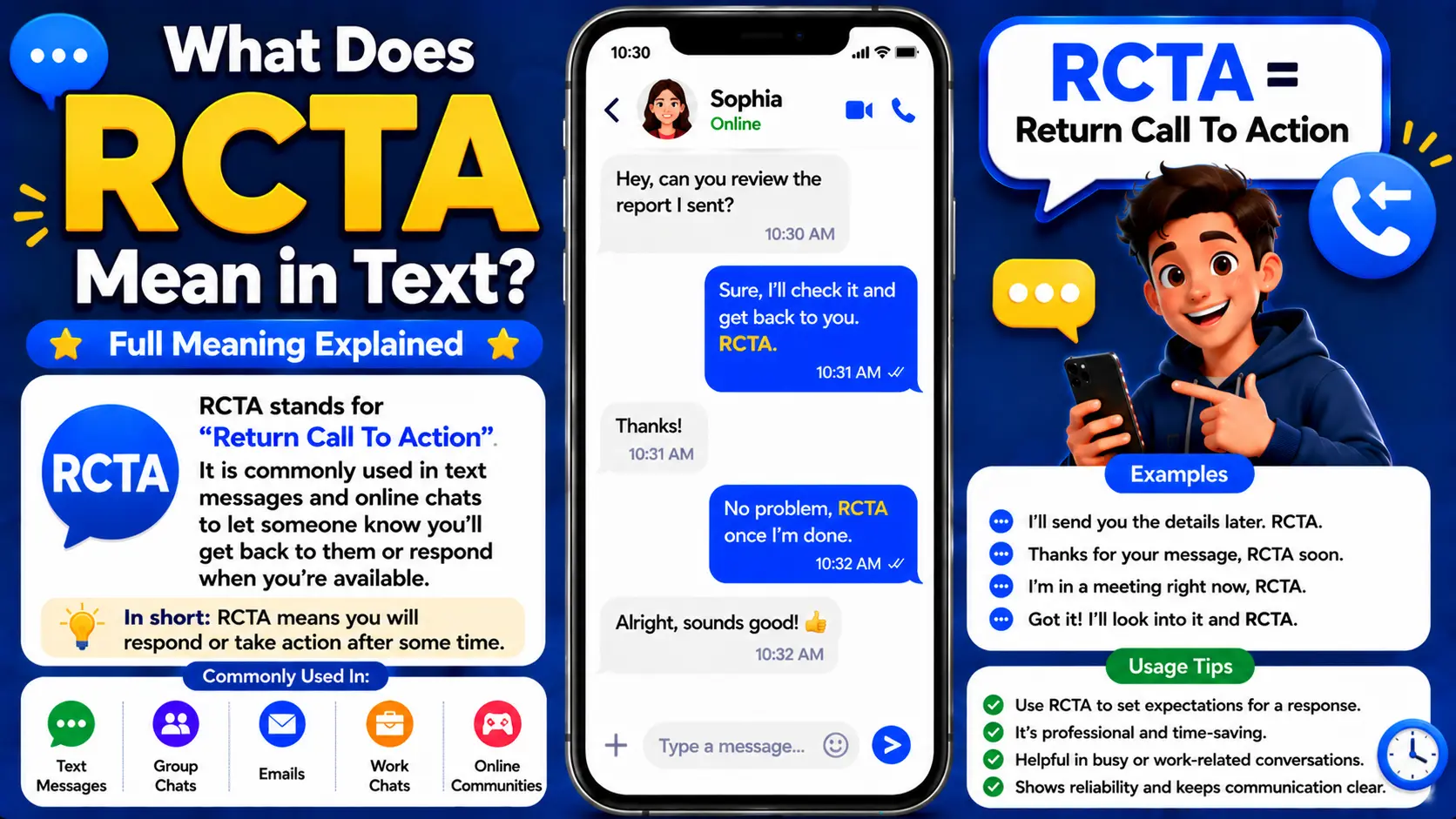
RCTA usually stands for:
“Race Change To Another”
It refers to people who claim they identify as a different race than the one they were born into.
The term became popular mainly through online communities and social media discussions. In many cases, it is linked to identity trends, internet subcultures, roleplay-style behavior, or controversial personal beliefs.
Simple Breakdown
- RC = Race Change
- TA = To Another
Example Uses
“She said she’s RCTA because she feels more connected to Korean culture.”
“That TikTok comment section turned into a huge argument about RCTA.”
“I thought RCTA was a joke at first.”
Many people use the term sarcastically, while others discuss it seriously. That difference in tone is one reason misunderstandings happen so often.
Origin & Background
The term RCTA began appearing more widely in online spaces around the early 2020s. It gained traction through TikTok edits, Discord communities, fandom culture, and identity-focused discussions.
Some internet users claimed they spiritually, emotionally, or psychologically identified with another race. Others created content around “changing race” through manifestation, subliminals, aesthetics, or lifestyle immersion.
Over time, the term evolved into something larger than just slang.
Social Media Influence
Platforms like TikTok amplified the trend quickly because controversial identity discussions attract attention. Videos using hashtags connected to RCTA often sparked millions of views, debates, reactions, and criticism.
Some creators treated it like a personal identity journey.
Others mocked it openly.
This split created confusion for new users who didn’t understand whether the term was serious, ironic, or part of internet satire.
Cultural Impact
RCTA became controversial because race is tied deeply to:
- history
- culture
- discrimination
- family background
- lived experiences
Many critics argue that race cannot simply be “changed” like a fashion style or online persona. Others view certain RCTA discussions as disrespectful cultural appropriation.
Because of this, the term often carries emotional tension online.
Real-Life Conversations
WhatsApp Conversation
Person A:
Did you see her new bio?
Person B:
Yeah, she says she’s RCTA now.
Person A:
Wait… seriously or as a joke?
Person B:
Honestly, I can’t even tell anymore.
Instagram DM
Person A:
Why are people angry in those comments?
Person B:
Because the creator said she changed races through subliminals.
Person A:
Ohhh, so that’s what RCTA means.
TikTok Comments
Person A:
This trend feels disrespectful.
Person B:
Some people take RCTA seriously though.
Person A:
That’s exactly why the internet keeps arguing about it.
Text Message
Person A:
My cousin keeps talking about RCTA TikTok.
Person B:
Be careful with that topic. It gets controversial fast.
Emotional & Psychological Meaning
At a deeper level, RCTA conversations often reveal something bigger about modern internet culture.
Many people online are searching for:
- identity
- belonging
- acceptance
- emotional connection
- self-expression
Sometimes users become deeply attached to another culture through music, fashion, entertainment, language, or online communities. In some cases, that admiration turns into identity confusion.
For example, someone heavily immersed in another culture’s media may start feeling emotionally connected to it beyond simple fandom.
That emotional attachment can become complicated.
Why People Use the Term
Some users:
- genuinely feel disconnected from their own identity
- romanticize another culture
- seek attention online
- participate in internet trends
- use it ironically for humor or trolling
A Realistic Scenario
A teenager spends years consuming Korean dramas, music, beauty content, and social media communities. Over time, they begin saying they feel “more Korean” emotionally than connected to their own background.
Online spaces may encourage those feelings, especially when identity discussions become trendy.
This doesn’t always come from bad intentions. Sometimes it reflects loneliness, admiration, escapism, or the desire to belong somewhere emotionally.
Usage in Different Contexts
Social Media
RCTA appears most commonly on:
- TikTok
- Discord
- X
- Reddit-style communities
It’s often used in debates, reaction videos, or controversial posts.
Friends & Relationships
Among friends, the term may appear jokingly or sarcastically.
Example:
“Don’t start acting RCTA after watching one drama series.”
Tone matters heavily here.
Work or Professional Settings
RCTA is generally inappropriate for professional communication because:
- it can be misunderstood
- it touches sensitive cultural issues
- it may offend coworkers or clients
Most workplaces would avoid discussions around it entirely.
Casual vs Serious Tone
Some people use RCTA ironically.
Others discuss it as a genuine identity concept.
Without context, it’s easy to misread someone’s intention.
When NOT to Use It
There are situations where using RCTA can create discomfort or conflict.
Avoid Using It:
- in professional settings
- during serious racial discussions
- to mock someone’s ethnicity
- around people sensitive to cultural identity issues
- as a joke targeting marginalized groups
Cultural Sensitivity Matters
Race and culture are deeply personal topics for many people. Casual use of RCTA may sound dismissive or offensive depending on the audience.
What seems funny in one online circle may feel disrespectful in another.
Common Misunderstandings
People Think It’s Official
RCTA is not a medically recognized identity term.
It mostly exists within internet culture and online discussions.
Confusing Culture With Race
Many people mix up:
- appreciating a culture
- participating in a culture
- changing racial identity
These are very different ideas.
Assuming Everyone Uses It Seriously
A huge percentage of RCTA content online is satire, trolling, or exaggerated internet humor.
That’s why context is critical.
Tone Confusion
One person may post about RCTA sincerely.
Another may use the exact same phrase sarcastically.
Text alone doesn’t always reveal intention clearly.
Comparison Table
| Expression | Meaning | Tone | Common Usage |
|---|---|---|---|
| RCTA | Identifying as another race | Controversial | Internet subcultures |
| Cultural Appreciation | Respecting another culture | Positive | Learning/travel/media |
| Cultural Appropriation | Misusing cultural elements | Negative | Social criticism |
| Stan Culture | Deep fandom admiration | Casual | Pop culture communities |
| Identity Roleplay | Exploring alternate identities | Mixed | Online communities |
| Reverse Racism Debate | Social argument topic | Serious | Political/social discussions |
Key Insight
The biggest misunderstanding about RCTA is assuming cultural admiration automatically equals racial identity change. Most people enjoy cultures outside their own without claiming a new race. The internet often blurs those boundaries for attention, controversy, or emotional expression.
Variations / Types
1. IRCTA
“Ironic RCTA”
Used sarcastically or jokingly online.
2. SRCTA
“Spiritual RCTA”
People claiming a spiritual connection to another race.
3. TikTok RCTA
Trend-focused online identity content.
4. Meme RCTA
Used mainly for internet humor and trolling.
5. Subliminal RCTA
Connected to manifestation or subliminal communities.
6. Aesthetic RCTA
People heavily adopting another culture’s visual style.
7. Fandom-Based RCTA
Influenced by music, anime, dramas, or celebrity fandoms.
8. Satirical RCTA
Used to mock extreme online identity trends.
9. Identity Exploration RCTA
People experimenting emotionally with identity concepts.
10. Controversial RCTA Discussions
Debates about ethics, race, and online behavior.
How to Respond When Someone Uses It
Casual Replies
- “I’ve seen that term online before.”
- “Internet slang gets confusing fast.”
- “That topic is pretty controversial.”
Funny Replies
- “TikTok invents a new identity every week.”
- “The comment section is about to explode.”
- “I need subtitles for internet culture now.”
Mature Replies
- “Cultural appreciation and racial identity aren’t exactly the same thing.”
- “That conversation deserves sensitivity.”
- “People have strong opinions about that topic.”
Respectful Replies
- “I’d rather understand someone’s perspective before judging.”
- “Race discussions can be emotionally sensitive.”
- “It’s important to approach these conversations carefully.”
Regional & Cultural Usage
Western Culture
In Western countries, RCTA discussions are usually viewed critically because race is closely connected to history, discrimination, and identity politics.
Many people see the concept as insensitive or unrealistic.
Asian Culture
Reactions vary widely across Asian communities. Some view RCTA trends as strange internet behavior, while others feel uncomfortable seeing culture turned into aesthetic identity performance.
Middle Eastern Culture
In many Middle Eastern communities, the term is less mainstream but still seen online through global social media platforms. Discussions often focus on respect, authenticity, and cultural boundaries.
Global Internet Usage
Globally, RCTA exists mostly in digital spaces rather than everyday life. Many people only discover the term through viral content or controversy.
Gen Z vs Millennials
Gen Z
- More exposed to identity-based internet language
- More familiar with TikTok culture
- More likely to encounter RCTA online
Millennials
- Often more skeptical of internet identity trends
- More likely to see the term as satire or trolling
Generational differences strongly affect how people interpret the phrase.
Is It Safe for Kids?
Parents should understand the context if children encounter RCTA online.
The term itself is not explicit, but discussions around it can involve:
- identity confusion
- racial debates
- social pressure
- controversial online communities
Young users may struggle to separate satire from serious belief systems.
Open conversations about cultural respect and online influence are usually more helpful than harsh reactions.
FAQs
What does RCTA stand for in text?
RCTA usually means “Race Change To Another,” a controversial internet term related to identity discussions.
Is RCTA a joke or serious?
Both. Some people use it sarcastically, while others discuss it seriously online.
Did TikTok popularize RCTA?
Yes. TikTok played a major role in spreading the term globally.
Is RCTA officially recognized?
No. It is mainly an internet-created term, not an official identity category.
Why is RCTA controversial?
Because many people believe race involves lived experience, history, and culture that cannot simply be changed.
Is RCTA the same as appreciating another culture?
No. Appreciating another culture is very different from claiming a different racial identity.
Should I use the term casually?
It’s better to use caution because some people may find it offensive or disrespectful.
Conclusion
Understanding what RCTA means in text requires more than just reading a simple definition. The term sits at the intersection of internet culture, identity, emotional belonging, satire, and social controversy.
For some people, it reflects admiration for another culture. For others, it represents confusion about identity boundaries online. And for many internet users, it has become another example of how social media can blur the line between sincerity and performance.
The most important thing is context.
Before using terms like RCTA, it helps to understand how different audiences may interpret them emotionally and culturally. Online language evolves fast, but thoughtful communication still matters.
When you approach these conversations with awareness and respect, you avoid misunderstandings and communicate more confidently in modern digital spaces.