

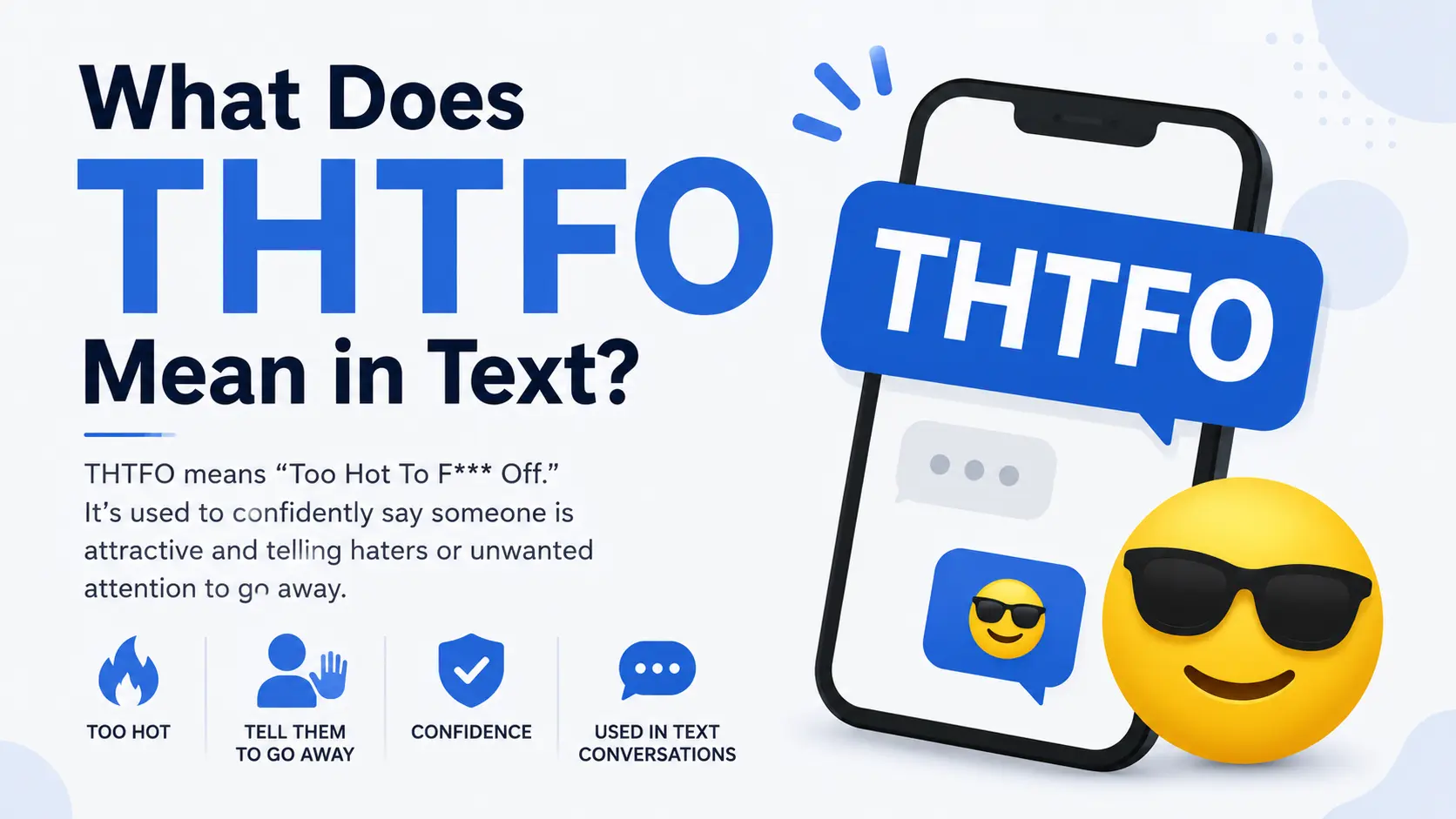
If you’ve seen “THTFO” in a text, TikTok comment, gaming chat, or heated online conversation, you probably paused for a second trying to figure out what it meant.
Unlike common abbreviations such as “LOL” or “BRB,” THTFO feels more intense and emotionally charged. That’s exactly why people search for it. The phrase often appears during arguments, emotional reactions, or dramatic social media moments, leaving many people confused about whether it’s funny, rude, aggressive, or just exaggerated slang.
In modern texting culture, tone matters as much as the words themselves. A short acronym can completely change the emotional energy of a conversation. THTFO is one of those expressions that carries attitude, emotion, and context all at once.
This guide explains the real meaning of THTFO, where it came from, how people use it online, and when you should avoid using it altogether.
THTFO Meaning in Text
“THTFO” usually stands for:
“Talked His/Her/Their F*ing Off”**
People use it to describe someone who talked excessively, aggressively, emotionally, or nonstop.
It can be negative, funny, dramatic, or even admiring depending on the situation and tone.
Simple Meaning
- Someone would not stop talking
- Someone passionately argued their point
- Someone verbally overwhelmed others
- Someone kept ranting or explaining intensely
Quick Examples
“Bro really THTFO during the meeting 💀”
“She got mad and THTFO in the group chat.”
“That creator THTFO on TikTok live last night.”
The phrase is heavily emotional and usually connected to intense conversations.
Origin & Background
THTFO grew from internet shorthand culture where long emotional phrases became compressed into quick acronyms.
The expression likely evolved from spoken slang commonly heard in urban conversations and online communities. Over time, texting culture shortened it into “THTFO” for speed and style.
Social media accelerated its popularity, especially:
- TikTok comment sections
- Twitter/X reactions
- Discord servers
- Gaming chats
- Group texts
People love abbreviations that capture emotion quickly. THTFO became popular because it instantly communicates a scene where someone “went off” verbally.
In earlier internet culture, people might say:
- “He was ranting”
- “She wouldn’t stop talking”
- “They went off”
Now, younger users often compress those ideas into sharper slang like THTFO.
The phrase also reflects modern online communication habits where dramatic reactions gain attention faster than calm explanations.
Real-Life Conversations
WhatsApp Conversation
Person A:
Did you see Sara in the family group chat?
Person B:
Yeah 😭 she THTFO after her cousin made that joke.
Instagram DM
Person A:
Why’s everyone talking about that livestream?
Person B:
Because the dude THTFO for like 20 minutes straight.
TikTok Comments
Person A:
That teacher was calm at first.
Person B:
Then he THTFO and the whole class got silent 💀
Text Message
Person A:
How did the meeting go?
Person B:
Manager THTFO about deadlines again.
Emotional & Psychological Meaning
THTFO is more than just slang. It reflects emotional intensity.
When people use this term, they are usually describing:
- Frustration
- Anger
- Passion
- Emotional release
- Verbal dominance
- Over-explaining
In digital communication, people often bottle emotions until they suddenly “explode” through messages, voice notes, or online rants. THTFO captures that emotional overflow perfectly.
Psychologically, the phrase also reflects modern internet behavior where emotional expression is public and performative. People don’t just argue privately anymore. They rant on livestreams, post threads, or vent in group chats.
A relatable example:
Imagine someone staying quiet during weeks of workplace stress. Then one small comment pushes them over the edge, and they suddenly send long paragraphs explaining every frustration they’ve been holding inside. A friend watching that situation might later say:
“Yeah… they definitely THTFO.”
That reaction feels human because most people have experienced emotional overload at some point.
Usage in Different Contexts
Social Media
On TikTok, Instagram, or X, THTFO often describes dramatic online moments.
Example:
“The streamer THTFO after losing the game.”
Sometimes it’s used humorously. Other times it highlights real anger.
Friends & Relationships
Friends may use it casually when someone overreacts or passionately vents.
Example:
“You asked one question and he THTFO 😂”
In relationships, it can describe emotional arguments or intense discussions.
Work or Professional Settings
This slang is usually inappropriate in formal workplaces.
Even though younger employees understand it, using THTFO in professional emails or meetings can appear disrespectful or immature.
Instead, people might say:
- “They became emotional”
- “They spoke passionately”
- “The discussion escalated”
Casual vs Serious Tone
Tone changes everything.
Casual Tone
Funny exaggeration among friends:
“Coach THTFO after we lost.”
Serious Tone
Describing emotional conflict:
“She THTFO during the breakup conversation.”
The same slang can sound playful or harsh depending on context.
When NOT to Use It
THTFO is not appropriate everywhere.
Avoid using it in:
- Professional emails
- Academic discussions
- Conversations with older relatives unfamiliar with slang
- Sensitive emotional situations
- Public posts about serious trauma or mental health
Because the acronym includes profanity indirectly, some people may find it offensive even if you do not spell out the full phrase.
It can also sound dismissive toward someone’s emotions.
For example:
If someone was genuinely hurt and expressing pain, saying they “THTFO” may make their feelings sound dramatic rather than valid.
Context matters.
Common Misunderstandings
People Think It Always Means Anger
Not always.
Sometimes THTFO simply means someone talked a lot or passionately without actual anger.
Confusion About the Letters
Many users struggle because THTFO is not universally standardized.
Some interpret it slightly differently depending on community or region.
Literal vs Figurative Meaning
People usually do not mean someone literally “talked excessively forever.”
It’s often exaggerated internet humor.
Example:
“Bro THTFO for two hours.”
Maybe it was only ten minutes.
Tone Can Be Misread
In text messages, sarcasm disappears easily.
What sounds funny to one person may sound insulting to another.
That’s why emojis often accompany the phrase:
- 😂
- 💀
- 😭
These soften the tone.
Comparison Table
| Expression | Meaning | Tone | Intensity |
|---|---|---|---|
| THTFO | Talked aggressively or nonstop | Emotional | High |
| Went Off | Became intense emotionally | Dramatic | High |
| Ranted | Spoke emotionally for a long time | Serious | Medium |
| Yap/Yapping | Talking too much | Playful | Low |
| Venting | Releasing emotions | Honest | Medium |
| Stayed Quiet | Opposite behavior | Calm | Low |
| Kept It Cool | Controlled emotions | Mature | Low |
Key Insight
THTFO stands out because it mixes intensity, emotion, and internet humor together. It is stronger than “talking a lot” but often softer than describing a full emotional breakdown.
Variations & Related Types
1. Went Off
Means someone became emotionally intense or outspoken.
2. Ranting
Talking emotionally for an extended period.
3. Yapping
Playful slang for nonstop talking.
4. Awkwardly
Acting emotionally overwhelmed or hyper.
5. Venting
Releasing stress or frustration verbally.
6. Crash Out
Gen Z slang for emotionally losing control.
7. Heated
Describes emotionally intense discussion.
8. Tweaking
Acting unusually emotional or stressed.
9. Losing It
Becoming emotionally overwhelmed.
10. Spiraling
Emotionally overthinking or unraveling publicly.
How to Respond When Someone Uses It
Casual Replies
- “😂 What happened?”
- “No way, seriously?”
- “I know they were mad.”
Funny Replies
- “Bro unlocked unlimited dialogue.”
- “Someone mute him 💀”
- “That rant deserved subtitles.”
Mature Replies
- “Sounds like they had a lot built up.”
- “Maybe they needed to express themselves.”
- “Hopefully things calm down soon.”
Respectful Replies
- “I understand why they felt emotional.”
- “That situation sounded stressful.”
- “Everyone reacts differently sometimes.”
Regional & Cultural Usage
Western Culture
In American and Western internet culture, THTFO is often humorous and dramatic.
People use it casually in memes, gaming culture, and reaction posts.
Asian Culture
In many Asian communities, communication tends to value emotional restraint more publicly.
Because of this, slang like THTFO may feel more aggressive or disrespectful depending on the context.
However, younger internet users still understand and use global slang regularly.
Middle Eastern Culture
Tone and respect are highly important in many Middle Eastern conversations.
Using slang connected to profanity or emotional outbursts can sometimes be viewed negatively, especially around family or formal discussions.
Among younger users online, though, the phrase may still appear casually in memes or private chats.
Global Internet Usage
Internet slang spreads extremely fast now.
Even users who speak English as a second language often understand expressions like THTFO through TikTok, gaming communities, or online fandoms.
The emotional energy behind the phrase is usually understood even when the exact wording is unfamiliar.
Gen Z vs Millennials
Gen Z
- Uses THTFO more casually
- Often ironic or meme-based
- Comfortable with emotionally expressive slang
Millennials
- More likely to say “ranting” or “went off”
- May use the acronym less frequently
- Often interpret it more literally
Generational language differences shape how intense the phrase feels.
Is It Safe for Kids?
THTFO is mildly risky for younger audiences because it indirectly includes profanity and emotionally aggressive language.
While many teenagers see it as normal internet slang, parents and educators should understand the context in which it appears.
The phrase itself is not dangerous, but repeated exposure to hostile or aggressive online communication can influence how kids express emotions digitally.
Teaching context awareness is more helpful than banning slang completely.
FAQs
What does THTFO stand for in texting?
It usually means “Talked His/Her/Their F***ing Off,” describing someone speaking intensely or nonstop.
Is THTFO rude?
It can sound rude depending on tone and context, especially in serious conversations.
Is THTFO popular on TikTok?
Yes. It appears often in reaction videos, livestream comments, and dramatic storytelling posts.
Can THTFO be funny?
Absolutely. Many people use it jokingly to exaggerate emotional reactions.
Should I use THTFO at work?
Usually no. It is informal slang and may sound unprofessional.
Does THTFO always mean anger?
No. Sometimes it simply means someone talked passionately or excessively.
Why do people use acronyms like THTFO?
They communicate emotion quickly while matching the fast pace of modern texting culture.
Conclusion
THTFO is one of those internet slang terms that captures emotion instantly. It describes moments when someone talks intensely, emotionally, or nonstop, whether from frustration, passion, humor, or stress.
What makes the phrase interesting is not just the words themselves, but what they reveal about modern communication. People today express emotions faster, louder, and more publicly than ever before. Slang like THTFO reflects that shift.
Still, context matters. Among friends, it can sound hilarious and relatable. In serious conversations, it may feel dismissive or aggressive. Understanding tone is the key to using it confidently.
The more you understand internet slang, the easier digital conversations become. And sometimes, knowing the emotional meaning behind a phrase matters even more than the literal definition itself.