
When someone types “UPS” in a message, many people immediately think about the delivery company or a package update. However, in texting and online conversations, “UPS” can have a completely different meaning depending on the situation.
Understanding what does UPS mean in text helps avoid confusion, especially when chatting on social media, messaging apps, or online communities. Short forms and slang words often change meaning because people use them creatively in everyday conversations.
In modern digital communication, context is everything. A three-letter word can express emotions, describe a situation, or simply represent a casual phrase between friends.
This guide explains the meaning of UPS in text, where it came from, how people use it, and how to respond naturally when you see it.
What Does UPS Mean in Text? Quick Meaning
In texting, UPS usually means “Oops” or “Ups” as a casual spelling variation, especially in some online conversations and non-native English texting styles.
It is often used when someone:
• Makes a small mistake
• Realizes something unexpected happened
• Wants to show surprise or embarrassment
• Reacts to an accidental action
Examples:
“I sent the wrong photo ups 😅”
“Ups, I forgot your birthday message.”
“Ups! That was not supposed to happen.”
The meaning depends heavily on the conversation. In some cases, people may also use UPS as an abbreviation for something specific, but casual texting most commonly connects it with a mistake or unexpected moment.
Origin & Background of UPS in Text
The use of “UPS” in texting developed from the natural evolution of online language. As people started communicating faster through SMS, chat rooms, and social media, spelling became more flexible.
Many internet users began writing words the way they sounded rather than following traditional spelling rules. “Oops” became “ups” in some communities because the pronunciation feels similar.
This variation is especially noticeable among international internet users. In languages where English is a second language, people often adapt English expressions into their own texting style.
Social media platforms also helped spread these informal spellings. Short reactions, emojis, and quick responses became part of everyday online communication.
Today, “ups” often carries a playful feeling rather than a serious apology.
Real-Life Conversations Using UPS
WhatsApp Conversation
Person A:
“I accidentally deleted our chat history.”
Person B:
“Ups 😭 did you save anything?”
Person A:
“No, I think everything is gone.”
Here, UPS shows a small mistake and emotional reaction.
Instagram DM Conversation
Person A:
“Your picture got posted on my story by accident.”
Person B:
“Ups 😂 remove it quickly.”
Person A:
“Already fixed it.”
In this situation, UPS creates a light and friendly tone.
TikTok Comments Conversation
Person A:
“Everyone noticed I forgot the lyrics.”
Person B:
“Ups, but your voice was still amazing.”
The word softens the reaction and makes the comment feel supportive.
Text Message Conversation
Person A:
“I told my manager the wrong meeting time.”
Person B:
“Ups, hope you can fix it.”
Here, UPS expresses concern about a mistake.
Emotional & Psychological Meaning of UPS
Words used in texting often reveal emotions more than people realize. When someone writes “ups,” they are usually not only describing an error. They are also showing their attitude toward that moment.
It can communicate:
• Light embarrassment
• Humor
• Surprise
• Acceptance of a small mistake
• A desire to keep the conversation relaxed
Modern communication often avoids overly formal language. Instead of writing a long apology, someone might say “ups 😅” because it feels more natural and human.
For example, imagine texting a friend after accidentally sending a message too early. Writing “ups, ignore that 😂” feels warmer than saying “I apologize for the mistake.”
This shows how digital language has become more emotional and personal.
Usage in Different Contexts
Social Media
On platforms like Instagram, TikTok, and Facebook, UPS is usually casual. People use it in comments, captions, and replies when reacting to funny mistakes.
Example:
“Ups, forgot to record the ending 😂”
It creates a friendly and relatable feeling.
Friends and Relationships
Among friends, UPS can make mistakes feel less serious.
Example:
“Ups, I ate the last slice of pizza.”
The message sounds playful rather than guilty.
In relationships, tone matters. A cute or funny “ups” can reduce tension after a small accident.
Work and Professional Settings
Using UPS in professional communication is usually not recommended unless the workplace culture is very casual.
Instead of:
“Ups, I missed the deadline.”
A better professional message would be:
“I apologize, I missed the deadline and I am working on it now.”
Professional conversations usually require clearer language.
Casual vs Serious Tone
UPS is mostly casual.
It fits:
• Friends
• Social media
• Informal chats
It may not fit:
• Formal emails
• Business reports
• Important apologies
When Not to Use UPS
Although UPS is harmless in casual situations, there are moments where it can create confusion.
Avoid using it when:
• Talking to someone professionally
• Discussing serious mistakes
• Apologizing for something important
• Communicating with someone unfamiliar with online slang
Cultural understanding also matters. Some people may not recognize “ups” and may wonder if you mean something else.
When the situation requires clarity, use complete words instead.
Common Misunderstandings About UPS
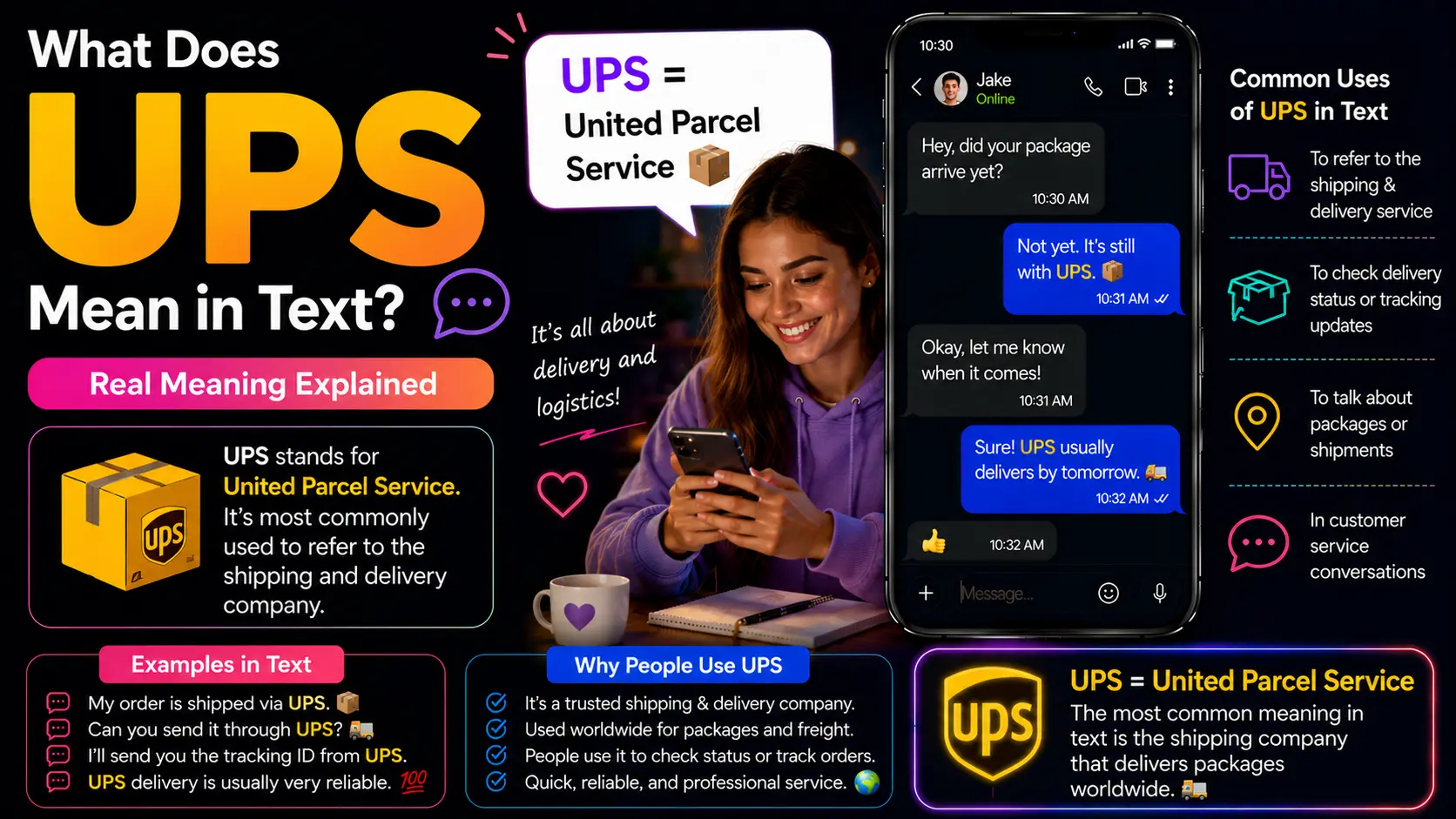
One common mistake is assuming UPS always means the delivery company. In everyday texting, the meaning depends on context.
Another misunderstanding is thinking “ups” is always a serious apology. Usually, it is a small emotional reaction, similar to saying “oops.”
People may also confuse it with:
• A business abbreviation
• A technical term
• A product name
The surrounding conversation reveals the true meaning.
For example:
“My package is coming through UPS”
Here it refers to the delivery service.
“Ups, I made a mistake”
Here it refers to a reaction.
Comparison Table
| Expression | Meaning | Tone |
|---|---|---|
| UPS / Ups | Small mistake or surprise reaction | Casual |
| Oops | Traditional form of showing a mistake | Casual |
| My bad | Accepting responsibility | Friendly |
| Sorry | Apology | More serious |
| Oh no | Surprise or concern | Emotional |
| Yay | Opposite emotional reaction, happiness | Positive |
| Uh oh | Something may be wrong | Concerned |
Key Insight
The meaning of UPS is not only about the letters. Like most internet expressions, the real meaning comes from the situation, relationship, and emotion behind the message.
Variations and Types of UPS Usage
1. Simple Ups
Meaning: A basic reaction to a mistake.
Example:
“Ups, forgot my keys.”
2. Funny Ups
Meaning: A playful way to admit something.
Example:
“Ups, I ate all the snacks.”
3. Embarrassed Ups
Meaning: Showing awkwardness.
Example:
“Ups, everyone heard that.”
4. Surprise Ups
Meaning: Reacting to something unexpected.
Example:
“Ups, that happened fast.”
5. Cute Ups
Meaning: A softer expression used between close people.
Example:
“Ups baby, my mistake.”
6. Social Media Ups
Meaning: A casual comment reaction online.
Example:
“Ups, the camera was still recording.”
7. Apology Ups
Meaning: A small informal apology.
Example:
“Ups, I forgot to reply.”
8. Accidental Ups
Meaning: Used after an unintended action.
Example:
“Ups, pressed the wrong button.”
9. Playful Ups
Meaning: A joking reaction.
Example:
“Ups, stole your fries again.”
10. Emotional Ups
Meaning: A reaction showing embarrassment or surprise.
Example:
“Ups 😳 I didn’t mean that.”
How to Respond When Someone Uses UPS
Casual Replies
“😂 No worries.”
“It happens.”
“Lol, it’s okay.”
Funny Replies
“Too late, damage done 😂”
“Classic mistake.”
“Your ups moment is recorded.”
Mature Replies
“No problem, thanks for letting me know.”
“I understand, mistakes happen.”
“Thanks for explaining.”
Respectful Replies
“That’s okay, I appreciate your honesty.”
“No worries, we can fix it.”
Regional & Cultural Usage
Western Culture
In many Western online spaces, “oops” is more common than “ups.” However, people understand similar informal expressions easily because internet language changes quickly.
Asian Culture
In many Asian online communities, English slang is often adapted into local conversations. “Ups” may appear because users write words based on pronunciation.
Middle Eastern Culture
Internet users in Middle Eastern countries often mix English words with local languages. Casual expressions like “ups” may appear in friendly conversations.
Global Internet Usage
The internet has created a shared digital language. Expressions move across countries quickly, and people often adopt phrases from different cultures.
Generational Differences
Gen Z users often prefer short, expressive reactions with emojis.
Example:
“Ups 😭😂”
Millennials may understand it but often prefer:
“Oops, my bad.”
Both communicate the same basic idea with different styles.
Is UPS Safe for Kids?
Yes, UPS as a casual texting expression is generally harmless.
However, children should learn that slang belongs in appropriate situations. Informal internet language may not always work in school, professional, or respectful conversations.
Teaching context awareness is more important than avoiding simple slang words.
FAQs
What does UPS mean in text messages?
UPS usually means a casual version of “oops,” showing a mistake, surprise, or small accident.
Is UPS the same as Oops?
Yes, in many online conversations, UPS is used like Oops, although Oops is the standard spelling.
Can UPS mean something else?
Yes. Context matters because UPS can also refer to names, companies, or abbreviations outside texting.
Is UPS rude?
No. It is usually friendly and informal.
Should I use UPS at work?
It is better to avoid it in formal professional communication.
Why do people write UPS instead of Oops?
Some people write it based on pronunciation or internet habits.
How do I reply to UPS?
A simple “no worries” or “it’s okay” usually works.
Conclusion
Understanding what does UPS mean in text helps you communicate more confidently in today’s fast-moving digital world.
This small expression shows how language changes through online conversations. A simple word can carry humor, embarrassment, friendliness, or surprise depending on the moment.
The best way to understand texting slang is to look beyond the letters and notice the emotion behind them. When you understand context, online conversations become easier, clearer, and more natural.
Use UPS casually with people who understand informal language, and choose clearer words when the situation requires professionalism.