

If you have ever scrolled through messages or social media and seen “WTS,” you probably paused for a second and wondered what it meant. It is one of those short, context-driven abbreviations that can feel obvious to some people and confusing to others.
People search for “what is WTS mean in text” because the meaning changes depending on where it is used. In some conversations, it feels like a business term. In others, it sounds casual or even playful. That mix creates confusion, especially for beginners trying to understand modern digital communication.
This guide clears that confusion in a simple, real-world way. You will learn what WTS means, how people actually use it, and how to respond naturally without overthinking.
WTS – Quick Meaning
WTS most commonly means:
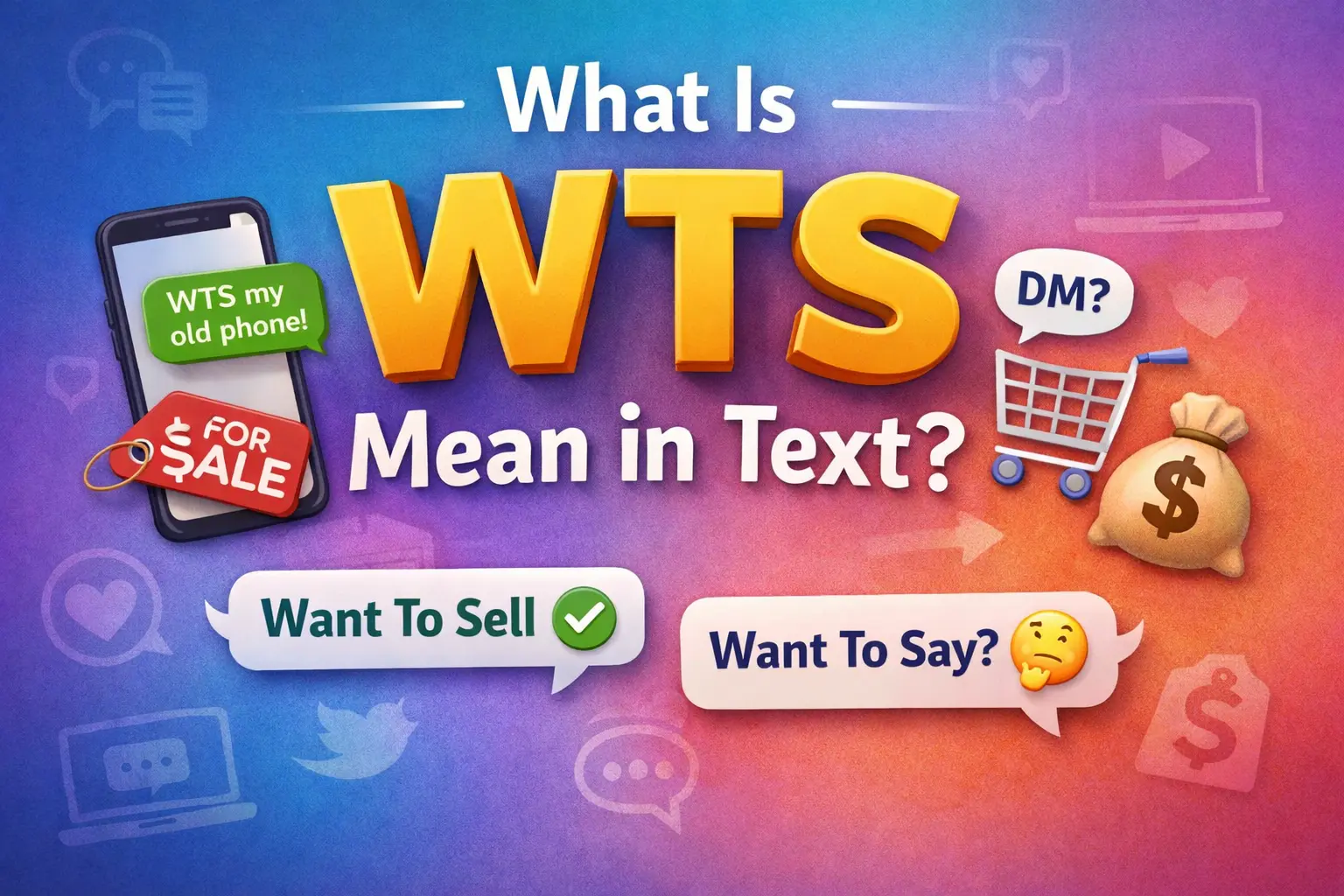
- “Want To Sell”
It is widely used in online marketplaces, group chats, and social media where people are offering items for sale.
Simple examples:
- “WTS my old phone, barely used.”
- “WTS concert tickets for tomorrow night.”
- “Anyone interested? WTS gaming setup.”
In some rare cases, WTS can also mean:
- “Want To Say” in casual texting
Example:
- “WTS, I really appreciate your help.”
But in most online contexts, especially on platforms like Twitter, Facebook groups, or forums, it almost always means Want To Sell.
Origin & Background
WTS grew from the early days of online trading communities and forums. Before sleek apps existed, people relied on message boards and chat threads to buy and sell items.
To keep things quick and efficient, users started using shorthand like:
- WTS – Want To Sell
- WTB – Want To Buy
- WTT – Want To Trade
Over time, this language moved from niche forums into mainstream social media. Platforms like Instagram, Twitter, and Facebook Marketplace made these abbreviations even more popular.
Culturally, WTS reflects a shift toward fast communication and digital commerce. People want to say more with fewer words, especially when attention spans are short and scrolling is fast.
Today, WTS is not just a term. It is part of how people casually do business online.
Real-Life Conversations
1. WhatsApp Chat
Person A: Hey, are you still looking for a laptop?
Person B: Yeah, why?
Person A: WTS mine, I just upgraded. Interested?
Person B: Send pics please!
2. Instagram DM
Person A: Saw your story, is that jacket new?
Person B: Actually no, WTS if you want it 😅
Person A: Wait really? How much?
3. TikTok Comments
Person A: This hoodie is fire 🔥
Person B: Thanks! WTS, DM me if you want one
Person A: I might actually buy it 👀
4. Text Message
Person A: Cleaning my room today
Person B: Nice, find anything interesting?
Person A: Yeah, WTS my old PlayStation
Person B: Bro I might take that 😄
These examples show how naturally WTS fits into everyday conversations without sounding too formal.
Emotional & Psychological Meaning
At first glance, WTS seems purely practical. It is about selling something. But there is more beneath the surface.
When someone uses WTS, they are often expressing:
- A desire to move on from something
- A need for quick interaction or transaction
- Openness to negotiation or interest
There is also a subtle social element. Instead of posting a full advertisement, saying “WTS” feels casual and less pushy. It invites conversation rather than forcing a sale.
A real-life scenario
You buy something you were excited about, but later you realize you do not need it. Instead of making a big deal, you casually post “WTS” with a photo. It feels lighter, less emotional, and easier to let go.
That small abbreviation helps people manage both practical decisions and emotional distance.
Usage in Different Contexts
Social Media
WTS is most common here. People use it in captions, stories, and comments.
Example:
“WTS these sneakers, worn twice.”
It is quick and instantly understood by the right audience.
Friends & Relationships
Among friends, WTS feels more relaxed and personal.
Example:
“WTS my guitar, but only if it goes to someone I know.”
Here, it blends business with trust.
Work / Professional Settings
In formal environments, WTS is rarely appropriate.
Instead of:
“WTS office chair”
Use:
“I am selling an office chair. Let me know if you are interested.”
Professional communication values clarity over shorthand.
Casual vs Serious Tone
- Casual: “WTS this, DM me”
- Serious: “I am selling this item. Please contact me for details.”
Tone depends on your audience. WTS leans toward casual and informal.
When NOT to Use It
There are moments where using WTS can feel out of place or confusing.
- In formal emails or business proposals
- When speaking to someone unfamiliar with internet slang
- In sensitive situations where tone matters
- When clarity is more important than speed
For example, telling a client “WTS product stock” can sound unprofessional or unclear.
Always consider who you are talking to.
Common Misunderstandings
1. Thinking it always means “Want To Say”
Some people assume WTS is about expressing thoughts. While that meaning exists, it is much less common.
2. Tone confusion
“WTS this item” might sound casual to one person and abrupt to another. Context matters.
3. Assuming everyone understands it
Not everyone is familiar with internet abbreviations. Using WTS with the wrong audience can create confusion.
4. Mixing it with similar terms
WTS is often confused with WTB or WTT, which have completely different meanings.
Comparison Table
| Term | Meaning | Usage |
|---|---|---|
| WTS | Want To Sell | Selling items online |
| WTB | Want To Buy | Looking to purchase something |
| WTT | Want To Trade | Exchange items |
| FS | For Sale | Slightly more formal selling term |
| ISO | In Search Of | Looking for something specific |
| NFS | Not For Sale | Clarifying item is unavailable |
Key Insight
These abbreviations form a small language of their own. Once you understand one, the others become easier. WTS fits into a system designed for quick, efficient online interaction.
Variations / Types
Here are common variations and related expressions:
- WTB – Want To Buy
Used when searching for an item. - WTT – Want To Trade
Used for swapping items. - FS – For Sale
A more direct version of WTS. - NFS – Not For Sale
Clarifies that something is not available. - WTS ASAP
Indicates urgency in selling. - WTS Cheap
Suggests a low price or quick deal. - WTS Bundle
Selling multiple items together. - WTS Urgent
Adds emotional urgency to the sale. - WTS DM Me
Invites private messages for details. - WTS Negotiable
Open to price discussions.
Each variation adds tone, urgency, or clarity.
How to Respond When Someone Uses It
Casual Replies
- “How much are you asking?”
- “Can you send more pics?”
- “Still available?”
Funny Replies
- “Do I need it? No. Do I want it? Yes 😅”
- “My wallet says no but my heart says yes”
Mature Replies
- “I might be interested. Can you share details?”
- “What condition is it in?”
Respectful Replies
- “Thanks for sharing. I will think about it.”
- “Not interested, but good luck selling!”
Your response should match your interest level and tone.
Regional & Cultural Usage
Western Culture
WTS is widely used in online marketplaces and social platforms. It is considered normal and efficient.
Asian Culture
Usage exists but may be mixed with local language. Some users prefer full phrases for clarity.
Middle Eastern Culture
WTS appears in online groups, especially for buying and selling. However, tone and politeness are often more emphasized.
Global Internet Usage
Across the internet, WTS is part of a shared digital language. It crosses borders easily because of its simplicity.
Generational Differences
- Gen Z: Uses WTS naturally and frequently
- Millennials: Understand it but may switch to clearer wording in formal contexts
Younger users are more comfortable with shorthand communication.
Is It Safe for Kids?
Yes, WTS itself is safe. It simply means “Want To Sell.”
However, context matters. If children are using it in online marketplaces, they should be guided about:
- Online safety
- Avoiding scams
- Not sharing personal information
The term is harmless, but the environment it is used in should be monitored.
FAQs
1. What does WTS mean in texting?
It usually means “Want To Sell,” especially when offering an item.
2. Can WTS mean something else?
Yes, it can mean “Want To Say,” but this is less common.
3. Is WTS formal or informal?
It is informal and best used in casual or online settings.
4. Where is WTS most commonly used?
On social media, marketplaces, and messaging apps.
5. Is WTS the same as “for sale”?
Yes, but WTS feels more casual and conversational.
6. Should I use WTS in business emails?
No. Use full, clear language in professional communication.
7. How do I reply to WTS?
Ask for details, price, or simply express interest.
Conclusion
Understanding what WTS means in text is more than just learning an abbreviation. It is about recognizing how modern communication works.
WTS reflects speed, simplicity, and a shift toward informal interaction. It helps people connect, trade, and communicate without unnecessary complexity.
Once you understand its meaning and tone, using it becomes natural. You do not have to overthink it. Just match your words to your audience and situation.
And the next time you see “WTS,” you will not pause. You will instantly understand what is being offered and how to respond.