
In today’s fast-paced digital world, abbreviations and slang pop up everywhere, and sometimes they leave us scratching our heads. One such phrase that frequently appears in texts, social media posts, and chats is “IMO.” If you’ve ever seen someone type it and wondered, “What does that even mean?” you’re not alone.
People search for “whats IMO mean in text” because it’s common, yet its meaning is not immediately obvious to everyone. Misunderstanding it can lead to miscommunication, especially in chats where tone is hard to convey. This article will break down IMO from definition to real-life usage, explore its cultural impact, and give you all the tools to use it confidently.
IMO – Quick Meaning
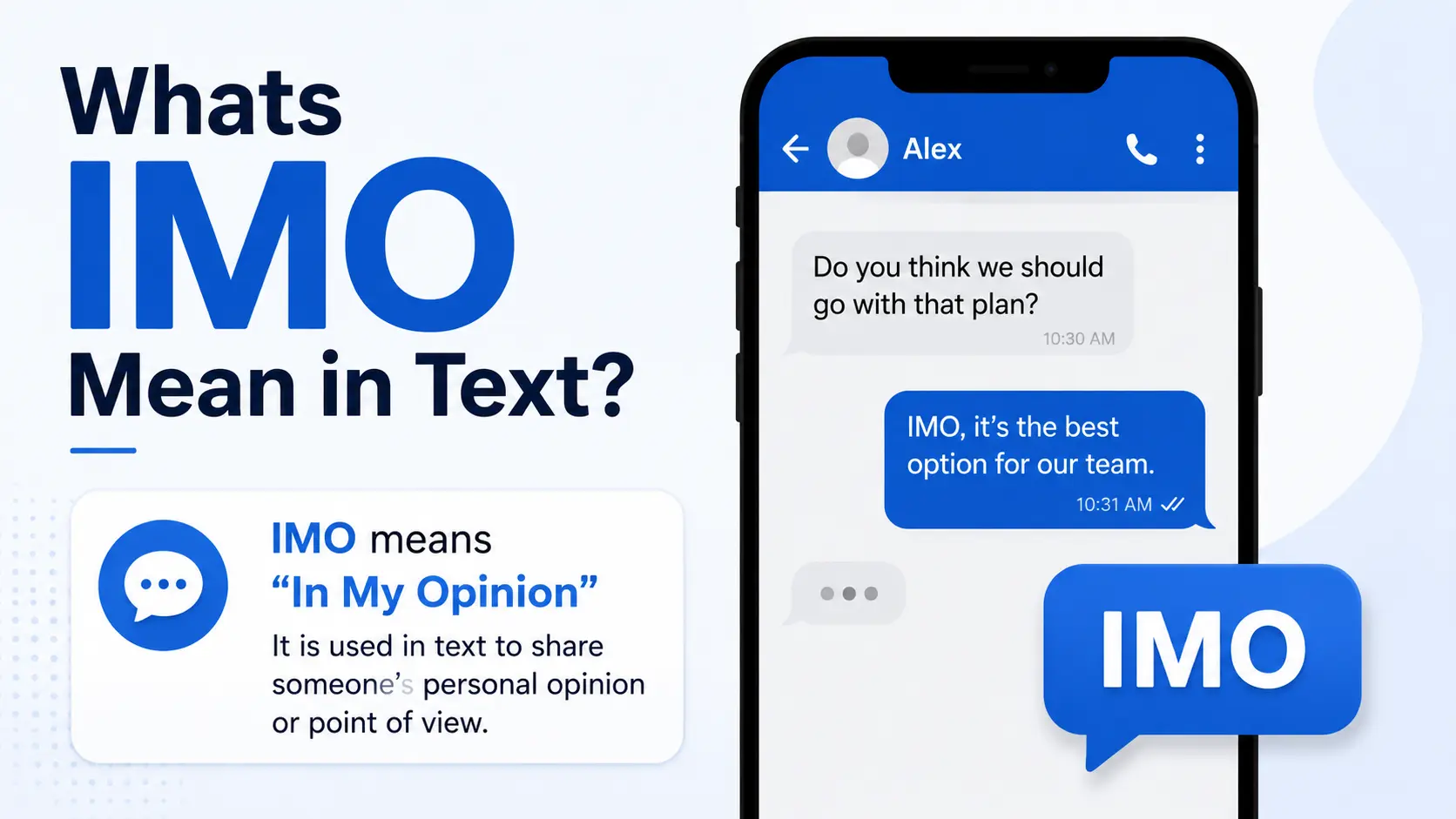
IMO stands for “In My Opinion.” It’s a way to soften statements, show personal perspective, or invite discussion without sounding aggressive.
Key points to know:
- Used to indicate a personal viewpoint
- Often appears in texts, emails, and social media
- Helps keep conversations polite and subjective
Examples in context:
- “IMO, pineapple on pizza isn’t that bad.”
- “That movie was great, IMO.”
- “IMO, we should wait before making a decision.”
These examples show that IMO signals subjectivity. It tells the reader, “This is just what I think, not necessarily fact.”
Origin & Background
IMO originated with early internet and SMS culture. Abbreviations like LOL, BRB, and IMO became popular because they saved time when typing on small phone keyboards.
- Cultural influence: IMO has been embraced globally, from casual Instagram posts to serious Reddit debates.
- Social media impact: Its frequent use in comments and replies has cemented it as part of online etiquette.
- Evolution: While it started as text shorthand, IMO is now recognized even in formal online forums. People use it to politely express opinions, often alongside other acronyms like IMHO (In My Humble Opinion).
Real-Life Conversations
Here are some realistic examples of IMO in modern messaging contexts:
WhatsApp Chat
Person A: “Do you think we should go to the beach tomorrow?”
Person B: “IMO, it’s going to rain, so maybe plan something indoors.”
Instagram DM
Person A: “That outfit looks amazing on you 😍”
Person B: “Thanks! IMO, black always works best for me.”
TikTok Comment
Person A: “This dance trend is overrated.”
Person B: “IMO, it’s actually fun and easy for beginners.”
Text Message
Person A: “Should I take the job offer or wait?”
Person B: “IMO, wait a little. You might get something better soon.”
These examples show how IMO signals a personal opinion without imposing it on others.
Emotional & Psychological Meaning
IMO isn’t just shorthand—it carries subtle emotional weight:
- Politeness: It softens statements that could be interpreted as critical.
- Relatability: It shows humility, acknowledging your opinion is subjective.
- Openness: Encourages discussion rather than confrontation.
Scenario: Imagine texting a friend about a movie you loved, and they hated it. Typing “IMO, it was brilliant” helps share your enthusiasm without dismissing their perspective. This balance is key to modern, emotionally intelligent communication.
Usage in Different Contexts
Social Media: Common in comment sections, threads, and posts to show personal take.
Friends & Relationships: Helps maintain friendly debates without causing tension.
Work / Professional Settings: Useful in collaborative discussions, emails, or chat groups. Example: “IMO, we should focus on client feedback first.”
Casual vs Serious Tone: It works in both contexts but always signals personal opinion rather than directive advice.
When NOT to Use It
IMO should be avoided in:
- Formal documents: Contracts, official letters, or academic papers
- Sensitive topics: When your opinion could unintentionally offend
- Direct instructions: Using it where clarity or authority is required
Cultural sensitivity matters. Not everyone online understands IMO, so use it carefully in cross-cultural conversations.
Common Misunderstandings
- Confusing opinion with fact: Some readers might take your IMO statement as truth.
- Tone misinterpretation: Without vocal cues, IMO can seem sarcastic if context is unclear.
- Literal reading: New users sometimes read it as a typo instead of an acronym.
Comparison Table
| Slang / Acronym | Meaning | Usage Notes |
|---|---|---|
| IMO | In My Opinion | Express personal view politely |
| IMHO | In My Humble Opinion | Slightly more formal, modest tone |
| TBH | To Be Honest | Can be more blunt, less polite |
| FWIW | For What It’s Worth | Adds casual value to opinion |
| FYI | For Your Information | Neutral, informative |
| NGL | Not Gonna Lie | Casual, often honest or emotional |
| SMH | Shaking My Head | Express frustration, not opinion |
Key Insight: IMO is unique because it blends politeness, subjectivity, and clarity in one short phrase. It’s versatile but context-dependent.
Variations / Types
- IMHO – Adds humility: “In My Humble Opinion”
- IMNSHO – “In My Not So Humble Opinion” for playful sarcasm
- IMO + emoji – Adds emotional nuance: “IMO 😂”
- IMO, personally – Reinforces personal perspective
- IMO + suggestion – Gives advice gently: “IMO, try the blue one”
- IMO for debate – Marks opinion in discussions: “IMO, that’s incorrect”
- IMO with question – Opens conversation: “IMO, should we go with option B?”
- IMO in polls – Personal take on trending topics
- IMO in threads – Clarifies your stance in comment chains
- IMHO / IMO combined – Adds both opinion and humility
How to Respond When Someone Uses It
Casual: “Totally agree, IMO too!”
Funny: “IMO, you need coffee first 😆”
Mature: “I see your point, IMO makes sense.”
Respectful: “Thanks for sharing, IMO gives me a new perspective.”
Regional & Cultural Usage
- Western culture: Widely understood online, casual and polite
- Asian culture: Increasingly used among younger audiences in messaging apps
- Middle Eastern culture: Mostly online; formal writing rarely uses acronyms
- Global internet usage: Recognized in international forums and social media
- Generational differences: Gen Z frequently uses it in texts; Millennials may use IMHO more
Is It Safe for Kids?
Yes, IMO is harmless for kids. It promotes respectful opinion sharing and can help teach digital etiquette. Parents should ensure kids understand it’s subjective and not a fact.
FAQs
1. Can IMO be used in professional emails?
Yes, but best in casual internal emails, not formal reports.
2. Is IMO the same as IMHO?
Similar, but IMHO adds humility.
3. Can IMO come across as rude?
Rarely, unless context or tone is misread.
4. Does IMO appear in voice chats?
It’s mostly text-based, but some people say it verbally in informal conversations.
5. Can IMO be used sarcastically?
Yes, context and tone will show sarcasm.
6. Should I use IMO with strangers online?
Yes, to soften opinions, especially in debates.
7. Are there alternatives to IMO?
Yes, IMHO, TBH, FWIW, depending on tone and formality.
Conclusion
IMO is a small acronym with a big impact. It allows you to express opinions clearly, politely, and thoughtfully in our fast-paced digital world. Whether you’re texting a friend, commenting on a TikTok, or chatting in a work group, using IMO can help you communicate with nuance and respect. By understanding its origins, usage, and emotional weight, you can confidently sprinkle IMO into conversations without fear of misinterpretation. Next time you type it, remember—it’s not just shorthand; it’s a tool for connection and clarity.