
You might have seen someone describe themselves as “ISFP” in a bio, a message, or even a casual chat and wondered what it actually means. It shows up quietly, often without explanation, which can make it feel confusing if you are not familiar with personality types.
People search for “what does ISFP mean in text” because it feels like insider language. It looks like a code, but it is really a way people describe how they think, feel, and connect with others.
In this guide, I will break it down in a way that feels real and easy to understand. No complicated jargon. Just clear meaning, real-life examples, and insight into why people use it in conversations today.
ISFP – Quick Meaning
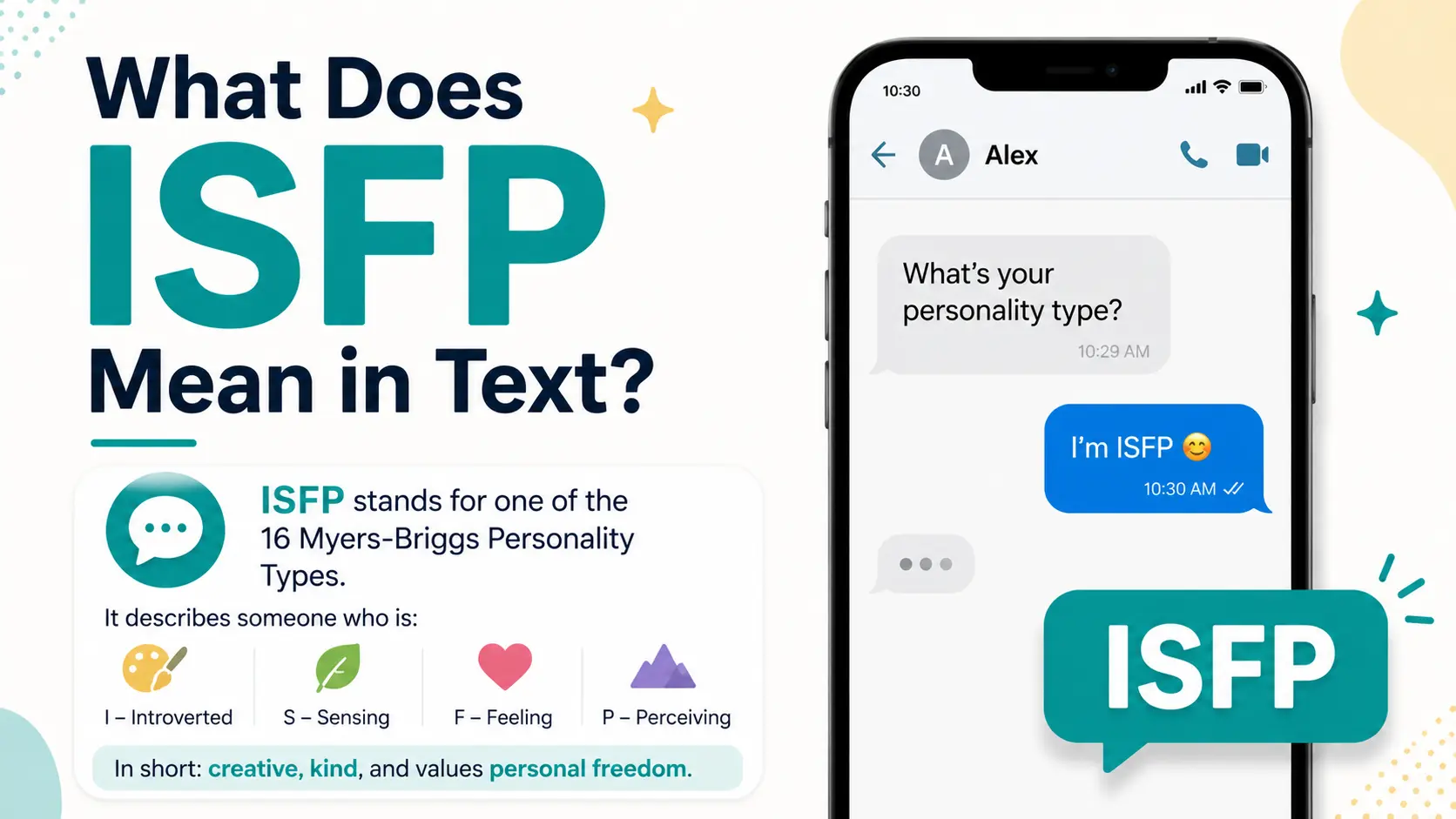
ISFP is a personality type from the Myers-Briggs Type Indicator system.
It stands for:
- I = Introverted
- S = Sensing
- F = Feeling
- P = Perceiving
In simple terms, an ISFP is someone who is:
- Quiet but emotionally aware
- Creative and expressive
- Sensitive to their environment
- Independent and spontaneous
In text, “ISFP” usually means:
“I relate to this personality type” or “This is how I naturally think and feel.”
Examples:
- “I’m an ISFP so I need alone time to recharge.”
- “That makes sense, you’re such an ISFP.”
- “ISFP vibes honestly, very calm and artistic.”
Origin & Background
ISFP comes from the Myers-Briggs personality framework, developed in the mid-20th century. It was based on psychological ideas from Carl Jung, who explored how people perceive the world and make decisions.
Over time, this system moved beyond psychology textbooks and into everyday life.
Social media played a huge role in this shift.
Platforms like Instagram, TikTok, and Reddit turned personality types into relatable content. People started sharing memes, short videos, and captions like “ISFP energy” or “Things only ISFPs understand.”
The meaning evolved from something academic into something more personal and expressive. Today, using “ISFP” in text is less about strict psychology and more about identity and connection.
Real-Life Conversations
Here is how ISFP naturally appears in everyday chats.
WhatsApp Conversation
Person A: I don’t like crowded places, I just feel drained
Person B: Same here, are you an ISFP or something?
Person A: Haha yes actually
Instagram DMs
Person A: Your art style is so peaceful
Person B: Thank you, I’m an ISFP so I love calm vibes
TikTok Comments
User1: This video screams ISFP energy
User2: Literally me, quiet but emotional inside
Text Message
Friend A: Why do you disappear sometimes?
Friend B: I just need space, classic ISFP behavior
These conversations feel natural because people use ISFP as a quick way to explain their personality without long explanations.
Emotional & Psychological Meaning
When someone uses “ISFP” in text, they are often expressing something deeper than just a label.
It can signal:
- A need for emotional space
- A preference for quiet connection over loud interaction
- A strong inner world that is not always visible
ISFPs are often described as “gentle souls.” They feel deeply but do not always show it openly.
People use this term because it helps them feel understood.
I once saw someone explain why they avoid arguments by simply saying, “I’m ISFP, I hate conflict.” That one line carried so much emotional truth. It was not just a label. It was a boundary.
That is the real power of this term in text. It communicates feelings quickly without over-explaining.
Usage in Different Contexts
Social Media
On platforms like TikTok or Instagram, ISFP is often used in:
- Bios
- Personality memes
- Aesthetic posts
Example: “ISFP | lover of quiet sunsets”
Friends & Relationships
Among friends, it helps explain behavior.
- “I didn’t reply, I’m just in my ISFP mood”
- “You’re so ISFP, always following your feelings”
It builds understanding.
Work / Professional Settings
In professional environments, it may appear in personality discussions or team-building contexts.
- “As an ISFP, I prefer flexible work styles”
Though it is less common in formal emails.
Casual vs Serious Tone
- Casual: “That’s so ISFP of you”
- Serious: “I identify as an ISFP personality type”
Tone depends on context.
When NOT to Use It
There are moments where using “ISFP” might not fit well.
- Formal communication: Job applications or official emails
- With people unfamiliar with personality types: It may confuse them
- During serious conflict: It can sound like avoiding responsibility
- Cultural differences: Not everyone relates to personality labels
For example, saying “I’m ISFP, that’s why I didn’t do it” in a serious discussion might feel dismissive.
Common Misunderstandings
Many people misinterpret ISFP in text.
1. It defines everything about a person
Not true. It is a guide, not a rulebook.
2. ISFP means shy or weak
Wrong. ISFPs can be strong and independent.
3. It is just internet slang
It actually has psychological roots.
4. Everyone uses it the same way
Meaning can shift depending on tone and context.
Comparison Table
| Term | Meaning | How It Differs from ISFP |
|---|---|---|
| Introvert | Someone who prefers solitude | ISFP is more specific with emotional traits |
| INFP | Another personality type | INFP is more idealistic, ISFP more practical |
| Artist personality | Creative person | ISFP often overlaps but is more structured |
| Extrovert | Social and outgoing | Opposite energy style |
| Empath | Feels deeply | ISFP includes this but also lifestyle traits |
Key Insight:
ISFP is not just about being introverted or emotional. It combines creativity, sensitivity, and independence into one personality pattern.
Variations / Types
Here are related expressions you might see:
- ISFP-T
More sensitive and emotionally reactive version - ISFP-A
More confident and emotionally stable - ISFP vibes
Refers to calm, artistic energy - Classic ISFP
Stereotypical traits like quiet creativity - ISFP energy
Mood-based expression of personality - ISFP mood
Feeling introspective or withdrawn - ISFP aesthetic
Minimalist, nature-inspired visuals - ISFP personality
General description of the type - ISFP traits
Specific characteristics like empathy and creativity - ISFP behavior
Actions linked to personality tendencies
How to Respond When Someone Uses It
Casual Replies
- “That explains a lot actually”
- “Makes sense now”
Funny Replies
- “So you disappear like a ninja?”
- “Ah yes, the mysterious artist type”
Mature Replies
- “I appreciate you sharing that”
- “That helps me understand you better”
Respectful Replies
- “Got it, I’ll keep that in mind”
- “Thanks for explaining your perspective”
Regional & Cultural Usage
Western Culture
Very common. Personality types are widely discussed and used in daily conversations.
Asian Culture
Growing popularity, especially among younger generations online. Often tied to self-discovery.
Middle Eastern Culture
Less mainstream but increasing through social media exposure.
Global Internet Usage
ISFP is now part of global online language. It crosses borders easily.
Generational Differences
- Gen Z: Uses it casually and creatively
- Millennials: Use it more for self-awareness and growth
Is It Safe for Kids?
Yes, ISFP is completely safe.
It is not slang or inappropriate language. It is simply a personality label.
However, kids should understand that it is not a fixed identity. Personalities grow and change over time.
FAQs
1. What does ISFP mean in texting?
It refers to a personality type that is introverted, creative, and emotionally aware.
2. Is ISFP a compliment?
Usually yes. It often highlights creativity and sensitivity.
3. Can someone be both ISFP and outgoing?
Yes. Personality types are flexible, not strict boxes.
4. Why do people use ISFP in bios?
To quickly express identity and personality traits.
5. Is ISFP rare?
It is not extremely rare, but not the most common type either.
6. Does ISFP mean artistic?
Often yes, but not always. Creativity can show in many forms.
Conclusion
Understanding what ISFP means in text is really about understanding people.
It is not just a label. It is a shortcut for expressing personality, emotions, and identity in a fast-moving digital world.
When someone says they are an ISFP, they are quietly telling you how they experience life. They value feeling over logic, peace over chaos, and authenticity over attention.
Once you recognize that, conversations become easier. You respond with more empathy. You understand silence better. You connect on a deeper level.
And if you ever feel like that description fits you, there is nothing wrong with using it yourself. It is simply another way of saying, “This is who I am.”