
If you’ve ever received a message saying “SOS” and wondered whether it was serious, dramatic, funny, or just internet slang, you’re not alone. Many people search for “what’s SOS mean in text” because the phrase can carry different emotions depending on the conversation.
In some situations, SOS is a genuine cry for help. In others, it’s used jokingly between friends who are stressed, overwhelmed, or socially uncomfortable. That mix of seriousness and humor is exactly why the term has become so common in texting, social media, and online culture.
Today, SOS appears everywhere from WhatsApp chats to TikTok comments. One person may use it because they’re stuck in an awkward family dinner, while another might use it during an actual emergency. Understanding the tone behind it matters more than ever in digital communication.
This guide breaks down what SOS really means in text, where it came from, how people use it emotionally, and when you should avoid using it altogether.
SOS Meaning in Text – Quick Meaning
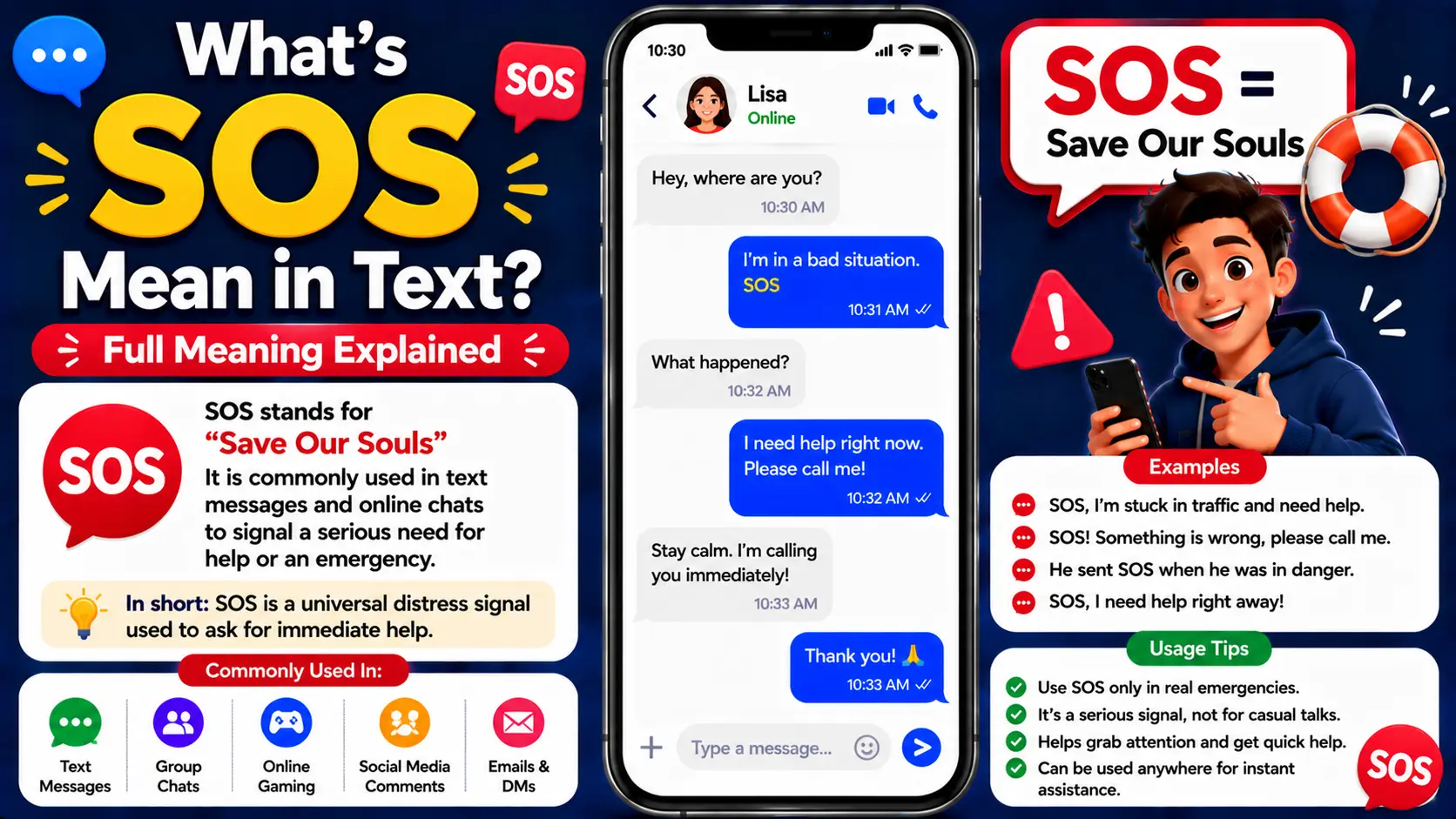
SOS usually means:
- “Help me”
- “I’m in trouble”
- “I need assistance”
- “Save me from this situation”
In texting culture, it can be either serious or playful depending on the context.
Common examples
“SOS, this meeting won’t end 😭”
“Can someone bring snacks? SOS.”
“SOS. My phone is at 2% and I’m lost.”
In modern texting, SOS often expresses stress, panic, frustration, embarrassment, or emotional overwhelm in a fast and dramatic way.
Origin & Background of SOS
The term SOS originally came from maritime emergency communication. It became internationally recognized in the early 1900s as a distress signal used by ships.
Contrary to popular belief, SOS does not officially stand for “Save Our Souls” or “Save Our Ship.” The letters were chosen because they were easy to transmit in Morse code:
- Three short signals
- Three long signals
- Three short signals
Over time, people began attaching emotional meanings to it. Movies, television, and pop culture helped transform SOS from a literal emergency signal into an emotional expression.
As texting and internet culture evolved, younger generations adapted it into casual communication. Instead of signaling physical danger, people started using SOS for everyday struggles like:
- Awkward dates
- Boring classes
- Social anxiety
- Relationship drama
- Stressful situations
Social media accelerated this shift. TikTok creators, meme pages, and influencers frequently use SOS humorously to exaggerate emotional reactions.
Today, the phrase blends seriousness, humor, and emotional honesty all at once.
Real-Life Conversations Using SOS
WhatsApp Conversation
Person A:
My relatives have been here for 5 hours.
Person B:
Still??
Person A:
SOS. They just started another story from 1998.
Instagram DM
Person A:
I accidentally liked his photo from 2021.
Person B:
NO WAY 💀
Person A:
SOS please.
TikTok Comments
Person A:
Why does this song make me miss someone I never dated?
Person B:
Same. Emotional SOS honestly.
Text Message
Person A:
The teacher just announced a surprise presentation.
Person B:
SOS. I’m pretending to be sick.
Emotional & Psychological Meaning of SOS
One reason SOS became so popular online is because it instantly communicates emotion without needing a long explanation.
When people text SOS, they’re often expressing:
- Stress
- Panic
- Anxiety
- Embarrassment
- Emotional overload
- Social discomfort
It’s short, dramatic, and emotionally recognizable.
In modern communication, people want fast emotional connection. SOS works because it tells others, “I need support,” even if the situation is small.
Sometimes the message is playful. Other times, it reflects real emotional exhaustion.
A relatable scenario
Imagine sitting at a dinner where everyone keeps asking uncomfortable personal questions. Instead of typing a long explanation to your best friend, you simply text:
“SOS.”
That one word communicates frustration, urgency, awkwardness, and a request for rescue all at once.
This reflects how digital language has become emotionally compressed. People now use short expressions to communicate complex feelings quickly.
Usage in Different Contexts
Social Media
On platforms like TikTok, Instagram, and X, SOS is often used dramatically for humor.
Examples:
- “SOS this outfit is too good.”
- “SOS I can’t stop watching this show.”
In these situations, it usually means emotional overwhelm rather than actual danger.
Friends & Relationships
Among friends, SOS often signals:
- Needing emotional support
- Wanting advice
- Feeling awkward
- Asking someone to “save” them socially
In relationships, it can also express vulnerability or emotional need.
Example:
“SOS, I think I’m falling for him.”
Work & Professional Settings
Using SOS at work depends heavily on tone and workplace culture.
Casual team chats may allow messages like:
“SOS, the spreadsheet crashed.”
However, in formal professional communication, SOS can sound overly dramatic or unclear.
Instead, direct language is usually better.
Casual vs Serious Tone
The same word can completely change meaning based on context.
Casual:
“SOS, I ate too much pizza.”
Serious:
“SOS, my car broke down on the highway.”
Tone, urgency, and relationship dynamics all influence interpretation.
When NOT to Use SOS
Even though SOS is common online, there are situations where using it may create confusion or appear insensitive.
During real emergencies
If you’re facing actual danger, clear communication matters more than slang.
Instead of only texting “SOS,” include details like:
- Your location
- The problem
- Who should contact help
Professional environments
Using SOS in formal emails or business communication may appear unprofessional.
Avoid it in:
- Job applications
- Client emails
- Official reports
Sensitive emotional situations
If someone is discussing trauma, grief, or serious mental health struggles, using SOS jokingly may feel dismissive.
Context always matters.
Cultural misunderstandings
Some people still associate SOS strictly with emergencies. A joking message could confuse or alarm them.
Common Misunderstandings About SOS
People assume it always means danger
One of the biggest misunderstandings is believing SOS always signals a real emergency.
In texting culture, it’s often exaggerated humor.
Tone can be unclear
Without emojis or context, SOS may sound more serious than intended.
Compare:
“SOS 😂”
vs
“SOS.”
The second feels much more urgent.
Literal vs figurative meaning
Literal SOS:
- Actual distress
- Emergency help needed
Figurative SOS:
- Emotional frustration
- Social discomfort
- Playful exaggeration
Understanding that difference is important in online communication.
Comparison Table
| Expression | Meaning | Tone | Common Usage |
|---|---|---|---|
| SOS | Help me / save me | Dramatic or serious | Texting, social media |
| HELP | Direct request for help | Serious | Emergencies or confusion |
| I’m doomed | Feeling hopeless | Humorous | Friends, memes |
| Send help | Overwhelmed emotionally | Funny | TikTok, Instagram |
| RIP me | Something embarrassing happened | Sarcastic | Casual texting |
| I’m fine | Often emotionally hidden stress | Indirect | Emotional conversations |
| Emergency | Real urgent situation | Serious | Formal communication |
Key Insight
SOS survives in internet culture because it balances urgency and humor. It allows people to express emotional intensity quickly without always sounding deeply serious.
Variations & Types of SOS Usage
1. “SOS pls”
A softer, playful version asking for quick help.
2. “Emotional SOS”
Used when someone feels mentally overwhelmed.
3. “SOS 😭”
Adds dramatic humor and emotional intensity.
4. “SOS bestie”
A friendly request for emotional rescue.
5. “Relationship SOS”
Refers to romantic confusion or problems.
6. “Study SOS”
Used by students during exam stress.
7. “Fashion SOS”
Playful request for outfit advice.
8. “Social SOS”
Feeling awkward at events or gatherings.
9. “Family SOS”
Used during stressful family situations.
10. “Vacation SOS”
Travel problems or funny disasters while away.
How to Respond When Someone Uses SOS
Casual Replies
- “What happened?”
- “I got you.”
- “Tell me everything.”
Funny Replies
- “Sending emotional backup now.”
- “Rescue team activated.”
- “On my way with snacks.”
Mature Replies
- “Do you need real help or just to vent?”
- “I’m here. Talk to me.”
- “Take your time explaining.”
Respectful Replies
- “Are you safe?”
- “Do you want me to call you?”
- “Let me know how I can help.”
The best response depends on whether the person is joking, stressed, or genuinely in trouble.
Regional & Cultural Usage
Western Culture
In Western internet culture, SOS is heavily tied to humor, exaggeration, and emotional expression.
People use it casually in memes and social posts.
Asian Culture
In many Asian online communities, SOS is common among younger users, especially in fandom spaces, gaming communities, and student conversations.
It often reflects stress or embarrassment.
Middle Eastern Culture
In Middle Eastern texting culture, SOS may still feel more serious to older generations, while younger users adopt the more playful internet meaning.
Family and social respect also influence how casually it’s used.
Global Internet Usage
Globally, SOS has become part of universal internet slang.
Its emotional simplicity makes it easy to understand across languages.
Gen Z vs Millennials
Gen Z
- Uses SOS more dramatically and humorously
- Often paired with memes or emojis
- Emotionally expressive
Millennials
- More likely to use it semi-seriously
- Often connected to stress or exhaustion
- Slightly less exaggerated
Is SOS Safe for Kids?
Generally, yes.
SOS itself is not inappropriate language. Most children encounter it through social media, gaming chats, or texting.
However, parents should help kids understand the difference between:
- Playful online slang
- Real emergency communication
Teaching context is important so children know when a situation requires serious action instead of internet humor.
FAQs About SOS in Text
What does SOS mean in texting?
SOS usually means “help me” or “I need assistance.” In texting, it can be serious or playful depending on context.
Does SOS stand for something?
Many people say it means “Save Our Souls” or “Save Our Ship,” but historically it was chosen as an easy Morse code distress signal.
Is SOS always serious?
No. Online, it’s often used humorously to express stress, awkwardness, or emotional overwhelm.
What does “SOS 😂” mean?
It usually means the person is jokingly overwhelmed or reacting dramatically to something funny or stressful.
Can I use SOS at work?
Only in casual workplace chats. In professional communication, direct wording is usually better.
Why is SOS popular on TikTok?
TikTok culture favors short, emotional expressions. SOS quickly communicates dramatic feelings in a relatable way.
What should I reply to SOS?
Respond based on the tone. Ask if they’re okay, offer help, or match their humor if the situation is casual.
Conclusion
Understanding what SOS means in text is really about understanding modern digital emotion. The phrase may have started as a serious emergency signal, but today it carries layers of humor, stress, vulnerability, and social connection.
That’s why people continue using it across every platform imaginable.
Sometimes SOS means:
- “I’m overwhelmed.”
- “Please rescue me socially.”
- “I need support.”
- “This situation is ridiculous.”
And sometimes, it truly means someone needs immediate help.
The key is context.
When you recognize the emotional tone behind the message, you can respond more naturally and confidently. In a world where communication moves fast, SOS remains one of the simplest yet most emotionally powerful expressions people use online.