
If you’ve ever received a message that simply says “HMU,” you probably paused for a moment and wondered what exactly it meant.
You’re not alone.
This short, three-letter phrase shows up everywhere. It pops up in WhatsApp chats, Instagram captions, TikTok comments, and even casual work conversations. Yet its meaning isn’t always obvious, especially if you’re new to internet slang.
People search for “why does hmu mean in text” because it feels unclear at first glance. It doesn’t sound like normal English, and the tone can shift depending on who says it and how.
In this guide, you’ll understand not just what “HMU” means, but why people use it, how it evolved, and what it really says about modern communication.
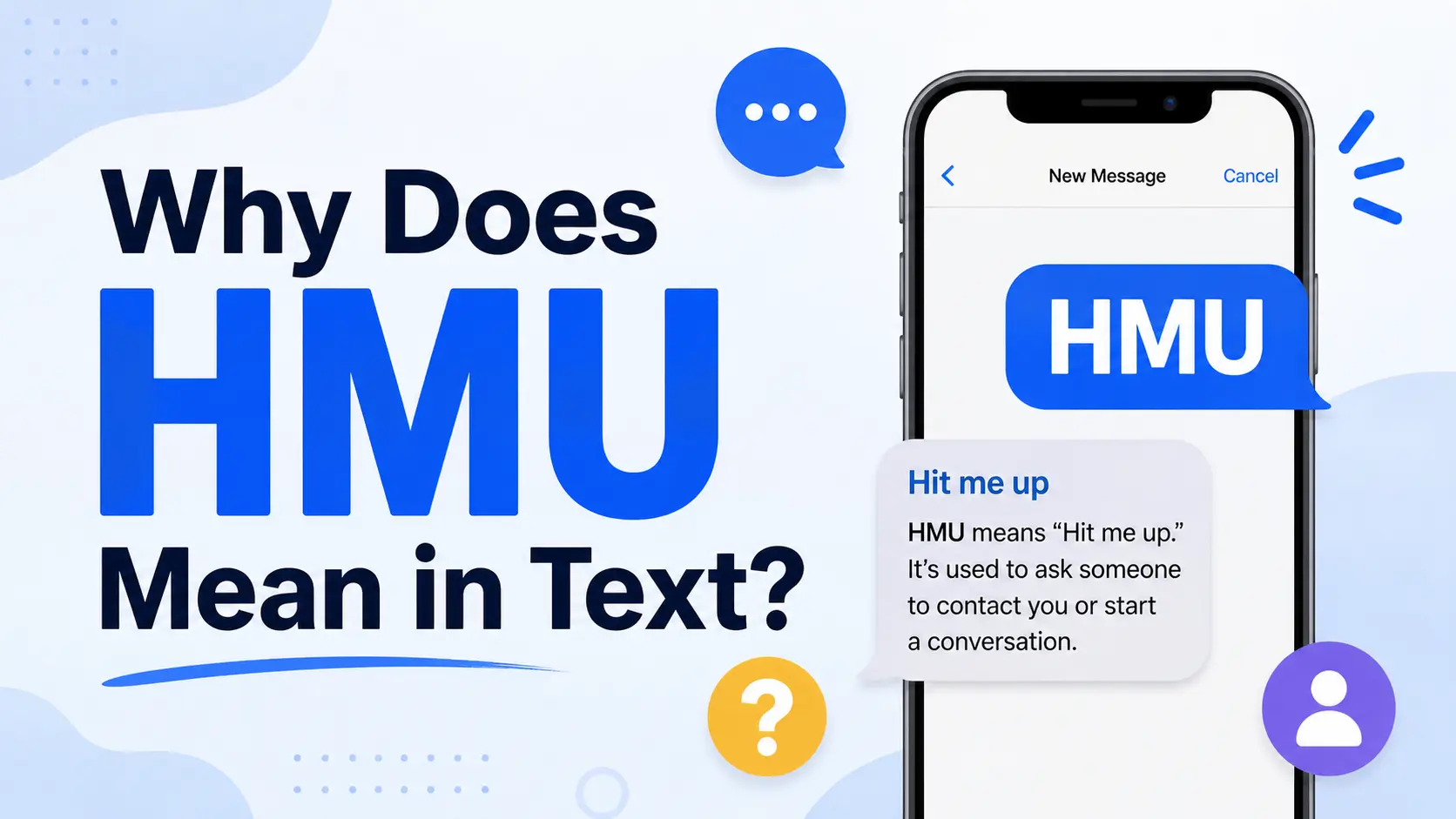
“HMU” – Quick Meaning
HMU stands for “Hit Me Up.”
It’s a casual way of saying:
- Contact me
- Message me
- Let’s talk or connect
It often implies openness or invitation.
Simple examples:
- “I’ll be free later, HMU.”
- “If you need help, just HMU.”
- “HMU when you get there.”
At its core, it’s about starting or continuing a conversation.
Origin & Background
“HMU” comes from the phrase “hit me up,” which originally had a very different tone.
In older slang, especially in urban American culture, “hit me up” meant to reach out or ask for something, often casually or informally. Over time, texting culture shortened it into “HMU” for speed and convenience.
As smartphones and social media grew, especially platforms like Instagram and Snapchat, abbreviations became essential. People wanted to communicate faster without typing full sentences.
That’s where “HMU” thrived.
It became:
- A shortcut for connection
- A low-pressure invitation
- A social signal of availability
Today, it’s deeply embedded in internet culture and widely understood across the world.
Real-Life Conversations
Here’s how “HMU” actually appears in everyday conversations.
1. WhatsApp Chat
Person A: I’m bored at home
Person B: Same 😭
Person A: HMU if you wanna go out later
2. Instagram DM
Person A: Your trip pics look amazing
Person B: Thank you!
Person A: HMU when you’re back, we should hang
3. TikTok Comments
Person A: Anyone know a good editing app?
Person B: I use CapCut
Person C: HMU, I’ll show you how to use it
4. Text Message
Person A: I got the job!!
Person B: No way, congrats 🎉
Person A: Thanks! HMU later, I’ll tell you everything
These examples show how flexible and natural the phrase feels in real conversations.
Emotional & Psychological Meaning
“HMU” might look simple, but emotionally, it carries more meaning than you’d expect.
It often expresses:
- Openness
- Casual interest
- Low-pressure connection
- Availability without commitment
People use it because it feels easy. It doesn’t demand a response, but it invites one.
There’s also a subtle psychological layer.
Saying “HMU” gives control to the other person. Instead of directly asking for attention, it creates space for them to respond when they want.
A real-life scenario:
You want to reconnect with someone you haven’t spoken to in months. Instead of sending a long message, you write, “Hey, it’s been a while. HMU sometime.”
It feels lighter. Less pressure. More natural.
That’s why it works so well in modern communication.
Usage in Different Contexts
Social Media
On platforms like Instagram or TikTok, “HMU” is often used in captions or comments.
Example:
“Looking for gym buddies, HMU 💪”
It acts as an open invitation.
Friends & Relationships
Among friends, it’s casual and friendly.
Example:
“HMU when you’re free.”
In relationships, it can feel more personal depending on tone.
Work / Professional Settings
This is where you need caution.
“HMU” can feel too informal in professional emails or formal chats. However, in relaxed team environments or startup culture, it may still be acceptable.
Casual vs Serious Tone
- Casual: “HMU later”
- Slightly serious: “HMU when you have time to discuss this”
Tone depends heavily on context and wording.
When NOT to Use It
There are moments where “HMU” just doesn’t fit.
Avoid it in:
- Formal emails or job applications
- Communication with senior professionals
- Serious conversations where clarity matters
- Cultural settings where slang is less common
It can come across as lazy or unclear in these situations.
Common Misunderstandings
Many people misinterpret “HMU,” especially at first.
1. Thinking It’s Aggressive
“Hit me up” sounds physical, but it’s not. It’s purely conversational.
2. Tone Confusion
It can sound:
- Friendly
- Flirty
- Neutral
The tone depends on context.
3. Literal vs Figurative Meaning
It’s never literal. No one is asking to be “hit.”
It simply means reach out.
Comparison Table
| Expression | Meaning | Tone | Usage |
|---|---|---|---|
| HMU | Contact me | Casual | Friends, social media |
| Text me | Send a message | Neutral | Everyday use |
| Call me | Phone call request | Direct | Personal or urgent |
| Let me know | Inform me | Polite | Professional & casual |
| Don’t contact me | Opposite meaning | Firm | Boundaries |
Key Insight:
“HMU” stands out because it’s casual and open-ended. It invites connection without pressure, which is why it feels so natural in modern conversations.
Variations / Types
Here are common variations you’ll see:
- HMU later
Means contact me later. - HMU anytime
Open invitation with no time limit. - HMU if interested
Used in offers or suggestions. - HMU ASAP
Contact me as soon as possible. - HMU bro
Friendly tone among friends. - HMU pls
Polite version of the phrase. - HMU when free
Flexible and considerate. - HMU for details
Used in promotions or information sharing. - HMU if you need anything
Supportive and caring tone. - HMU tonight
Specific time-based invitation.
How to Respond When Someone Uses It
Casual Replies
- “Sure, I will!”
- “Got you 👍”
Funny Replies
- “Consider yourself hit 😂”
- “Incoming message in 3…2…1…”
Mature Replies
- “I’ll reach out later today.”
- “I’ll message you once I’m free.”
Respectful Replies
- “Thanks, I’ll contact you soon.”
- “Appreciate it, I’ll follow up.”
Your response should match the tone of the conversation.
Regional & Cultural Usage
Western Culture
Very common and widely understood. Used daily in casual communication.
Asian Culture
Less common in formal settings but popular among younger, English-speaking users.
Middle Eastern Culture
Used mostly in online conversations. Tone may feel too casual in traditional environments.
Global Internet Usage
“HMU” has become a universal slang term thanks to social media.
Generational Differences
- Gen Z: Uses it naturally and frequently
- Millennials: Understand it well but may use it less often
- Older generations: May find it confusing or informal
Is It Safe for Kids?
Yes, “HMU” is generally safe.
It doesn’t contain harmful or inappropriate meaning. However, context still matters. Kids should understand who they’re communicating with and when casual language is appropriate.
FAQs
1. Does HMU mean flirting?
Not always. It can be friendly or neutral, but context can make it sound flirty.
2. Is HMU rude?
No. It’s casual, but not rude unless used in a formal situation.
3. Can I use HMU in emails?
It’s best to avoid it in formal emails.
4. What’s the full form of HMU?
It stands for “Hit Me Up.”
5. Is HMU outdated?
No. It’s still widely used, especially among younger users.
6. Can HMU be used professionally?
Only in very casual work environments.
Conclusion
“HMU” may look like just another internet abbreviation, but it reflects something deeper about how we communicate today.
It’s quick. It’s open. It removes pressure.
Instead of demanding attention, it invites connection in a relaxed way. That’s why it continues to stay relevant across platforms and generations.
Once you understand the tone and context, using “HMU” becomes effortless.
So the next time you see it or feel like reaching out casually, don’t overthink it.
Just use it naturally.