
If you spend time on Snapchat, TikTok, Instagram DMs, or casual texting, you’ve probably seen someone type “WRUD” and wondered what it actually means.
At first glance, it looks confusing. Some people think it is a typo. Others assume it is a secret internet code. But in modern texting culture, WRUD has a simple meaning that reflects how fast and casual online communication has become.
Understanding slang like WRUD helps you avoid awkward misunderstandings and communicate more naturally in digital conversations. It also gives insight into how younger generations shorten language to create quicker, more emotionally expressive interactions.
In this guide, you’ll learn exactly what WRUD means in text, where it came from, how people use it, when not to use it, and how to reply naturally in real conversations.
WRUD – Quick Meaning
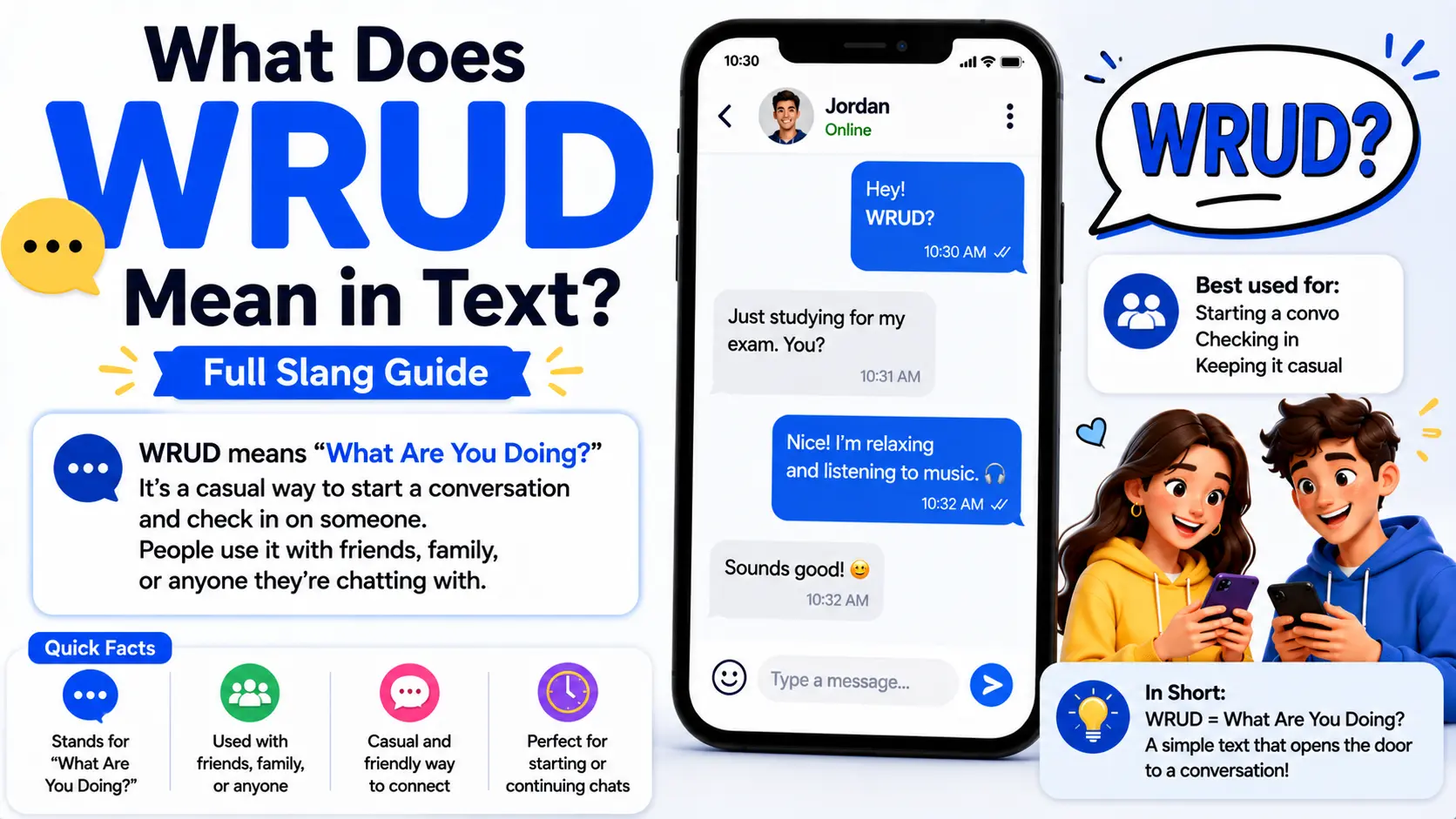
WRUD usually means:
“What are you doing?”
It is a shortened texting version of the question people commonly ask in chats and DMs.
People use it to:
- Start conversations
- Check in casually
- Flirt
- Continue an ongoing chat
- Show interest in someone’s current activity
Simple Examples
“wrud rn?”
“hey wrud later?”
“bored… wrud?”
In most cases, WRUD carries a relaxed, friendly tone.
Origin & Background
WRUD came from the evolution of mobile texting culture in the early smartphone era.
Back when people used keypad phones and limited text plans, shortening phrases became normal. Expressions like:
- WYD
- BRB
- LOL
- IDC
- HMU
started dominating online communication.
WRUD developed as another compressed version of “What are you doing?” Instead of typing every word, users removed vowels and spaces to make texting faster.
The slang became more visible through:
- Snapchat streak culture
- Instagram DMs
- Online gaming chats
- TikTok comments
- Teen texting habits
Unlike older abbreviations, WRUD feels more conversational and less formal. It often appears in fast-moving chats where speed matters more than grammar.
Over time, WRUD also gained a subtle emotional meaning. Depending on context, it can signal:
- Curiosity
- Loneliness
- Romantic interest
- Boredom
- Desire for attention
That emotional layer is why the phrase became popular among Gen Z users.
Real-Life Conversations
Here are realistic ways WRUD appears in everyday texting.
WhatsApp Conversation
Person A:
hey wrud tonight?
Person B:
nothing much, just watching a movie lol
Person A:
same honestly, kinda bored
Instagram DM
Person A:
wrud 👀
Person B:
trying to survive this homework
Person A:
good luck 😂
TikTok Comments
Person A:
why everyone awake at 3am wrud rn
Person B:
scrolling TikTok instead of sleeping
Person C:
literally all of us
Text Message
Person A:
wrud after work?
Person B:
probably grabbing food with friends
Person A:
cool, hit me later
Emotional & Psychological Meaning
Even though WRUD looks simple, it often carries emotional intent.
People rarely ask “What are you doing?” just to collect information. Most of the time, they are trying to:
- Start emotional connection
- Avoid feeling lonely
- Continue attention from someone
- Reopen a conversation
- Show interest casually
That is why WRUD feels softer and more approachable than a direct question.
In modern digital culture, short slang creates emotional safety. Typing “wrud” feels less intense than writing a full sentence. It reduces pressure and keeps conversations light.
For example, someone may text:
“wrud?”
late at night because they miss talking to a person but do not want to sound overly emotional.
That tiny message can quietly mean:
- “I’m thinking about you.”
- “I want attention.”
- “I’m bored and want company.”
- “Do you want to talk?”
This is part of what makes internet slang psychologically interesting. Small abbreviations often carry deeper emotional weight than people realize.
Usage in Different Contexts
Social Media
On Snapchat or Instagram, WRUD is extremely casual.
People use it:
- To start streak conversations
- To flirt
- To revive dead chats
- To pass time
Example:
“wrud rn 😂”
The tone here is relaxed and playful.
Friends & Relationships
Among friends, WRUD simply means:
“What’s going on with you?”
In relationships or talking stages, though, it can feel more personal.
Example:
“wrud tonight? miss talking to you”
That version adds emotional closeness.
Work or Professional Settings
WRUD is generally inappropriate in professional communication.
Avoid using it in:
- Emails
- Workplace chats
- Client messages
- Academic communication
Instead, write:
“What are you working on right now?”
or
“Are you available to talk?”
Professional settings usually require complete sentences.
Casual vs Serious Tone
WRUD almost always sounds casual.
Using it during serious conversations may feel insensitive or immature.
For example:
- Good casual use: “wrud later?”
- Bad serious use: “wrud about the meeting issue?”
Tone matters heavily in digital communication.
When NOT to Use It
There are situations where WRUD can create confusion or appear disrespectful.
Formal Situations
Avoid it with:
- Teachers
- Employers
- Customers
- Professional contacts
It may look lazy or unprofessional.
Serious Emotional Conversations
If someone is upset, emotional, or discussing something important, WRUD can sound detached.
Example:
- Poor response: “wrud now?”
- Better response: “How are you feeling?”
Cultural Sensitivity
Not everyone understands internet slang equally.
Older users or non-native English speakers may misread WRUD entirely.
During Conflict
Using short slang during arguments may seem dismissive.
Someone could interpret it as:
- Lack of seriousness
- Emotional avoidance
- Disrespect
Common Misunderstandings
Many people misunderstand WRUD because internet slang changes quickly.
Mistaking It for a Typo
Some users think WRUD is accidental keyboard smashing. It actually has intentional meaning.
Assuming It Is Aggressive
Because it is short, some people think WRUD sounds rude.
In reality, tone depends on context and emojis.
Example:
“wrud 😂”
feels playful.
But:
“wrud.”
may feel cold.
Confusing It With WYD
WRUD and WYD are similar but slightly different in feeling.
- WYD = “What you doing?”
- WRUD = “What are you doing?”
WRUD sometimes feels a little more conversational.
Literal vs Emotional Meaning
The literal meaning asks about activity.
But emotionally, it often means:
“I want interaction.”
That emotional layer is easy to miss.
Comparison Table
| Expression | Meaning | Tone | Common Usage |
|---|---|---|---|
| WRUD | What are you doing? | Casual | Texting & DMs |
| WYD | What you doing? | Very casual | Snapchat, texting |
| WYA | Where are you at? | Curious | Friends & meetups |
| HMU | Hit me up | Friendly | Invitations |
| IDC | I don’t care | Dismissive | Casual chats |
| BRB | Be right back | Neutral | Ongoing conversations |
| Sup | What’s up? | Relaxed | Conversation starter |
| GTG | Got to go | Practical | Ending chats |
Key Insight
Most texting slang exists to create faster emotional connection. WRUD succeeds because it feels light, easy, and low-pressure while still showing interest in someone.
Variations / Types
Here are common versions related to WRUD.
1. WRUD RN
Means “What are you doing right now?”
Used for immediate conversation.
2. WYD
Short for “What you doing?”
The most common alternative.
3. WYA
Means “Where you at?”
Usually asks location.
4. HMU
Means “Hit me up.”
Used to invite conversation later.
5. SUP
Short for “What’s up?”
General greeting.
6. HYD
Means “How you doing?”
More emotional and caring.
7. NMU
Means “Not much, you?”
Common reply in casual texting.
8. RU Busy?
A shortened version of “Are you busy?”
More direct than WRUD.
9. Wassup
A slang greeting meaning “What’s going on?”
Friendly and informal.
10. You Up?
Late-night texting phrase often used for attention or flirting.
How to Respond When Someone Uses It
Your reply depends on tone and relationship.
Casual Replies
- “Just chilling.”
- “Watching Netflix.”
- “Nothing much lol.”
- “At home rn.”
Funny Replies
- “Avoiding responsibilities.”
- “Pretending to be productive.”
- “Mentally on vacation 😂”
- “Fighting demons and losing.”
Mature Replies
- “Finishing some work right now.”
- “Taking a break after a long day.”
- “Spending time with family.”
Respectful Replies
- “Not much, how about you?”
- “Just relaxing. Hope your day’s good.”
- “Busy at the moment but I’ll text later.”
Regional & Cultural Usage
Western Culture
In the United States and Europe, WRUD is seen as casual digital slang mostly used by teens and young adults.
It often appears in:
- Snapchat
- Gaming chats
Asian Culture
In many Asian countries, English texting slang is popular among younger internet users.
However, not everyone recognizes WRUD immediately because local slang systems are also widely used.
Middle Eastern Culture
Among bilingual users, WRUD appears mostly in online spaces influenced by global social media trends.
Younger users adopt it more frequently than older generations.
Global Internet Usage
Internet culture spreads slang rapidly.
A phrase that starts in one country can become global within months through:
- TikTok trends
- Memes
- Gaming communities
- Viral content
WRUD is part of this worldwide digital language shift.
Gen Z vs Millennials
Gen Z
- Uses slang heavily
- Prefers short messages
- Values speed and casual tone
Millennials
- Understand most slang
- Often use slightly more complete sentences
- May prefer WYD over WRUD
These generational differences shape texting style significantly.
Is It Safe for Kids?
Yes, WRUD is generally harmless.
It simply means:
“What are you doing?”
However, parents should still understand the context in which slang is used online. Like most internet expressions, meaning can change depending on:
- Tone
- Relationship
- Platform
- Conversation type
Teaching kids healthy digital communication matters more than banning harmless slang.
FAQs
What does WRUD stand for in text?
WRUD stands for “What are you doing?”
Is WRUD rude?
No. It is usually casual and friendly. Tone depends on context.
Is WRUD the same as WYD?
They are very similar. Both ask what someone is doing, but WRUD can feel slightly more conversational.
Who uses WRUD the most?
Mostly Gen Z users, teenagers, and active social media users.
Can I use WRUD professionally?
It is better not to. Use complete sentences in professional communication.
Is WRUD flirting?
Sometimes. People often use it to start casual or romantic conversations.
Why do people shorten phrases like this?
Short slang makes texting faster, easier, and emotionally lighter.
Conclusion
WRUD may look like just another internet abbreviation, but it reflects something bigger about modern communication.
People today want conversations that feel fast, effortless, and emotionally safe. Slang like WRUD helps create that atmosphere. It allows users to check in, flirt, reconnect, or simply fight boredom without sounding overly formal.
Understanding these expressions is not just about keeping up with trends. It helps you read tone, emotion, and social intent more accurately in digital conversations.
So the next time someone texts:
“wrud?”
you’ll know it probably means more than just curiosity. In many cases, it is simply a modern way of saying:
“I want to talk to you.”