
If you’ve ever seen someone text “I’ve got a gig tonight” or “That was a fun gig,” you might have paused for a second and wondered what exactly they meant.
You’re not alone.
The word “gig” shows up in texts, social media captions, and casual chats, but its meaning can shift depending on the context. Sometimes it refers to work. Other times it hints at music, freelancing, or even a side hustle.
This guide clears that confusion.
By the end, you’ll not only understand what “gig” means in text, but also how people actually use it in real conversations, what emotions it carries, and when you should or shouldn’t use it.
“Gig” – Quick Meaning
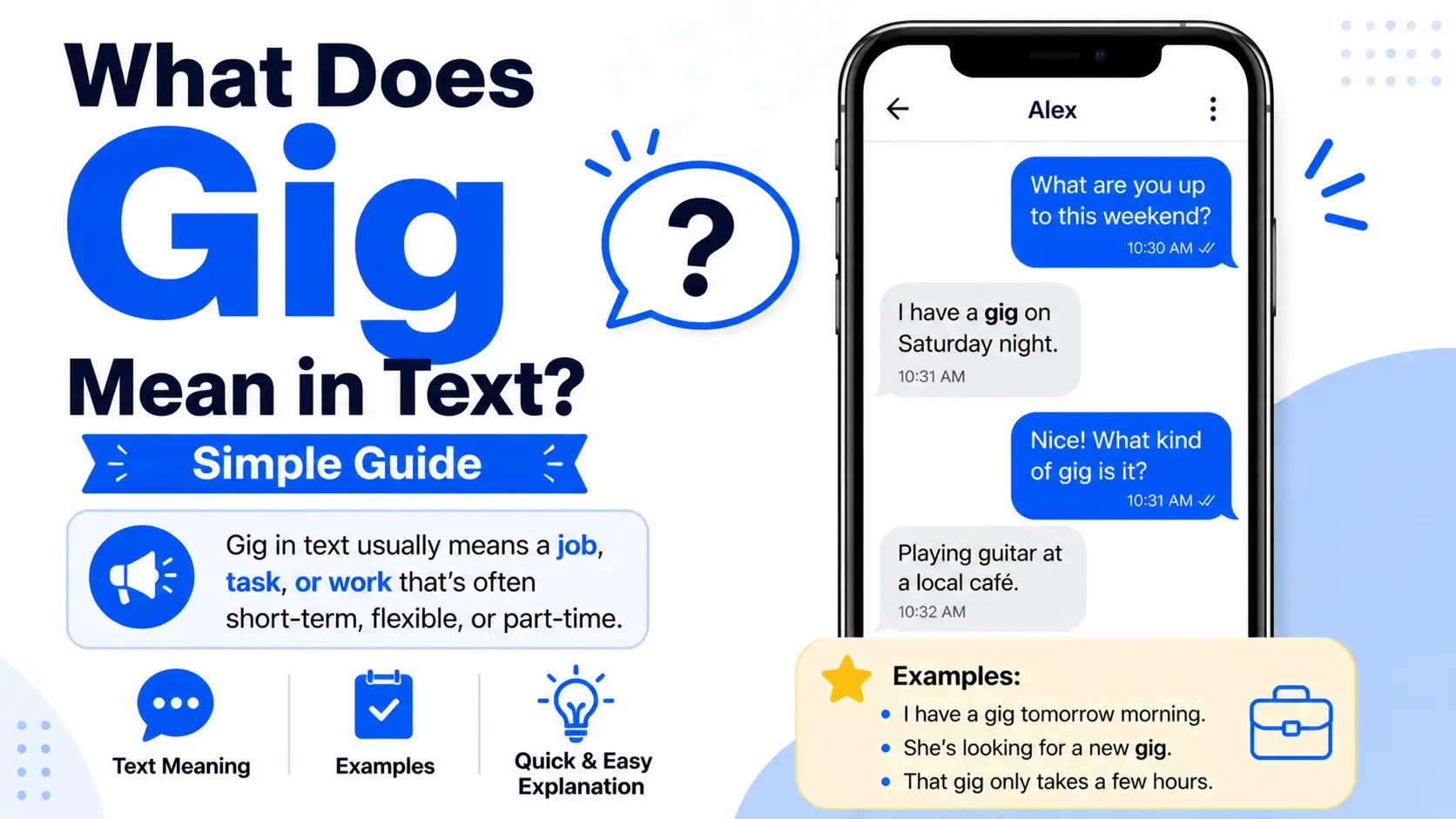
In text, “gig” usually means:
- A job or work task, often temporary
- A performance, especially in music or entertainment
- A side hustle or freelance project
Simple examples:
- “I’ve got a gig tonight at a café.”
- “Just landed a new freelance gig!”
- “Weekend gig pays well, not gonna lie.”
At its core, “gig” suggests something flexible, temporary, or creative rather than a long-term, fixed job.
Origin & Background
The word “gig” didn’t start with texting at all.
Originally, it came from the music world, where performers used it to describe live shows. A band playing at a small club or a singer performing at a wedding would call it a “gig.”
Over time, the meaning expanded.
As freelance culture grew, especially with the rise of digital platforms, “gig” became associated with short-term work. This gave birth to the term “gig economy,” where people take on flexible jobs instead of traditional full-time roles.
Social media accelerated this shift.
Now, influencers, designers, writers, and even delivery workers casually refer to their work as “gigs.” The word has evolved into something modern, flexible, and often self-driven.
Real-Life Conversations
Here’s how “gig” naturally shows up in everyday chats:
WhatsApp Chat
Person A: Are you free tonight?
Person B: Not really, I’ve got a gig at 8. Wish me luck!
Instagram DMs
Person A: Your designs are getting so good!
Person B: Thank you! Just got my first paid gig today 😭
TikTok Comments
User 1: How do you make money doing this?
Creator: Small gigs here and there. It adds up over time!
Text Message
Person A: Why are you always busy lately?
Person B: Just juggling multiple gigs. Trying to save up.
These examples show how flexible the word is. It fits creative work, hustle culture, and even personal growth journeys.
Emotional & Psychological Meaning
“Gig” is more than just a word. It reflects a mindset.
When someone says “gig,” it often carries a sense of:
- Independence
- Flexibility
- Creative freedom
- Ambition and hustle
It feels lighter than saying “job.” Less pressure, more freedom.
People use it because it sounds modern and self-directed. It suggests they are choosing their path rather than being stuck in a routine.
A quick real-life scenario:
You’re talking to a friend who left a 9-to-5 job. Instead of saying “I’m unemployed,” they say, “I’m doing a few gigs right now.”
Notice the difference.
One sounds uncertain. The other feels active, hopeful, and in control.
That’s the emotional power of the word.
Usage in Different Contexts
Social Media
On platforms like Instagram or TikTok, “gig” often highlights freelance wins or creative work.
Example: “Shot a wedding gig today. Exhausted but happy.”
Friends & Relationships
Among friends, it’s used casually to describe what someone is doing for money or passion.
Example: “My weekend gig is finally paying off.”
Work / Professional Settings
In professional conversations, “gig” is more common in creative industries like design, music, writing, and tech freelancing.
Example: “I’m currently working on a short-term gig with a startup.”
Casual vs Serious Tone
- Casual: “Got a gig this weekend.”
- Slightly formal: “I’ve taken on a freelance gig recently.”
The tone shifts depending on how you frame it, but it generally stays relaxed.
When NOT to Use It
Even though “gig” is versatile, there are moments where it doesn’t fit.
- Formal corporate settings
Saying “gig” in a serious interview may sound too casual - Sensitive conversations about stability
If someone is worried about financial security, calling their work a “gig” might feel dismissive - Traditional industries
In fields like law or medicine, “gig” can sound unprofessional - Cultural misunderstandings
Some people may not be familiar with the term and could misinterpret it
In these cases, using “job,” “project,” or “position” is safer.
Common Misunderstandings
People often get confused about “gig” because of its flexible meaning.
1. It always means music
Not anymore. While it started there, now it includes any short-term work.
2. It’s not a “real job”
This is outdated thinking. Many people earn full-time income through gigs.
3. It’s always temporary
Some gigs turn into long-term opportunities or careers.
4. It sounds unprofessional
Depends on the context. In creative fields, it’s completely normal.
Comparison Table
| Term | Meaning | Tone | Usage |
|---|---|---|---|
| Gig | Short-term work or performance | Casual, modern | Freelance, creative work |
| Job | Regular employment | Neutral | Formal and informal |
| Hustle | Extra effort to earn money | Energetic | Side income mindset |
| Project | Task with a goal | Professional | Work environments |
| Career | Long-term profession | Serious | Life planning |
Key Insight:
“Gig” sits between freedom and work. It blends earning with flexibility, which is why it resonates so strongly in modern communication.
Variations / Types of “Gig”
Here are common ways people use or modify the word:
- Side gig
A small job done alongside a main income - Freelance gig
Independent work without a long-term contract - Paid gig
Any task that earns money - Music gig
Live performance by artists or bands - Online gig
Remote work like writing, editing, or designing - Weekend gig
Part-time work done on weekends - Quick gig
Short task completed quickly - Creative gig
Art, design, or content-related work - One-time gig
A job done only once - High-paying gig
Short-term work with good income
How to Respond When Someone Uses “Gig”
Here’s how you can reply naturally:
Casual Replies
- “Nice, hope it goes well!”
- “That sounds fun honestly.”
Funny Replies
- “Don’t forget me when you get famous 😄”
- “Free tickets or what?”
Mature Replies
- “That’s great. Building experience step by step.”
- “Sounds like a good opportunity.”
Respectful Replies
- “Wishing you the best for your gig.”
- “Hope it turns out successful for you.”
Regional & Cultural Usage
Western Culture
Very common. Strongly linked to freelancing and creative independence.
Asian Culture
Growing in popularity, especially among younger people working online or remotely.
Middle Eastern Culture
Used more in digital spaces. Less common in traditional offline conversations.
Global Internet Usage
“Gig” has become a universal term thanks to social media and remote work platforms.
Generational Differences
- Gen Z: Uses it frequently and casually
- Millennials: Comfortable with it, especially in freelance work
- Older generations: May prefer “job” or “work”
Is It Safe for Kids?
Yes, “gig” is completely safe.
It has no inappropriate meaning. It simply refers to work, performance, or tasks. However, younger users may need context to understand how it applies in different situations.
FAQs
1. Does “gig” always mean a job?
No. It can also mean a performance or event, especially in music.
2. Is “gig” formal or informal?
Mostly informal, but acceptable in creative professional settings.
3. Can a full-time job be called a gig?
Usually no, unless someone is speaking casually.
4. What is a “side gig”?
A small job done in addition to your main work.
5. Why do people prefer saying “gig”?
It sounds flexible, modern, and less restrictive than “job.”
6. Is “gig economy” related to this?
Yes. It refers to a system where people work short-term jobs instead of permanent roles.
Conclusion
“Gig” is one of those words that quietly reflects how work has changed.
It started in music, grew through freelancing, and now lives comfortably in everyday conversations. Whether someone is performing on stage, designing a logo, or delivering food, calling it a “gig” adds a sense of flexibility and personal control.
Understanding this word is not just about language. It’s about understanding a shift in how people see work, identity, and independence.
So the next time someone says they’ve got a gig, you’ll know exactly what they mean. And maybe, you’ll start using it yourself with confidence.