
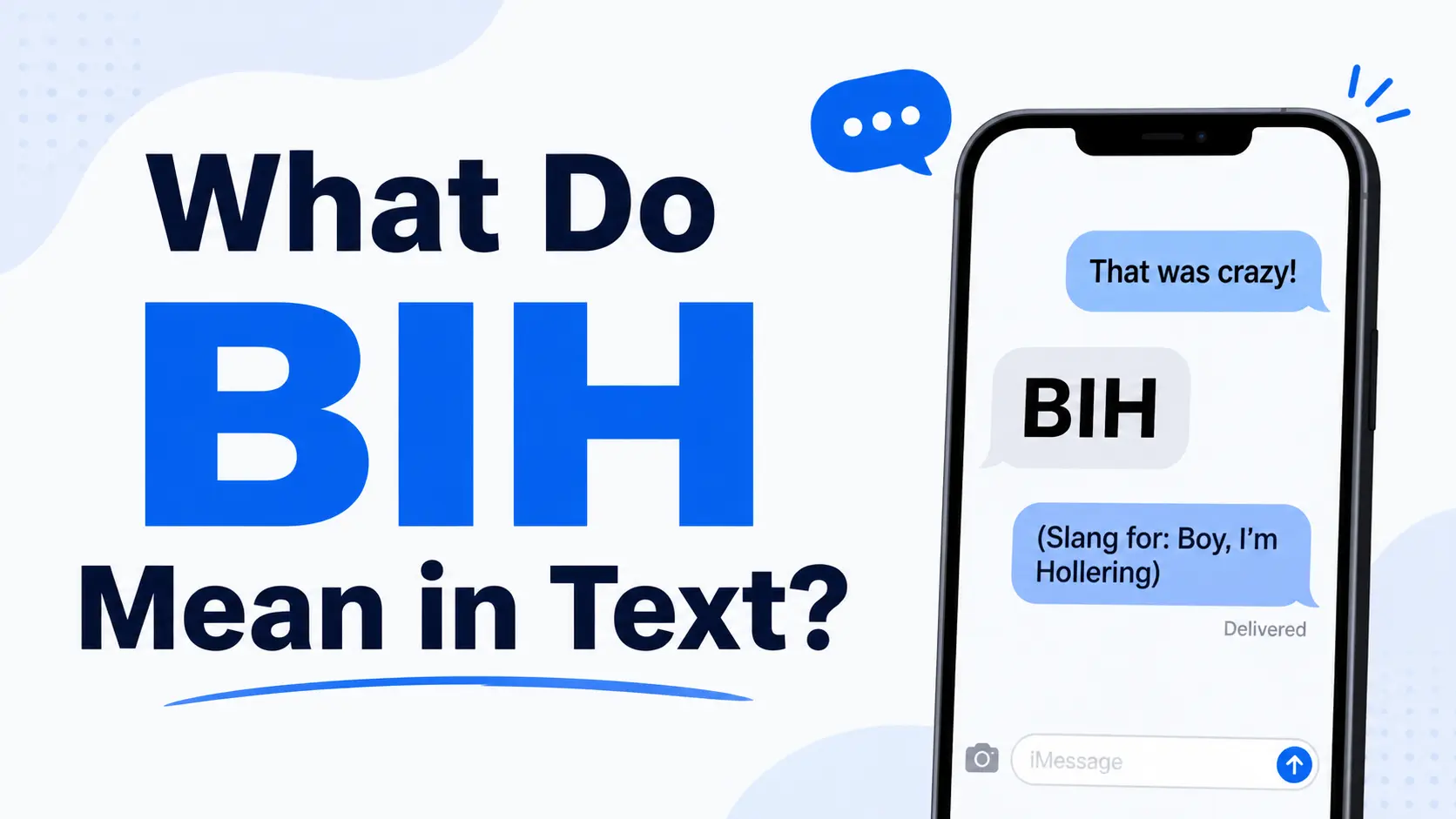
If you’ve been scrolling through texts, Instagram DMs, or TikTok comments, you may have stumbled upon “bih” and wondered what it actually means. At first glance, it looks like a typo, a random combination of letters, or even an inside joke. But this short word has grown into a recognizable piece of online communication. Understanding it can save you from confusion, awkward replies, or even misreading someone’s tone.
People search for “what do bih mean in text” because it’s everywhere in casual conversation, yet its meaning isn’t always obvious. This guide will break it down, explore its origins, show real-life examples, and help you use it confidently in the right context.
BIH – Quick Meaning
At its core, “bih” is modern slang derived from the word “bitch.” However, it is rarely meant to be insulting in casual digital conversation. Instead, it functions as a term of familiarity, playful teasing, or friendly emphasis.
- Short definition: A casual or playful way to refer to someone, often a friend.
- Tone: Can be affectionate, sassy, humorous, or slightly teasing.
- Use: Commonly in texts, social media comments, or memes.
Examples in texts:
- “You wild bih, always making me laugh 😆”
- “Stop being extra, bih 😂”
- “Bih, you really did that? 👀”
Notice how the word carries emotion and personality more than literal insult.
Origin & Background
The slang “bih” emerged from African American Vernacular English and quickly spread across social media platforms. It is a creative spelling that softens the harshness of “bitch,” allowing people to communicate familiarity without heavy negativity.
- Cultural roots: AAVE (African American Vernacular English) influence on modern slang.
- Social media role: Platforms like Twitter, Instagram, and TikTok accelerated its popularity. Users wanted a way to express sass, camaraderie, or attitude without being overly aggressive.
- Evolution: Initially informal and edgy, it has become normalized in casual chats, memes, and pop culture references.
Real-Life Conversations
WhatsApp:
Person A: “I can’t believe you showed up in that outfit 😳”
Person B: “Bih, stop playing, it’s fire 🔥”
Instagram DMs:
Person A: “You really just posted that story?”
Person B: “Bih, of course, why not 😎”
TikTok Comments:
User1: “She killed that dance routine 💃”
User2: “Bih, she really did 😭”
Text Messages:
Person A: “You ate the last slice of pizza?”
Person B: “Bih, guilty as charged 😏”
These examples show that “bih” conveys emotion, humor, or surprise while softening the tone of critique.
Emotional & Psychological Meaning
Using “bih” is more than slang—it expresses a spectrum of emotions:
- Affection: Among friends, it signals closeness or teasing.
- Playfulness: Softens criticism or judgment.
- Sass & personality: Adds flair to an otherwise plain text.
Scenario: Imagine your best friend just showed up late but looked amazing. Typing “Bih, you really came through 😍” expresses both surprise and admiration without sounding serious or harsh. It’s a linguistic shortcut for emotion, tone, and personality rolled into one small word.
Usage in Different Contexts
- Social media: Comments, stories, memes—used to convey humor, admiration, or sass.
- Friends & relationships: Light teasing or affectionate banter.
- Work / professional settings: Rarely appropriate unless you have a very informal rapport with colleagues.
- Casual vs serious tone: Works best in informal texts. Misusing it in serious contexts can appear disrespectful.
When NOT to Use It
- Professional emails or messages – Can appear unprofessional.
- With strangers or formal acquaintances – Risk of misunderstanding tone.
- In cross-cultural contexts – Not all cultures understand playful reclaiming of “bitch,” which could lead to offense.
Common Misunderstandings
- Literal interpretation: Some think it’s always insulting, but context matters.
- Tone confusion: Without emojis or familiar tone, it may read as rude.
- Overuse: Using it excessively can reduce impact or seem immature.
Comparison Table
| Expression | Meaning | Tone | Usage |
|---|---|---|---|
| BIH | Casual, playful version of “bitch” | Friendly / sassy | Texts, social media |
| BFF | Best friend forever | Affectionate | Friend chats |
| Sis | Friendly term, often for women | Warm / casual | Informal conversations |
| Bruh | Casual, sometimes exasperated | Relaxed / humorous | Any informal chat |
| Mean BIH | Slightly teasing / edgy | Playful / bold | Among friends |
| Chill BIH | Calm, funny emphasis | Affectionate / humorous | Social media / texts |
Key Insight: Slang like “bih” relies heavily on tone, context, and cultural familiarity. Using it incorrectly can create confusion, while using it well signals closeness and personality.
Variations / Types
- Extra bih – Playful exaggeration of someone’s behavior.
- Wild bih – Someone doing something unexpected.
- Cute bih – Affectionate compliment.
- Funny bih – Highlights humor.
- amazing bih – Confident or bold action.
- Sleepy bih – Expresses tiredness in a fun way.
- Angry bih – Lightly teasing anger.
- Messy bih – Someone being dramatic.
- Queen bih – Empowering term among friends.
- Baby bih – Endearing, softens the slang.
How to Respond When Someone Uses It
- Casual reply: “😂 you know me”
- Funny reply: “Bih, I’m unstoppable 😎”
- Mature reply: “Appreciate it, always”
- Respectful reply: “Thanks, that means a lot ❤️”
Your response often mirrors the relationship tone, from playful to sincere.
Regional & Cultural Usage
- Western culture: Common among Gen Z, friendly or teasing.
- Asian culture: Increasingly used online but may carry confusion offline.
- Middle Eastern culture: Rarely used in formal conversations; primarily online among youth.
- Global internet usage: Recognized on platforms like TikTok and Instagram.
- Generational differences: Millennials may avoid using it due to original negative connotation; Gen Z reclaims it playfully.
Is It Safe for Kids?
Generally safe in casual, supervised digital communication. Context is key. Inappropriate when used to insult or bully. Teaching kids about tone and context is crucial.
FAQs
1. Can “bih” be offensive?
Yes, if used aggressively or with someone unfamiliar. Context and tone matter.
2. Is it the same as “bitch”?
Not exactly. “Bih” is a softened, playful version often affectionate.
3. Can men use it?
Yes, widely used by all genders online.
4. Does it work in professional settings?
No, it is best reserved for casual or social contexts.
5. Is it a Gen Z word?
Yes, primarily popular among younger internet users.
6. Can it replace “friend” or “buddy”?
In casual speech, yes, but tone and relationship matter.
7. Are there emojis that fit with it?
Yes, 😂 😏 😎 😍 are common to convey playfulness.
Conclusion
“BIH” is more than a simple slang word. It carries emotion, personality, and a modern digital flavor. Understanding its meaning, tone, and context lets you navigate social media, texts, and DMs with confidence. Use it playfully among friends, sparingly in casual online interactions, and never in formal settings. When used well, it’s a small word with big character, adding charm and authenticity to conversations.
Embrace it, experiment with tone, and let your messages reflect personality. You’ll find that bih isn’t just slang—it’s a tool for modern emotional expression.