
The word “ikke” appears more and more in text messages, TikTok comments, Instagram captions, and online chats. For some people, it feels familiar immediately. For others, it looks confusing because it is not traditional English slang like “LOL” or “BRB.”
The confusion usually comes from the fact that “ikke” has cultural roots outside English-speaking countries, yet it now appears in global internet conversations. Depending on the context, it can sound playful, emotional, sarcastic, casual, or even comforting.
In this guide, you will learn exactly what “ikke” means in text, where it comes from, how people actually use it online, and why it has become part of modern digital communication.
Ikke Meaning in Text – Quick Definition
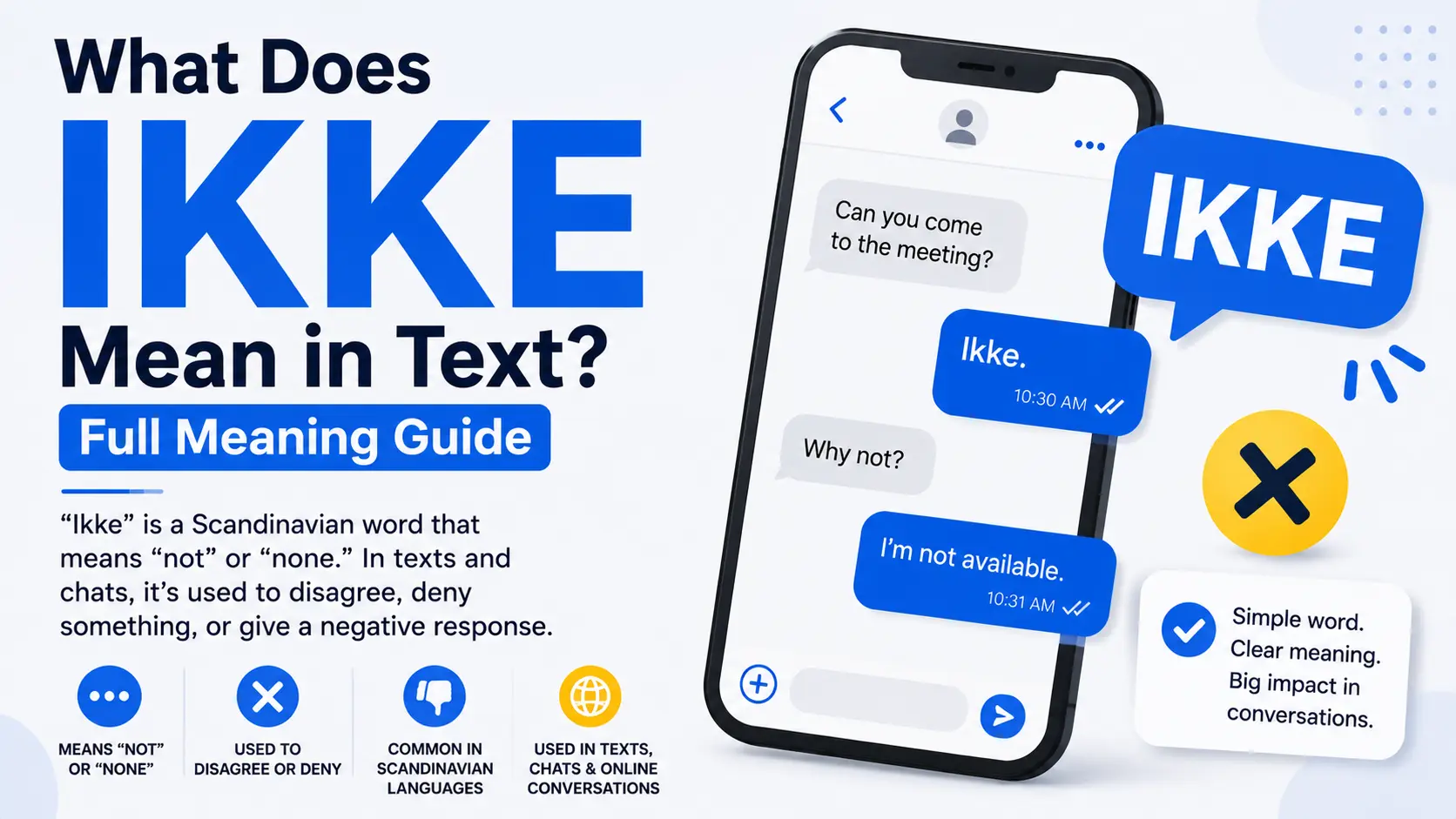
In texting and online conversations, “ikke” is most commonly a Scandinavian word meaning:
- “not”
- “no”
- “isn’t”
- “don’t”
It comes mainly from Norwegian and Danish languages.
People may use it:
- naturally in multilingual conversations
- while chatting with Scandinavian friends
- in memes or TikTok culture
- to sound expressive or playful online
Simple Examples
“Jeg liker det ikke.”
“I don’t like it.”
“Ikke worry, you’ll be fine.”
“Don’t worry, you’ll be fine.”
“That’s ikke true.”
“That’s not true.”
Sometimes people also use “ikke” stylistically even when speaking mostly English online.
Origin and Background of “Ikke”
The word “ikke” has deep roots in Scandinavian languages, especially:
- Norwegian
- Danish
For decades, it simply functioned as a normal everyday word meaning “not.” But social media changed how language travels across borders.
Apps like TikTok, Instagram, Snapchat, and Discord created environments where people mix languages naturally. A person in Pakistan, the United States, Germany, or the Philippines might suddenly start using small foreign expressions because they saw them repeatedly in viral content.
That is exactly what happened with “ikke.”
Social Media Influence
Many users first saw “ikke” in:
- Nordic TikTok videos
- gaming communities
- aesthetic Instagram captions
- multilingual meme pages
- K-pop and international fandom spaces
Over time, the word became recognizable even to people who do not speak Norwegian or Danish.
Some users now add it casually into English sentences because:
- it sounds softer than “not”
- it feels expressive
- it gives conversations personality
- it creates an “internet culture” vibe
Language online evolves emotionally, not just grammatically. “Ikke” became popular because it feels human and conversational.
Real-Life Conversations Using “Ikke”
WhatsApp Conversation
Person A:
Are you mad at me?
Person B:
Nooo, ikke at all 😂
I was just tired yesterday.
Instagram DM
Person A:
You deleted your post?
Person B:
Yeah, the vibe was ikke right anymore.
TikTok Comments
Person A:
This song healed my heart.
Person B:
Ikke kidding, same here.
Text Message
Person A:
You coming tonight?
Person B:
Ikke sure yet. Depends on work.
Emotional and Psychological Meaning of “Ikke”
Words online are rarely just about dictionary definitions anymore.
People use expressions like “ikke” because they create emotional tone.
Compared to a direct English “not,” the word can feel:
- softer
- more playful
- less aggressive
- culturally stylish
- emotionally expressive
In digital communication, tone matters more than grammar. A tiny word can completely change how a message feels.
For example:
“Not funny.”
sounds cold.
But:
“Ikke funny 😭”
feels lighter and more playful.
That emotional softness is one reason internet users adopt foreign slang and expressions.
A Realistic Personal Scenario
Imagine someone posting a vulnerable TikTok about heartbreak. Instead of replying with a harsh “No” or “That’s wrong,” a friend comments:
“Ikke your fault honestly.”
It feels gentler. More emotionally aware. More internet-native.
Modern texting is increasingly about emotional comfort, not just efficiency.
How “Ikke” Is Used in Different Contexts
Social Media
On social media, “ikke” is often used for:
- humor
- aesthetic captions
- emotional reactions
- sarcastic comments
- multilingual internet culture
Example:
“Ikke me crying at 2 AM again.”
Friends and Relationships
Among friends, the word can sound warm and casual.
Example:
“Ikke ignoring you, I just fell asleep.”
In relationships, it may soften difficult conversations.
Example:
“I’m ikke upset, just disappointed.”
Work or Professional Settings
In professional communication, “ikke” is usually inappropriate unless:
- everyone understands the language
- the workplace is informal
- it is part of cultural communication
Using it in formal emails can confuse people.
Avoid examples like:
“The report is ikke finished.”
Professional writing should stay clear and direct.
Casual vs Serious Tone
In casual chats:
- playful
- expressive
- trendy
In serious discussions:
- potentially confusing
- may appear immature
- can weaken clarity
Context changes everything.
When NOT to Use “Ikke”
Even harmless slang can create misunderstandings in the wrong setting.
Avoid using “ikke” when:
Speaking With People Unfamiliar With It
Some people may think:
- it is a typo
- it is mocking English
- it is random nonsense
During Serious Emotional Conversations
If someone is deeply upset, unusual slang may feel emotionally disconnected.
Example:
“Ikke sad please.”
This could sound dismissive instead of comforting.
In Professional or Academic Writing
Teachers, clients, or employers may not understand it.
Clarity should always come before trendiness.
During Cross-Cultural Conversations
Not everyone interprets internet slang similarly. What sounds playful to one person may sound strange to another.
Common Misunderstandings About “Ikke”
People Think It Is a Typo
Many assume “ikke” is a misspelling of:
- “Ike”
- “icky”
- “okay”
- “idk”
But it is actually a real word.
People Misread the Tone
Depending on context, it can sound:
- sarcastic
- funny
- cold
- comforting
Tone online depends heavily on emojis, punctuation, and relationship dynamics.
Literal vs Internet Meaning
Literally, “ikke” means “not.”
But online, it sometimes functions more like:
- a mood
- a stylistic expression
- an emotional softener
That difference matters.
Comparison Table
| Expression | Meaning | Tone | Common Usage |
|---|---|---|---|
| Ikke | Not / no | Soft, trendy | Social media, texting |
| Nope | No | Casual | Everyday chat |
| Nah | No / disagree | Relaxed | Friends, memes |
| Not really | Mild disagreement | Neutral | Conversations |
| Never | Strong refusal | Serious | Direct statements |
| IDK | I don’t know | Informal | Quick texting |
| Fr | For real | Agreement | Gen Z slang |
Key Insight
“Ikke” stands out because it feels emotionally softer than direct English negatives. That subtle emotional effect is why many internet users enjoy using it casually.
Variations and Related Forms of “Ikke”
1. Ikke at all
Means “not at all.”
Used for reassurance or denial.
2. Ikke sure
Means uncertain or undecided.
Common in casual texting.
3. Ikke funny
Means something is not funny.
Usually playful or sarcastic.
4. Ikke bad
Means “not bad.”
Used positively.
5. Ikke me
A humorous self-reference online.
Popular in memes.
6. Ikke true
Means something is false.
Can sound dramatic online.
7. Ikke worried
Means not worried.
Often comforting.
8. Ikke okay
Means emotionally uncomfortable or upset.
Common in emotional posts.
9. Ikke happening
Means something will not happen.
Usually joking or dismissive.
10. Ikke ready
Means emotionally or mentally unprepared.
Very common on TikTok.
How to Respond When Someone Uses “Ikke”
Casual Replies
- “Haha got you.”
- “Okay fair enough.”
- “Makes sense honestly.”
Funny Replies
- “Ikke me laughing at this 😭”
- “You started the Scandinavian era.”
- “Why does that actually sound cool?”
Mature Replies
- “I understand what you mean.”
- “Thanks for explaining clearly.”
- “That’s understandable.”
Respectful Replies
- “No worries.”
- “I appreciate your honesty.”
- “All good on my side.”
Regional and Cultural Usage of “Ikke”
Western Culture
In Western online spaces, “ikke” often appears:
- ironically
- aesthetically
- humorously
It blends into meme culture naturally.
Asian Culture
Asian internet communities often adopt multilingual slang quickly, especially through fandoms and TikTok trends.
Here, “ikke” may appear:
- in captions
- fan edits
- emotional memes
- gaming chats
Middle Eastern Culture
In Middle Eastern online communities, English and foreign slang often mix together naturally.
Users may use “ikke” simply because:
- it sounds trendy
- it feels expressive
- they saw influencers using it
Global Internet Usage
The internet no longer belongs to one language group.
Modern users constantly borrow:
- Korean phrases
- Japanese slang
- Arabic expressions
- Scandinavian words
- African internet slang
“Ikke” is part of this global language blending.
Gen Z vs Millennials
Gen Z
- more likely to use “ikke”
- enjoys stylistic language mixing
- uses slang emotionally
Millennials
- may recognize it less
- prefer clearer wording
- sometimes view it as niche internet slang
Generational communication styles shape how slang spreads.
Is “Ikke” Safe for Kids?
Generally, yes.
“Ikke” itself is not offensive or dangerous. It is simply a foreign-language word meaning “not.”
However, parents should still pay attention to:
- the full conversation context
- social media environments
- emotional tone
- surrounding slang
The word alone is harmless.
Frequently Asked Questions
What does “ikke” mean in texting?
It usually means “not” or “no” and comes from Norwegian or Danish languages.
Is “ikke” slang?
Not originally. It is a real Scandinavian word, but internet culture sometimes uses it like slang.
Why do people use “ikke” online?
People use it because it sounds playful, aesthetic, emotional, and trendy in online conversations.
Is “ikke” offensive?
No. The word itself is not offensive.
Can I use “ikke” in English sentences?
Yes, many internet users mix it casually into English chats online.
Is “ikke” common on TikTok?
Yes. It appears in captions, comments, memes, and multilingual online communities.
Does “ikke” always mean “not”?
Mostly yes, though tone and internet context can slightly change how it feels emotionally.
Conclusion
The meaning of “ikke” in text is surprisingly simple, yet its online popularity says something bigger about modern communication.
People today do not just communicate for information. They communicate for feeling, tone, identity, humor, and connection.
That is why small words like “ikke” spread so quickly across the internet.
At its core, it simply means “not” or “no.” But emotionally, it often feels softer, more expressive, and more personal than direct English wording.
If you see “ikke” in a message now, you will understand not only the translation, but also the mood behind it.
And if you decide to use it yourself, you will probably sound a little more internet-savvy too.