
In today’s fast-paced digital world, texting and social media have created a language of their own. You might scroll through a WhatsApp chat or TikTok comment and see “JKKK” and wonder what it actually means. Is it a joke? Is it serious? Why do people use it, and is it okay to respond the same way?
This article dives into everything you need to know about “JKKK”, including its meaning, origin, usage, emotional undertones, and cultural nuances. By the end, you’ll not only understand it but also feel confident using it in the right context.
JKKK – Quick Meaning
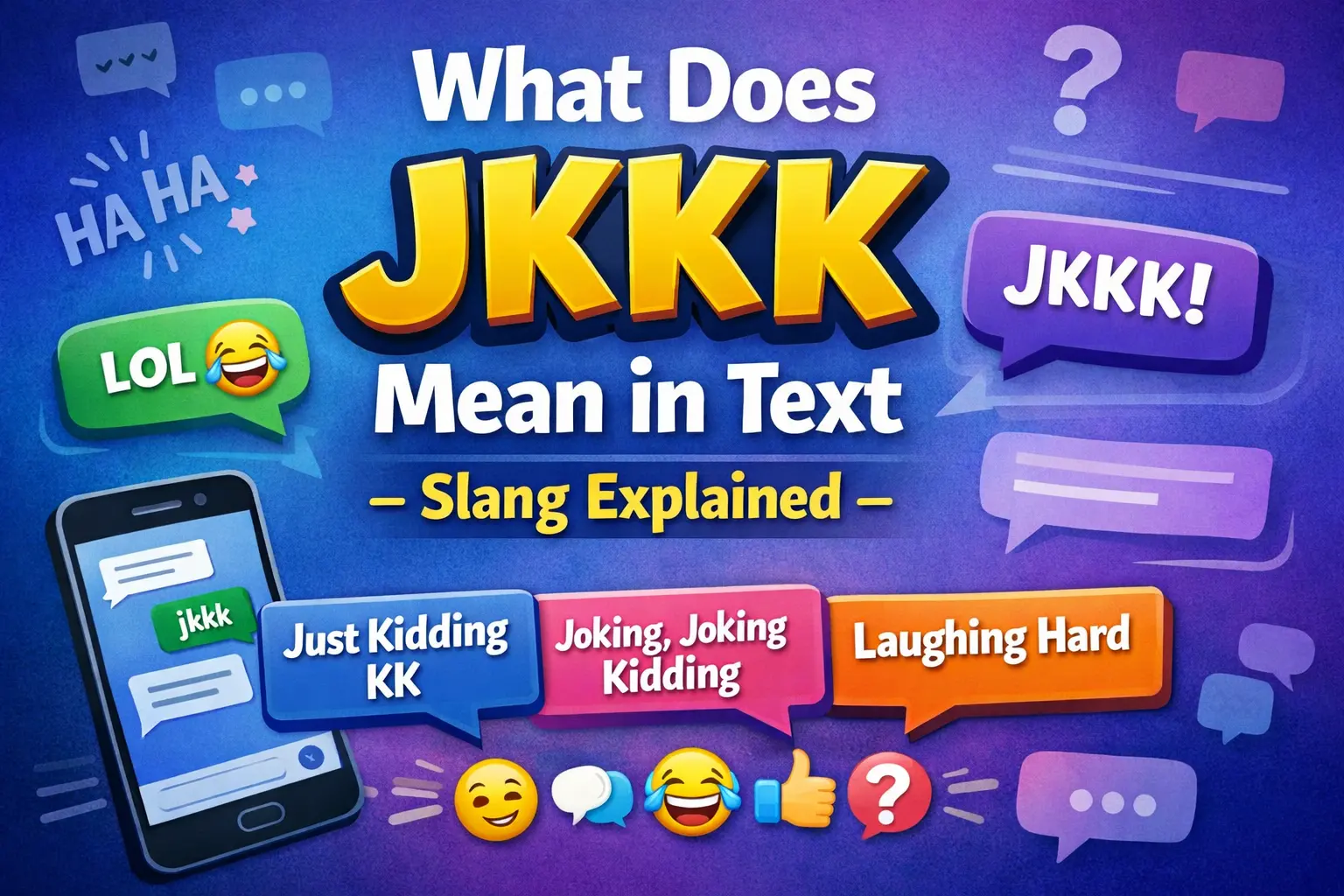
At its core, JKKK is a playful way to indicate that someone is joking, laughing, or teasing lightly. It’s similar to writing “haha” but with a slightly more exaggerated, informal flair.
Key Points:
- Meaning: Just Kidding (KK), with extra letters for emphasis
- Tone: Playful, casual, humorous
- Common Platforms: WhatsApp, Instagram, TikTok, text messages
Examples in Text:
- “You ate my fries? JKKK 😆”
- “I was going to tell everyone your secret… JKKK!”
- “Don’t worry, I’m not mad, JKKK.”
The repetition of K adds emphasis, showing that the sender is clearly joking or being lighthearted.
Origin & Background
JKKK stems from internet slang culture, particularly influenced by:
- Texting shorthand: Early 2000s saw people shortening phrases like “Just kidding” to “JK.” Adding multiple Ks became a way to show stronger joking intent.
- Social media culture: Platforms like Instagram and TikTok encouraged exaggerated, playful expressions to convey tone without voice.
- Cultural evolution: The slang has global reach, especially among Gen Z, where playful exaggeration is common in chats and memes.
Originally, “JK” was enough to signal a joke, but over time, “JKKK” evolved to reduce ambiguity and make the joke unmistakably obvious.
Real-Life Conversations
Here are some realistic examples showing how JKKK appears in everyday communication:
WhatsApp Chat
Person A: “I finished all the chocolate… 😅”
Person B: “Wait, all of it? That’s selfish!”
Person A: “JKKK, I left some for you 😋”
Instagram DM
Person A: “You really thought I’d wear that to the party?”
Person B: “Honestly, yes 😆”
Person A: “JKKK, don’t worry, I’m changing 😜”
TikTok Comment
User1: “I tried dancing like you and fell flat on my face 😂”
User2: “JKKK, I did the same yesterday!”
Text Message
Person A: “I might actually eat a whole pizza by myself tonight”
Person B: “Are you serious?”
Person A: “JKKK, maybe just half 😏”
These examples show that JKKK softens statements, adds humor, and prevents misunderstandings.
Emotional & Psychological Meaning
Using JKKK conveys several psychological cues:
- Lightheartedness: It signals that the sender is not serious and wants the tone to remain playful.
- Avoids conflict: In tense or teasing conversations, JKKK reassures the recipient.
- Social bonding: Humor strengthens friendships and digital rapport.
Scenario: Imagine telling your friend, “I’m moving to Antarctica next month… JKKK.” The extra Ks immediately signal playfulness, preventing alarm or confusion.
This slang reflects the modern preference for digital emotional clarity, where tone can be easily misinterpreted without visual or vocal cues.
Usage in Different Contexts
Social Media: Frequently used in comments, memes, and captions to indicate jokes.
Friends & Relationships: Common in texting to tease, joke, or lighten a serious conversation.
Work / Professional Settings: Rarely appropriate; could be seen as too casual or unprofessional.
Casual vs Serious Tone: Works well in informal settings; adding multiple Ks emphasizes humor.
When NOT to Use It
Avoid JKKK in:
- Professional emails or formal communication
- Sensitive conversations about personal issues
- Situations where humor could be misunderstood (e.g., with someone you don’t know well)
Cultural sensitivity matters. Some people may not be familiar with the playful exaggeration, so misinterpretation is possible.
Common Misunderstandings
- Literal confusion: People may misread it as a typo or error.
- Tone misreading: Without context, the extra Ks may seem sarcastic or passive-aggressive.
- Overuse: Constant use can make the sender seem unserious or insincere.
Comparison Table
| Slang | Meaning | Tone | Related Expression | Opposite Meaning |
|---|---|---|---|---|
| JK | Just kidding | Casual | LOL, Haha | Serious, Sincere |
| JKKK | Just kidding (emphasized) | Playful | Haha, LMAO | Serious, Formal |
| LOL | Laugh out loud | Humorous | ROFL, Haha | Silent, Serious |
| SMH | Shaking my head | Disapproving | Facepalm | Agree, Approve |
Key Insight: Repetition in JKKK amplifies humor and clarity, helping digital conversations avoid tone ambiguity.
Variations / Types
- JK – Standard “just kidding”
- JKK – Slightly playful, less exaggerated
- JKKK – Stronger, obvious joking
- JKL – Sometimes used as “just kidding, laughing”
- JKJK – Emphasizes back-to-back joking
- JK😂 – Adds laughter emoji for extra clarity
- JKK 😜 – Playful and teasing tone
- JK!!! – Written emphasis without repetition of K
- Jk… – Subtle, understated joking
- JKkkk – Combination of upper and lower case for dramatic effect
How to Respond When Someone Uses It
Casual Replies: “Haha got it 😆”
Funny Replies: “Good one, you almost scared me 😜”
Mature Replies: “I know you’re joking, don’t worry”
Respectful Replies: “Understood, just kidding noted 🙂”
Regional & Cultural Usage
- Western Culture: Common among Gen Z and Millennials, mostly online.
- Asian Culture: Increasingly used among younger netizens in playful online chats.
- Middle Eastern Culture: Emerging in youth social media circles, mainly for casual texting.
- Global Internet Usage: Recognized widely, but context is key.
- Generational Differences: Gen Z uses multiple Ks for emphasis; Millennials often stick to JK.
Is It Safe for Kids?
Yes, JKKK is generally safe, as it expresses harmless joking. However, children should learn context sensitivity, ensuring jokes are appropriate and understood by all recipients.
FAQs
1. Can JKKK be used in professional emails?
No, it’s too casual and informal for workplace communication.
2. Is JKKK the same as LOL?
Not exactly. JKKK signals joking, while LOL expresses laughter.
3. Why do people use multiple Ks?
To emphasize the joking nature and prevent tone confusion.
4. Can JKKK be misunderstood?
Yes, especially if the recipient is unfamiliar with the slang or context.
5. Is it common in TikTok comments?
Very common, especially for playful or teasing remarks.
6. Does JKKK have a negative meaning?
No, it is primarily lighthearted and humorous.
7. How does JKKK differ from JK?
JKKK is more exaggerated, emphasizing that the statement is a joke.
Conclusion
JKKK is more than just a string of letters. It’s a cultural tool that communicates playfulness, reduces misunderstandings, and strengthens digital bonds. By understanding its meaning, context, and emotional undertones, you can confidently use it among friends, on social media, and in casual texting. Remember, tone matters, so use it wisely and enjoy the lighthearted side of online communication.