
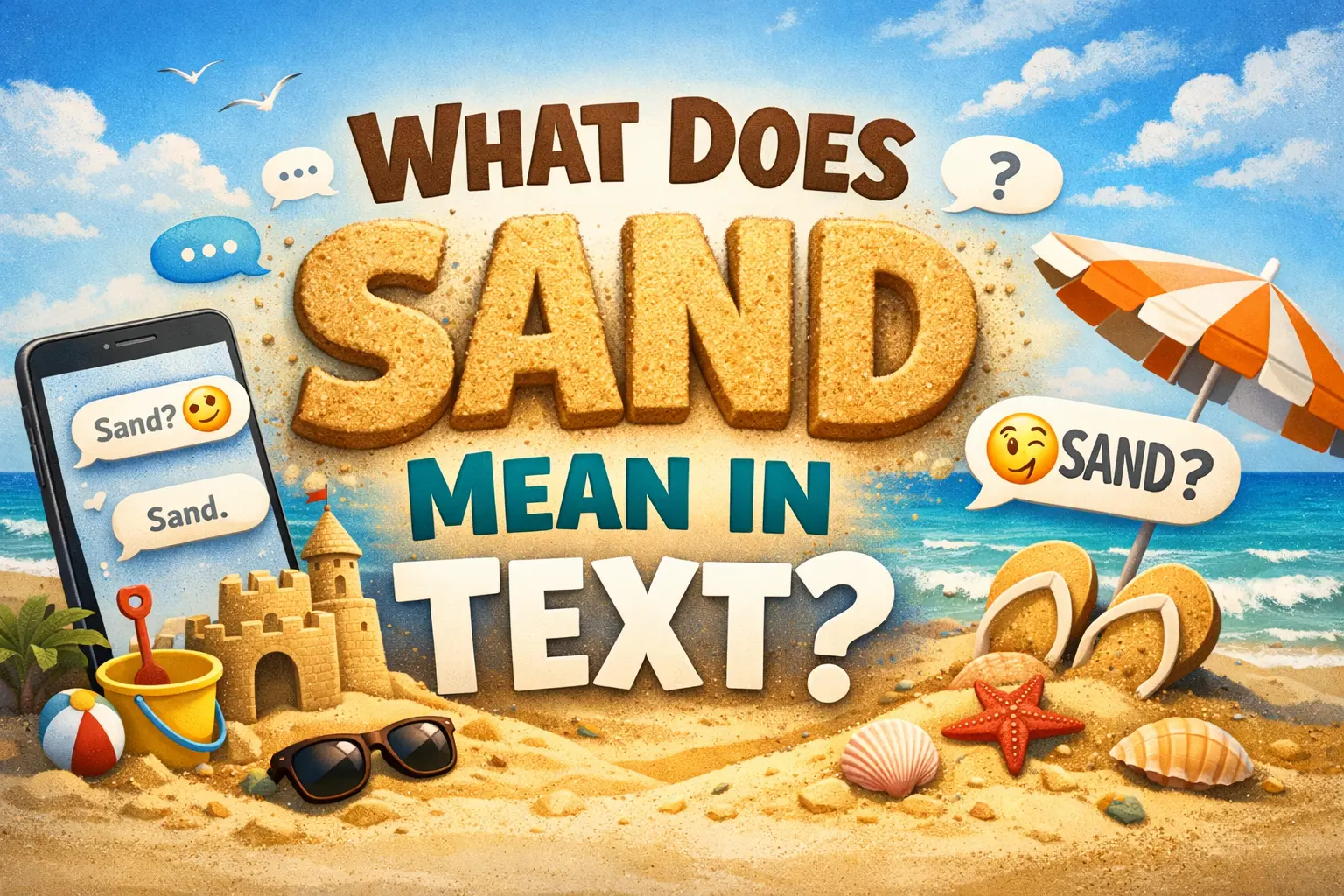
Texting and social media are always evolving, with new slang appearing almost every day. One word that has recently caught people off guard is “sand.” If you’ve come across it in a chat or comment and felt confused, you’re not the only one.
Many people search for its meaning because it’s not immediately clear, and misunderstanding it can lead to awkward or off-tone replies. Knowing what it means can help you stay in the loop and communicate more smoothly online.
In this guide, we’ll explain the meaning of “sand” in text, look at how it started, share real-life examples, and give practical tips on when to use it—and when to skip it. By the end, you’ll feel comfortable recognizing and using it naturally in your conversations.
Sand – Quick Meaning
In texting or social media, “sand” is slang that generally conveys playfulness, annoyance, or sass, depending on the context. It is often used to react to someone’s message, joke, or teasing remark.
Key points to know:
- Tone matters: Sand can be friendly teasing or mild sarcasm.
- Emotional nuance: It often expresses subtle irritation or playful mockery.
- Flexible usage: Works in casual texting, DMs, or social media comments.
Examples:
- “Ugh, you always take the last slice 😒 sand”
- “Sand, I can’t believe you forgot again!”
- “You think you’re funny? Sand.”
Notice how the tone depends heavily on the conversation context.
Origin & Background
The slang “sand” has roots in internet culture and evolved from playful shorthand used among younger generations. While there’s no definitive origin, its rise is linked to:
- Social media trends: Platforms like TikTok, Instagram, and Snapchat accelerated its use.
- Texting shorthand: Younger users often create playful, one-word reactions for convenience.
- Cultural influence: The expression taps into Gen Z humor, which values irony, subtle sass, and inside jokes.
Over time, sand became more than a simple word. It’s now a social signal—a way to express feeling without long explanations. It’s similar to saying “ugh,” “seriously,” or using a rolling eyes emoji, but with a distinct, slangy punch.
Real-Life Conversations
WhatsApp Chat:
Person A: “I ate the last piece of pizza 😬”
Person B: “Sand! You knew I was saving that 😂”
Instagram DM:
Person A: “You’re actually late again 😑”
Person B: “Sand… traffic was horrible, promise!”
TikTok Comments:
Commenter 1: “This trend is so overhyped 😒”
Commenter 2: “Sand, it’s literally viral everywhere lol”
Text Message:
Person A: “Forgot your homework?”
Person B: “Sand… totally slipped my mind 😅”
These examples show that sand often conveys mild frustration or teasing but rarely hostility.
Emotional & Psychological Meaning
Using sand in text communicates more than just words. Psychologically, it:
- Expresses subtle emotion without lengthy explanations.
- Serves as a playful boundary: you’re showing irritation without serious conflict.
- Reflects modern communication style, where brevity and nuance dominate.
Example scenario: You’re texting a friend who’s always late. Instead of a lecture, you send “Sand 😒,” signaling annoyance with a humorous undertone. It’s concise, emotionally clear, and keeps the tone light.
Usage in Different Contexts
Social Media: Quick reactions to posts, memes, or viral videos. Often paired with emojis.
Friends & Relationships: Light teasing or playful nagging. Strengthens rapport without being harsh.
Work / Professional Settings: Usually inappropriate, unless your workplace has a very casual culture.
Casual vs Serious Tone: In casual chats, it’s funny and engaging. In serious conversations, it might confuse or offend if used incorrectly.
When NOT to Use It
Sand can backfire if used in the wrong scenario:
- Formal work emails
- Serious discussions about conflict or emotions
- Cultural misinterpretation, since not everyone knows the slang
- With unfamiliar contacts, as tone might be misunderstood
Common Misunderstandings
- Literal confusion: Some people think “sand” refers to the grainy material.
- Tone issues: Without emojis or context, “sand” can seem harsh.
- Generational gap: Older recipients may not grasp the playful sarcasm.
Comparison Table
| Expression | Meaning | Tone | Related Use |
|---|---|---|---|
| Sand | Playful annoyance/sass | Casual, ironic | Reaction to teasing |
| Ugh | Mild frustration | Neutral | Shows irritation |
| Smh | Disapproval | Informal | Judgmental tone |
| Lol | Humor or light teasing | Friendly | Softens statements |
| Lmao | Strong humor | Casual | Exaggerated fun |
| Seriously | Questioning or disbelief | Serious | Confusion or disbelief |
Key Insight: Sand is unique in its brevity and playful tone. It balances humor and mild irritation without being overbearing.
Variations / Types
- Sand 😒 – Mild annoyance
- Sand lol – Playful sarcasm
- Sand smh – Frustrated disbelief
- Sand hehe – Light teasing
- Sand bruh – Casual disbelief
- Sand sigh – Tired or fed-up
- Sand 😂 – Humor mixed with irritation
- Sand omg – Surprise with mild annoyance
- Sand seriously? – Playful judgment
- Sand… – Ellipsis adds dramatic flair
How to Respond When Someone Uses It
- Casual reply: “Haha ok, got it 😅”
- Funny reply: “Sand yourself, not me 😎”
- Mature reply: “I see, won’t happen again”
- Respectful reply: “Noted, thanks for letting me know”
Regional & Cultural Usage
- Western culture: Popular among teens and young adults online, often playful.
- Asian culture: Context-sensitive; tone may vary more.
- Middle Eastern culture: Less common; mostly seen in English-language internet communities.
- Global internet usage: Recognized in Gen Z spaces worldwide, especially TikTok and Instagram.
- Generational differences: Gen Z uses it casually; Millennials may need context to understand.
Is It Safe for Kids?
Yes, generally safe. Sand is non-explicit and playful, though parents should note it’s a slang term that can be sarcastic. Young children may not grasp the nuance and could misinterpret tone.
FAQs
1. Can sand be used in serious messages?
Not recommended. It’s casual and playful, not formal.
2. Is sand offensive?
Rarely, unless misused or sent in an inappropriate context.
3. Can I use sand in emails?
Avoid it in professional emails; it’s slang meant for casual chats.
4. Does sand have a literal meaning?
Yes, literally it’s fine grains of rock, but in text it’s slang.
5. Is sand universal slang?
Mostly popular in English-speaking Gen Z communities online.
6. Can older people understand sand?
Some may not. Tone can be lost without context or emojis.
7. Are there alternatives to sand?
Yes—ugh, smh, lol, hehe, or playful emojis work similarly.
Conclusion
Sand is a small word with big expressive power. It conveys subtle emotion, playful annoyance, or sarcastic humor in a single syllable. Understanding it lets you navigate texts, DMs, and social media more confidently. By using it thoughtfully, you can communicate your feelings quickly and stylishly, while avoiding misunderstandings. The next time a friend texts “Sand”, you’ll know exactly how to respond—with clarity, humor, and confidence.