

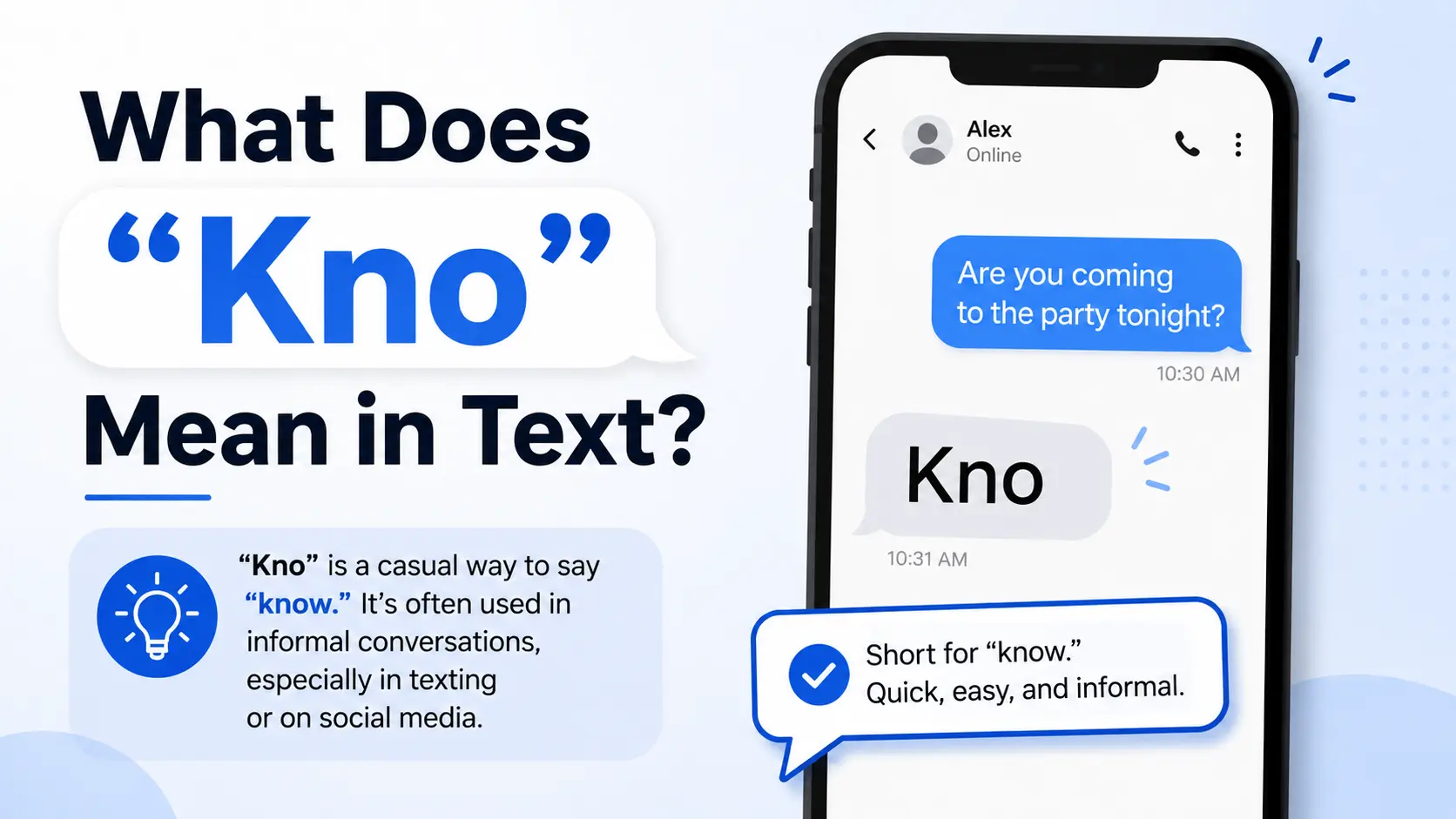
If you’ve ever seen someone type “kno” in a message and paused for a second, you’re not alone. It looks like a typo at first glance, but in reality, it’s intentional. People use it all the time in chats, comments, and casual conversations online.
The confusion usually comes from how similar it looks to “know.” Is it the same word? Is it slang? Or does it carry a different tone?
This guide clears that up completely. You’ll understand what “kno” means, when to use it, and how it fits into modern texting culture without overthinking it.
What Does “Kno” Mean in Text – Quick Meaning
“Kno” is an informal, shortened version of the word “know.”
It’s used in casual texting to save time or create a relaxed tone.
Simple breakdown:
- “Kno” = “Know”
- Used mostly in informal conversations
- Often reflects a laid-back or conversational vibe
Examples:
- “I kno what you mean.”
- “Idk if you kno this already…”
- “You kno how it is.”
It’s not grammatically correct, but that’s exactly the point. It feels natural and effortless.
Origin & Background
“Kno” didn’t come from a dictionary. It came from how people actually talk and type online.
As texting grew, especially with SMS limits and fast typing habits, people started dropping silent letters. Since the “w” in “know” isn’t pronounced, it became an easy target to remove.
Social media platforms like Instagram, Snapchat, and TikTok pushed this trend further. Shorter words mean faster replies, and faster replies keep conversations flowing.
Over time, “kno” became part of a broader style of writing where convenience beats correctness.
It also reflects a cultural shift. People want to sound more human and less formal in digital spaces.
Real-Life Conversations
Here’s how “kno” actually shows up in everyday chats.
Person A: I feel like something’s off today
Person B: Yeah, I kno what you mean
Instagram DMs
Person A: This song hits different at night
Person B: I kno right?? It’s a whole vibe
TikTok Comments
User 1: Why is this so relatable 😭
User 2: I kno, it’s literally my life
Text Messages
Person A: You ever just overthink everything?
Person B: I kno… it’s exhausting sometimes
These examples show how natural it feels in casual communication.
Emotional & Psychological Meaning
“Kno” carries more than just meaning. It carries tone.
When someone uses “kno” instead of “know,” they’re signaling comfort and familiarity. It feels less formal, more personal, and sometimes even more empathetic.
It often expresses:
- Agreement
- Understanding
- Emotional connection
- Shared experience
There’s also a subtle psychological layer. Using relaxed spelling makes conversations feel less serious and more human. It lowers the barrier between people.
A quick scenario:
You text a friend about a stressful day, and they reply, “I kno, that sounds really tough.”
That small spelling choice makes the response feel softer and more genuine compared to a formal reply.
Usage in Different Contexts
Social Media
“Kno” fits perfectly in captions, comments, and quick replies. It keeps things light and relatable.
Example:
“I kno this feeling too well 😅”
Friends & Relationships
This is where it shines the most. It helps conversations feel natural and unforced.
Example:
“I kno you’ve been trying your best.”
Work / Professional Settings
Avoid using “kno” here. It can look careless or unprofessional.
Instead, stick to “know” in emails or formal messages.
Casual vs Serious Tone
- Casual: “I kno what you mean”
- Serious: “I know what you mean”
The difference is subtle but important.
When NOT to Use It
Even though it’s common, there are times when “kno” doesn’t fit.
Avoid using it:
- In job applications or emails
- In academic writing
- When clarity is critical
- With people who prefer formal communication
It can also come across as lazy in the wrong context, even if that’s not your intention.
Common Misunderstandings
1. Thinking it’s a typo
Many people assume “kno” is just a mistake. In reality, it’s intentional.
2. Tone confusion
Some might read it as too casual or even dismissive depending on context.
3. Overusing it
Using “kno” in every sentence can feel forced or unnatural.
4. Literal vs emotional meaning
It doesn’t just mean “know.” Sometimes it implies agreement or empathy.
Comparison Table
| Expression | Meaning | Tone | Usage |
|---|---|---|---|
| Kno | Informal “know” | Casual | Friends, chats |
| Know | Standard spelling | Neutral/Formal | All contexts |
| No | Negative response | Direct | Any context |
| I get it | Understanding | Supportive | Emotional conversations |
| Ik (I know) | Acknowledgment | Quick, casual | Texting |
Key Insight
“Kno” is less about the word itself and more about how it makes a conversation feel. It softens communication and adds a human touch.
Variations / Types
Here are common variations you’ll see:
- Ik (I know)
Short for quick agreement - Idk (I don’t know)
Expresses uncertainty - Yk (You know)
Used to connect ideas - Knoo
Stretched for emphasis or emotion - Knooo 😭
Adds emotional intensity - I kno right
Strong agreement - U kno
Ultra-casual version - Kno this
Used for emphasis - I kno that feeling
Shows empathy - Kno what I mean?
Invites agreement
How to Respond When Someone Uses It
Casual Replies
- “Yeah, same here”
- “Exactly”
Funny Replies
- “You always kno everything 😂”
- “Stop reading my mind”
Mature Replies
- “I understand what you’re saying”
- “That makes sense”
Respectful Replies
- “I appreciate that you get it”
- “Thanks for understanding”
Regional & Cultural Usage
Western Culture
Very common in casual texting. Seen as friendly and relaxed.
Asian Culture
Used among younger audiences, especially online. Still avoided in formal settings.
Middle Eastern Culture
Mixed usage. Younger users adopt it, but formal communication remains important.
Global Internet Usage
“Kno” is widely understood across platforms. It’s part of global texting language now.
Generational Differences
- Gen Z: Uses it naturally and frequently
- Millennials: Use it sometimes but switch to formal writing when needed
Is It Safe for Kids?
Yes, “kno” is completely safe.
It’s just a casual spelling of “know” with no harmful or inappropriate meaning. The only thing to teach is when to use it and when to stick to proper spelling.
FAQs
1. Is “kno” correct English?
No, it’s informal slang, not standard English.
2. Is “kno” the same as “know”?
Yes, it has the same meaning but a more casual tone.
3. Why do people use “kno” instead of “know”?
To type faster and sound more relaxed.
4. Can I use “kno” in school or work?
It’s better to avoid it in formal settings.
5. Does “kno” change the meaning of a sentence?
Not really, but it changes the tone.
6. Is “kno” popular?
Yes, especially among younger users and on social media.
Conclusion
“Kno” is a small change in spelling, but it says a lot about how communication is evolving. It reflects comfort, speed, and emotional connection in digital conversations.
Used in the right context, it makes your messages feel natural and relatable. Used in the wrong one, it can feel careless.
The key is balance. Understand the tone, read the situation, and choose what fits best.
Once you get that, you won’t just understand “kno.” You’ll start noticing how language adapts to real human connection.