
If you’ve ever seen someone say “nice DP” or “change your DP” in a chat, you may have paused for a second and wondered what it actually means. The phrase appears constantly in texting, WhatsApp conversations, Instagram chats, gaming communities, and social media comments.
The confusion usually comes from the fact that “DP” can mean different things depending on the platform and the context. In most online conversations, though, DP simply refers to someone’s profile picture.
People search for “what do dp mean in text” because the abbreviation feels universal yet slightly unclear. Some people use it casually every day, while others encounter it for the first time in a group chat or comment section.
Understanding digital slang like this helps you communicate more naturally online and avoid awkward misunderstandings. It also reveals something deeper about modern communication and identity on the internet.
DP Meaning in Text – Quick Definition
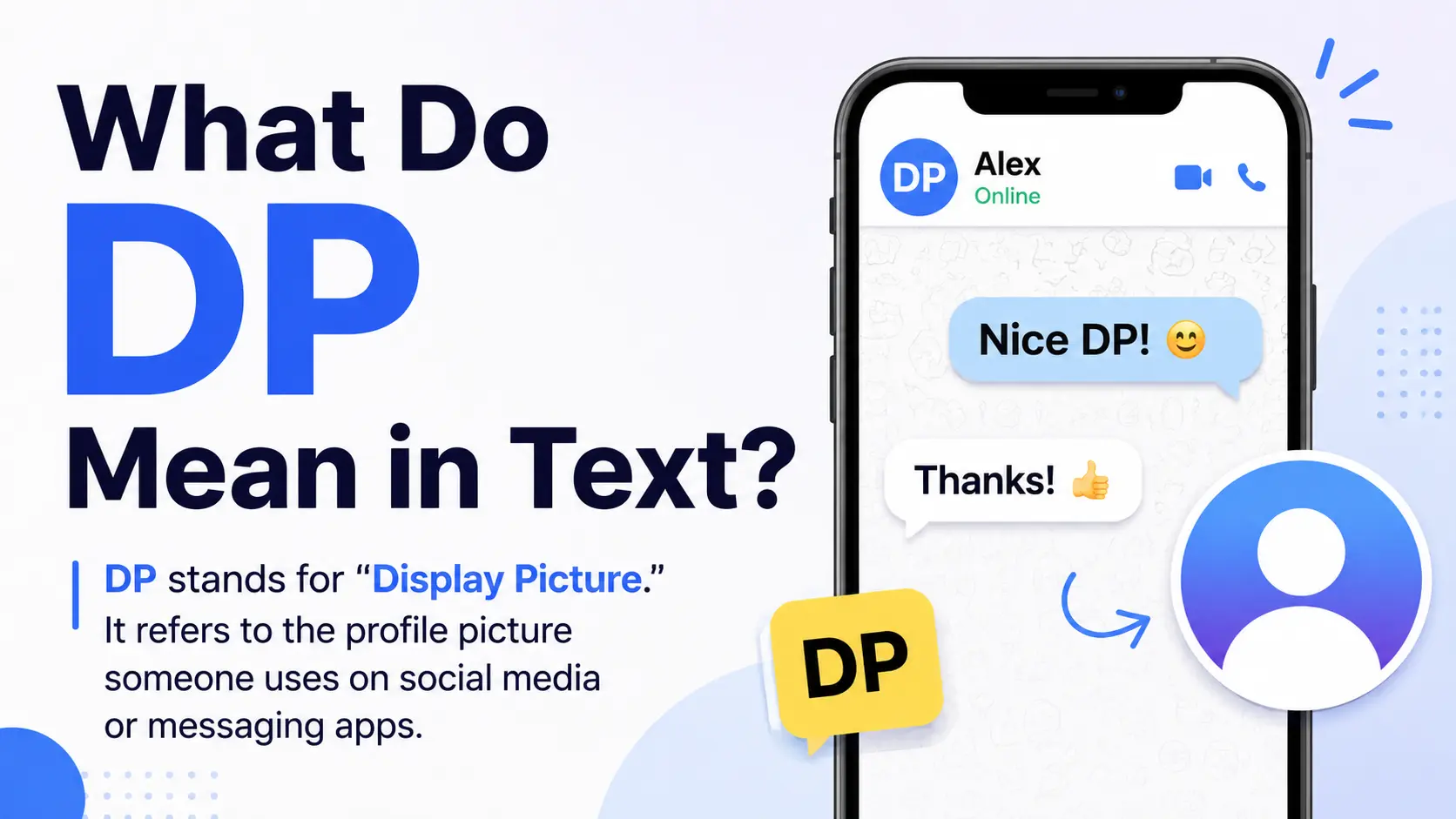
In texting and social media language, DP usually means:
- Display Picture
- Profile Picture
It refers to the image someone uses on their social media account, messaging app, or online profile.
Simple Examples
“Your DP looks amazing!”
“Why did you remove your DP?”
“I can’t recognize you from that DP.”
On apps like WhatsApp, Telegram, Facebook, and Instagram, people often use “DP” instead of saying “profile picture” because it’s shorter and faster.
Origin and Background of DP
The term “DP” became popular during the early rise of instant messaging platforms and social networking websites in the 2000s.
Back then, services like MSN Messenger, Yahoo Messenger, and BBM encouraged users to personalize their accounts with small images. Those images became known as “display pictures.”
Over time, the internet shortened everything. Just like “LOL” replaced “laughing out loud,” “DP” became the quick way to mention someone’s profile image.
Social Media Influence
As smartphones and social apps exploded globally, DP became part of everyday digital language. WhatsApp especially played a major role in making the term common across Asia, the Middle East, and many African countries.
Interestingly, Western users often prefer the phrase “PFP,” which stands for “profile picture,” while many Asian and Middle Eastern users still say “DP.”
That difference reflects how internet culture evolves differently across regions.
Real-Life Conversations Using DP
Here are some realistic examples showing how people naturally use the term.
WhatsApp Conversation
Person A:
Why did you remove your DP?
Person B:
Needed a little social media break.
Person A:
Honestly, I thought you blocked me for a second.
Instagram DM
Person A:
Your new DP is fire 🔥
Person B:
Thank you! Took me 40 tries to get that photo right.
TikTok Comment Section
Person A:
That anime DP tells me everything already 😂
Person B:
And what exactly does it tell you?
Person A:
That you definitely stay awake till 3 AM watching edits.
Text Message
Person A:
Cute DP.
Person B:
You noticed finally 😭
Person A:
Hard not to. You look happy in it.
These examples show that DP conversations are often emotional, playful, or personal because profile pictures represent identity online.
Emotional and Psychological Meaning Behind DP
A DP may look like just a small photo, but psychologically, it often represents much more.
People carefully choose profile pictures because they want to control how others see them. A DP can communicate:
- Confidence
- Mood
- Relationship status
- Personality
- Social belonging
- Style or aesthetic
Sometimes people change their DP after an emotional event, a breakup, a graduation, or a personal achievement.
A black DP may signal sadness or protest. A couple DP may express affection publicly. A travel DP can show freedom, adventure, or success.
A Real-Life Style Scenario
Imagine someone changing their DP after months of feeling insecure about themselves. Friends suddenly start complimenting the photo, and the person feels seen and appreciated.
That small image becomes more than just a picture. It becomes a statement of confidence.
This is why people notice DPs so quickly. Humans naturally interpret visuals emotionally.
Usage of DP in Different Contexts
Social Media
On social media, DP is commonly used when discussing someone’s profile image.
Examples:
- “Your DP matches your vibe.”
- “Change your DP, it’s blurry.”
- “That DP is iconic.”
The term is extremely common on WhatsApp, Facebook, Telegram, and Snapchat.
Friends and Relationships
Friends often comment on each other’s DPs casually. In relationships, people may even overanalyze them.
Examples:
- “Why did you remove our couple DP?”
- “Who took your DP picture?”
- “You changed your DP right after the fight.”
This shows how profile pictures sometimes carry emotional meaning.
Work and Professional Settings
In professional environments, DP usually refers to business profile images on platforms like LinkedIn, Slack, or Microsoft Teams.
Examples:
- “Please upload a professional DP.”
- “Your DP helps coworkers recognize you.”
In work settings, the tone is more formal and practical.
Casual vs Serious Tone
The meaning changes depending on context:
- Casual: “Nice DP!”
- Emotional: “Why did you delete your DP?”
- Professional: “Please update your DP for the company directory.”
Tone matters a lot.
When NOT to Use DP
Even though DP is common internet slang, there are moments when using it may feel inappropriate or confusing.
Formal Communication
Avoid saying “DP” in highly professional emails or official documents.
Instead of:
- “Please update your DP.”
Say:
- “Please update your profile photo.”
With Older Audiences
Some older users may not understand the abbreviation immediately.
During Sensitive Situations
Commenting on someone’s DP during emotional events can sometimes feel intrusive.
For example:
- “Why is your DP black?”
- “Why did you remove your picture?”
These questions may unintentionally pressure someone emotionally.
Common Misunderstandings About DP
One major reason people search for “what do dp mean in text” is because the abbreviation has multiple meanings online.
Common Confusions
| DP Meaning | Context |
|---|---|
| Display Picture | Social media/texting |
| Double Penetration | Adult content context |
| Data Processing | Tech/business |
| Diamond Pearl | Gaming references |
Context is everything.
If someone says:
- “Your DP looks nice.”
They almost certainly mean your profile picture.
But in unrelated internet communities, the meaning can change completely.
Tone Confusion
Some people think mentioning someone’s DP sounds flirtatious.
Sometimes it is. Sometimes it’s just casual conversation.
The emotional tone depends on:
- Relationship
- Platform
- Timing
- Word choice
DP Comparison Table
| Expression | Meaning | Common Platform | Tone |
|---|---|---|---|
| DP | Display Picture | WhatsApp, Facebook | Casual |
| PFP | Profile Picture | TikTok, Twitter/X | Trendy |
| Avatar | Digital identity image | Gaming, forums | Creative |
| Selfie | Self-taken photo | Personal | |
| Bitmoji | Cartoon profile character | Snapchat | Playful |
| Status Pic | Temporary image vibe | Social apps | Informal |
| Icon | Online identity image | Discord, gaming | Community-based |
| No DP | No profile picture | Messaging apps | Neutral |
Key Insight
Although these expressions are similar, each reflects a slightly different internet culture. “DP” feels more personal and messaging-focused, while “PFP” is strongly tied to newer social media trends and Gen Z language.
Variations and Types of DP
Here are some common DP-related expressions people use online.
1. Couple DP
A shared or matching profile picture used by couples.
2. Sad DP
A dark or emotional profile image expressing sadness.
3. Anime DP
An anime character used as a profile picture.
4. Attitude DP
A confident or stylish photo meant to look bold.
5. Cute DP
A soft, adorable, or attractive profile picture.
6. Professional DP
A clean and formal image used for work platforms.
7. Black DP
A fully black image often used during mourning or protest.
8. Aesthetic DP
An artistic, trendy, or visually pleasing profile image.
9. Hidden DP
A profile image visible only to selected people.
10. Matching DP
Two friends or partners using coordinated profile pictures.
How to Respond When Someone Uses “DP”
Here are natural ways to reply when someone comments on your DP.
Casual Replies
- “Haha thanks!”
- “Finally changed it after months.”
- “Glad you noticed.”
Funny Replies
- “Took 87 selfies for that one.”
- “My camera deserves the credit.”
- “Professional model era started.”
Mature Replies
- “Appreciate that.”
- “I wanted something more natural.”
- “Thank you, that means a lot.”
Respectful Replies
- “That’s kind of you.”
- “Thanks for the compliment.”
- “I’m happy you liked it.”
Your response depends on your relationship with the person and the tone of the conversation.
Regional and Cultural Usage of DP
Western Culture
In many Western countries, “PFP” is now more common than “DP,” especially among younger users on TikTok and X.
Still, DP is understood by many internet users.
Asian Culture
In South Asian countries like India, Pakistan, and Bangladesh, DP remains extremely popular, especially on WhatsApp and Facebook.
People commonly say:
- “Change your DP.”
- “Nice DP.”
- “Who’s in your DP?”
Middle Eastern Culture
The term is also widely used in Middle Eastern messaging culture, particularly in family and community WhatsApp groups.
Privacy settings around DPs are often discussed seriously there.
Global Internet Usage
Globally, DP has become part of shared internet language, though its popularity varies by app and age group.
Gen Z vs Millennials
- Gen Z: More likely to say “PFP”
- Millennials: More familiar with “DP”
This difference highlights how internet slang evolves over time.
Is DP Safe for Kids?
Yes, the profile-picture meaning of DP is generally safe for kids.
However, parents should know that abbreviations can sometimes have alternative meanings online depending on context.
The safest approach is teaching children:
- Context awareness
- Privacy settings
- Safe photo sharing
- Digital identity responsibility
A profile picture may seem small, but it affects online safety and self-image.
Frequently Asked Questions
What does DP stand for in texting?
DP usually stands for “Display Picture” or “Profile Picture.”
Is DP the same as PFP?
Almost. Both refer to profile images, but PFP is newer internet slang.
Why do people say DP on WhatsApp?
WhatsApp users commonly use “DP” because the app popularized the phrase in many countries.
Can DP have other meanings?
Yes. Depending on context, DP can mean different things in gaming, business, or adult content discussions.
Is calling someone’s DP nice flirting?
Sometimes. It depends on the tone, relationship, and context.
Why do people change their DP often?
People change profile pictures to express emotions, style, milestones, or mood changes.
What does “no DP” mean?
It means someone has no visible profile picture on their account.
Conclusion
Understanding what “DP” means in text helps you navigate modern online conversations with confidence. In most cases, it simply refers to a person’s display picture or profile photo.
But behind that tiny image is something much deeper. DPs reflect personality, emotions, identity, confidence, and even relationships. That’s why people notice them instantly and talk about them so often.
Internet language keeps evolving, but DP remains one of the most recognizable digital expressions across messaging culture worldwide.
The next time someone says, “Nice DP,” you’ll know exactly what they mean and how to respond naturally.