

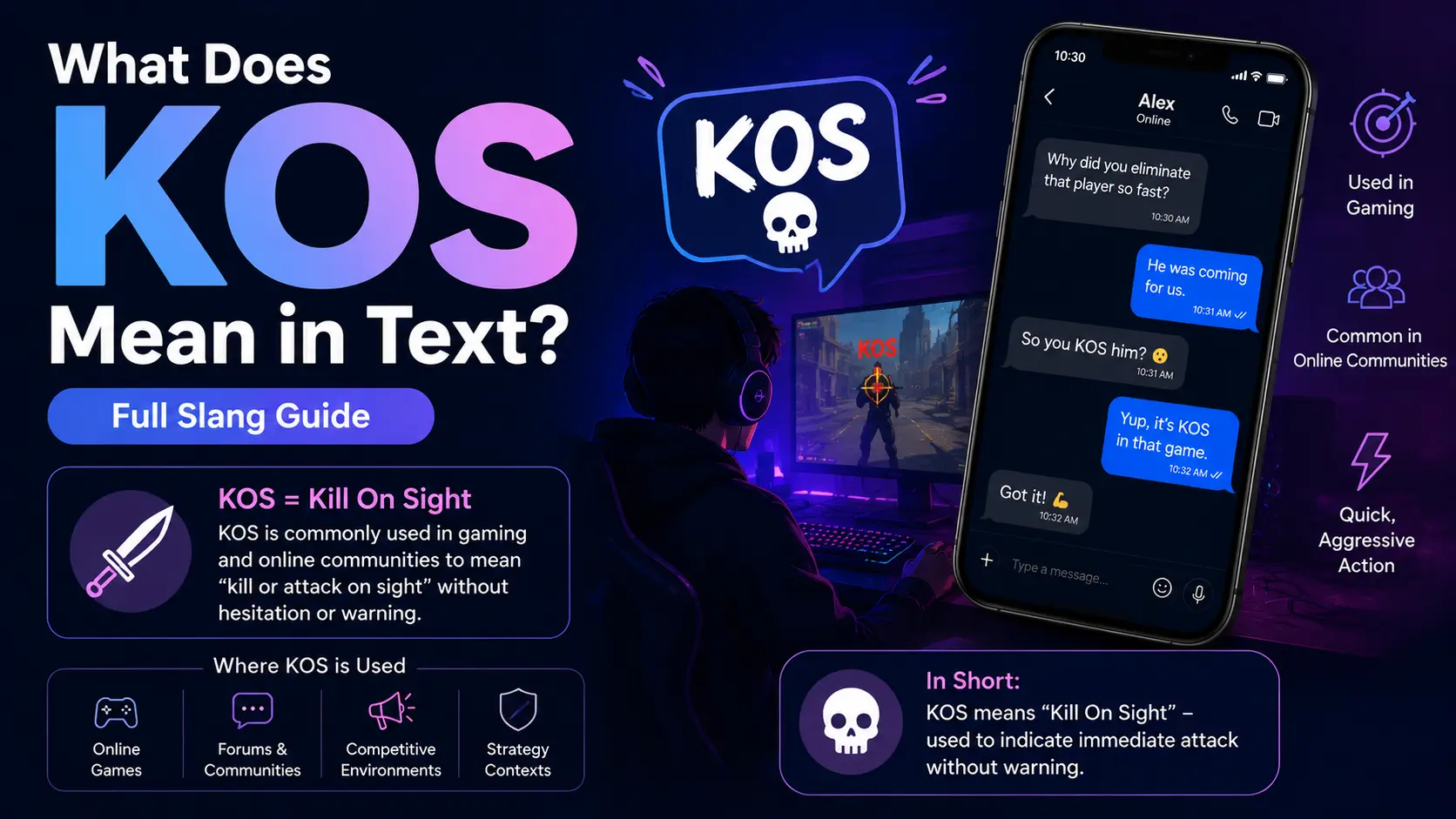
If you’ve seen “KOS” in a text message, TikTok comment, gaming chat, or Instagram DM, you’re probably wondering what it actually means. Like many internet abbreviations, KOS can carry different meanings depending on the context, tone, and platform where it’s used.
Sometimes it sounds aggressive. Other times it feels playful or dramatic. That confusion is exactly why so many people search for the phrase “what does KOS mean in text.”
In modern digital communication, slang evolves fast. A single acronym can shift meaning between gaming communities, friendships, memes, and online culture. Understanding these small expressions helps people avoid misunderstandings and communicate more naturally online.
This guide breaks down the real meaning of KOS, where it came from, how people use it today, and how you should respond when someone sends it to you.
KOS Meaning in Text – Quick Definition
“KOS” usually stands for “Kill On Sight.”
It means someone should be attacked, blocked, ignored, or targeted immediately upon seeing them. The phrase originally came from gaming culture but later spread into texting and internet slang.
Simple Meaning
- “KOS” = immediate hostility or rejection
- Often used jokingly between friends
- Common in gaming, memes, and social media
Quick Examples
“Nah, he’s KOS after what he said.”
“Anyone who spoils the show is KOS.”
“Bro stole my fries. He’s officially KOS.”
In many conversations, people are not being literally violent. Instead, they use KOS dramatically to express annoyance, betrayal, frustration, or playful anger.
Origin & Background of KOS
The phrase “Kill On Sight” existed long before texting culture. It originally appeared in military and combat terminology where it described an enemy considered dangerous enough to eliminate immediately.
Later, online gaming communities adopted the term.
Massively multiplayer games and survival games helped popularize KOS because players often had to decide quickly whether another player was friendly or hostile.
Games like:
- Survival RPGs
- Open-world combat games
- PvP multiplayer games
made “KOS” part of everyday gamer vocabulary.
Over time, social media transformed the expression. Instead of meaning actual combat, it became exaggerated internet slang.
People began saying things like:
- “Anyone who eats pineapple pizza is KOS.”
- “If you text your ex at 2 AM, you’re KOS.”
- “Spoilers are instant KOS.”
The meaning evolved from literal danger to emotional exaggeration.
TikTok, Discord, Reddit, and meme culture accelerated this shift. Gen Z especially enjoys dramatic humor, and KOS fits perfectly into that style of communication.
Real-Life Conversations Using KOS
WhatsApp Conversation
Person A:
Did you seriously post my bad photo?
Person B:
Relax 😭
Person A:
Nope. You’re KOS now.
Instagram DM
Person A:
You watched the final episode without me??
Person B:
I couldn’t wait 😭
Person A:
That’s friendship betrayal. Absolute KOS behavior.
TikTok Comments
Person A:
People who skip intros are weird.
Person B:
Okay but people who clap when the plane lands are KOS.
Text Message
Person A:
He left me on read for three days.
Person B:
Honestly? KOS.
These examples show how emotionally expressive modern slang has become. Most people use KOS playfully, not literally.
Emotional & Psychological Meaning Behind KOS
KOS is emotionally charged slang.
People use it when they want to exaggerate feelings quickly without writing a long explanation. It communicates:
- annoyance
- betrayal
- mock anger
- frustration
- sarcasm
- emotional intensity
In digital culture, people often prefer dramatic shorthand because it feels funny, relatable, and emotionally expressive.
Instead of saying:
“I’m upset with you and temporarily annoyed,”
someone simply says:
“You’re KOS.”
That short phrase carries emotion instantly.
It also reflects how internet culture rewards humor mixed with exaggeration. Online communication often turns ordinary situations into “dramatic events” for entertainment.
A Realistic Scenario
Imagine your best friend watches your favorite series finale without you after promising to wait.
You’re not genuinely furious, but you feel disappointed. Instead of starting an argument, you jokingly text:
“You’re officially KOS.”
That message softens tension while still expressing emotion.
This balance between humor and honesty is one reason slang like KOS became so popular.
Usage in Different Contexts
Social Media
On TikTok, X, Instagram, and Reddit, KOS is usually sarcastic or comedic.
Examples:
- “People who chew loudly are KOS.”
- “Anyone spoiling this movie is KOS.”
The tone is often exaggerated for humor.
Friends & Relationships
Among friends, KOS can mean:
- temporary annoyance
- playful anger
- teasing rejection
Couples may also use it jokingly after small disagreements.
Example:
“You forgot my coffee order. KOS.”
Gaming Communities
Gaming is where KOS remains closest to its original meaning.
In multiplayer games, “KOS” can literally mean:
- attack immediately
- don’t trust the player
- hostile target
Example:
“Clan members marked them KOS.”
Work or Professional Settings
KOS is usually inappropriate in professional communication.
Even jokingly, the phrase may sound aggressive or immature in workplace chats or emails.
Avoid using it with:
- managers
- clients
- coworkers you don’t know well
When NOT to Use KOS
Although many people use KOS humorously, there are situations where it can create problems.
Serious Conversations
Avoid using KOS during emotional conflicts or sensitive discussions.
Someone may misunderstand your intention.
Professional Environments
In workplace communication, phrases involving violence can appear unprofessional or alarming.
Cultural Sensitivity
Some cultures interpret aggressive slang more literally than others.
What sounds playful in one community may sound threatening elsewhere.
With People Who Don’t Understand Internet Slang
Older adults or people unfamiliar with gaming culture may find the term confusing or offensive.
Common Misunderstandings About KOS
People Think It Always Means Violence
Most modern uses are exaggerated humor, not literal threats.
Tone Gets Lost in Text
Without emojis or context, KOS may sound harsher than intended.
Compare:
- “You’re KOS 😂”
- “You’re KOS.”
The second version feels much more serious.
Gaming Meaning vs Social Meaning
Gamers may interpret KOS literally while social media users often treat it as a joke.
Some Assume It Means “Knockout Status”
A few people confuse KOS with unrelated abbreviations. Context matters heavily.
Comparison Table
| Expression | Meaning | Tone | Common Usage |
|---|---|---|---|
| KOS | Kill On Sight | Aggressive or playful | Gaming, memes, texting |
| Blocked | Ignored or removed | Serious | Social media |
| Cancelled | Social rejection | Dramatic | Internet culture |
| Dead to me | Emotional exaggeration | Humorous | Friend groups |
| Avoid ASAP | Stay away quickly | Neutral | General texting |
| Friendly | Safe/trusting | Positive | Gaming/social |
Key Insight
KOS stands out because it blends internet humor with emotional intensity. It feels dramatic without always being genuinely hostile, which is why younger online communities use it so often.
Variations & Related Types of KOS
1. Gaming KOS
Literal hostile targeting inside multiplayer games.
2. Meme KOS
Used jokingly in funny internet posts.
3. Friendship KOS
Playful annoyance between friends.
4. Relationship KOS
Used after teasing betrayals or arguments.
5. Temporary KOS
Short-term irritation that fades quickly.
6. Social Media KOS
Calling out behavior online dramatically.
7. Clan KOS
Gaming groups marking enemies as hostile.
8. Fake KOS
Clearly exaggerated for comedy.
9. Emotional KOS
Expressing hurt feelings through humor.
10. Community KOS
Online groups collectively rejecting certain behavior.
How to Respond When Someone Uses KOS
Your reply depends on tone and relationship.
Casual Replies
- “Fair enough 😂”
- “I deserve that.”
- “I’ll recover somehow.”
Funny Replies
- “Please spare me.”
- “I come in peace.”
- “Not the KOS list 😭”
Mature Replies
- “Okay, I understand why you’re upset.”
- “That was my mistake.”
Respectful Replies
- “Sorry if I annoyed you.”
- “Didn’t mean any disrespect.”
If you are unsure whether the person is joking, respond calmly first.
Regional & Cultural Usage
Western Culture
In Western internet culture, KOS is heavily tied to gaming, sarcasm, and meme humor.
Younger users often treat it casually.
Asian Culture
In some Asian online communities, gaming-based meanings remain stronger than meme meanings.
The phrase may sound more literal depending on context.
Middle Eastern Culture
Usage exists mostly among younger English-speaking internet users and gamers.
Older generations may not recognize it.
Global Internet Usage
KOS spread globally through:
- gaming platforms
- TikTok trends
- Discord servers
- streaming communities
Today, many people know the phrase even if they never played games.
Gen Z vs Millennials
Gen Z:
Uses KOS more ironically and dramatically.
Millennials:
More likely to connect it with gaming culture first.
Younger users also combine KOS with emojis and meme humor more frequently.
Is KOS Safe for Kids?
KOS is not inherently dangerous, but parents should understand its context.
The phrase contains violent wording, even when used jokingly.
For most teens, it functions as exaggerated slang rather than a real threat. Still, context matters.
If a child uses KOS repeatedly in aggressive or bullying situations, adults should pay attention to tone and intent.
In casual gaming or meme conversations, it is usually harmless internet humor.
Frequently Asked Questions
What does KOS stand for in texting?
KOS usually means “Kill On Sight.” It expresses hostility, annoyance, or playful rejection depending on context.
Is KOS serious or a joke?
Most social media uses are jokes or exaggerations. In gaming, it can be more literal.
Where did KOS come from?
The term originated from military language and later became popular in online gaming communities.
Can KOS be offensive?
Yes. Some people may interpret it as aggressive, especially without humor or emojis.
Do gamers use KOS differently?
Yes. In games, KOS often means attacking another player immediately.
Is KOS popular on TikTok?
Yes. TikTok users often use KOS in memes, jokes, and dramatic comments.
Should I use KOS at work?
Usually no. It may sound too aggressive or unprofessional in workplace communication.
Conclusion
Understanding what KOS means in text helps you navigate modern internet conversations more confidently.
At its core, KOS means “Kill On Sight,” but today’s online culture has transformed it into something broader. It can signal annoyance, teasing, emotional exaggeration, or playful internet drama.
The key is context.
Among friends, it often feels humorous and harmless. In gaming spaces, it may carry a more literal meaning. In professional settings, it’s usually better avoided.
Digital slang keeps evolving because people want fast, emotionally expressive communication. KOS is one example of how internet culture turns strong emotions into short, memorable phrases.
Once you understand the tone behind it, the phrase becomes much easier to recognize and respond to naturally.