
In today’s fast-moving digital world, text slang changes constantly. One abbreviation can mean something playful in one chat and something emotional in another. That’s exactly why many people search for “what does LFY mean in text.”
You may have seen it in a TikTok comment, a Snapchat message, a gaming chat, or even during a late-night conversation with friends. At first glance, “LFY” looks confusing because it is not as universally recognized as slang terms like “LOL” or “BRB.”
The truth is that LFY can carry different meanings depending on context, tone, and the people using it. That uncertainty is what makes people curious about it.
This guide breaks down the meaning of LFY in simple language, explains where it came from, how people actually use it, and what emotions it often expresses online.
LFY Meaning in Text – Quick Answer
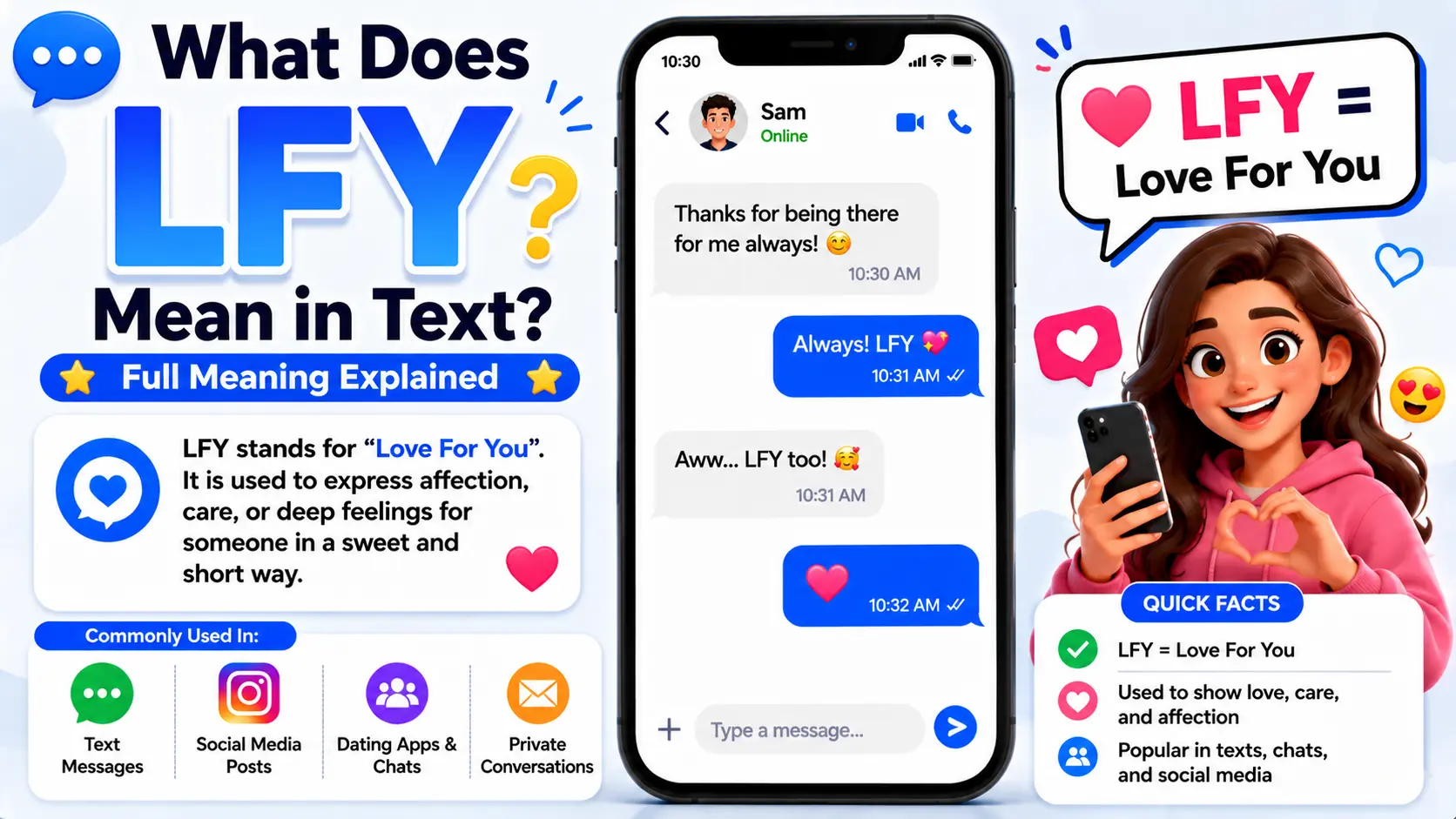
In texting and online slang, LFY most commonly means “Live For You” or “Living For You.”
It is usually used to express:
- Deep admiration
- Emotional attachment
- Support or loyalty
- Intense excitement about someone
People often use it in romantic chats, fan culture, friendships, or emotional social media comments.
Simple Examples
“Your new photos? LFY 😭”
“Honestly, I’m LFY right now.”
“Bestie, you know I LFY forever.”
In many conversations, LFY carries an emotional or dramatic tone rather than a literal meaning.
Origin & Background of LFY
Unlike older internet abbreviations that came from early chatrooms, LFY grew more organically through modern social platforms.
The phrase became more visible through:
- TikTok fandom culture
- Instagram edits and captions
- Emotional stan communities
- Group chats among Gen Z users
Many slang terms today spread through emotion rather than formal definitions. LFY is a perfect example of that trend.
Years ago, internet slang focused mostly on saving time while typing. Now, slang often exists to express mood, identity, humor, or emotional intensity.
That shift explains why terms like LFY feel more personal.
Social Media Influence
TikTok especially helped popularize emotional shorthand phrases. Users wanted quick ways to express:
- obsession
- admiration
- emotional attachment
- dramatic reactions
Instead of typing long emotional responses, someone might simply comment:
“LFY so bad.”
That tiny phrase can communicate excitement, affection, and emotional energy all at once.
How the Meaning Evolved
At first, LFY was used mostly inside smaller online communities and fandom spaces.
Over time, people started adapting it casually in:
- friendship conversations
- relationship chats
- reaction comments
- meme culture
Today, LFY does not always have one strict definition. Context matters heavily.
Real-Life Conversations Using LFY
Below are realistic examples showing how people naturally use LFY in daily communication.
WhatsApp Conversation
Person A:
Did you see Sarah’s graduation pictures?
Person B:
YES 😭 LFY honestly. She looks amazing.
Instagram DM
Person A:
You always hype me up.
Person B:
Because I LFY bestie 💖
TikTok Comments
Person A:
This outfit is outrageous.
Person B:
LFY immediately.
Text Message
Person A:
I got the job!
Person B:
STOPPPP. LFY right now. Proud of you.
These examples show that LFY usually carries emotional warmth, admiration, or energetic support.
Emotional & Psychological Meaning of LFY
One reason slang like LFY becomes popular is because modern communication is emotional but fast.
People want to express feelings quickly without writing long paragraphs.
LFY often communicates:
- affection
- admiration
- emotional excitement
- loyalty
- connection
- emotional investment
In many cases, it creates a sense of closeness between people.
Why People Use It
Digital communication can sometimes feel emotionally flat. Abbreviations like LFY add personality and emotional texture.
For example, compare these two replies:
- “That’s nice.”
- “LFY 😭”
The second response feels warmer, more energetic, and emotionally expressive.
What It Reveals About Modern Communication
Modern internet culture values emotional shorthand.
People today communicate through:
- abbreviations
- emojis
- reaction phrases
- inside jokes
- layered meanings
LFY reflects how online language has become more emotional and identity-driven.
A Realistic Personal Scenario
Imagine posting something you worked hard on, maybe art, music, or a personal achievement.
Someone comments:
“LFY so much rn.”
Even though it’s short, it feels supportive and emotionally validating.
That emotional impact is why these small phrases spread so quickly online.
Usage in Different Contexts
LFY can sound different depending on where and how it is used.
Social Media
On TikTok, Instagram, and X, LFY is often dramatic and playful.
Examples include:
- reacting to attractive photos
- praising creators
- fangirl or fanboy reactions
- emotional edits
It usually sounds enthusiastic rather than serious.
Friends & Relationships
Among friends, LFY can express emotional closeness.
Example:
“You brought me food? LFY forever.”
In relationships, it may sound affectionate or romantic.
Example:
“I swear I LFY.”
Tone matters heavily here.
Work or Professional Settings
LFY is generally inappropriate in professional communication.
Using slang like this in emails or workplace chats may:
- confuse people
- sound overly emotional
- appear unprofessional
Professional communication usually requires clearer language.
Casual vs Serious Tone
Sometimes LFY is playful.
Sometimes it is emotionally sincere.
That depends on:
- emojis
- relationship closeness
- context
- tone of the conversation
For example:
“LFY 😂”
Feels joking and lighthearted.
Meanwhile:
“I genuinely LFY.”
Feels much more emotional and serious.
When NOT to Use LFY
Although LFY can feel fun and expressive, there are situations where it may not fit well.
Professional Communication
Avoid using LFY in:
- job emails
- formal presentations
- workplace chats
- academic writing
Many people will not understand it.
Sensitive Conversations
If someone is discussing grief, trauma, or serious emotional struggles, slang can sometimes feel dismissive.
Clear communication works better in emotionally delicate moments.
Around Older Generations
Some Millennials may understand LFY, but many older adults may not recognize it at all.
That confusion can interrupt communication.
When Tone Might Be Misread
Text lacks facial expressions and vocal tone.
LFY can sometimes sound:
- sarcastic
- overly intense
- flirtatious
- dramatic
If clarity matters, avoid ambiguous slang.
Common Misunderstandings About LFY
Many people misunderstand LFY because internet slang changes quickly.
Mistaking It for a Typo
Some users assume LFY is simply a typing mistake.
That happens because it is less mainstream than abbreviations like OMG or LOL.
Assuming One Universal Meaning
LFY does not always mean the exact same thing.
Depending on the community, it may imply:
- admiration
- emotional obsession
- support
- affection
- excitement
Context always matters.
Tone Confusion
One person may use LFY jokingly.
Another may use it sincerely.
Without context, emotional interpretation becomes tricky.
Literal vs Figurative Meaning
Most people do not literally mean “I live for you.”
Instead, they use LFY figuratively to exaggerate emotional enthusiasm.
Internet culture often uses exaggerated language for humor and emotional expression.
LFY Comparison Table
| Expression | Meaning | Tone | Similarity to LFY |
|---|---|---|---|
| LFY | Live For You | Emotional | Original phrase |
| ILY | I Love You | Romantic/Sincere | More direct |
| Obsessed | Strong admiration | Dramatic | Similar emotional energy |
| Stan | Dedicated fan support | Internet slang | Similar fandom use |
| Simp | Excessive admiration | Often teasing | More negative/joking |
| IDC | I Don’t Care | Emotionally distant | Opposite vibe |
| Mood | Relatable feeling | Casual | Less emotionally intense |
| Slay | Praise or approval | Confident/fun | Similar supportive tone |
Key Insight
LFY stands out because it mixes emotional intensity with internet-style exaggeration. It often sounds affectionate without being as serious as saying “I love you.”
Variations & Related Forms of LFY
Here are common variations or similar expressions people use online.
1. LFYM
Meaning: Live For You More
Used jokingly to exaggerate emotional attachment.
2. ILFY
Meaning: I Live For You
More direct and emotional.
3. LFYSM
Meaning: Live For You So Much
Adds extra emotional intensity.
4. ILY
Meaning: I Love You
Classic emotional abbreviation.
5. Stan
Meaning: Hardcore fan support
Popular in fandom culture.
6. Obsessed
Meaning: Strong admiration
Common reaction slang online.
7. Ate
Meaning: Did something extremely well
Often used as praise.
8. Slay
Meaning: Impressing or succeeding confidently
Popular among Gen Z users.
9. Iconic
Meaning: Memorable or impressive
Frequently used in reaction culture.
10. Forever Mood
Meaning: Deeply relatable feeling
Used emotionally and humorously.
How to Respond When Someone Uses LFY
Your reply depends on tone and relationship.
Casual Replies
- “Haha stoppp 😭”
- “You’re too sweet.”
- “Appreciate you.”
Funny Replies
- “As you should 😌”
- “I’m emotionally famous now.”
- “LFY too bestie.”
Mature Replies
- “That genuinely means a lot.”
- “Thank you for the support.”
- “I appreciate your kindness.”
Respectful Replies
- “That’s really thoughtful.”
- “Glad you feel that way.”
- “Sending love back.”
Regional & Cultural Usage
Internet slang changes depending on culture and generation.
Western Culture
In the United States and parts of Europe, LFY often appears in:
- fandom culture
- celebrity edits
- emotional humor
- friendship conversations
It usually sounds expressive and dramatic.
Asian Culture
In many Asian online communities, emotional slang is often mixed with emojis and fandom language.
LFY may appear among:
- K-pop fans
- anime communities
- gaming groups
Tone tends to feel playful and emotionally expressive.
Middle Eastern Culture
Usage is less widespread but still appears among younger social media users who engage heavily with global internet trends.
People may mix LFY with local slang and bilingual texting styles.
Global Internet Usage
Online language spreads faster than ever.
TikTok, Instagram, and gaming communities help slang travel globally within weeks.
That’s why even niche abbreviations can suddenly appear everywhere.
Gen Z vs Millennials
Gen Z
- Uses emotional shorthand heavily
- Prefers expressive slang
- Communicates through layered internet humor
Millennials
- More familiar with older abbreviations like LOL or BRB
- May interpret LFY differently
- Sometimes see newer slang as overly dramatic
Generational communication styles strongly influence how slang is understood.
Is LFY Safe for Kids?
Generally, LFY is considered harmless slang.
Most uses involve:
- admiration
- emotional excitement
- supportive reactions
However, parents should still pay attention to overall online context because slang meanings can shift across communities and platforms.
Teaching kids healthy digital communication matters more than focusing on one abbreviation alone.
Frequently Asked Questions
What does LFY stand for in texting?
LFY usually means “Live For You” or “Living For You” in emotional or supportive online conversations.
Is LFY romantic?
Sometimes. It can sound romantic, affectionate, or simply supportive depending on context and tone.
Is LFY a Gen Z slang term?
Yes. LFY is mostly associated with Gen Z internet culture and social media communication.
Can LFY be used sarcastically?
Absolutely. Many people use LFY jokingly or dramatically for humor online.
Is LFY popular on TikTok?
Yes. TikTok helped spread many emotional slang phrases, including LFY-style expressions.
Does LFY always mean love?
No. It often expresses admiration or emotional excitement rather than literal love.
Should I use LFY professionally?
Usually no. It is best kept for casual conversations and social media interactions.
Conclusion
Understanding what LFY means in text is really about understanding modern digital emotion.
Today’s online language is not just about shortening words. It is about expressing feelings quickly, creatively, and socially.
LFY represents admiration, emotional excitement, support, and internet-style exaggeration all at once. Depending on context, it can sound playful, affectionate, dramatic, or deeply supportive.
The key is reading the tone behind the message.
Once you understand that emotional layer, slang like LFY becomes much easier to recognize and use confidently in conversations.