
When you first see “TBY” in a message, it can feel confusing. Is it a typo? A secret code? A new internet trend?
You are not alone. Thousands of people search for “what does TBY mean in text” because slang changes fast, especially on social media and messaging apps. One small abbreviation can completely change the tone of a conversation.
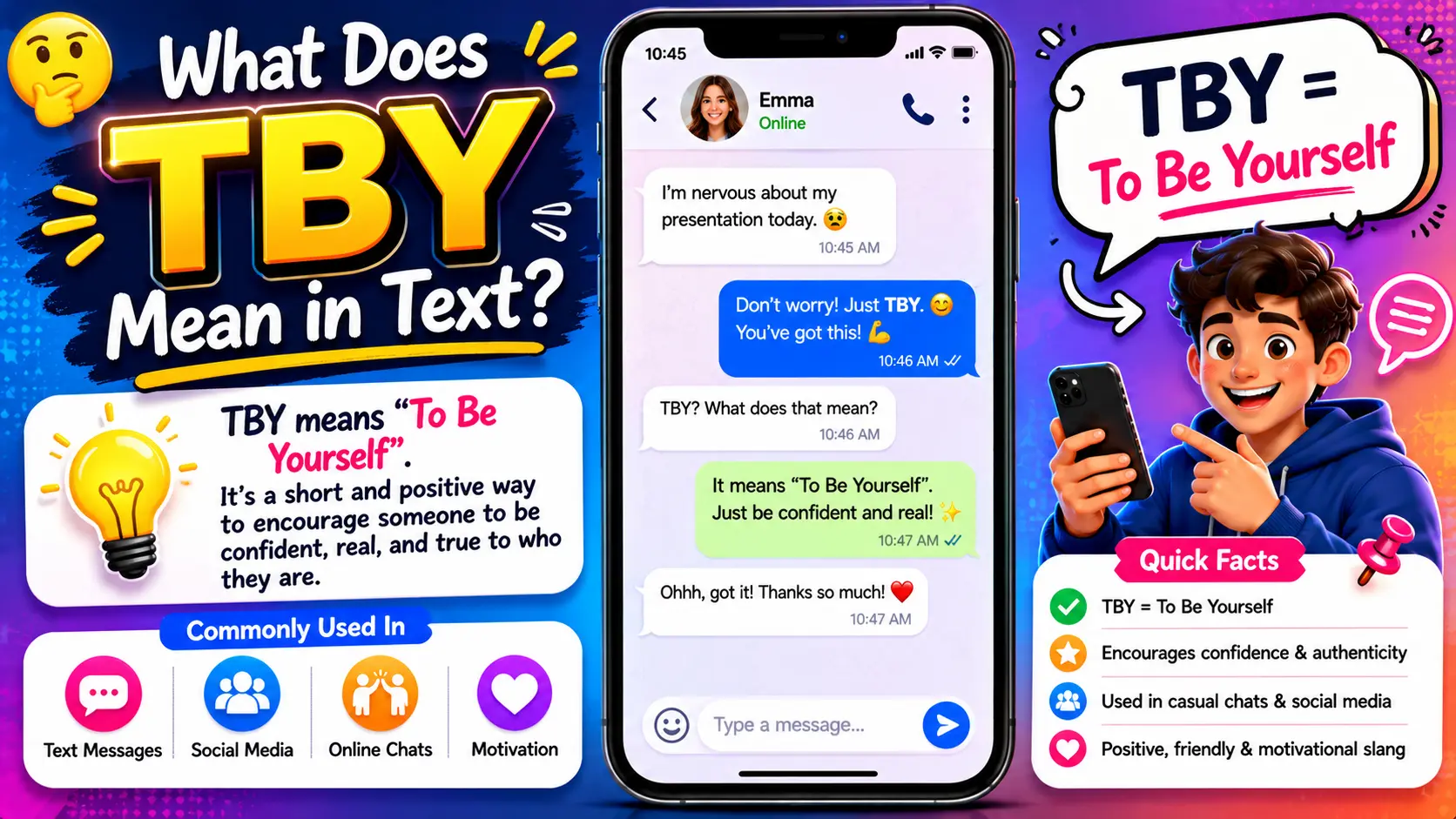
In most texting situations, TBY usually means “Think Bout You” or “Thinking About You.” It is commonly used in casual chats, emotional conversations, romantic texts, and social media captions.
The phrase may look simple, but its emotional meaning depends heavily on context. Sometimes it sounds sweet and caring. Other times it can feel nostalgic, flirtatious, or even emotionally distant.
This guide explains exactly what TBY means, where it came from, how people use it online, and when you should avoid using it.
TBY Meaning in Text – Quick Meaning
TBY = “Think Bout You” or “Thinking About You.”
People use it as a shortened emotional expression in texts, DMs, Snapchat, TikTok comments, and online conversations.
Common meanings of TBY:
- Thinking about someone emotionally
- Missing someone
- Showing affection casually
- Hinting romantic interest
- Sending a soft emotional check-in
Quick Examples
“Saw your post today… tby ❤️”
“Late night vibes got me tby again.”
“Not gonna lie, tby after our conversation.”
In most cases, TBY carries an emotional tone rather than a literal one.
Origin & Background of TBY
Like many internet abbreviations, TBY grew from the culture of fast digital communication.
As texting became more common, people started shortening phrases to type faster and sound more casual. “Thinking about you” eventually became “TBY” in certain online communities, especially among younger users.
The slang became more noticeable through:
- Snapchat streak culture
- Instagram stories
- TikTok captions
- Relationship memes
- Emotional aesthetic posts
Short emotional abbreviations became popular because they feel less intense than full emotional sentences.
For example:
- “I’m thinking about you” can sound serious.
- “tby” feels softer, lighter, and more modern.
That emotional subtlety is one reason Gen Z users especially enjoy shorthand expressions like this.
Over time, TBY also became associated with:
- late-night texting
- emotional vulnerability
- nostalgic posts
- relationship edits
- breakup culture online
In many ways, it reflects how modern communication balances emotion with emotional protection.
Real-Life Conversations Using TBY
WhatsApp Conversation
Person A:
You disappeared all day 😒
Person B:
Busy at work honestly. But tby the whole time.
Person A:
Okay fine, you’re forgiven 😂
Instagram DM
Person A:
That song you posted hit hard.
Person B:
Yeah… kinda tby lately.
Person A:
That’s actually sweet.
TikTok Comments
Person A:
“This playlist reminds me of someone.”
Person B:
real. tby every night lately 😭
Text Message Conversation
Person A:
I miss when we used to talk every day.
Person B:
Same honestly. Been tby a lot recently.
These examples show how emotionally flexible TBY can be. It may express romance, nostalgia, affection, or simple emotional reflection.
Emotional & Psychological Meaning of TBY
TBY is more than internet slang. It reflects how people communicate emotions in the digital age.
Many users prefer short emotional phrases because they feel safer than direct emotional statements.
Typing:
- “thinking about you”
can feel vulnerable.
But:
- “tby”
creates emotional distance while still expressing care.
Psychologically, this helps people:
- express feelings casually
- avoid rejection
- test emotional interest
- reconnect softly
- communicate affection without pressure
It is especially common among younger users who grew up with online messaging culture.
A Realistic Scenario
Imagine someone scrolling through old photos late at night. They do not want to send a dramatic emotional paragraph, but they also want the other person to know they crossed their mind.
So they send:
“idk why but tby tonight.”
That single phrase carries emotion, nostalgia, curiosity, and vulnerability all at once.
That is why slang like TBY feels emotionally powerful despite being only three letters.
Usage in Different Contexts
Social Media
On TikTok, Instagram, and Snapchat, TBY often appears in:
- captions
- emotional edits
- reposts
- story replies
- music-related content
Example:
“Rainy nights got me tby.”
It creates a relatable emotional atmosphere.
Friends & Relationships
Among friends, TBY may simply mean:
- “you crossed my mind”
- “I miss you”
- “I care about you”
In romantic conversations, it often sounds more intimate.
Example:
“Can’t sleep. Tby.”
That message usually carries emotional warmth or attraction.
Work or Professional Settings
TBY is generally not appropriate for professional communication.
Using slang abbreviations in work emails or business chats can:
- create confusion
- appear unprofessional
- sound overly personal
Instead, use complete sentences in professional spaces.
Casual vs Serious Tone
TBY usually sounds casual, but context changes everything.
Casual:
“Randomly tby after hearing that song.”
Serious:
“Been tby ever since we stopped talking.”
Tone depends on:
- relationship history
- emotional context
- timing
- emojis
- surrounding messages
When NOT to Use TBY
Even though TBY is popular, there are situations where it may feel inappropriate or confusing.
Professional Communication
Avoid using it in:
- work chats
- client messages
- academic emails
- formal discussions
Many people may not understand the abbreviation.
During Serious Conflict
If someone is emotionally hurt, vague slang can seem emotionally avoidant.
Instead of:
“tby”
It may be better to communicate clearly:
“I’ve been thinking about our conversation.”
Cultural or Generational Differences
Older users may misinterpret TBY or think it is random typing.
Not everyone follows internet slang trends.
Emotionally Sensitive Situations
Sometimes abbreviations can make emotional conversations feel less sincere.
For example:
- apologies
- grief
- relationship endings
Full sentences usually communicate better in emotionally important moments.
Common Misunderstandings About TBY
People Think It Has One Fixed Meaning
TBY changes depending on context.
It may mean:
- affection
- nostalgia
- flirting
- emotional reflection
Some People Mistake It for a Typo
Because it is less common than abbreviations like LOL or BRB, some users assume TBY was typed accidentally.
Tone Gets Misread Easily
A message like:
“tby.”
can sound:
- romantic
- sad
- passive-aggressive
- caring
depending on punctuation and relationship history.
Literal vs Emotional Meaning
Literally, it means “thinking about you.”
Emotionally, it often means:
- “I miss you”
- “I still care”
- “you stayed on my mind”
That emotional layer matters more than the literal wording.
Comparison Table
| Expression | Meaning | Emotional Tone | Common Usage |
|---|---|---|---|
| TBY | Thinking about you | Soft, emotional | Texting, DMs |
| ILY | I love you | Strong affection | Relationships |
| WYD | What are you doing? | Casual | Daily chats |
| IMY | I miss you | Emotional | Friends/romance |
| HMU | Hit me up | Social/informal | Invitations |
| IDC | I don’t care | Dismissive | Casual conflict |
| TBH | To be honest | Honest/opinionated | Social media |
| Ghosting | Ignoring someone | Negative | Dating culture |
Key Insight
TBY stands out because it combines emotional warmth with emotional subtlety. It says a lot without sounding overly dramatic.
Variations and Similar Expressions
1. IMY
Meaning: I miss you
A more direct emotional expression.
2. LY
Meaning: Love you
Short, affectionate, and casual.
3. Thinking of You
A full version that feels warmer and more sincere.
4. Missin U
More playful and informal texting slang.
5. On My Mind
Suggests emotional attachment or deep thought.
6. HBU
Meaning: How about you?
Not emotional, but often confused with TBY.
7. WYLL
Meaning: What you look like?
Popular on Snapchat and TikTok.
8. IHY
Meaning: I hate you
Usually playful among close friends.
9. NGL
Meaning: Not gonna lie
Often paired with emotional slang.
Example:
“ngl tby lately.”
10. ICYMI
Meaning: In case you missed it
Used more for information sharing online.
How to Respond When Someone Uses TBY
Your reply depends on the emotional tone of the conversation.
Casual Replies
- “Aww appreciate you.”
- “You crossed my mind too.”
- “That’s sweet honestly.”
Funny Replies
- “Rent free in your mind huh? 😂”
- “Finally remembered me?”
- “About time 😎”
Mature Replies
- “I’ve been reflecting too.”
- “I appreciate you telling me that.”
- “That means more than you know.”
Respectful Replies
- “Hope you’re doing well too.”
- “Sending positive energy your way.”
- “Glad we could reconnect.”
The best response is emotionally honest without overthinking the slang itself.
Regional & Cultural Usage
Western Culture
In Western online culture, TBY is commonly tied to:
- dating culture
- emotional vulnerability
- late-night texting
- relationship nostalgia
It is often romantic or emotionally expressive.
Asian Culture
In many Asian online communities, emotional expression is sometimes more indirect.
Abbreviations like TBY fit naturally because they communicate emotion softly rather than aggressively.
Middle Eastern Culture
Usage can vary depending on social norms and relationship boundaries.
In conservative environments, indirect emotional expressions may feel safer and more socially acceptable than openly romantic language.
Global Internet Usage
The internet blends cultures together, so slang spreads quickly across countries.
Even users who are not native English speakers often adopt abbreviations like:
- TBY
- IMY
- ILY
- TBH
because social media normalizes them globally.
Gen Z vs Millennials
Gen Z
- Uses slang more fluidly
- Prefers emotional shorthand
- Communicates through trends and aesthetics
Millennials
- More likely to type full phrases
- May use fewer abbreviations
- Often prefer clearer emotional communication
This generational difference explains why some people instantly understand TBY while others feel confused.
Is TBY Safe for Kids?
Generally, yes.
TBY is not considered dangerous or explicit slang. In most situations, it simply means “thinking about you.”
However, parents should still pay attention to:
- online context
- who children are messaging
- emotional tone
- digital boundaries
Like many internet abbreviations, meaning can shift depending on the conversation.
Open communication matters more than fearing the slang itself.
FAQs About TBY
What does TBY stand for in texting?
TBY usually stands for “Thinking Bout You” or “Thinking About You.”
Is TBY romantic?
Sometimes. It often carries emotional or affectionate energy, especially in personal conversations.
Is TBY used on TikTok?
Yes. TBY commonly appears in captions, comments, emotional edits, and relationship-related posts.
Can TBY mean friendship instead of romance?
Absolutely. Friends also use it to express care or emotional connection.
Is TBY formal slang?
No. It is informal internet slang mainly used in casual digital communication.
Why do people use TBY instead of full sentences?
Short slang feels quicker, softer, and emotionally safer in modern texting culture.
Should I use TBY at work?
Usually no. Professional communication works better with complete, clear sentences.
Conclusion
Understanding what TBY means in text is really about understanding modern digital emotions.
At its core, TBY means:
“I’ve been thinking about you.”
But emotionally, it can express:
- affection
- nostalgia
- curiosity
- longing
- emotional connection
That is why such a short phrase carries surprising emotional weight online.
Whether you see it in a TikTok comment, a late-night text, or an Instagram DM, context always matters. Tone, timing, and relationship history shape its meaning far more than the letters themselves.
Now when someone sends “tby,” you will understand not only the definition, but also the feeling behind it.