
In the fast-paced world of texting, social media, and online gaming, acronyms pop up everywhere. One that often leaves people scratching their heads is pwn. You may have seen it in a TikTok comment, a WhatsApp chat, or even a work meme. But what does it actually mean, why is it used, and when is it appropriate? This guide will break it all down with real-life examples, cultural insights, and practical advice.
By the end, you’ll not only understand pwn, but you’ll feel confident spotting it in conversations and responding naturally.
PWN – Quick Meaning
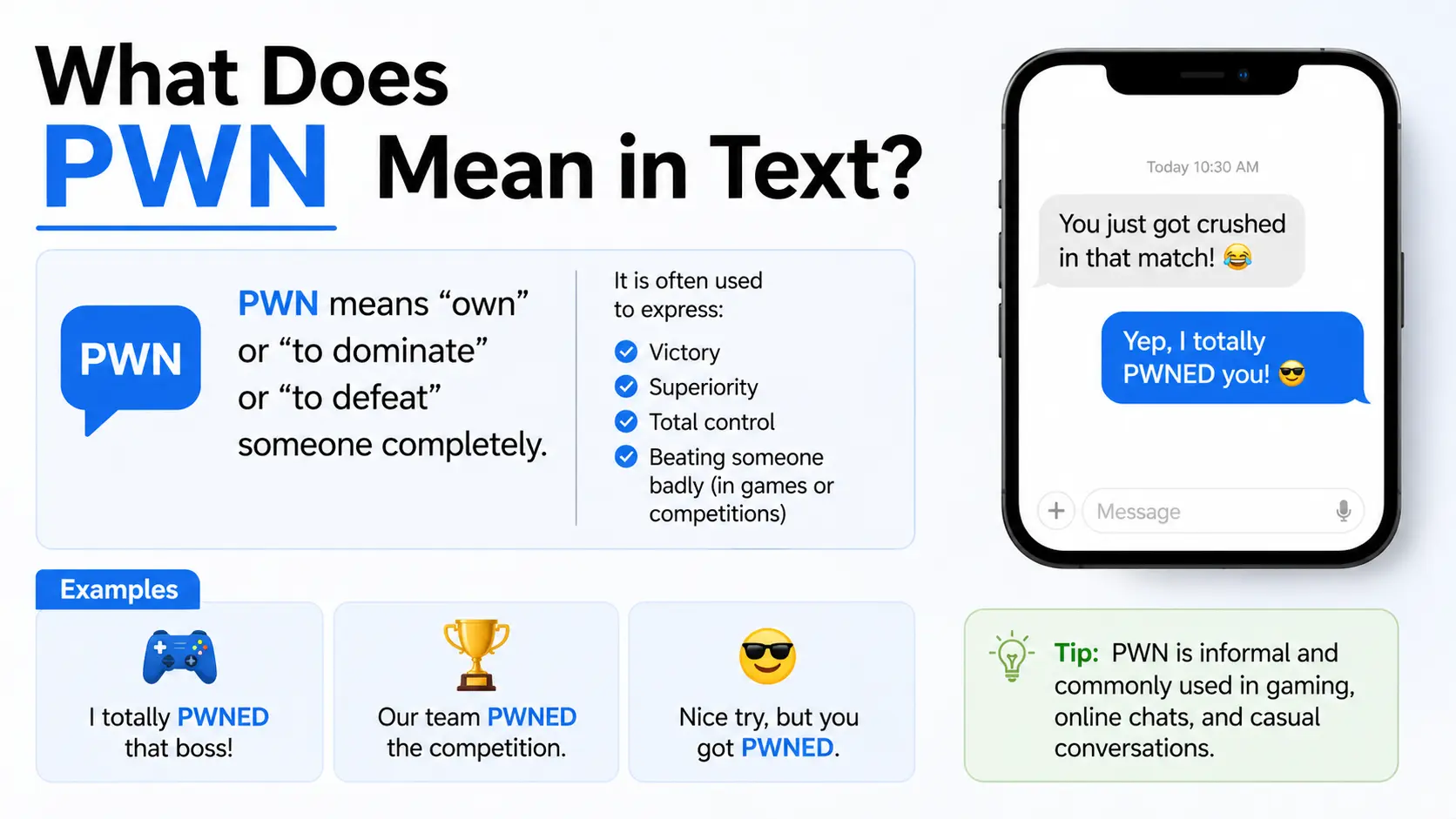
At its core, pwn is internet slang that originated in online gaming and hacker culture. It is a verb that conveys domination, winning, or humiliating someone in a competitive or playful way.
Key points:
- Pronounced like “pone”
- Means “to defeat” or “to outperform”
- Often playful but can be boastful
Examples in text:
- “I totally pwned him in that game last night”
- “She pwned the debate so badly everyone was speechless”
- “Pwned! Guess who finished the project first?”
It’s not just about winning; it’s about asserting skill or dominance in a lighthearted or teasing way.
Origin & Background
The term pwn has an interesting history. It emerged from online gaming communities in the early 2000s, particularly in first-person shooter games like Counter-Strike and World of Warcraft.
Originally, it was a typo of the word “own”, often appearing when players accidentally typed “pwned” instead of “owned.” Gamers found the typo amusing, and it quickly became a badge of pride. Saying someone “pwned” you implied they completely dominated you.
Over time, the term crossed into social media, memes, and casual texting. Its evolution reflects how online culture influences language, turning a simple typo into a widely recognized term.
Real-Life Conversations
Here are some realistic examples to see how pwn works in different platforms:
WhatsApp:
Person A: Did you finish the quiz?
Person B: Yup, and I totally pwned the hardest question.
Instagram DM:
Person A: That dance challenge looked tricky!
Person B: Ha! I pwned it in one take 😎
TikTok Comments:
User1: Whoa, that move was ridiculous!
User2: He literally pwned everyone in that video
Text Message:
Person A: How did the presentation go?
Person B: I pwned it! Boss loved it 😏
These examples show how versatile the term is, fitting playful, proud, and even humorous contexts.
Emotional & Psychological Meaning
Using pwn conveys more than winning; it communicates confidence, excitement, and a sense of achievement. It often expresses emotions that standard words like “win” cannot capture, especially among younger audiences or gaming communities.
Scenario: Imagine you’ve stayed up all night practicing a guitar solo. When you finally perform flawlessly in front of your friends, saying “I pwned it!” captures the pride and exhilaration far better than a simple “I did well.”
Psychologically, it reflects the desire for social recognition, playful competition, and the bonding that comes from shared online experiences.
Usage in Different Contexts
Social Media: Highlighting skill, talent, or a funny mishap
Friends & Relationships: Playful teasing or boasting among peers
Work/Professional Settings: Rare, but can appear in casual team chats or memes
Casual vs Serious Tone: Always lighthearted; serious or formal situations are not suitable
When NOT to Use It
While fun online, pwn can be inappropriate in:
- Formal business emails or presentations
- Serious disputes or conflicts
- Situations with older or unfamiliar audiences who may not understand slang
Misuse can create confusion, or worse, come across as arrogant or disrespectful.
Common Misunderstandings
- People often mispronounce it as “p-w-n” instead of “pone”
- Some think it’s aggressive when it’s usually playful
- New users may interpret it literally as a misspelling rather than slang
The context is everything. In most friendly or online spaces, pwned = playful domination, not personal insult.
Comparison Table
| Term | Meaning | Example | Tone | Opposite | Related Expressions |
|---|---|---|---|---|---|
| pwn | To dominate/playfully defeat | “I pwned that level” | Playful/confident | lose | owned, crushed, wrecked |
| owned | Similar, older gaming term | “He owned the leaderboard” | Confident | lose | pwned, dominated |
| wrecked | Stronger, more intense | “She wrecked the competition” | Boastful | fail | pwned, smashed |
| defeated | Neutral | “He defeated his rival” | Serious/formal | win | pwned, conquered |
Key Insight: While pwn is casual, playful, and digital-native, understanding context ensures it conveys confidence rather than offense.
Variations / Types
- pwned – Past tense; someone has been defeated
- pwning – Ongoing action; currently dominating
- pwner – The person doing the pwnage
- noob pwn – Defeating an inexperienced player
- total pwn – Complete domination
- pwnfest – A playful exaggeration for a series of wins
- leet pwn – Pwning in a skillful or elite way
- fail pwn – Winning due to someone else’s mistake
- pwnage – The act of pwn itself; victory highlighted
- epic pwn – Dramatic or legendary level of domination
How to Respond When Someone Uses It
Casual reply: “Haha nice, you really crushed it!”
Funny reply: “Wow, total pwn! Teach me your ways 😅”
Mature reply: “Congrats, that was impressive.”
Respectful reply: “You handled that so well, nicely done.”
Tailoring the response to tone and context ensures smooth communication.
Regional & Cultural Usage
Western culture: Strongly linked to gaming and playful banter
Asian culture: Popular among youth online, but not universal in older generations
Middle Eastern culture: Recognized among internet-savvy youth; less common offline
Global internet usage: Recognizable in gaming, memes, and TikTok trends
Generational differences: Gen Z uses it frequently; Millennials may remember it from early gaming, while older generations may be confused
Is It Safe for Kids?
Yes, pwn is generally safe for children because it is playful and non-offensive. Parents should note that context matters. Online chats among strangers can include more aggressive tones or teasing.
FAQs
1. Is pwn offensive?
No, it is usually playful. Tone and context are key.
2. How do you pronounce pwn?
It is pronounced “pone,” though many say “p-w-n” online.
3. Can it be used in school chats?
Yes, but best among friends in casual, lighthearted conversations.
4. Is it still relevant?
Yes, especially in gaming, memes, and social media.
5. Difference between pwn and owned?
Owned is older, pwn is playful and internet-native.
6. Can adults use it professionally?
Rarely. Only in casual or meme-friendly workplace chats.
7. Why do people like using pwn?
It conveys pride, humor, and playful dominance in a unique, digital way.
Conclusion
Understanding pwn opens a window into modern digital communication. It’s more than a word; it captures confidence, humor, and social bonding in a single punchy term. Using it thoughtfully lets you join in playful banter, connect with online communities, and express achievement creatively.
Next time someone says “You got pwned!”, you’ll know exactly what it means—and you might even smile knowing you’ve mastered the lingo.