
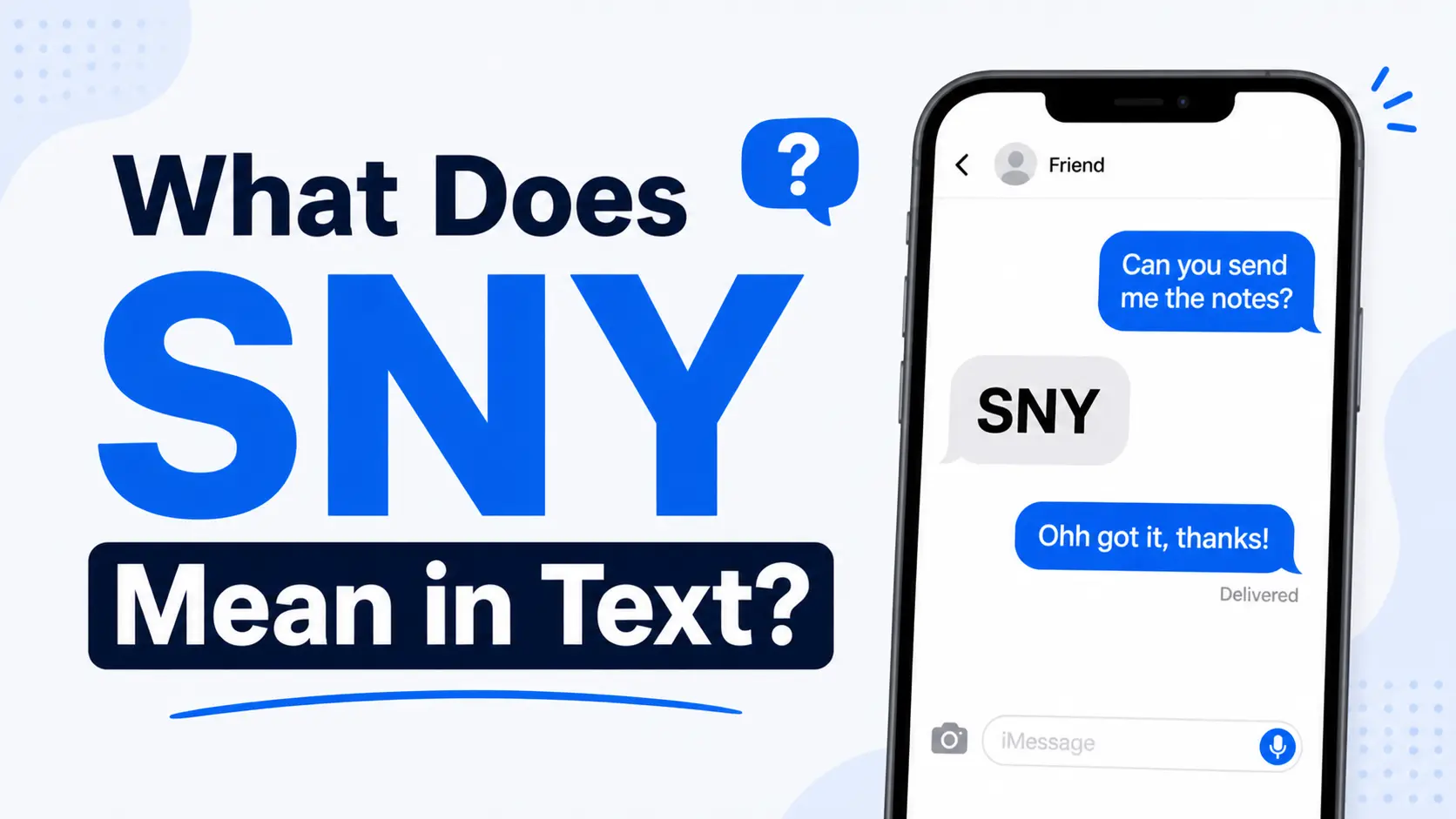
If you’ve ever received a message with “SNY” and paused for a second, you’re not alone.
At first glance, it looks like a random mix of letters. It doesn’t feel as obvious as popular slang like “LOL” or “BRB.” That’s exactly why people search for it. They want clarity without guessing the tone wrong.
“SNY” is one of those short forms that depends heavily on context. In one conversation, it might feel casual and harmless. In another, it could carry a slightly sharp or sarcastic edge.
This article clears that confusion. You’ll understand what “SNY” means, how people actually use it in real conversations, and when you should or should not use it yourself.
SNY – Quick Meaning
SNY usually stands for:
- “So Not You”
- Sometimes interpreted as “Sorry Not You” depending on context
- Occasionally used to express contrast or playful disagreement
Simple Examples
- “That outfit? SNY 😅”
- “You think I’d do that? SNY”
- “That’s SNY behavior, honestly”
In most cases, it’s a quick way of saying something doesn’t match someone’s personality or expectations.
Origin & Background
“SNY” does not have a single clear origin like some internet slang. Instead, it evolved naturally from texting culture where speed matters more than clarity.
As messaging apps grew, people started shortening phrases into initials. “So Not You” became “SNY” because it was quick to type and easy to recognize among close friends.
Social media platforms like TikTok and Instagram helped spread it further. Short comments, fast reactions, and inside jokes made abbreviations like this more popular.
Over time, its meaning expanded. It is no longer just about personality mismatch. It can also carry humor, sarcasm, or even light teasing.
This evolution is typical of modern digital language. Words are not fixed. They shift based on how people feel and interact online.
Real-Life Conversations
1. WhatsApp Chat
Person A: I’m thinking of going to a party tonight
Person B: You? Party? SNY 😂
Person A: Wow okay rude
2. Instagram DM
Person A: I just posted a gym selfie
Person B: That caption is SNY lol
Person A: What do you mean?
Person B: You’re not that serious type 😄
3. TikTok Comments
User 1: This trend is so me
User 2: SNY, you’d never do this 😭
4. Text Message
Person A: I might quit my job tomorrow
Person B: That’s SNY… are you okay?
These examples show something important. “SNY” is not always negative. It often sits somewhere between playful teasing and genuine surprise.
Emotional & Psychological Meaning
“SNY” is more than just an abbreviation. It carries emotional weight.
At its core, it expresses mismatch. Someone is reacting to behavior that feels unexpected or out of character.
What It Reveals
- A sense of familiarity with the other person
- An expectation about how someone “usually” behaves
- A subtle judgment, sometimes playful, sometimes serious
Why People Use It
People use “SNY” because it feels quick and expressive. It lets them react instantly without explaining everything.
A Real-Life Scenario
Imagine a friend who is always calm suddenly sends an angry message.
Your instinct might be to reply:
“That’s SNY… what happened?”
Here, you are not criticizing them. You are showing concern because their behavior feels unusual.
That emotional layer is what makes “SNY” powerful.
Usage in Different Contexts
Social Media
On platforms like Instagram or TikTok, “SNY” is often used casually.
- Light teasing
- Reaction to unexpected posts
- Commenting on trends
It usually carries a playful tone here.
Friends & Relationships
Among friends, it feels natural and informal.
- “That’s SNY, you hate spicy food”
- “SNY, you never wake up early”
In relationships, tone matters more. It can feel caring or slightly critical depending on how it’s said.
Work / Professional Settings
Avoid using “SNY” in professional communication.
It can sound unclear or even disrespectful. Most people outside casual circles may not understand it.
Casual vs Serious Tone
- Casual: playful, joking, friendly
- Serious: questioning behavior, expressing concern
The same word can feel completely different depending on context.
When NOT to Use It
There are moments where “SNY” can backfire.
In Formal Conversations
Emails, work chats, or professional messages are not the place for slang like this.
With People You Don’t Know Well
It can come across as judgmental if there is no established relationship.
During Sensitive Situations
If someone is upset or going through something serious, saying “SNY” might feel dismissive.
Cultural Sensitivity
In some cultures, direct or indirect judgment about behavior can feel uncomfortable or disrespectful.
Common Misunderstandings
1. Thinking It Always Means Insult
Not true. It is often playful.
2. Confusing the Tone
Without emojis or context, it can seem rude even if it was meant jokingly.
3. Taking It Literally
“SNY” is not always a strict statement. Sometimes it’s just a quick reaction.
4. Assuming Everyone Knows It
It is still relatively niche compared to common slang.
Comparison Table
| Expression | Meaning | Tone | When Used |
|---|---|---|---|
| SNY | So Not You | Playful / surprised | Unexpected behavior |
| LOL | Laughing Out Loud | Light / humorous | Funny situations |
| IDC | I Don’t Care | Dismissive | Lack of interest |
| SMH | Shaking My Head | Disapproval | Frustration |
| That’s you | Matches personality | Positive | Recognition |
Key Insight
“SNY” stands out because it is relational. It only makes sense when you know the person well enough to notice what feels “not like them.”
Variations / Types
Here are some related or similar expressions:
- SNY lol
Adds humor and softens the tone - SNY 😂
Clearly playful and friendly - SNY fr
Emphasizes seriousness - So not you
Full version for clarity - That’s not you
Slightly more direct - Out of character
More formal version - Not your vibe
Casual and modern - This ain’t you
Informal and expressive - Unexpected from you
Neutral tone - You changed?
More emotional and questioning
How to Respond When Someone Uses It
Casual Replies
- “I know right 😂”
- “Just trying something new”
Funny Replies
- “Character development 😎”
- “Plot twist”
Mature Replies
- “Yeah, I’ve been thinking differently lately”
- “Things change sometimes”
Respectful Replies
- “I understand why it seems that way”
- “I’ll explain later, it’s a long story”
Regional & Cultural Usage
Western Culture
“SNY” is used casually and often with humor. Friends use it freely without overthinking tone.
Asian Culture
Communication tends to be more indirect. Using “SNY” might feel slightly blunt unless softened with emojis.
Middle Eastern Culture
Tone and respect are important. It may be used among close friends but avoided in formal or sensitive conversations.
Global Internet Usage
Online, it blends into meme culture. People use it creatively, sometimes even exaggerating its meaning for humor.
Generational Differences
- Gen Z: Comfortable using it, understands nuance
- Millennials: May understand it but use it less frequently
Is It Safe for Kids?
Yes, “SNY” is generally safe.
It is not offensive or explicit. However, context still matters. Kids should understand tone to avoid sounding rude or dismissive.
FAQs
1. What does SNY stand for in texting?
It usually means “So Not You,” referring to behavior that feels out of character.
2. Is SNY rude?
Not necessarily. It depends on tone and context. It can be playful or slightly critical.
3. Can SNY have multiple meanings?
Yes. While “So Not You” is most common, it can sometimes mean “Sorry Not You.”
4. Is SNY commonly used?
It is moderately popular but not as widely known as basic slang.
5. Should I use SNY in professional messages?
No. It is best kept for casual conversations.
6. How do I know the tone?
Look at context, emojis, and your relationship with the sender.
7. Can SNY be misunderstood?
Yes, especially without tone indicators like emojis or additional text.
Conclusion
“SNY” may look small, but it carries a surprising amount of meaning.
At its heart, it reflects how well we think we know someone. It highlights expectations, personality, and those moments when someone acts differently.
Used the right way, it feels playful, expressive, and even caring. Used carelessly, it can feel confusing or slightly critical.
The key is simple. Pay attention to tone, context, and your relationship with the person.
Once you understand that, “SNY” becomes less of a mystery and more of a natural part of modern conversation.